
Pokémon card aisles stay empty because demand has exploded far beyond what even massive production can supply. In 2024 and 2025, US sales for the Pokémon Trading Card Game surged 87% year-over-year, making it the most popular franchise in the toy world according to Circana retail analytics. Despite the Pokémon Company printing 10 billion cards between March 2025 and March 2026—the highest volume in the company’s history—shelves at Target, Walmart, and card shops empty within minutes of restocking. A single Prismatic Evolutions booster display that arrives on a Tuesday afternoon might be gone by Wednesday morning.
The root cause isn’t a shortage of printing. It’s a perfect storm of overwhelming consumer demand, production already operating at absolute maximum capacity, and resellers buying entire stocks to sell on the secondary market at inflated prices. The Pokémon Company officially confirmed in early 2025 that demand exceeds production capacity. What makes this crisis feel particularly frustrating for casual collectors is that it’s structural—the company has already maxed out existing printing facilities. Real supply relief won’t arrive until 2028 or 2029, when a new 1.27 million square-foot printing facility becomes operational.
Table of Contents
- Why Did Pokémon Card Demand Suddenly Explode?
- Production at Maximum Capacity—And It’s Still Not Enough
- How Scalpers Turn Scarcity Into Empty Shelves
- When Will Stores Actually Have Stock Again?
- Why Certain Products Disappear Faster Than Others
- Specific Example: The Prismatic Evolutions Shortage
- What Comes Next: Industry Changes and Long-Term Outlook
- Conclusion
Why Did Pokémon Card Demand Suddenly Explode?
The demand surge traces directly to pokémon TCG Pocket, a mobile app that launched in October 2024 and reignited mainstream interest in the physical card game. The app became a cultural touchpoint that reintroduced millions of lapsed players and casual consumers to the TCG. Unlike digital-only competitors, Pocket was explicitly designed to drive players toward the physical card game—it works as a gateway product. Once players tried the app, many wanted to experience the real game with actual packs and booster boxes. This timing collided with an existing resurgence in trading card games overall.
Gen Z consumers discovered card collecting as both a hobby and an investment vehicle, while millennial lapsed players returned to the game they grew up with. The result was demand that multiplied across every demographic segment. Retail partners were caught unprepared. A booster box that retailed for $100-120 in 2022 now had secondary market value of $250-300 within weeks of release. This price appreciation only amplified FOMO (fear of missing out), driving more consumers into stores specifically to hunt for Pokémon packs.

Production at Maximum Capacity—And It’s Still Not Enough
Here’s the hard part: the Pokémon Company is already printing cards at maximum capacity. The 10 billion cards produced over a 12-month period represents the absolute ceiling for existing facilities. This isn’t theoretical—it’s what the company achieved in 2025-2026 by operating printing lines continuously. To put this in perspective, previous peak production years printed around 5-6 billion cards annually. Doubling output in a single year is extraordinary.
Yet even at double the historical rate, it doesn’t come close to meeting demand. The Pokémon Company lacks the physical infrastructure to print more cards without building new facilities, which takes years. Every spare printing slot is allocated to high-volume sets like Prismatic Evolutions because those products have proven commercial demand. Niche or slower-moving products get deprioritized, which is why some collector-focused sets remain scarce while flagship releases are merely “hard to find” rather than impossible. The limitation here is brutal: you cannot print 15 billion cards with factories designed for 10 billion without massive capital investment.
How Scalpers Turn Scarcity Into Empty Shelves
The emptiness you see isn’t just caused by high demand—it’s accelerated by resellers and secondary market dynamics. When a retailer receives a new shipment of booster boxes or elite trainer boxes, resellers often purchase the entire stock within the first hour, sometimes even before regular customers get a chance. These resellers list the same products on eBay, TCGPlayer, or Cardmarket at 2-3 times retail price. A $4 booster pack becomes $8-12.
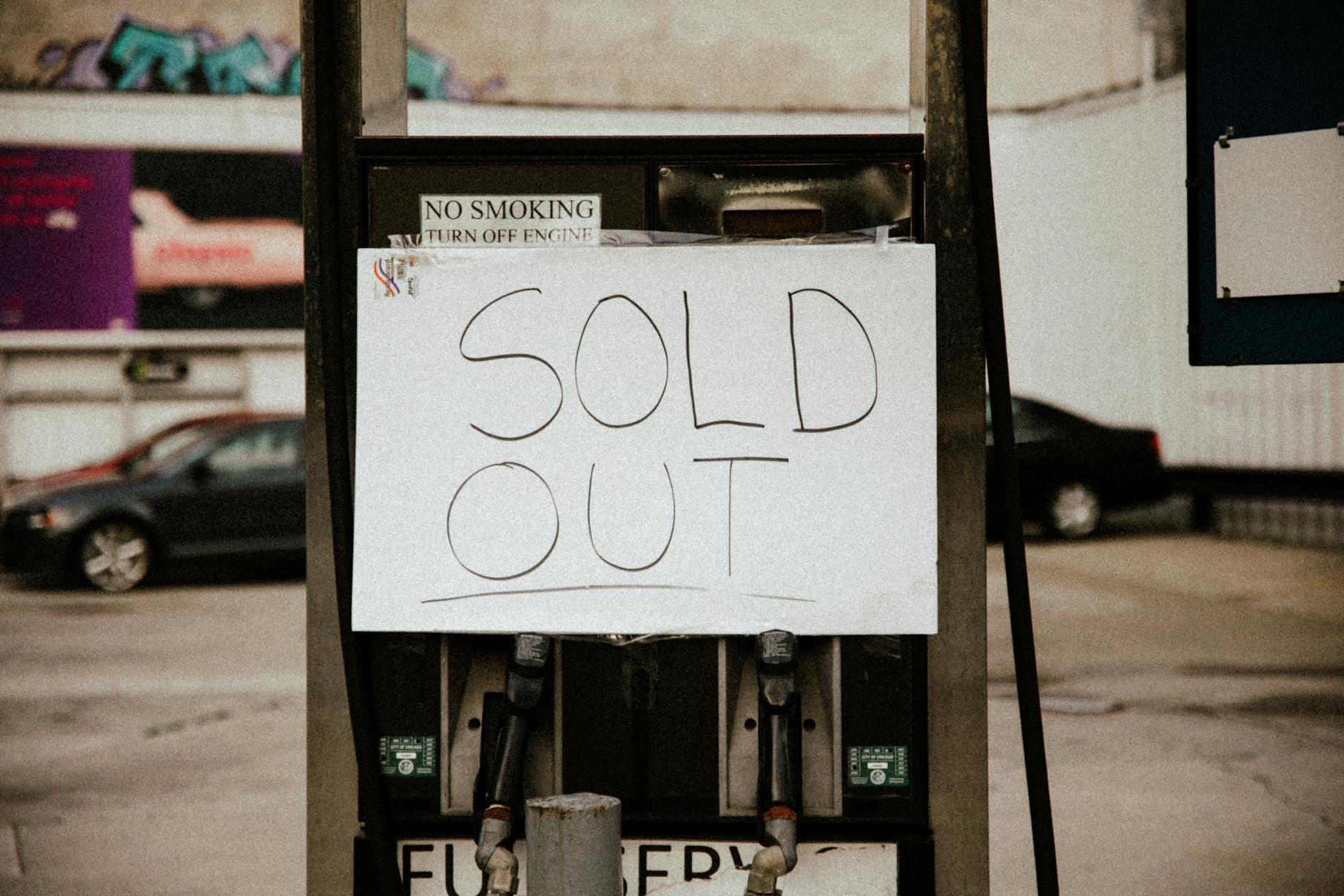
A $35 elite trainer box sells for $80-100. This creates a two-tier market where the shelf is empty of retail-priced product, but the same product is abundant online at premium prices. Casual players who remember paying $3.99 for packs are shocked to see $10 asking prices. The actual product exists—it’s just been captured by the secondary market, where only buyers willing to pay inflated prices can access it. For a collector shopping at retail on a Tuesday afternoon, the practical effect is the same as if those cards didn’t exist: the shelf is empty.
When Will Stores Actually Have Stock Again?
The Pokémon Company announced a major expansion in 2026 when Millennium Print Group began constructing a new 1.27 million square-foot printing facility specifically for Pokémon cards. This facility is expected to become operational by the end of 2028, with full production ramping through 2029. Once operational, it will approximately double total production capacity from the current 10 billion cards annually to an estimated 18-20 billion cards per year. That timeline is important to understand: relief is real, but it’s not coming until 2028-2029 at the earliest.
That’s two to three years away from now (May 2026). For collectors expecting to find casual stock on retail shelves this summer or fall, the outlook is grim. Even with the new facility, there’s no guarantee that supply will match demand immediately. The Pokémon Company will need to bring production fully online, work out supply chain logistics, and establish reliable distribution. The company learned from the 2020-2021 shortage that simply printing more cards doesn’t automatically solve retail shelf availability—distribution, retailer relationships, and anti-scalping measures all matter.
Why Certain Products Disappear Faster Than Others
Not all Pokémon products disappear at the same rate. High-demand, culturally relevant sets like Prismatic Evolutions (the Eevee-themed collection released in early 2025) sell out almost instantly across US retailers because they appeal to multiple customer segments simultaneously: hardcore collectors, casual players, Eevee fans, and investors all want the same product. A single store might receive 12 booster boxes of Prismatic Evolutions and watch them sell out in hours. Meanwhile, more niche or specialized products—like older reprints or products aimed at serious competitive players—move more slowly and stay in stock longer.
The problem is that the products people actually want (flagship sets with popular Pokémon) are also the products that resellers target most aggressively because they have the highest secondary market value. If you walk into a store looking for Prismatic Evolutions or the latest main-line booster set, the odds of finding anything on the shelf are low. But if you’re willing to buy a more obscure or older product, you might get lucky. This creates a bifurcated market where retail availability depends entirely on how mainstream the product is.

Specific Example: The Prismatic Evolutions Shortage
Prismatic Evolutions launched in early 2025 and immediately became the scarcity poster child for the Pokémon card shortage. The set features alternative-art Eevee cards, which have massive appeal to both collectors and competitive players. Some of the Eevee alternate-art cards in this set have secondary market values of $50-200 per card, creating enormous incentive for resellers to buy every booster box they can find.
Across the US, retailers reported complete sellouts within days of release. Some stores implemented purchase limits (one booster box per customer) to try to get cards into more hands, but resellers simply visited multiple stores. The Pokémon Company responded by printing Prismatic Evolutions in higher quantities than any set in history, yet demand still outpaced supply. The set remains the go-to example of why shelf scarcity happens: unmatched demand combined with product that has genuine secondary market value.
What Comes Next: Industry Changes and Long-Term Outlook
The Pokémon Company is taking steps beyond just building new factories. The company has been experimenting with anti-scalping measures, including increased online direct sales, purchase limits at retail partners, and working with retailers to implement stricter controls on bulk purchases. Whether these measures will be effective remains unclear—determined resellers have proven adaptable to most anti-scalping policies. The industry is also seeing conversations about whether the TCG market can sustain this level of demand long-term, or whether the spike driven by TCG Pocket will moderate after the initial hype phase.
By 2029, when the new printing facility is fully operational and capacity has expanded to 18-20 billion cards annually, the market dynamics will likely shift. If demand moderates even slightly, suddenly having 80% more production capacity could create the opposite problem: oversupply. But for the next two to three years, collectors should expect continued scarcity at retail, especially for popular sets. The question isn’t whether production will increase—it definitely will. The question is whether it will increase faster than demand does.
Conclusion
Pokémon card aisles stay empty because an 87% sales surge in demand, amplified by the October 2024 launch of Pokémon TCG Pocket, has overwhelmed production capacity that’s already operating at absolute maximum. The Pokémon Company is printing 10 billion cards annually—double historical output—yet it still can’t meet demand. Resellers and the secondary market exacerbate the problem by capturing retail inventory and selling it at 2-3 times markup, making retail shelves appear empty even when the product exists somewhere in the market.
Real structural relief won’t arrive until the new Millennium Print Group facility becomes operational in 2028-2029, expanding capacity to 18-20 billion cards annually. Until then, expect continued scarcity at retail, especially for popular sets like Prismatic Evolutions. For collectors willing to pay secondary market prices or wait for less popular products, cards are available. But for casual buyers hunting for packs at retail on a random afternoon, the shelves will remain largely bare.
You Might Also Like
- Why Retail Pokémon Card Drops Are Turning Into a Collector Frenzy Again
- Why Pokémon Card Shortages Are Becoming the Biggest Collector Story of 2026
- What the Latest Pokémon Card Printing Surge Means for Collectors