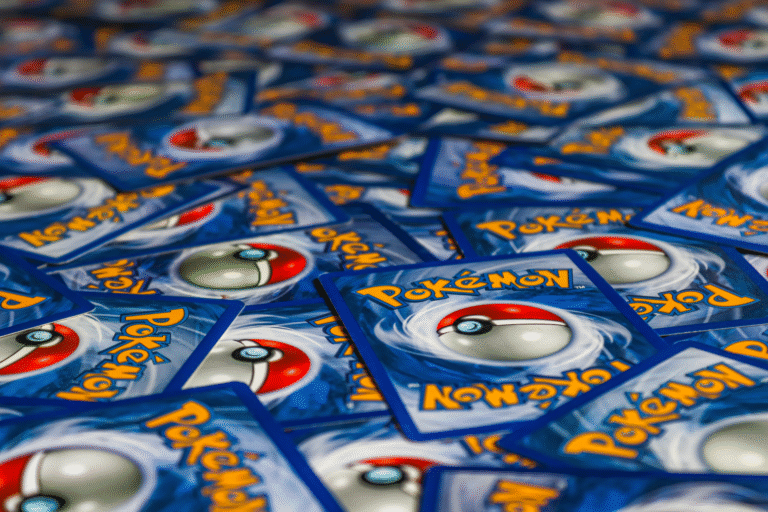
Pokémon card collecting isn’t just back—it’s become a genuine mainstream phenomenon with billions of dollars in annual sales and retail shelf space that rivals video games. What was once a niche hobby dominated by ’90s nostalgia has evolved into a multi-generational investment market that caught mainstream attention through a combination of mobile gaming launches, high-profile influencer spending, and a cultural shift toward collectibles as alternative assets. Logan Paul opening $2 million in vintage booster boxes on YouTube may have grabbed headlines, but the real story is quieter and more significant: Pokémon TCG sales reached $8.4 billion in 2025, up from $1.8 billion just a year prior, and the market is projected to reach $16.9 billion by 2035.
The numbers tell a story of explosive growth that goes far beyond enthusiast circles. Walmart reported a 200% increase in overall trading card sales with Pokémon cards alone growing 10x year-over-year, while GameStop’s Q1 2025 earnings revealed that collectibles—led by Pokémon and sports cards—made up 29% of total sales, finally outselling physical video game software. This isn’t speculation; it’s retail reality backed by real sales data from America’s largest retailers. For collectors, investors, and casual buyers alike, the mainstream breakthrough means better access, more competition on pricing, and a level of legitimacy the hobby never had before.
Table of Contents
- What Triggered the Return to Collecting?
- The Money Behind the Boom—Market Size and Growth
- Retail Goes All-In on Pokémon Cards
- Card Prices Are Surging—But Growth May Be Slowing
- Counterfeits Are a Real Problem in the Secondary Market
- Multiple Generations Are Collecting—For Different Reasons
- What’s Next—Stabilization and Celebration
- Conclusion
What Triggered the Return to Collecting?
The resurgence didn’t happen overnight, but rather built through several converging factors. The launch of pokémon TCG Pocket in October 2024 correlated with a visible spike in physical card interest according to Google Trends data, introducing millions of mobile gamers to the franchise and creating crossover appeal between digital and physical collecting. Simultaneously, high-profile influencers—most notably Logan Paul and other content creators—spent hundreds of thousands on vintage cards, bringing the hobby into YouTube recommendations and TikTok feeds. While some criticized this as speculative hype, it succeeded in one crucial way: it made card collecting culturally visible to demographics that had never considered it before.
Beyond marketing and viral moments, the hobby itself evolved. Modern Pokémon cards feature art that’s fundamentally different from the flat, simple designs of the ’90s. Today’s sets include full-art cards, special gallery subsets, and collaborations with acclaimed Japanese artists whose work transforms cards into collectible art pieces. A 2023 Charizard illustration by artist Arita doesn’t just feel valuable because of scarcity—it actually looks valuable. This artistic evolution gave collectors who couldn’t afford a 1st Edition base set Charizard graded at PSA 10 a genuine alternative: beautiful modern cards that cost a fraction of the price but deliver genuine aesthetic appeal.

The Money Behind the Boom—Market Size and Growth
The numbers backing this resurgence are staggering. The global trading card game market reached $7.43 billion in 2024 and is projected to grow to $15.84 billion by 2034, representing a 7.86% compound annual growth rate. Pokémon specifically owns a disproportionate share of that pie, with the Pokémon TCG market valued at $8.4 billion in 2025—a jump so dramatic from 2024’s $1.8 billion that it warrants skepticism. That figure likely includes projected demand, wholesale value, and speculative price inflation rather than just retail sales, so treat the $8.4 billion figure as an upper estimate of market enthusiasm rather than confirmed dollars flowing through retailers.
The production numbers offer context for why prices rose so dramatically before stabilizing. In fiscal year 2024-2025, The Pokémon Company printed 10.2 billion cards—a decrease from the previous year’s 11.9 billion. Over its entire history, the brand has printed more than 75 billion Pokémon cards total. This production scale is unimaginable in other collectibles markets, yet somehow the market still experiences periodic shortages, supply chain delays, and price volatility. The stabilization in production volumes heading into 2026 suggests that the wild price appreciation many collectors experienced in 2024 may have peaked, with sealed product allocations finally approaching manufacturer’s suggested retail prices rather than commanding 40-50% premiums.
Retail Goes All-In on Pokémon Cards
Five years ago, trading cards occupied a small section at specialty stores and comic shops. Today, Walmart dedicates multiple shelves to Pokémon products, Target stocks entire endcaps with booster boxes, and GameStop has effectively pivoted from being primarily a video game retailer to a collectibles destination. Target reported a nearly 70% increase in tcg sales in 2025, while Walmart’s 200% year-over-year growth in trading card sales demonstrates that mainstream consumers now view these as legitimate retail products worth shelf space and promotional investment. This retail expansion has democratized access but also created friction points.
Scalpers adapted quickly to retail availability, using bots or bulk purchasing to clear store shelves, then reselling online at markups. Some retailers implemented purchase limits to prevent this, but the cat-and-mouse game persists. The positive outcome: a casual collector in rural Montana can now find Pokémon cards at their local Target, something that was impossible just three years ago. The downside: the retail floor price you see in-store rarely reflects the true street value of what you’re buying, and impulse purchases at marked-up recommended retail prices are common.

Card Prices Are Surging—But Growth May Be Slowing
Between 2022 and 2025, individual Pokémon card values jumped 42% year-over-year on average, while sealed products (booster boxes and elite trainer boxes) appreciated 27%. These gains exceeded inflation, stock market performance, and most traditional collectibles, attracting investors who otherwise wouldn’t touch trading cards. A pristine copy of a special illustration rare from a current set that cost $50 two years ago might have been worth $71 by 2025, purely on appreciation. For a $100 sealed booster box purchased in late 2023, the value climb would have been even steeper before leveling off.
However, the recent production stabilization has cooled price momentum. Elite trainer boxes that commanded $70-80 premiums above the $40 MSRP in 2023-2024 are now available closer to that retail price, a correction that disappointed some speculative buyers but delighted actual collectors. This normalization is healthy for the hobby; it means current purchases are less likely to be underwater in six months. The caveat: cards graded at high values in 2023-2024, like PSA 9 and PSA 10 examples of competitive hits, have seen secondary market values hold relatively steady, which means if you paid $500 for a graded card two years ago, you might see it selling for $450-480 today. The investment thesis has shifted from “prices always go up” to “this particular card has durable collectibility.”.
Counterfeits Are a Real Problem in the Secondary Market
Anyone buying Pokémon cards online should operate under the assumption that 15-20% of cards available on general platforms like eBay or AliExpress are counterfeit. The quality of fakes has improved dramatically, with some indistinguishable from legitimate products except under microscopic examination. A counterfeit booster box purchased on a marketplace listing promising “sealed vintage stock from Japan” is almost certainly what you’re getting if the price seems too low. Even established marketplaces struggle with enforcement because the volume is massive and the profit margins for counterfeiters are substantial.
Grading services like PSA and Beckett theoretically solve this problem by authenticating cards before grading, but they’ve had their own challenges with counterfeits slipping through, especially during periods of high submission volume. For buyers, the protection is straightforward: buy from authorized retailers, established hobby shops, or well-reviewed marketplaces with buyer protection policies. Direct sales from verified sellers with long transaction histories are safer than bulk lots from anonymous accounts. If a vintage or rare card seems priced 20% below market rate, ask why before purchasing. The peace of mind is worth slightly higher prices.

Multiple Generations Are Collecting—For Different Reasons
Gen Z drives 56% of collectibles spending in 2025, a demographic that wasn’t even born when Pokémon Red and Blue launched. For this group, card collecting is partially about investment—they openly discuss whether a sealed box is a good financial allocation. Meanwhile, Millennials are buying cards to collect with their children, creating a family activity that didn’t exist before. And a third group—pure investors without childhood nostalgia—treat booster boxes the way their parents treat commodity futures: as an alternative asset class with volatility and potential returns.
This multi-generational appeal has stabilized demand. When Pokémon TCG Pocket drove traffic spikes in 2024, it was temporary enthusiasm from mobile gamers. But the sustained growth comes from parents buying cards for kids, collectors completing sets, and investors seeing durable asset potential. The 30th Anniversary of Pokémon in 2026 is expected to drive an additional 25% value boost on nostalgic cards from the base set era, potentially benefiting all three demographic groups simultaneously. However, this also means that cards purchased primarily as “Gen Z investment assets” might struggle if that demographic’s interest wanes while core collectors and parents keep the hobby stable.
What’s Next—Stabilization and Celebration
The Pokémon TCG market entered 2026 in a fundamentally different position than 2024. Production has stabilized, retail availability is normalized, and prices have softened from their peaks—all signs of a maturing market transitioning from speculative frenzy to sustainable collecting. The 30th Anniversary celebration planned for 2026 provides one final growth catalyst, with special releases, reprints of classic cards, and limited editions all but guaranteed to attract nostalgic buyers and completionist collectors. Looking beyond the anniversary, the hobby’s mainstream position appears durable.
A gaming franchise doesn’t sustain $8+ billion annual market value without genuine structural demand. Pokémon TCG Pocket has stabilized at tens of millions of monthly active players, introducing a constant pipeline of new people to the brand. Retail shelf space won’t disappear now that it’s proven profitable. The counterfeiting problem will persist but won’t deter legitimate buyers any more than it derailed fine art or high-end watches. For the next 12-18 months, expect relatively flat pricing on most common and uncommon cards, modest appreciation for special illustrations and tournament-relevant holos, and sustained interest from all three demographic groups that have made this hobby their own.
Conclusion
Pokémon card collecting returned to the mainstream not because of nostalgia alone, but because the hobby evolved. Better art, accessible retail distribution, durable production, and multi-generational appeal transformed it from niche hobby to legitimate collectibles market. Whether you’re buying for investment, completion, or pure enjoyment, the infrastructure exists now—grading services, retail availability, secondary market liquidity, and peer communities.
The days of finding bulk vintage cards in antique stores and flipping them on eBay are largely over, replaced by a transparent market where value is visible and prices reflect genuine demand. The core question for collectors is no longer “will this card appreciate?” but rather “do I genuinely want to own this?” That’s a healthier foundation for any hobby. The mainstream breakthrough means more competition for desirable cards, less room for arbitrage, and a level playing field where retail access depends on timing and luck rather than insider knowledge. For serious collectors, that’s a win.