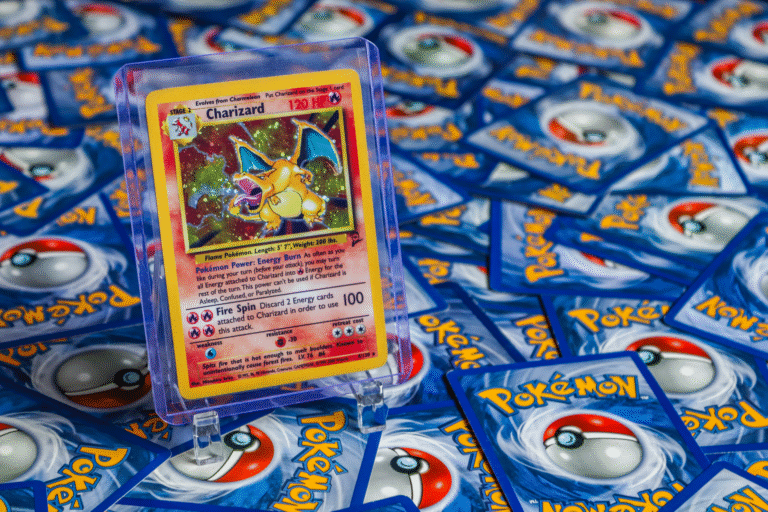
While there’s no current evidence of an imminent price spike for Majestic Dawn cards in 2026, understanding which cards hold the most value in this eighteen-year-old set is essential for collectors making informed purchases. Majestic Dawn, released in May 2008 as the fifth Diamond & Pearl series set, contains several cards that have maintained strong market value, with Leafeon LV.X commanding approximately $250 for near-mint copies and Glaceon holding steady around $34.
The reality is that price movements in vintage Pokemon cards are driven by consistent collector demand, condition scarcity, and long-term investment trends rather than sudden spikes. The cards worth watching are those with demonstrated collector interest and historical price stability, not speculative bets on future rallies. This article examines the most valuable Majestic Dawn cards based on documented market data, explains what makes them collectible, and provides practical guidance for anyone considering purchases in this set.
Table of Contents
- Which Majestic Dawn Cards Command the Highest Prices?
- Understanding Majestic Dawn’s Market Position
- Condition Is Everything in Vintage Set Valuations
- How Call Energy and Utility Cards Drive Set Demand
- The Danger of Speculation Without Recent Market Catalysts
- Comparing Majestic Dawn Values Across Price Guides
- The Long-Term Outlook for Majestic Dawn
- Conclusion
Which Majestic Dawn Cards Command the Highest Prices?
The most expensive card from Majestic Dawn is Leafeon LV.X (#99/100), which has sold for approximately $250 in near-mint condition. This is the card most frequently cited as the set’s most valuable, reflecting strong demand from both casual collectors and competitive players who value its role in the Diamond & Pearl era metagame. Glaceon (#20/100) follows with prices around $34, making it significantly more affordable but still among the set’s top cards.
Mewtwo (Holo) rounds out the expensive tier, typically valued between $31 and $35 in near-mint condition, though lightly-played copies can be found for around $16. Garchomp LV.X (#97/100) also commands collector attention despite less frequent market listings than Leafeon. This card was noted for being among the most powerful Pokémon in the set during its competitive era, which continues to drive interest from players seeking playsets for vintage format tournaments. These four cards represent the genuine value tier of Majestic Dawn, with documented sales supporting their pricing rather than speculation.

Understanding Majestic Dawn’s Market Position
Majestic Dawn contains 100 cards total with no secret cards, which means finding specific cards requires purchasing or trading rather than relying on chase elements within sealed product. The set’s age—now eighteen years old—is both an advantage and limitation for price appreciation. Older cards benefit from nostalgia and finite supply in high-grade condition, but they also competed with numerous other Pokemon sets released throughout the 2000s for collector attention.
The challenge is that original print runs from 2008 mean significant quantities of Majestic Dawn product were opened and played, resulting in a high percentage of cards in played or moderately-played condition. The real scarcity comes in near-mint grades, which command premiums because collectors must either locate original sealed boxes (increasingly rare and expensive) or search multiple used markets for well-preserved singles. This explains why price jumps occur rarely—the supply ceiling is already set, and gradual appreciation comes from increasing demand among existing collector populations rather than new market catalysts.
Condition Is Everything in Vintage Set Valuations
A single Majestic Dawn card can vary wildly in price depending on condition grading. Mewtwo (Holo) illustrates this perfectly: the same card worth $31-$35 in near-mint condition drops to $16 in lightly-played condition, representing nearly a 50% price difference. This makes condition assessment critical before purchasing, especially for cards at the $30+ price point where grading services become economically worthwhile to justify value.
The limitation for collectors is that professional grading through PSA, BGS, or Pokéllector adds 2-4 weeks to the authentication process and costs $15-$50 per card depending on the service and turnaround time. Most Majestic Dawn cards don’t justify professional grading due to lower absolute values, which means buyers must develop personal grading skills or accept uncertainty when purchasing raw (ungraded) copies. This creates an opportunity cost: spending time researching card condition reduces available capital for actually purchasing cards.

How Call Energy and Utility Cards Drive Set Demand
Beyond the collectible LV.X cards, Majestic Dawn contains utility cards that appeal to competitive players seeking specific functionality. Call Energy (#92/100) provides Colorless Energy while also triggering an ability to search for two Basic Pokémon from the deck, making it a functional card for constructed decks even seventeen years after release. These utility cards maintain modest price floors because their gameplay value is real and reproducible.
The tradeoff is that utility cards lack the nostalgia factor of iconic holographic creatures, making them less appealing to casual collectors even when their mechanical utility is strong. This creates an arbitrage opportunity: experienced players often undervalue these cards compared to their functional worth, while casual collectors overpay for aesthetically impressive but less-useful holographics. Understanding this dynamic helps collectors identify cards that may be undervalued relative to their actual demand drivers.
The Danger of Speculation Without Recent Market Catalysts
A critical warning: no recent news or analyst predictions exist regarding upcoming price movements in Majestic Dawn during 2026. The title of this article addresses cards “before the next price spike,” but the reality is that spike timing cannot be predicted reliably even by experienced collectors. Purchasing vintage cards based on the hope of future appreciation is speculation, not investment, and carries real risk.
The limitation is that Pokemon card prices are influenced by multiple unpredictable factors: new product releases that affect collector spending, format changes in competitive play, influencer coverage, and broader economic conditions affecting discretionary spending. Majestic Dawn cards appreciated gradually over years, not weeks, which means short-term holding periods are unlikely to generate returns. Collectors should purchase cards they genuinely want to own rather than treating them as stocks, since the price appreciation that does occur rewards patient multi-year positions, not active trading.

Comparing Majestic Dawn Values Across Price Guides
Multiple current pricing resources exist for Majestic Dawn cards, and prices vary slightly between platforms. TCGPlayer, the price guide, and PokéCardWorth all maintain pricing data, though values can differ by 10-20% depending on recent transaction volumes and the supply of copies listed. Leafeon LV.X, for example, may be listed at $250 on one platform but priced slightly differently on another depending on how many copies are currently for sale and at what asking prices.
This variation means smart shopping requires checking multiple sources before making high-value purchases. A card listed at $35 on one platform might be available for $28 on another, representing significant savings on expensive singles. The practical action is to set price alerts on your preferred platform rather than checking manually, which reduces the decision fatigue of tracking eighteen-year-old card markets.
The Long-Term Outlook for Majestic Dawn
Majestic Dawn will likely continue appreciating gradually as the set ages further and high-grade copies become increasingly scarce. However, this appreciation will be modest—measured in percentage points per year rather than doubling or tripling—because the set lacks the cultural significance of later releases or the extreme scarcity of early Base Set cards.
The set remains comfortably mid-tier in Pokemon TCG collecting, valuable enough to reward ownership but not rare enough to expect explosive returns. The real future value may emerge not from cards doubling in price, but from continued stability and the gradual consolidation of copies into long-term collections rather than casual player binders. Collectors who purchase Majestic Dawn cards now and hold them for five years will likely see appreciation, but those expecting dramatic spikes should recalibrate expectations toward gradual returns instead.
Conclusion
The most important Majestic Dawn cards to watch are Leafeon LV.X, Glaceon, Mewtwo (Holo), and Garchomp LV.X, which have demonstrated consistent collector demand and documented market valuations. However, the premise of “watching before the next price spike” requires realistic expectations: documented evidence of an imminent spike does not exist, and price movements in this set are driven by gradual appreciation rather than market catalysts.
Approach Majestic Dawn purchases with a focus on genuine collector interest and long-term holding rather than speculation on short-term returns. For anyone considering purchases, verify current prices directly on TCGPlayer, the price guide, or PokéCardWorth, prioritize condition assessment in your evaluation, and understand that appreciation, when it occurs, rewards patience over active trading. The value in Majestic Dawn comes from building a collection of cards you appreciate owning, with price stability as a secondary benefit rather than the primary investment driver.