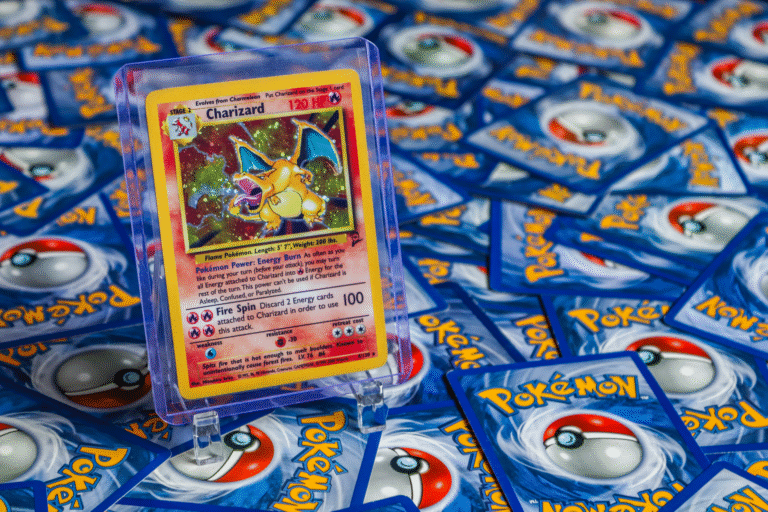
Majestic Dawn, released in May 2008, contains several cards that continue to surprise collectors with their sustained and growing market value in 2026. While this Diamond & Pearl era set is nearly two decades old, it has demonstrated remarkable staying power in the secondary market, with certain cards commanding prices that rival far newer releases. The most notable example is Glaceon, which reaches $45 in near-mint condition—a testament to both its visual appeal and its role in the competitive metagame when it was legal.
The surprise for modern collectors isn’t that these cards are valuable today, but that they’ve retained and even increased their value despite the hundreds of new Pokémon TCG sets released since 2008. For collectors entering the hobby in recent years, discovering that cards from nearly two decades ago can still command premium prices often contradicts their assumptions about the trading card market. This article examines which Majestic Dawn cards hold the greatest potential to surprise both new and experienced collectors as they reassess their collections in 2026.
Table of Contents
- Which Majestic Dawn Cards Command the Highest Secondary Market Prices?
- Why Older Pokémon Cards Continue Rising in Value Despite Their Age
- How Condition Grading Dramatically Impacts Majestic Dawn Card Values
- Building a Majestic Dawn Collection on Today’s Market
- The Risk of Overestimating Majestic Dawn Card Values Based on Comps
- How Majestic Dawn Compares to Other Vintage Diamond & Pearl Sets
- Market Outlook and Strategic Considerations for Mid-2026 Collectors
- Conclusion
Which Majestic Dawn Cards Command the Highest Secondary Market Prices?
The most consistently valuable cards in Majestic Dawn center around iconic Pokémon with strong visual design and competitive playability from the diamond & Pearl era. Glaceon leads the set at $45 in near-mint condition, with more modest grading significantly reducing its value: lightly played copies sit around $23, while damaged cards drop to approximately $12. This dramatic 75% price difference between conditions illustrates how grading quality directly impacts value for older sets where perfect copies are increasingly scarce. Mewtwo follows closely behind at $37–$39 in both holo and reverse holo versions, maintaining strong demand among both competitive players seeking vintage legal cards and collectors attracted to Mewtwo’s iconic status.
The pricing stability across both printings suggests that demand, rather than scarcity, drives its value. Zapdos has emerged as one of the set’s genuine surprise performers, trending upward throughout the market cycle, while Articuno has moved from $17 to nearly $19 in near-mint condition, indicating steady collector interest in the Legendary bird trio represented in the set. What distinguishes these cards from chase rares in modern sets is their dual appeal: they attract both vintage format players who use them in sanctioned tournaments and collectors building complete sets or condition-specific collections. This dual demand creates a pricing floor that common or marginal cards lack, explaining why Majestic Dawn, despite being from 2008, continues generating collector interest rather than declining into pure nostalgia value.

Why Older Pokémon Cards Continue Rising in Value Despite Their Age
The sustained price growth of Majestic Dawn cards reflects broader market dynamics that extend far beyond the set’s initial release window. The modern Pokémon TCG resurgence beginning around 2020 sparked renewed interest in vintage sets, with collectors and investors recognizing that early-print runs of popular cards from the Diamond & Pearl era had limited supply compared to contemporary releases. Majestic Dawn, as the fifth expansion in the Diamond & Pearl Series, benefited from the era’s popularity when the card game was at peak engagement, yet print runs were constrained compared to today’s oversupply of modern product. However, this upward trend comes with significant limitations. Not all cards in Majestic Dawn have appreciated—common rares and utility cards remain cheap even in mint condition, with many selling for under $5.
The appreciation applies specifically to visually striking or competitively relevant cards that had maintained collector demand across the intervening years. Additionally, the prices cited in current guides reflect current market conditions in mid-2026; future appreciation is never guaranteed, and market saturation from increased reprints of Pokémon like Glaceon and Mewtwo could pressure these cards’ values downward. The warning here is crucial: collectors sometimes purchase older cards based on historical appreciation rates, assuming past performance guarantees future results. While Majestic Dawn has proven resilient, the market for vintage Pokémon cards is speculative. Cards can decline if collecting interest shifts to newer sets, if reprints flood the market with modern versions of the same Pokémon, or if broader economic conditions reduce discretionary spending on collectibles.
How Condition Grading Dramatically Impacts Majestic Dawn Card Values
The price disparity between conditions represents perhaps the most critical surprise for collectors new to vintage sets. Glaceon’s example—$45 in near-mint, $23 in lightly played, $12 in damaged—reveals that achieving near-mint status is essential for maximizing returns. A single point difference in a professional grading scale can represent a $10–20 swing on cards in Majestic Dawn’s top tier, making grading investment a rational consideration for high-value cards rather than merely cosmetic perfectionism. For Majestic Dawn specifically, this condition sensitivity reflects the set’s age and the physical wear that affects cards stored for 17+ years. Cards from 2008 have endured potential edge wear from shuffling, surface scratches from handling, and centering issues common in older print runs where quality control standards differed from modern manufacturing.
Near-mint specimens are genuinely scarce because most cards in circulation have experienced some degradation; they represent genuine outliers rather than typical preservation outcomes. This scarcity premium explains why near-mint Mewtwo ($37–39) sits at roughly double the price of heavily played copies. The practical implication is that collectors should have realistic expectations about grades before purchasing. A card advertised as “near-mint” from a reputable grader (PSA, BGS, or CGC) justifies its premium because it represents documented preservation quality. Conversely, raw cards sold as “NM” by sellers without professional grading carry risk; what one seller deems near-mint might grade lower under professional evaluation. For cards in the $30+ range, professional grading often makes financial and practical sense.

Building a Majestic Dawn Collection on Today’s Market
Collectors approaching Majestic Dawn in 2026 face several strategic decisions about acquisition and budget allocation. A complete set of all 100 cards typically costs $200–400 depending on condition tolerance and card selection, with the bulk of the cost concentrated on the 10–15 cards like Glaceon, Mewtwo, and the Legendary birds. A budget-conscious collector can complete the set with lower-grade or lightly played copies of the key cards while obtaining near-mint copies of bulk commons and uncommons, producing a collection that’s both complete and visually presentable without approaching five-figure expenditures. Alternatively, many collectors pursue theme-based subcollections: the Legendary bird trio (Articuno, Zapdos, Moltres), evolution lines of specific Pokémon, or exclusively near-mint copies of Pokémon LV.X cards (a Diamond & Pearl era mechanic). These targeted approaches reduce financial burden while maintaining collection coherence and appeal.
The comparison to modern set collecting is instructive: completing a contemporary set demands ongoing expenditure as new product releases, whereas Majestic Dawn acquisition is a finite project with a defined endpoint, making budget planning more straightforward. The tradeoff is between completeness and condition. A collector with $400 can obtain either a complete set in mixed conditions or a 40–50 card subcollection in consistently near-mint condition. The first approach appeals to completists and set registry enthusiasts, while the second maximizes visual impact and financial appreciation potential. Neither choice is objectively superior; the decision depends on individual priorities and long-term collection vision.
The Risk of Overestimating Majestic Dawn Card Values Based on Comps
A common collector mistake involves purchasing cards at asking prices without cross-referencing multiple pricing sources, then discovering that recent sales prices differ substantially from list prices. Majestic Dawn’s presence on the price guide, TCGPlayer, PokeCardWorth, and other platforms creates the impression of price transparency, but significant variation exists between platforms due to differences in grading assumptions, condition standards, and trader margins. A card listed at $45 on one site might sell at $35 on another, or have no recent sales history, creating uncertainty about true market value. For Majestic Dawn specifically, many cards haven’t traded frequently enough to establish consistent pricing. While Glaceon and Mewtwo have sufficient trading volume to reflect real market demand, cards ranked 20th through 50th in set value might have limited sales data, meaning prices reflect seller optimism rather than actual buyer willingness.
Checking the price guide’s “Price History” graphs and TCGPlayer’s sales data (rather than just list prices) provides more realistic guidance about what collectors actually paid versus what sellers are asking. The warning is straightforward: never assume asking prices equal actual market value, especially for cards outside the top 5–10 in a set. Additionally, collectors should recognize that these prices reflect ungraded card values or specific grades. A raw Glaceon at $45 assumes buyer assessment and risk; the same card professionally graded as NM might command $65 at auction, or $20–25 if it grades lower than expected. The gap between raw and professionally graded pricing for Majestic Dawn is typically 30–50%, a meaningful consideration before committing purchase budgets.

How Majestic Dawn Compares to Other Vintage Diamond & Pearl Sets
Majestic Dawn occupies a middle position within the Diamond & Pearl era in terms of collector demand and secondary market pricing. Sets immediately preceding it, like Secret Wonders (set 4) and Great Encounters (set 3), contain some cards with comparable or higher values, while later sets in the era like Legends Awakened (set 6) have shown mixed performance. The comparison reveals that Majestic Dawn’s strength derives not from being the rarest or most competitive set of its era, but from containing a balanced mix of visually appealing cards with both competitive and collecting appeal.
Collectors building a focused vintage collection sometimes approach the entire Diamond & Pearl series (eight sets total) as a coherent project, acquiring one set per month to spread costs. From this perspective, Majestic Dawn represents a mid-tier investment—more valuable than earlier or later sets in the series, but less expensive than the very earliest expansions. For collectors with this comprehensive vision, Majestic Dawn fits logically as a component of a broader vintage strategy rather than a standalone target.
Market Outlook and Strategic Considerations for Mid-2026 Collectors
As of mid-2026, Majestic Dawn enters its second decade of being “vintage” in the primary sense—old enough that mint copies are increasingly scarce, yet recent enough that many original owners still hold cards. The set’s pricing trajectory suggests continued modest appreciation, though the rate will likely moderate from the explosive growth seen during the 2020–2023 resurgence peak. For collectors entering the market now, Majestic Dawn cards are unlikely to deliver the 200% returns that early purchasers received, but they offer stability and modest appreciation potential compared to modern sets prone to oversupply. The forward-looking consideration is reprinting risk.
The Pokémon Company occasionally re-releases iconic cards from older eras through special collections, tins, and anniversary products. A surprise reprint of Glaceon or Mewtwo in 2027 or beyond could pressure current values downward by introducing newer copies with pristine condition and certification into the market. Collectors should view current pricing as reflecting today’s supply dynamics, which could shift if the company chooses to capitalize on nostalgia through reprints. Conversely, if the company avoids reprinting Majestic Dawn cards, supply constraints will strengthen values over the coming years as existing copies deteriorate from circulation and storage degradation.
Conclusion
The cards most likely to surprise collectors in 2026 from Majestic Dawn are the tier-one cards—Glaceon, Mewtwo, Zapdos, and Articuno—which combine visual distinction, competitive playability from the card’s era, and genuine scarcity in near-mint condition. These surprise many contemporary collectors because their sustained $37–45 price points contradict assumptions that 17-year-old cards should be cheap, yet their prices reflect real demand and meaningful scarcity rather than speculation. The secondary market for Majestic Dawn has matured beyond hype into a rational valuation of condition-adjusted supply versus collector demand.
For collectors approaching Majestic Dawn in 2026, the strategic priority is determining whether completeness or condition-quality matters more, cross-referencing prices across multiple platforms to avoid overpaying, and recognizing that professional grading becomes economically sensible for cards above $30. The set continues offering value through patient collection-building, but collectors should avoid the trap of assuming recent prices will multiply further or that lesser-known cards in the set will appreciate simply by virtue of being old. Majestic Dawn’s surprise value lies in its reliable consistency and actual rarity of top cards, not in speculative betting on dark horse cards or future reprints changing the market dynamics.