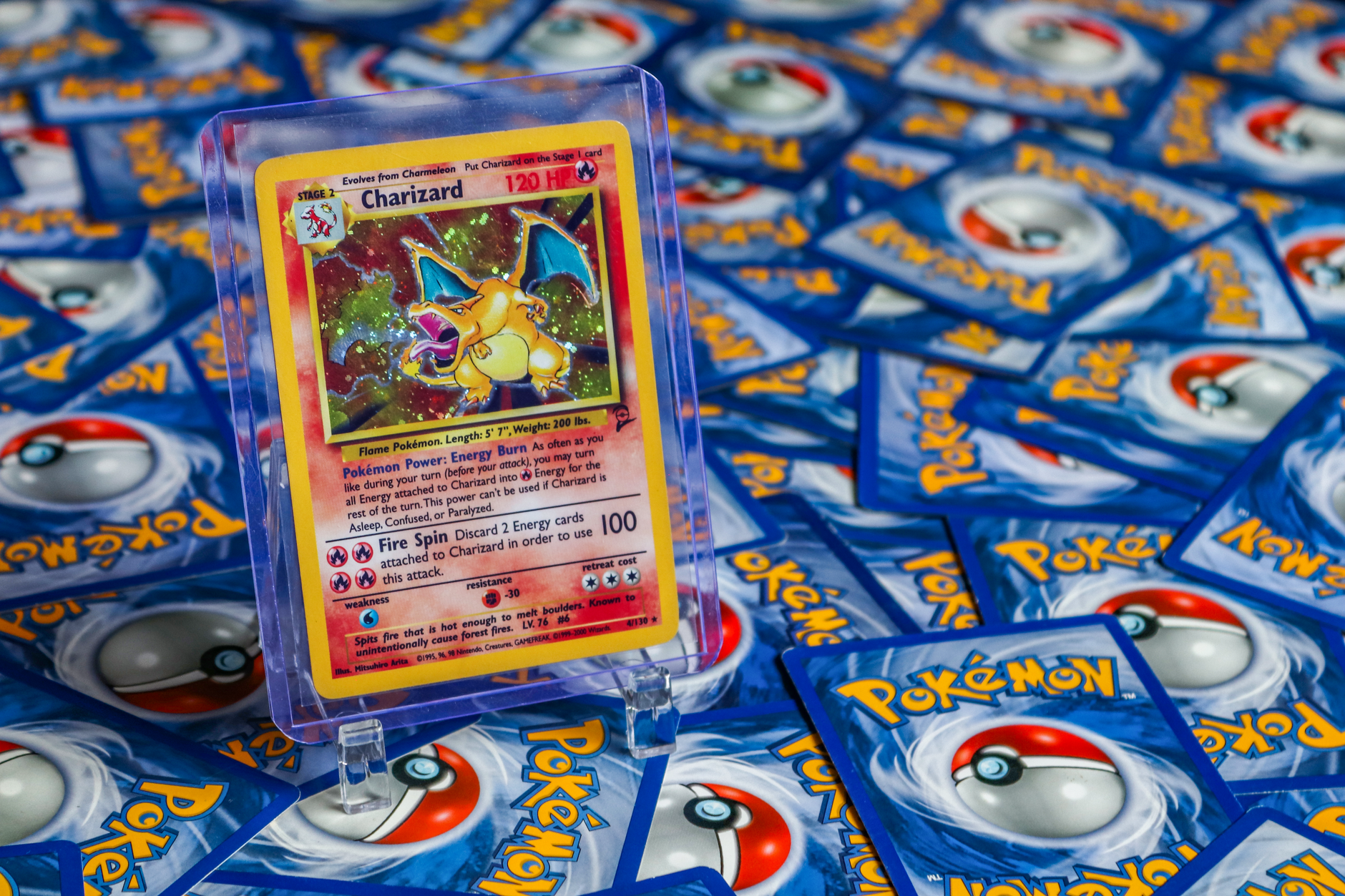
The Pikachu trading card market reached an aggregate valuation of $27,843.81 in 2026, representing the cumulative value of 509 distinct Pikachu cards across all production variants and conditions. This valuation reflects both a year-to-date gain of 31.4% and the remarkable expansion of the Pikachu card market, which now encompasses everything from common bulk cards valued at $0.05 to museum-quality specimens exceeding $3,200. The market’s growth tells a story of sustained collector interest, strategic buying by high-profile investors, and the occasional landmark sale that reshapes price expectations across the entire category. Individual Pikachu cards range dramatically in value. The average Pikachu card in the tracked market costs $54.70, but this number obscures enormous variation.
A collector might purchase multiple Pikachu cards for under a dollar, yet a single PSA 10-graded card from the right era could command thousands. This price disparity reflects the intersection of scarcity, condition, vintage status, and thematic significance that defines modern trading card valuations. The market’s momentum, however, has decelerated slightly. While Pikachu cards gained 31.4% year-to-date through July 2026, they have declined 3.1% over the past 30 days, suggesting that the sharp early-year enthusiasm may be cooling. This pattern often precedes periods of consolidation, where speculators exit positions and prices stabilize at more sustainable levels.
Table of Contents
- What Drives Pikachu Card Valuations in the 2026 Market?
- Price Range and Distribution Across 509 Pikachu Variants
- Record-Breaking Auctions and Market Catalysts
- Legendary Pikachu Promos and Their Market Positions
- Condition Grading and Price Volatility
- The Pikachu Card Market’s Recent Momentum Shift
- Market Structure and the Reality of Trading Pikachu Cards
- Frequently Asked Questions
What Drives Pikachu Card Valuations in the 2026 Market?
pikachu‘s market performance is anchored by a handful of extraordinary sales that establish price ceilings and reshape collector expectations. In February 2026, a PSA 10-graded Pikachu Illustrator card sold for $16.492 million at auction, becoming the most expensive trading card ever sold. This transaction sent shockwaves through the hobby and prompted renewed interest in Pikachu variants across all price tiers. The Illustrator card’s legendary status—only a handful exist in museum condition—means this sale, while spectacular, exists in a different universe from typical market transactions. Beyond record-setting auctions, market valuation is driven by the intersection of supply and thematic demand.
Pikachu’s status as the franchise’s most recognizable character ensures consistent collector interest, but supply constraints create pricing power. Vintage first-edition cards from the 1990s, promotional variants issued in limited quantities, and anniversary editions all command premium valuations relative to more recent, mass-produced releases. The $27.8 million aggregate valuation reflects a market where scarcity and celebrity-character status compound each other’s effects. Celebrity participation has emerged as an underestimated price catalyst. In March 2026, a high-profile Pikachu auction involving public figures generated media attention that drove valuations across the entire Pikachu card universe. This dynamic reveals a risk for collectors: market valuations can spike on celebrity involvement, drawing speculative buyers who lack long-term commitment to the hobby and may exit positions quickly once attention fades.
Price Range and Distribution Across 509 Pikachu Variants
The Pikachu card market encompasses 509 distinct cards, each with its own production history, rarity designation, and collector demand profile. The lowest-priced cards—those at $0.05—are typically modern, high-volume production runs with minimal scarcity or condition premiums. These cards are often purchased in bulk as part of lot acquisitions and carry no grading certification. At the opposite end, cards approaching the $3,200 threshold typically require multiple demand drivers: high age, severe scarcity, exceptional condition, or heritage as a promotional variant. The $54.70 average price masks a heavily skewed distribution where a small percentage of cards command the vast majority of total market value.
This concentration means that the 509-card universe includes perhaps 50 to 100 cards accounting for the bulk of the $27.8 million valuation. The remaining 400+ cards populate the sub-$500 range, where collector passion meets rational price discovery. A limitation of relying solely on average pricing is that it can overstate affordability; a collector seeking a “typical” Pikachu card should budget for something in the $200 to $500 range if condition and grading are factored in. Price discovery in this market is driven by completed sales data, psa population reports (which measure rarity), and comparable market analysis. Cards at the middle tier ($100 to $1,000) show the most price volatility because collectors actively debate their fair value, whereas the ultra-rare cards ($5,000+) change hands so infrequently that asking prices often diverge sharply from realized values.
Record-Breaking Auctions and Market Catalysts
The $16.492 million sale of a PSA 10 Pikachu Illustrator in February 2026 represents a watershed moment for trading card collecting. The Illustrator card, produced as a promotional item for a Japanese competition in the mid-1990s, exists in perhaps dozens of copies worldwide, with fewer than five in PSA 10 condition. This extreme scarcity, combined with the card’s historical significance and Pikachu’s unmatched brand recognition, created a perfect storm for record pricing. The transaction signal-boosted the entire Pikachu category and attracted investor capital that might have otherwise pursued stocks or cryptocurrency. The psychological effect of the February record sale persisted through March 2026, when a second major Pikachu auction—bolstered by celebrity involvement—generated fresh media attention.
This clustering of high-profile sales within a six-week window created the perception of a booming market, even though the volume of transactions at elite price points remains vanishingly small. The danger for collectors entering the market during such periods is that euphoria-driven pricing often precedes correction. A collector who purchased aggressively in March on the assumption that prices would continue climbing faced the reality of declining prices by early summer. These auctions also revealed a market bifurcation: ultra-rare cards in perfect condition trade in a completely separate ecosystem from mid-tier collectibles. The $16.492 million sale established no new normal for $5,000 cards or even $100,000 cards; it was a one-off driven by a unique asset’s extreme rarity.
Legendary Pikachu Promos and Their Market Positions
Among the 509 Pikachu cards in the tracked market, several promotional variants command exceptional valuations due to their combination of rarity and thematic importance. The 20th Anniversary Pikachu Festa promotional card is valued at approximately $20,000 USD, making it one of the most expensive regularly-produced Pikachu variants. This card was issued in extremely limited quantities in Japan as part of a 20-year anniversary celebration, and its scarcity in high grades explains its premium positioning. Most collectors will never own one, and those who do typically view it as a long-term wealth store rather than an active collection piece. The Pikachu Munch Scream promotional card—a reference to Edvard Munch’s famous painting—carries a valuation near $10,000 USD.
This card exemplifies how thematic relevance and artistic collaboration can elevate a card’s market position far beyond what its production numbers might suggest. The card’s unusual design and crossover appeal to art-conscious collectors have built a dedicated demand base willing to pay premium prices. Below these ultra-rare promos sits a tier of exceptionally graded standard promotional cards. A PSA 10 promotional Pikachu, valued at $2,600 USD, demonstrates how grading certification and condition can increase a card’s value by orders of magnitude compared to ungraded or lower-grade copies of the same card. A collector purchasing a $2,600 PSA 10 promo is paying substantially for the credibility and permanence of professional certification, not just the card itself.
Condition Grading and Price Volatility
The Professional Sports Authenticator (PSA) grading scale—ranging from 1 (poor) to 10 (gem mint)—introduces both transparency and volatility into Pikachu card pricing. A single Pikachu card in PSA 8 condition might cost $400, while the identical card in PSA 10 might cost $2,000 or more. This non-linear pricing structure means that grading outcomes have enormous financial stakes for collectors, and marginal improvements in condition can double or triple a card’s value. The flip side is that small defects invisible to the naked eye can trigger grading downgrades with five-figure financial consequences. Grade inflation and deflation cycles also create market risk.
The PSA grading standards that produced a $16.492 million valuation for the Pikachu Illustrator reflect current market consensus, but future generations of graders might apply different standards. A card currently rated PSA 10 could theoretically be re-evaluated and downgraded if grading philosophies shift. This introduces a permanent risk discount that sophisticated collectors price in when assessing ultra-high-value cards. Ungraded Pikachu cards—those without professional certification—typically trade at 40% to 70% discounts relative to their graded equivalents, even when condition appears comparable to the naked eye. This pricing gap reflects not just quality assurance but also the psychological comfort that professional authentication provides. For collectors storing cards long-term, grading certification becomes an insurance policy against future disputes over authenticity or condition.
The Pikachu Card Market’s Recent Momentum Shift
The 31.4% year-to-date gain through July 2026 represents significant appreciation, yet the 3.1% decline over the past 30 days signals a pivot in market psychology. Early 2026 saw strong momentum driven by the February record auction, celebrity involvement in March, and speculative buying from new entrants to the hobby. By mid-summer, however, some of this speculative capital has begun rotating out, and price discovery is resetting at lower levels.
This pattern is typical of markets that experience rapid appreciation followed by consolidation. The price decline over the past month does not necessarily indicate weakness in underlying demand for genuine Pikachu cards—collectors still actively pursue rare variants—but rather a correction in valuation multiples. Cards that were commanding inflated prices in March are now trading closer to historical ranges. For long-term collectors, this recalibration presents opportunity; for short-term traders who bought during the March peak, it represents losses.
Market Structure and the Reality of Trading Pikachu Cards
The aggregate market valuation of $27,843.81 across 509 cards is an analytical construct that helps investors understand the category’s total value, but it should not be confused with market liquidity. The vast majority of Pikachu cards in this universe are held by collectors with no intention of selling, creating a situation where theoretical value bears little resemblance to realized transaction volume. The most liquid market exists for mid-tier cards in the $100 to $1,000 range, where dozens of transactions occur monthly.
At the ultra-rare end, weeks or months may pass between sales, making real-time valuation largely speculative. Collectors and investors should also recognize that the average price of $54.70 reflects a market dominated in total value by a handful of ultra-rare cards, not by the typical Pikachu acquisition. A new collector entering the market with a $500 budget would find far more substantial inventory at that price point than the average suggests. Similarly, portfolio-level thinking about Pikachu collections requires distinguishing between holdings of mid-tier cards (where market liquidity exists and pricing is relatively stable) and ultra-rare variants (where pricing is driven by individual transactions and celebrity interest).
- —
Frequently Asked Questions
What is the most expensive Pikachu card ever sold?
A PSA 10-graded Pikachu Illustrator sold for $16.492 million in February 2026, becoming the most expensive trading card ever sold at auction. Only a handful of this promotional card exist worldwide, with fewer than five in the highest condition grades.
What is the average price of a Pikachu trading card?
The average Pikachu card price is $54.70, though this figure is heavily skewed by ultra-rare variants. The price range spans from $0.05 to $3,200, with most actively traded cards falling between $100 and $1,000.
Why did Pikachu card prices jump in 2026?
Early 2026 saw significant appreciation driven by the record $16.492 million Pikachu Illustrator auction in February and subsequent celebrity-driven attention in March. However, prices declined 3.1% over the past 30 days, suggesting the initial surge has begun to consolidate.
Which Pikachu promos are the most valuable?
The 20th Anniversary Pikachu Festa promo is valued near $20,000, while the Pikachu Munch Scream promo reaches approximately $10,000. A PSA 10-graded promotional Pikachu carries a $2,600 valuation.
How much has the Pikachu card market appreciated year-to-date?
Pikachu cards gained 31.4% year-to-date through July 2026, though recent volatility and a 3.1% monthly decline suggest prices are consolidating after early-year enthusiasm.
What drives the huge price differences between Pikachu cards?
Rarity, condition grading, age, and promotional status create massive pricing variations. Professional grading certification (PSA) can increase a card’s value by 40% to 200% compared to ungraded copies. Vintage first-edition cards from the 1990s command premiums over modern releases.
You Might Also Like
- Trading Card Game Accessories Revolutionize Hobby Retail Growth in Europe
- PSA Card Grading Backlog Reaches 11 Million Units Currently
- PSA Announces 11 Million Card Backlog Persists Despite Value Grading Service Pause