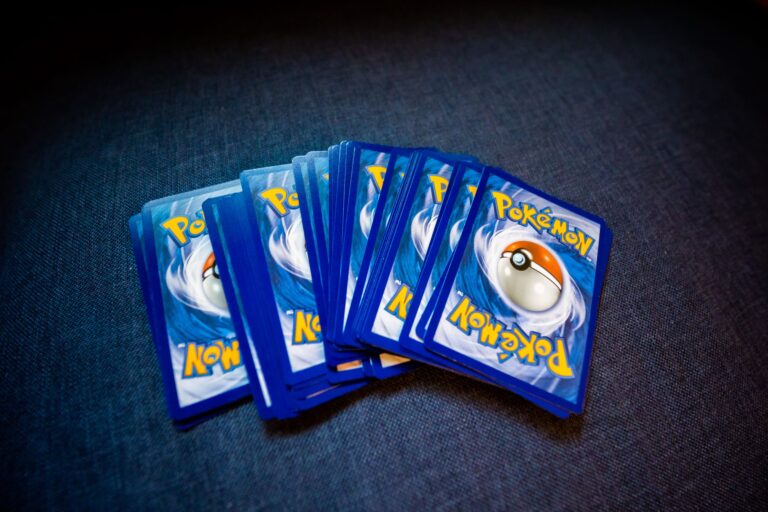
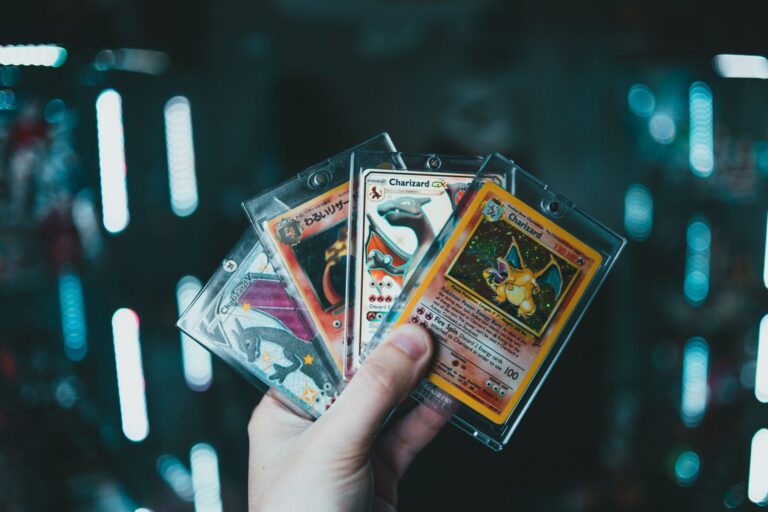
Base Set Charizard remains a powerful force in the vintage Pokémon card market, but it is no longer the sole driver of demand or value. While a Japanese Base Set Charizard just set an all-time record at $1,700,000 in March 2026 and a 1st Edition American version sold for $550,000 in December 2025, the Pikachu Illustrator card holds the top position at $16,492,000. The market has evolved beyond single-card dominance.
Collectors and investors now distribute demand across multiple high-value vintage cards, with Charizard functioning as a cornerstone asset rather than the primary engine of the entire market. The data reveals a more nuanced picture than headlines suggest. Charizard’s cultural significance and relative scarcity have made it an anchor point for pricing benchmarks, but other vintage cards—particularly Gold Stars from the EX era and rare Japanese promos—are now driving comparable or stronger appreciation. The vintage Pokémon market has matured from 2020 to 2026, diversifying away from single-card obsession into a broader ecosystem where multiple rarities compete for collector capital.
Table of Contents
- What Factors Keep Base Set Charizard a Top Performer?
- How Charizard’s Market Position Compares to Other Vintage Cards
- Record-Breaking Sales and What They Signal
- Investment Returns and Risk Assessment for Modern Buyers
- Market Saturation and the Risk of Charizard Oversupply
- Charizard’s Role in Diversified Vintage Collections
- The Future Role of Base Set Charizard in Vintage Pokémon Markets
- Conclusion
- Frequently Asked Questions
What Factors Keep Base Set Charizard a Top Performer?
base Set Charizard’s enduring appeal stems from three irreplaceable advantages: extreme scarcity, cultural iconography, and baseline investment stability. Only 122 examples of the 1st Edition PSA 10 version exist in circulation—a supply constraint that keeps prices elevated even as new collectors enter the market. The character itself has remained Pokémon’s visual ambassador for three decades, creating demand from both serious investors and casual fans willing to overpay for nostalgic value. Pricing stability is another reason Charizard retains appeal.
A 1st Edition Base Set Charizard commands $3,000–$6,000 in the current market, while the unlimited version sits at $300–$500. Analysts project 8–12% annual appreciation for PSA 9–10 specimens under normal market conditions. These are modest but predictable returns, which attract risk-averse collectors who might avoid more volatile cards. However, this stability also means Charizard rarely produces explosive 50–100% gains anymore. The card has matured as an asset class.

How Charizard’s Market Position Compares to Other Vintage Cards
When comparing Charizard to other blue-chip vintage cards, the hierarchy becomes clear. Pikachu Illustrator dominates at $16,492,000, making Charizard’s $1.7 million record look modest by comparison. Blastoise 1st edition commands similar demand drivers as Charizard—cultural weight and Base Set pedigree—yet data from 2026 shows Blastoise appreciating faster in certain PSA grades. Gold Stars from the EX era, though less culturally iconic, are showing 30–50% annual appreciation, outpacing Charizard’s projected 8–12% baseline. This diversification represents a market correction.
Between 2020 and 2025, spending on non-sports trading cards surged 350%, but that influx of capital didn’t concentrate exclusively on Charizard. Instead, it spread across the entire vintage ecosystem. Collectors learned that chasing a single card—even an iconic one—leaves money on the table. A warning: newer collectors often assume Charizard’s historical dominance guarantees future returns, but the market data suggests complacency. Cards like Japanese Blastoise and rare Gold Stars now offer better risk-adjusted returns for patient investors.
Record-Breaking Sales and What They Signal
The $1.7 million Japanese Base Set Charizard sale in March 2026 made headlines, but context matters. This sale occurred during Pokémon’s 30th-anniversary year, when analysts projected 30–50% appreciation across the entire vintage segment. The buyer was likely capitalizing on anniversary hype rather than discovering new demand fundamentals. The $550,000 December 2025 sale for a 1st Edition American version followed a similar pattern—strong but not unprecedented for a card that had already commanded five-figure sums.
What’s revealing is where Charizard record sales fit within the broader vintage market. The Pikachu Illustrator, which sold for $16.4 million, effectively sets a ceiling that Charizard cannot approach. Japanese Blastoise 1st Edition sales have sometimes exceeded American Charizard equivalents, signaling that collectors view scarcity and artistic significance differently than market commentators assumed. These record sales function more as marketing touchstones than evidence of Charizard’s market dominance. They attract media attention and casual interest, but serious collectors track steady-state pricing, not once-in-a-decade auctions.

Investment Returns and Risk Assessment for Modern Buyers
For investors entering the Charizard market in 2026, the risk-return profile is less compelling than 2020–2023. A 1st Edition PSA 10 at $3,000–$6,000 with projected 8–12% annual gains delivers predictable wealth accumulation, but it demands significant capital for modest returns. A $5,000 investment growing 10% annually yields $500—solid but unexciting compared to emerging alternatives like Gold Stars, which offer 30–50% potential at lower price points. The tradeoff is stability versus upside.
Charizard buyers sacrifice explosive growth potential in exchange for cultural staying power and broad collector interest. If the vintage card market contracts, Charizard will hold value better than obscure rares simply because demand for it is global and multi-generational. However, that same broad appeal means new Charizards are constantly entering the market through sealed product breaks and lost collections, which creates subtle supply pressure that rarer cards avoid. Investors should view Charizard as a core holding, not an outsized growth bet.
Market Saturation and the Risk of Charizard Oversupply
A critical limitation facing Charizard collectors is awareness of how many examples actually exist. With 122 PSA 10s in circulation, the card is rare but not impossibly scarce. Sealed Base Set booster boxes have appreciated dramatically, meaning collectors periodically crack packs, pull Charizards, and submit them for grading. Each new 8, 9, or 10 adds supply that keeps mid-grade examples from becoming extinct. This differs sharply from true one-of-one or ultra-limited cards, which benefit from mathematical scarcity that can never increase.
Additionally, the vintage card market’s 350% growth between 2020 and 2025 attracted graders, authenticators, and entire PSA factory operations to increase throughput. This means older ungraded Charizards are steadily flowing into the market. While PSA 10 examples remain rare, the influx of 8s and 9s suppresses price appreciation across the board. A warning: collectors betting on Charizard as inflation protection should monitor PSA population reports quarterly. If population growth accelerates, entry prices may face downward pressure despite cultural demand remaining constant.
Charizard’s Role in Diversified Vintage Collections
Seasoned collectors treat Charizard as a portfolio cornerstone, not a standalone investment. A diversified vintage approach includes Charizard alongside Pikachu promos, Blastoise, Dark Charizard, and Japanese holos that collectively spread risk. This strategy reflects the market reality: no single card drives all vintage demand anymore. Charizard’s value proposition lies in its stability and recognition, which reduces the cognitive burden of explaining holdings to non-collectors.
In practice, a $10,000 vintage investment might allocate $4,000–$5,000 to Charizard (covering a solid 1st Edition PSA 8 or 9), with the remainder split across complementary cards. This approach captures Charizard’s brand value while accessing faster-appreciating assets. The limitation is complexity—diversification requires deeper market knowledge and authentication expertise. Single-card collectors benefit from simplicity; diversified approaches require ongoing monitoring and rebalancing.
The Future Role of Base Set Charizard in Vintage Pokémon Markets
Looking forward, Base Set Charizard will likely remain a top-tier vintage asset but will continue losing market share to specialized segments. As Pokémon TCG releases new rarities and artists create new cultural moments, younger collectors will develop attachments to cards beyond the original 1995 lineup. Charizard’s dominance was partly an artifact of being the most visible vintage card for 15 years; that window is closing.
Analysts projecting 30–50% appreciation during 2026’s anniversary year essentially expect Charizard to participate in broader market enthusiasm rather than lead it independently. By 2027, when anniversary effects fade, Charizard’s long-term growth rate will likely revert to the 8–12% baseline, matching inflation and modest equity returns. This isn’t failure—it’s maturation. The card will remain valuable, but it will function as one major asset class among several rather than the primary engine of the entire vintage market.
Conclusion
Base Set Charizard is still a main driver of vintage Pokémon demand, but it shares that role with Pikachu Illustrator, Blastoise, Gold Stars, and other rare vintages. The market has evolved from single-card obsession into a diversified ecosystem where multiple rarities attract capital simultaneously. Record sales like the $1.7 million Japanese example capture attention but obscure the underlying trend: demand is spreading, not concentrating.
For collectors and investors, the takeaway is straightforward: Charizard remains a core holding for its stability and recognition, but it should not be a sole investment. Portfolio construction should acknowledge Charizard’s maturation as an asset class while exploring faster-appreciating alternatives. The vintage Pokémon market in 2026 rewards diversification and selective focus on emerging high-demand segments rather than nostalgic concentration on a single card, however iconic.
Frequently Asked Questions
Is Base Set Charizard still a good investment in 2026?
Yes, but with realistic expectations. A PSA 9–10 at $3,000–$6,000 offers 8–12% annual appreciation and cultural stability. It’s suitable for long-term wealth preservation, not explosive short-term gains. Pair it with faster-appreciating cards like Gold Stars for balanced returns.
Why did the Japanese Base Set Charizard sell for $1.7 million if Charizard isn’t the main driver?
That sale benefited from 30th-anniversary hype and the buyer’s preference for Japanese printing. Pikachu Illustrator still holds the all-time record at $16.4 million, indicating Charizard’s secondary status in true top-tier pricing.
How many PSA 10 Base Set Charizards exist?
Only 122 examples of the 1st Edition version are in circulation. This scarcity keeps prices elevated but is not unprecedented compared to other blue-chip vintages.
Will Charizard prices keep rising?
Analysts project 8–12% annual appreciation under normal conditions and 30–50% during 2026’s anniversary year. After 2026, growth will likely normalize to historical rates as anniversary effects fade.
What cards are outperforming Charizard?
Pikachu Illustrator leads at $16.4 million. Gold Stars from the EX era show 30–50% annual appreciation, exceeding Charizard’s baseline. Japanese Blastoise and other rare vintages also show comparable or stronger performance.
Should I buy a Charizard or look for alternatives?
Include Charizard for stability and recognition, but diversify into Gold Stars and other high-demand vintages for better risk-adjusted returns. A 40–50% allocation to Charizard within a broader vintage portfolio is typical for balanced collectors.