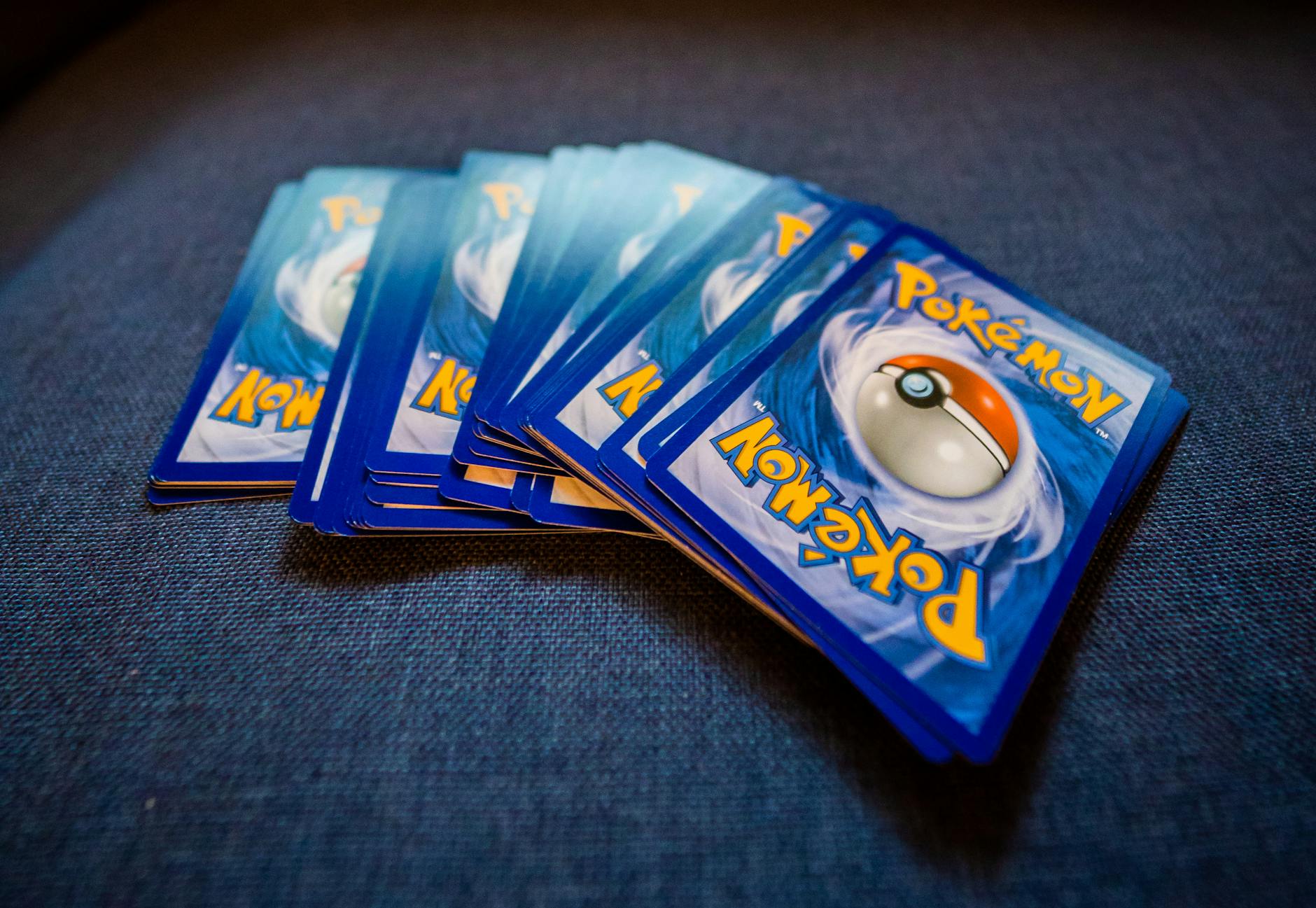
Shadowless Pokémon cards have become the gateway between affordable vintage cards and elite collectibles that command six-figure prices. These cards lack the subtle drop shadow that frames the artwork on all subsequent Pokémon TCG printings, making them visually distinct and historically significant as among the earliest cards ever produced. A PSA 10 Shadowless Charizard sold for $550,000 in December 2025, while prices for near-mint ungraded versions can reach $1,000—putting serious shadowless cards within reach of collectors with genuine budgets, not just billionaire-level wealth. If you’re watching prices rise and wondering what drives that value, or whether shadowless cards belong in your collection, understanding their history and market position is essential.
The appeal is straightforward: shadowless cards represent the starting point of the entire Pokémon Trading Card Game. They were produced during only the first two print runs of the Base Set in early 1999, creating an inherently limited supply. They’re rarer than the Unlimited version that came later, but more accessible than the even scarcer 1st Edition cards. For collectors entering the vintage market, shadowless cards offer a rare combination of historical authenticity, genuinely limited availability, and prices that reward quality without requiring seven-figure budgets.
Table of Contents
- What Exactly Are Shadowless Pokémon Cards and How Do You Identify Them?
- Why Shadowless Cards Command Such Premium Prices Compared to Later Printings
- The Charizard Phenomenon: Why One Card Dominates Shadowless Pricing
- How to Identify and Grade Shadowless Cards: A Practical Guide for Collectors
- The Condition Trap: Why Shadowless Cards Reward Quality Over Quantity
- Market Trends: The 2026 Rebound and Price Projections Ahead
- Building a Shadowless Collection Strategy for 2026
- Conclusion
What Exactly Are Shadowless Pokémon Cards and How Do You Identify Them?
The defining visual characteristic is right in the name: shadowless cards have no drop shadow around the frame of the artwork. On every subsequent print run of the base Set and beyond, Pokémon printed a subtle dark shadow border around the card’s image to add depth. The very first cards printed—and the second print run—came without this detail. It’s a small feature, but one that becomes obvious once you know what you’re looking for. Hold a shadowless Charizard next to a later Base Set printing, and the difference is immediately apparent. Shadowless cards came from the first two print runs of Base Set in early 1999, a narrow production window that lasted just weeks. After those initial runs sold out, Pokémon switched to the shadowless-free unlimited printings that would continue for months.
This timing created a natural rarity checkpoint: anyone who bought Base Set cards late in 1999 or in 2000 would have gotten unlimited cards. You only got shadowless if you were buying from the very first shipments. The rarity hierarchy goes 1st edition (stamped on the card, extremely rare) at the top, then shadowless versions, then unlimited versions. A shadowless card is more valuable than an unlimited version of the same card, but typically costs significantly less than a 1st Edition copy of that same card—making it the middle ground. Beyond the visual detail, shadowless cards have no other mechanical difference from unlimited cards. The text is the same, the artwork is identical, and they function exactly the same way in play. The difference is pure history and scarcity. That rarity is almost entirely driven by the accident of production timing rather than any quality difference, which appeals to collectors who want authentic vintage cards without paying for the extreme premium of 1st Edition.
Why Shadowless Cards Command Such Premium Prices Compared to Later Printings
Shadowless cards carry the weight of being the earliest mass-market version of Pokémon’s entire trading card game. They represent the literal beginning of the TCG hobby when it was still ramping up and before anyone understood that Base Set cards would become the most sought-after vintage collectible in the card world. That historical significance translates directly into collector demand and prices. A shadowless Charizard isn’t just a card with a rare printing variant—it’s one of the first Charizards printed in the entire history of the game. The limited production window is the main driver. Unlike cards printed months or years apart, shadowless cards came from only the first two print runs over a matter of weeks. That constraint creates genuine scarcity. PSA, the major grading company, has certified far fewer shadowless cards in high condition compared to unlimited versions—not because shadowless cards were better preserved, but because fewer were ever printed. When you add in the natural wear from 25 years of storage, that gap widens further.
A PSA 10 shadowless card is meaningfully harder to find than a PSA 10 unlimited card of the same print, and the market prices reflect that difference. Condition creates the most dramatic price impact. A PSA 9 shadowless Charizard sits in the $50,000 to $80,000 range. Jump one point to PSA 10, and the same card hits around $550,000. That’s not a small premium—it’s an exponential leap. The reason is straightforward: perfect or near-perfect shadowless cards from 1999 are extremely hard to find. Most cards from that era show some wear, yellowing, or corner rounding. When you find a shadowless card that has survived 25+ years virtually untouched, collectors will pay serious premiums. The grading difference can mean the card was stored away immediately versus being played with or handled casually.
The Charizard Phenomenon: Why One Card Dominates Shadowless Pricing
Charizard is the dominant shadowless card by a wide margin, and the reasons are both practical and cultural. Charizard is one of the most famous Pokémon from the original generation, immediately recognizable, and heavily featured in the first anime series. When casual collectors think of vintage Pokémon cards, Charizard is often the first card that comes to mind. That popularity translates into demand that outpaces almost every other Base Set card by a factor of ten or more. Recent auction results illustrate the magnitude. In December 2025, a PSA 10 1st Edition Shadowless Charizard sold for $550,000 at auction. Logan Paul, the YouTuber and investor known for high-profile card purchases, bought a Shadowless Charizard for $954,800.
These aren’t outlier prices driven by hype—they represent active market transactions. Even more striking, a Japanese No Rarity Charizard graded PSA 10 sold for $1,700,000 in 2026, becoming the first Charizard ever to exceed $1 million at public auction. The Japanese version is rarer still, but the principle holds: high-grade Charizards command prices that dwarf other shadowless cards. For new collectors, this creates both opportunity and risk. Charizard’s fame means demand is always strong, which can protect your investment. It also means Charizard prices have been driven high enough that near-mint ungraded versions can cost $1,000 or more. If your goal is to own a shadowless card but you want to start with a lower-priced entry point, other Base Set shadowless cards like Blastoise, Venusaur, or Mewtwo offer genuine vintage rarity at a fraction of Charizard’s cost. You’re trading fame for value, which isn’t always a bad trade.

How to Identify and Grade Shadowless Cards: A Practical Guide for Collectors
The shadowless identification test is simple but requires a careful eye. Look at the artwork frame on the card. Does it have a dark border shadow beneath and to the right of the image? If yes, it’s not shadowless—it’s a later printing. If the frame has crisp edges with no shadow effect, you’re looking at either a 1st Edition shadowless or an unlimited shadowless. The visual distinction between shadowless and unlimited is exclusively the drop shadow around the artwork. Everything else—set symbol, text, layout—is identical. To distinguish 1st Edition from shadowless, you need to look at the stamp on the lower right of the card, just above the illustrator credit. 1st Edition cards have a stamp showing “1st Edition” in a circle.
Shadowless and unlimited cards have no edition stamp at all. This stamp is your clearest marker. The shadowless cards are genuinely harder to identify than 1st Edition because they require you to notice what’s missing—the shadow detail—rather than what’s added. Condition is where the real complexity enters. Professional grading through PSA, BGS, or CGC has become essential for shadowless cards above a certain price. A PSA 9 and PSA 10 can represent the difference between $50,000 and $550,000 on a Charizard. The grading scale looks at centering (how the image sits on the card), corner wear, edge wear, and surface condition. For newer collectors, having a professional grade backing up your card is worth the cost on any shadowless card you plan to hold long-term. Without a grade, you’re relying on your own eye and condition assessment, which is reasonable for lower-value cards but risky for high-stakes purchases.
The Condition Trap: Why Shadowless Cards Reward Quality Over Quantity
This is the critical lesson for new collectors: condition is not a luxury detail with shadowless cards—it’s the entire investment story. A shadowless Charizard in moderate condition might cost $500 or $1,000 ungraded. The same card in near-mint condition, once professionally graded, could be worth $50,000. You’re not buying a slightly nicer version of the same card; you’re buying access to a different market tier entirely. The danger is assuming you can buy a lower-grade shadowless card and hold it while waiting for prices to rise. That only works if the market for that grade is active. A PSA 6 or PSA 7 shadowless card might sit for years without much price appreciation because the real collector demand is concentrated in PSA 8, 9, and 10. You can end up holding inventory that doesn’t move. The opposite risk is overpaying for condition you don’t need.
If you’re collecting shadowless cards as historical pieces rather than investment vehicles, a lower-graded card still represents the same 1999 production run and the same historical significance. You’re paying for perfect preservation, not historical content. Storage becomes critical once you own shadowless cards. These cards are fragile. Exposure to light causes yellowing. Humidity and temperature swings cause warping and peeling. If you’re investing serious money in shadowless cards, you need proper storage: dry, cool conditions, in card sleeves and storage boxes designed for long-term holding. Casual storage in a shoebox or binder will deteriorate the card and destroy any investment premium. This is why PSA grading matters—the slab protects the card from further damage.
Market Trends: The 2026 Rebound and Price Projections Ahead
The Pokémon card market went through a boom-and-bust cycle from 2020 to 2022. Prices skyrocketed, speculation flooded in, and then the market crashed when it became clear demand had cooled. By 2023 and early 2024, the market stabilized at more sustainable levels. Now in 2026, vintage Base Set cards are experiencing a genuine rebound, not driven by hype but by serious collectors and investors returning to the market with clearer heads. The data is concrete. Vintage 1st Edition cards are projected for 30 to 50 percent appreciation through the rest of 2026. Base Set-era cards have already appreciated 15 to 25 percent heading into Pokémon’s 30th anniversary celebration planned for 2026. Shadowless cards specifically are benefiting from this trend because they sit in the sweet spot of historical significance and actual scarcity.
They’re more accessible than 1st Edition but rarer and more historically important than unlimited cards. For collectors entering the market now, the timing actually favors buying vintage shadowless cards before the 30th anniversary hype fully kicks in. What’s driving this rebound is fundamentally different from 2021. In 2021, speculators were buying boxes of newly printed cards hoping to flip them for profit. That created a bubble. In 2026, the demand is from collectors genuinely interested in owning early Pokémon TCG history. Shadowless cards have limited supply that can’t be expanded—Pokémon isn’t going to print more shadowless Base Set cards. That scarcity combined with steady collector demand creates a much healthier foundation for prices than speculation-driven markets.
Building a Shadowless Collection Strategy for 2026
For new collectors deciding whether shadowless cards fit their collection strategy, the question isn’t really about Charizard versus other cards—it’s about deciding what you’re actually collecting for. If you want iconic Pokémon cards at the most affordable entry point possible, shadowless cards offer that combination better than 1st Edition while maintaining genuine historical weight. If your budget is $2,000 to $5,000, you can assemble a meaningful shadowless collection of multiple different cards. That same budget in 1st Edition gets you maybe one card. The forward-looking insight is that shadowless cards are unlikely to decline in value over the next 5 to 10 years.
The supply is fixed at production numbers from 1999. Demand from collectors is stable and growing as more people learn about the card hobby. The worst case scenario is that shadowless cards plateau at current prices. The realistic case is continued appreciation as collectors become more sophisticated about vintage rarity and as older cards become genuinely harder to find in higher grades. The 30-50 percent appreciation projections for 1st Edition suggest shadowless cards, as the next tier down, will see proportional appreciation.
Conclusion
Shadowless Pokémon cards explain themselves through simple logic: they’re historically significant as the earliest versions of the TCG, genuinely scarce from a limited production window in 1999, and valuable in proportion to their rarity and condition. New collectors watching prices rise should understand that most of the current market value is concentrated in cards graded PSA 9 and PSA 10—the perfect or near-perfect examples that are genuinely difficult to find. Starting with an ungraded lower-condition shadowless card is a reasonable way to own a piece of Pokémon history, but if you’re planning to invest serious money, condition becomes the dominating factor in your returns.
The best approach is to buy shadowless cards you actually like looking at, with condition as good as your budget allows, and hold them long-term. The market for vintage shadowless cards is stable and appreciating. Whether you’re collecting Charizard or building a diverse collection of shadowless Base Set cards, you’re buying something with 25 years of proven demand and a fixed supply that only becomes scarcer as years pass. That’s a more defensible investment than almost any other card category, and it comes with the added benefit of owning cards from the very beginning of the Pokémon TCG era.
You Might Also Like
- Why Base Set Pokemon Card Prices Are Moving Again in 2026
- Are Base Set Pokemon Cards Still the Safest Vintage Pokemon Bet?
- The Pokémon TCG Cards With Exploding Prices This Week – 05/24/2026