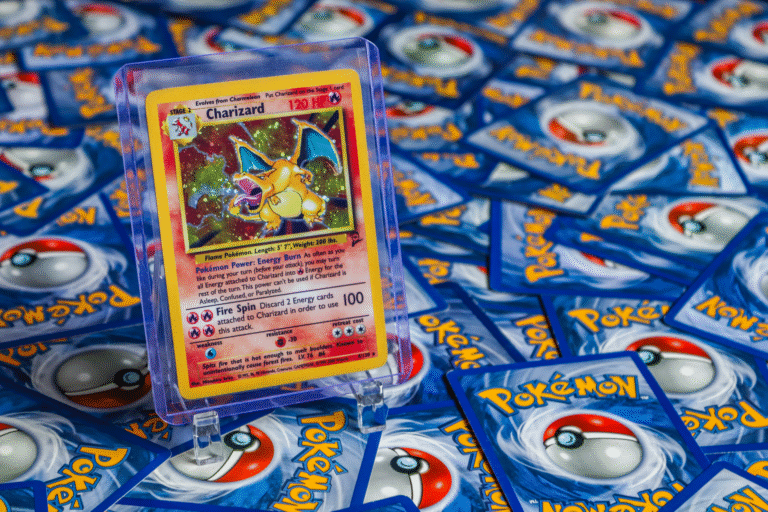
Demand for Australian Base Set cards during the 2026 vintage rebound is undeniably strong, though it operates in a fundamentally different market landscape than the speculative frenzy of 2020–2022. The market has matured into what analysts describe as “healthy consolidation,” where sustained collector interest and franchise momentum—rather than speculation alone—drive prices upward. A Base Set Charizard in gem-mint condition (PSA 10) currently fetches $8,000–$14,000 AUD, and vintage booster boxes have doubled in price from $12.80 in 2023 to $25.26 in 2025, reflecting genuine collector appetite rather than panic buying.
The demand is real, measurable, and underpinned by specific market catalysts entering 2026. Pokémon’s 30th anniversary celebration and McDonald’s reintroduction of Pokémon TCG Happy Meals have rekindled mainstream interest, while Australian collectors benefit from a stable domestic market with consistent pricing infrastructure. This is not the explosive, unsustainable growth of the pandemic era—it is a more grounded rebound built on actual collecting demand and investment fundamentals.
Table of Contents
- How Strong Is the Actual Collector Demand?
- What’s Driving the Vintage Rebound in 2026?
- The Australian Base Set Market—Unique Dynamics and Pricing Gaps
- Investment Potential Versus Collecting for Pleasure—Diverging Pathways
- Market Maturation and Hidden Risks in a Consolidated Market
- Grading and Condition—The Premium Pyramid in Australian Collecting
- Forward Outlook—Will Demand Sustain Beyond 2026?
- Conclusion
How Strong Is the Actual Collector Demand?
Collector demand remains robust across all segments of the australian Base Set market, with the most telling indicator being consistent price momentum rather than volatility. Shadowless Base Set holo rares—a foundational collecting category—trade at $200–$900 AUD in Near Mint condition, a range that has held relatively steady through 2025 and into early 2026. This stability matters because it suggests real buyers, not traders chasing quick flips. The market is neither collapsing nor entering another bubble; it is consolidating around fair-value pricing determined by collectors who actually want to own these cards. The demand split between Australian and international buyers has shifted noticeably.
Where overseas collectors once dominated Australian Base Set purchases, the local market has strengthened significantly. More Australian collectors are building collections rather than trading purely for investment, which has anchored prices and reduced the volatility seen during 2021–2022. This domestic appetite is particularly pronounced for shadowless and first-edition variants, which are traditionally scarcer in the Australian market than elsewhere in the Commonwealth. A practical warning: demand strength can mask liquidity challenges. A PSA 10 Charizard at $12,000 may be in high demand, but finding a buyer at that exact price point on any given week is different than having immediate market liquidity. Collectors chasing top-tier cards should expect longer sell times than casual vintage hobby participants.

What’s Driving the Vintage Rebound in 2026?
Two major catalysts are propelling the 2026 vintage rebound: Pokémon’s 30th anniversary milestone and the strategic return of Pokémon TCG to McDonald’s Happy Meals. The 30th anniversary has triggered renewed nostalgia among millennial collectors who originally collected Base set cards in the late 1990s, many of whom have disposable income and are re-entering the hobby as adults. This demographic shift has strengthened the collector base with serious buyers rather than speculative traders, which explains the market’s resistance to price crashes that plagued 2023. The McDonald’s revival is particularly important for market momentum, though its direct impact is somewhat misunderstood. The modern reprints available through Happy Meals are not driving demand for vintage Base Set cards directly; instead, they create a cultural “Pokémon moment” that reminds broader audiences of the franchise’s historical significance.
This cultural wave benefits vintage collectors indirectly by attracting new entrants into the TCG hobby, some of whom eventually graduate from modern products to seeking authentic 1990s originals. The effect is real but gradual—it inflates interest rather than immediately spiking Base Set prices. A significant limitation worth noting: these catalysts are time-bound. The 30th anniversary is a one-time event, and McDonald’s promotional windows typically last 3–4 months per region. Collectors should not assume current demand momentum will sustain indefinitely once these marketing pushes conclude. Historical precedent suggests secondary dips after major promotional events end, though the underlying collector base may prevent the market-wide collapse seen after 2021.
The Australian Base Set Market—Unique Dynamics and Pricing Gaps
The Australian Base Set market operates with distinct pricing characteristics compared to North American or international markets, primarily due to supply scarcity and regional collector demographics. Australian sealed Base Set product (booster boxes and unlimited editions) has historically been rarer than US stock, which creates natural price premiums when high-quality examples surface. The 100% price increase in vintage base Set booster boxes from $12.80 in 2023 to $25.26 in 2025 reflects both global market rebound and Australian-specific supply constraints. Australian collectors face a unique situation: access to shadowless variants is limited compared to other Commonwealth markets, and certification through PSA by Australian graders requires international shipping or third-party domestic agents.
This friction has elevated prices for locally-graded examples but also created opportunities for astute buyers willing to purchase raw cards and submit for grading. The PSA backlog issues of 2021–2023 have largely resolved, making the grading pathway more accessible for Australian collectors seeking authentication on their Base Set holdings. A practical comparison: an Australian collector might pay 15–20% more for a shadowless holo rare than a collector in the United States, simply due to regional scarcity. This is not necessarily a negative—it reflects real market conditions—but collectors should account for this premium when evaluating whether to purchase domestically versus importing internationally.
Investment Potential Versus Collecting for Pleasure—Diverging Pathways
The 2026 vintage rebound has created an unusual bifurcation: pure investment interest and genuine collecting interest are no longer perfectly aligned. High-grade Base Set cards (PSA 9–10) are projected to appreciate 15–25% annually, which attracts investment capital, but this rate of appreciation assumes ongoing demand and scarcity. Meanwhile, collectors seeking to acquire cards for personal enjoyment face a different calculus—they care less about future resale value and more about enjoying the cards at current market prices. For investors, the Australian Base Set market presents a tradeoff. Prices have risen substantially, compressing the margin-of-safety window that made purchases in 2023–2024 attractive.
A Base Set Charizard purchased at $8,000 must appreciate predictably for the investment thesis to outperform alternative asset classes. For collectors, this is largely irrelevant—they benefit from stable pricing that signals market health, and they can make purchasing decisions based on their personal interest rather than speculative timing. The key distinction: buyers entering the market in 2026 should clarify their intent. Investors should model scenarios where 15–25% annual growth does not materialize (particularly if McDonald’s and the 30th anniversary catalysts fade), while collectors can focus on finding cards they genuinely want at current market prices without worrying about future appreciation. Mixing these frameworks is where collectors often stumble—overpaying for investment potential they didn’t intend to capture.
Market Maturation and Hidden Risks in a Consolidated Market
The current Australian Base Set market is qualitatively different from 2020–2022 in ways that reduce catastrophic downside but also constrain explosive upside. The speculative frenzy has passed; buyers entering now are primarily genuine collectors and experienced investors, not casual social-media-driven speculators. This maturation has created a stable floor, but it has also absorbed much of the profit-taking opportunity that made early entrants wealthy. A critical warning: the market’s health depends on sustained engagement from the collector base. If the Pokémon 30th anniversary momentum fades without being replaced by a new cultural catalyst (e.g., a hit Pokémon media release or sustained mainstream interest), demand could soften.
Australian collectors should not assume current pricing is a permanent baseline—consolidation can shift downward as easily as upward if collector engagement declines. High-grade sealed product is more vulnerable to this scenario than graded singles, because sealed product is purely speculative (the cards inside have unknown condition), whereas a PSA 10 card is tied to tangible collector demand. Liquidity remains a secondary concern. While demand is strong, selling a $10,000+ Base Set card in the Australian market may require international listing (eBay, Heritage Auctions) to access the full buyer pool. Local sales are possible but often slower and subject to wider price negotiation.

Grading and Condition—The Premium Pyramid in Australian Collecting
Condition premiums in the Australian Base Set market follow international standards but with distinct local flavor. A Near Mint shadowless holo rare at $200–$900 AUD represents a broad range, with PSA 8 examples at the lower end and PSA 9 examples approaching the upper bound. The jump from PSA 9 to PSA 10 is where prices compress dramatically—the Charizard example ($8,000–$14,000 for PSA 10) is partly supply-constrained by the sheer rarity of gem-mint Base Set cards that have survived 25+ years.
For Australian collectors, this creates an actionable insight: PSA 8 and PSA 9 cards often offer better value per unit of collector enjoyment than PSA 10 specimens. A PSA 9 Base Set Charizard might represent 70–80% of the visual experience of a PSA 10 at 40–50% of the cost. This is a legitimate strategic choice for collectors with fixed budgets, though it does sacrifice some investment upside if the card is ever resold.
Forward Outlook—Will Demand Sustain Beyond 2026?
The sustainability of Australian Base Set demand hinges on two factors: the continuing appeal of 30th anniversary messaging (which naturally fades through late 2026) and the broader cultural momentum of Pokémon TCG as a hobby. If either stalls, demand will likely contract to pre-2026 levels. However, the structural shift toward genuine collector interest (rather than speculation) suggests that any contraction will be modest compared to 2022–2023, when speculative money evaporated overnight.
Looking ahead, Australian Base Set cards are likely to occupy a stable niche within the broader TCG investment landscape. Vintage product is inherently scarce, and as sealed supply dwindles, graded singles will become the primary collectible form. The 15–25% annual appreciation projection may not hold universally, but selective examples (first-edition shadowless, PSA 9+ specimens) are likely to maintain collector value over multi-year timeframes. Collectors entering in 2026 should do so with the understanding that this is a mature market offering stability rather than explosive returns.
Conclusion
Demand for Australian Base Set cards during the 2026 vintage rebound is strong and sustainable, driven by genuine collector interest rather than speculative momentum. The doubling of booster box prices from $12.80 to $25.26, paired with steady pricing in the $200–$900 range for shadowless holo rares and $8,000–$14,000 for gem-mint Charizards, reflects a market in healthy consolidation.
This is fundamentally different from the unsustainable bubble of 2020–2022, and it carries the advantage of stability alongside the limitation of moderated upside potential. Australian collectors and investors entering the market should distinguish between collecting and investment intent, account for the time-bound nature of current catalysts (30th anniversary, McDonald’s revival), and recognize that while demand is strong today, it depends on sustained cultural momentum from the Pokémon franchise. For those with a long-term perspective, Australian Base Set cards remain a substantive collectible asset; for those seeking rapid appreciation, the market has largely priced in the easy gains.