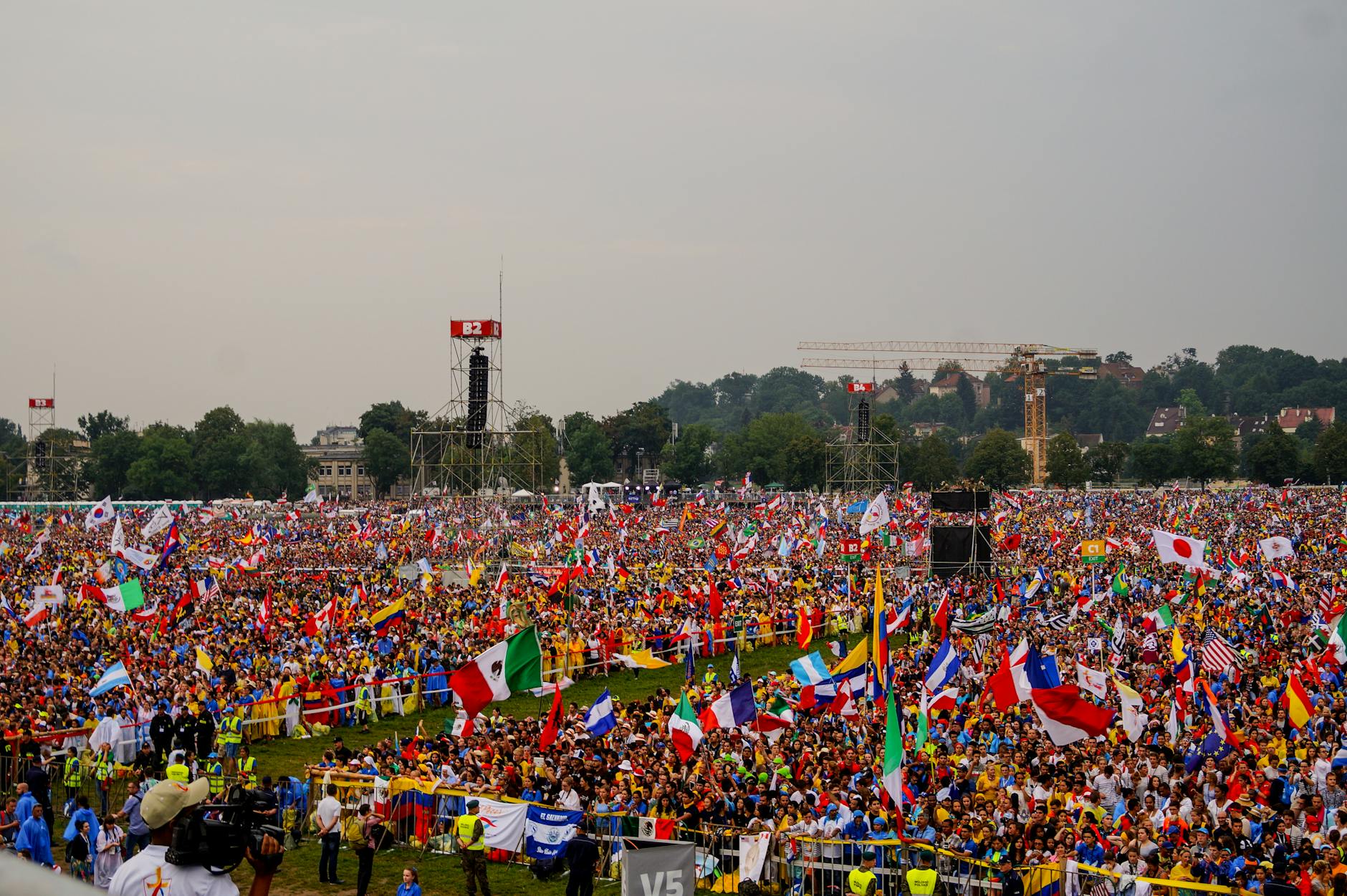
Pokémon Worlds transformed from a niche competitive tournament into a hybrid convention-esports phenomenon by embracing broader fan culture rather than restricting itself to tournament play alone. Starting as an exclusive championship for the best players, the event expanded over decades to include trading, artist signings, product launches, casual play areas, and entertainment stages—blurring the line between competitive sports venue and pop culture festival.
This shift happened gradually through the 1990s and 2000s as The Pokémon Company recognized that the majority of attendees came for the experience and community, not just the competitive matches. The 2023 Pokémon World Championships in Yokohama exemplifies this hybrid model: the event drew over 30,000 attendees across multiple days, with dedicated competition halls running simultaneously to vendor areas, arcade zones, and main-stage entertainment featuring collaborations with local cultural institutions. This expansion wasn’t a forced corporate decision but a response to what fans actually wanted—the same people collecting cards were also curious about competitive play, merchandise launches, and meeting other collectors.
Table of Contents
- When Did Pokémon Worlds Shift From Tournament to Festival?
- How the Competition Floor Became Central Theater Rather Than Closed Competition
- Merchandise, Artist Signings, and the Vendor Hall as Economic Driver
- Balancing Competitive Integrity With Festival Accessibility
- Managing Crowds, Accessibility, and Health Risks
- How Regional Qualifiers Became Minor Tournaments With Major Perks
- The Future of Pokémon Worlds as Esports Meets Pop Culture
- Conclusion
When Did Pokémon Worlds Shift From Tournament to Festival?
The pivot accelerated between 2010 and 2015 as The pokémon Company recognized that limiting Worlds to a closed competitive event left money and community engagement on the table. Prior to 2010, Pokémon Worlds was primarily an invitational championship for regional champions and top-ranked players, held in exclusive hotel ballrooms with spectator seating roped off from the competition floor. The turning point came when regional qualifier events began growing exponentially—parents attending to watch their children play started asking when they could shop, get cards signed, or watch live matches on screens rather than being confined to overflow rooms.
By 2015, Pokémon Worlds had evolved into what The Pokémon Company called the “Pokémon World Championships Experience,” explicitly acknowledging that the tournament itself was one attraction among many. The Boston location that year featured a separate vendor hall, a “Professor’s Lab” teaching area, and scheduled artist signings—generating revenue from attendees who had no intention of competing but wanted to participate in the broader event. This model proved so successful that it became the template for every subsequent World Championships.
How the Competition Floor Became Central Theater Rather Than Closed Competition
The tournament structure itself didn’t change, but the presentation did. before 2015, competitors played at standard tables with minimal spectator access; after 2015, feature matches moved to elevated stages with large video screens, commentary, and live audience seating. This required redesigning the physical space and training commentary teams that could make card game decisions understandable to people watching their first Pokémon match.
A significant limitation of this approach emerged quickly: the noise and distraction from crowds affected player concentration during critical matches. The Pokémon Company addressed this by separating the “feature” matches—broadcast to audiences and commentary teams—from the “standard” matches played in quieter sections. Top-ranked players appreciated the spectacle when they were on the main stage, but unknown or newer competitors complained about unequal conditions. The 2019 World Championships in Washington, D.C., formalized this by explicitly seeding the tournament so that featured matches featured higher-ranked players, though this created backlash from some competitors who felt predetermined narrative was replacing merit-based competition structure.
Merchandise, Artist Signings, and the Vendor Hall as Economic Driver
The merchandise experience at Worlds evolved alongside the tournament itself. Early iterations featured official Pokémon Company merchandise stands selling booster boxes and promotional products, but by 2015, the event had opened vendor floors to independent card sellers, artist booths, and third-party manufacturers. The 2022 London Worlds included over 80 vendor booths spanning multiple halls, with card dealers reporting that Worlds weekend generated 15-20% of their annual revenue in a single event.
Artist signings became unexpectedly popular—illustrators whose card artwork had appeared in Pokémon TCG sets could command lines of 50-100 people waiting for autographs and sketches. High-end graded cards, rare vintage PSA 10s, and limited printings moved during Worlds at prices 30-50% higher than normal market rates, creating a secondary market phenomenon around the event itself. A warning emerged here: aggressive resellers buying up stock and flipping it created price spikes that excluded casual collectors from accessing new product at fair prices, and several Worlds venues tightened vendor regulations to prevent bulk buying by speculative retailers.
Balancing Competitive Integrity With Festival Accessibility
One practical challenge became apparent: how do you run a serious world championship while simultaneously operating a family-friendly convention? The Pokémon Company solved this through physical separation and scheduling. Competitive matches run on schedule during specific windows; casual play areas and vendor halls operate on looser schedules; entertainment stages and artist signings happen during breaks and evenings. The tradeoff is that serious competitors now require their own dedicated space and travel time, complicating the logistics of hosting a World Championships.
The 2018 Columbus event cost The Pokémon Company roughly $2-3 million to produce (based on industry estimates for events of that scale), a significant increase from the $500,000-$800,000 spent on pre-2010 tournaments. Venues capable of hosting both a structured tournament and a convention with separate security, bathrooms, and vendor infrastructure became a limiting factor—not every city had a convention center large enough, which restricted where Worlds could be held. This led to a rotating schedule concentrated in major metro areas with adequate facilities.
Managing Crowds, Accessibility, and Health Risks
Pokémon Worlds scaled so quickly after 2015 that crowd management became a genuine concern. The 2017 San Francisco event in a downtown hotel sold out accommodation within hours, and day-pass ticket sales were capped due to fire code limits in the main hall. Players and casual attendees reported difficulty navigating vendor floors during peak hours, and security concerns around high-value card transactions (dealers exchanging tens of thousands of dollars in graded cards) created pressure for dedicated security zones.
A warning emerged during the 2019-2020 period: the packed conditions that made Worlds exciting from a community perspective made disease transmission easier. The shift to hybrid and scaled-back in-person events in 2020-2021 revealed a hard limit to how large the physical event could grow without degrading the experience. The Pokémon Company responded by implementing lottery-based vendor and competitor registration, capping attendance at 10,000-15,000 per day rather than allowing the 30,000+ figures of earlier years, and staggering entry times. Some players and collectors complained this made the event feel controlled and less spontaneous, though it did improve the experience for those who attended.
How Regional Qualifiers Became Minor Tournaments With Major Perks
As Worlds grew into a convention event, regional qualifier tournaments took on new importance. Players now competed at regional qualifiers not just to earn invitations to Worlds, but for exclusive product releases, promo cards, and travel grants.
The 2020-2021 qualifying cycle introduced “Worlds points” earned throughout the season, making the entire championship season into a distributed event rather than a single weekend occasion. Regional qualifiers began adding vendor halls and artist signings in imitation of the main Worlds event, effectively creating a network of smaller convention-tournaments across the United States and internationally. A collector attending the regional qualifier in their area could now experience a scaled-down version of the Worlds festival experience without traveling to the main event, though with fewer vendors and less vendor selection than the flagship championship.
The Future of Pokémon Worlds as Esports Meets Pop Culture
Looking forward, The Pokémon Company has signaled that Pokémon Worlds will continue prioritizing the festival experience alongside competitive play. Recent announcements about the 2025 championships in Kyoto include partnerships with local cultural institutions, creating a hybrid sports-tourism event that uses the competitive tournament as an anchor for broader visitor attraction. This suggests Worlds will become less of a singular “tournament with extras” and more of a 3-4 day festival where the championship matches are one highlight among many.
The emerging model suggests increased investment in esports infrastructure—dedicated broadcast studios, better commentary production, and potentially live streaming improvements—alongside expansion of the convention experience. Virtual attendance options and digital product releases tied to the live event are likely coming soon, letting collectors who can’t attend still participate in the broader Worlds ecosystem. This suggests the line between “attending Worlds” and “participating in Worlds” will continue to blur, accommodating different types of Pokémon fans regardless of geography or interest in competitive play.
Conclusion
Pokémon Worlds evolved into a convention-esports-festival hybrid because The Pokémon Company responded to what attendees actually wanted rather than imposing a top-down vision. The transformation happened gradually over 15 years, starting with adding merchant vendors and spectator areas to a closed tournament, then expanding to artist signings, casual play zones, and entertainment programming. The 2015 redesign in Boston marked the formal pivot toward treating Worlds as a multi-day experience event rather than a single competition bracket.
For card collectors and Pokémon fans, understanding this evolution helps explain why Worlds matters beyond competitive rankings. The event now functions as both a market engine (where cards spike in value and exclusive products launch) and a cultural gathering point for the community. Whether you’re interested in competitive play, card collecting, or simply the Pokémon culture experience, Worlds has become an event designed to accommodate all of those interests simultaneously—a deliberate choice to expand rather than exclude, even if it came with tradeoffs in venue logistics and crowd management.
You Might Also Like
- Why Pokémon Worlds 2026 Could Be Bigger Than Ever
- What RIMOWA’s Pokémon Collection Reveals About Global Fan Demand
- What Makes the Pokémon Fossil Museum More Than a Fan Attraction