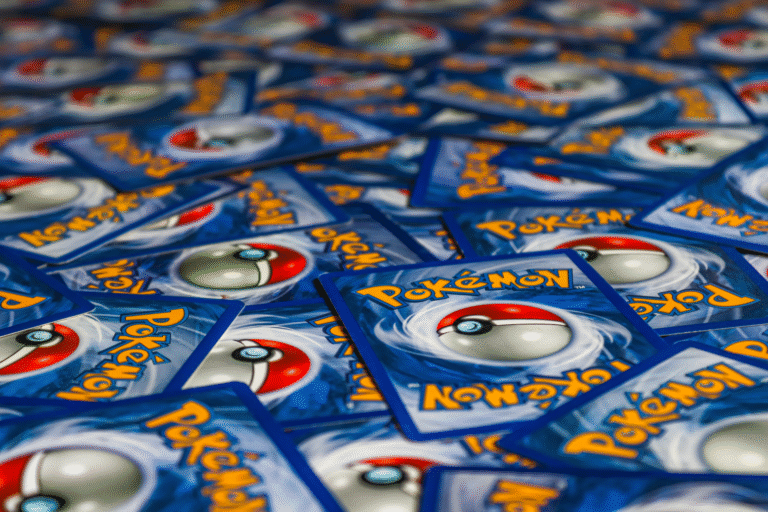
Pokémon’s 30th anniversary in 2026 is already reshaping card prices across both vintage and modern markets. The February 27 Pokémon Day milestone triggered a significant rally—vintage cards from Base Set, Jungle, and Fossil experienced 30-50% price increases in the months that followed. This anniversary effect isn’t temporary hype; it reflects how major collector milestones create sustained demand waves that push prices higher across multiple card categories simultaneously, with January 2026 alone marking a 46% year-over-year price increase for average Pokémon cards across the market. The anniversary momentum will intensify further when the 30th Celebration expansion set releases worldwide on September 16, 2026.
This specially designed set—featuring innovative cards like a “Futuristic” rare rarity with Mewtwo and Mew illustrated by YOSHIROTTEN, plus the added appeal of all-foil cards including Basic Energy—is expected to drive additional price pressure on sealed products and boost secondary market values. The combination of nostalgia-driven buying, media coverage tied to the anniversary, and the release of new premium products creates an ideal environment for price appreciation. Understanding how anniversary marketing cycles affect card pricing matters whether you’re a collector, investor, or casual buyer. The timing, the specific products released, and the psychology of anniversary-driven demand each play distinct roles in determining which cards appreciate and which remain stagnant.
Table of Contents
- What Drives Price Increases During Major Anniversary Celebrations?
- The 30th Celebration Set’s Role in Shaping Market Value
- How Vintage Cards Leverage Anniversary Momentum
- Modern Cards Show Uneven Anniversary Effects
- Market Saturation and the Anniversary Price Ceiling
- Sealed Products Versus Individual Cards in Anniversary Cycles
- What Comes After the 30th Anniversary?
- Conclusion
What Drives Price Increases During Major Anniversary Celebrations?
Anniversary milestones trigger price increases through multiple interconnected mechanisms. First, milestone anniversaries generate widespread media coverage and social media momentum—30 years represents a significant cultural moment that extends beyond the typical collector community. This broader attention brings new buyers into the market, increasing competition for available inventory. Second, anniversary-timed product releases like the 30th Celebration set create artificial scarcity relative to regular expansion sets. Limited print runs and exclusive card designs available only during the anniversary window create urgency among collectors who fear missing out on historically significant products. The vintage card market responds particularly strongly to anniversary cycles because these older sets become symbolic of the franchise’s history.
Base Set, Jungle, and Fossil cards—the original 1999-2000 releases—jumped 30-50% in value following the February 27 anniversary announcement and celebration. This represents more than simple supply-demand dynamics; it reflects a psychological shift where collectors actively seek “first edition” or original-era cards as tangible connections to the franchise’s founding moment. The 18-30% year-over-year price growth among vintage cards demonstrates sustained appreciation, not just a brief spike. One limitation to understand: not all cards appreciate equally during anniversary cycles. Cards that were already expensive often see proportionally smaller gains, while undervalued vintage cards experience the largest percentage jumps. A Base Set Charizard may only gain 15-20% when already priced at thousands of dollars, while an underappreciated vintage rare from the same era might double in value during the same period.
The 30th Celebration Set’s Role in Shaping Market Value
The 30th Celebration expansion set represents a deliberate design choice to create premium, collectible products during the anniversary year. Releasing worldwide simultaneously on September 16, 2026—a coordinated global launch rather than staggered regional rollouts—signals the Pokémon Company’s intent to maximize anniversary impact across all markets at once. Every single card in the set is foil, including Basic Energy, which immediately distinguishes it from regular expansions and appeals to collectors prioritizing visual appeal and rarity perception. The new “Futuristic” rare rarity, featuring artwork by celebrated illustrator YOSHIROTTEN, adds an entirely new collectibility angle that didn’t exist before this set. Japan’s booster box pricing at 7,200 yen per box (20 packs) establishes a pricing baseline that influences Western markets. Special anniversary sets typically command premium pricing relative to regular expansions, and international retailers price accordingly. Special Illustration Rares (SIRs) from the anniversary set already show floor prices above $950 in current 2026 markets, indicating strong collector demand.
However, there’s an important caveat: anniversary sets experience distinct price trajectories compared to regular expansions. They often peak in value 6-12 months after release as the anniversary hype moderates and early buyers realize they can sell into strong demand. Smart investors sometimes capture different portions of this arc—some buying at release for immediate short-term flips, others holding for 2-3 year appreciation. The risk with anniversary sets is overestimating their long-term collectibility. While sealed Elite Trainer Boxes typically appreciate 30% within 12 months, this assumes the set doesn’t receive unexpected reprints or lose collector interest. The 30th Celebration set is genuinely limited and tied to a once-per-franchise anniversary, which provides stronger long-term foundations than regular expansions. Still, buyer enthusiasm eventually normalizes, and the market reprices accordingly.
How Vintage Cards Leverage Anniversary Momentum
Vintage cards represent the direct beneficiaries of anniversary marketing cycles because they’re literally part of the historical narrative. A 1999 Base Set Shadowless Charizard becomes more culturally significant when media outlets celebrate “30 years of Pokémon” and show images of original-era cards. Graded vintage cards have shown particularly strong appreciation—with projections of 15-25% compound annual growth through 2035 based on current market trends. This long-term growth trajectory suggests that anniversary-driven price increases aren’t temporary spikes but foundational shifts in valuation. The February-to-present period (February 27 through early 2026) demonstrates this clearly. Vintage cards experienced 18-30% year-over-year price increases following the anniversary date, and these gains have proven durable rather than evaporating as initial excitement faded.
A vintage Jungle Pikachu or Fossil Dragonite that appreciated during the anniversary window hasn’t collapsed back to pre-February pricing. Instead, these cards have retained the bulk of their gains while newer vintage card buyers continue entering the market seeking their own pieces of Pokémon history. The limiting factor here is condition and grading. psa 10 and PSA 9 vintage cards show the strongest appreciation because serious collectors pursue high-grade examples and these are genuinely scarce. A PSA 6 or PSA 7 vintage card appreciates less dramatically because there’s larger available inventory and less collector pursuit. Prices for low-grade vintage cards may stay relatively flat even during anniversary booms.

Modern Cards Show Uneven Anniversary Effects
Modern card pricing during the 2026 anniversary has revealed stark differences between card types. Special Illustration Rares (SIRs) dominate the price tiers—Paldea Evolved’s Iono SAR ranges from $150-$300 for PSA 10 copies, while the 151 set’s “Sunzard” (Charizard SAR) commands $255-$285 for the same grading. Both of these represent modern-era cards released in the past 1-2 years, yet they’ve achieved pricing that exceeds many older, theoretically “rarer” cards simply because the modern card market values scarcity and artwork appeal heavily. The anniversary effect on modern cards is more about sustained demand than novelty. The February-April 2026 period (coinciding with anniversary hype) maintained or slightly elevated modern card prices, but didn’t trigger the dramatic jumps seen in vintage cards.
This reflects the different collector psychology: vintage cards appeal to nostalgia and historical significance during anniversaries, while modern cards continue appreciating based on regular market mechanics like tournament relevance, artwork popularity, and supply constraints. An Iono SAR maintains its $150-$300 value range regardless of anniversary marketing because its value derives from the card’s visual appeal and playability, not historical significance. One important comparison: sealed modern products appreciate differently than individual cards. A sealed Paldea Evolved booster box might appreciate 20-30% annually based on scarcity, while individual cards within that set may spike or dip based on meta changes and collector interest. The anniversary actually reinforces this divergence—collectors buying sealed anniversary-era products for investment purposes expect the 15-25% compound annual growth mentioned in market projections, but those same collectors might ignore individual cards from the same set if they’re not visually spectacular or tournament-relevant.
Market Saturation and the Anniversary Price Ceiling
Anniversary years historically attract investment capital and speculative buying that temporarily inflates prices beyond sustainable levels. The January 2026 watershed moment—46% year-over-year average price increases—likely represents a market peak relative to normal growth trajectories. As the anniversary year progresses and September’s 30th Celebration set releases, the market will absorb new supply while anniversary-driven demand gradually moderates. Prices won’t collapse, but expect normalized growth rates (5-10% annually) to replace the 30-50% vintage card appreciation seen in early 2026. A significant warning for buyers entering the market during anniversary hype: you’re potentially buying near a price peak rather than a value opportunity.
The collectors who captured the strongest returns bought vintage cards in December 2025 or early January 2026, ahead of broad anniversary marketing. Buyers today in June 2026 are purchasing after significant appreciation has already occurred. While long-term projections suggest continued 15-25% annual growth for graded cards, short-term returns (next 3-6 months) are unlikely to match the 30-50% gains recent buyers realized. The September 30th Celebration set release will test market saturation. If collectors and investors have already allocated their anniversary budgets to vintage cards and earlier 2026 sets, the new anniversary set might underperform expectations. Conversely, if the marketing campaign around the new set attracts casual buyers and lapsed collectors, demand could exceed supply and create secondary market scarcity that drives prices higher.

Sealed Products Versus Individual Cards in Anniversary Cycles
Sealed product appreciation follows different rules than individual cards during anniversary periods. An Elite Trainer Box from the 30th Celebration set will appreciate approximately 30% within 12 months based on historical patterns, making sealed products attractive for long-term investors with patience and storage space. However, individual chase cards (the most expensive SIRs and special rares) can spike 50%+ or drop 20%+ within months as collector preferences shift and secondary market inventory fluctuates.
For example, a sealed 30th Celebration booster box purchased at September 2026 release pricing will likely be worth 30% more by September 2027, assuming no unexpected reprints. An individual Mewtwo or Mew Futuristic rare from the same set might range from $150-$500 depending on which specific illustration variant and grading. That individual card could appreciate to $750 if collector interest intensifies, or depreciate to $75 if interest wanes. This volatility makes sealed products more predictable investments while individual cards offer higher upside with higher risk.
What Comes After the 30th Anniversary?
The anniversary year creates a significant market inflection point, but the post-anniversary period actually matters more for long-term card values. Historical data on previous milestone anniversaries (25th, 20th) shows that cards purchased during anniversaries typically appreciate steadily in the following years as initial hype fades and genuine collector value stabilizes. The Pokémon Company’s commitment to the franchise—evidenced by consistent new set releases, tournament support, and media expansion—suggests the 2026 anniversary appreciations have genuine fundamentals supporting them.
Looking toward 2027 and beyond, graded vintage cards are projected to appreciate 15-25% annually through 2035. This moderate but consistent growth reflects an aging collector base with increasing disposable income, limited supply of original 1999-2000 cards, and sustained demand from both new and existing collectors. The anniversary peaks eventually moderate into sustainable growth rates, but the baseline price floor established during 2026 likely remains intact. A Base Set card worth $2,000 at the anniversary peak might normalize to $1,700-$1,800, not collapse back to $1,200, because the anniversary milestone represented a genuine revaluation of the franchise’s historical significance.
Conclusion
Pokémon’s 30th anniversary has already created measurable price impacts across both vintage and modern card markets, with the February milestone driving 30-50% appreciations in vintage cards and establishing new floor prices for modern special rares. The September 16 release of the 30th Celebration set will sustain anniversary momentum through the final quarter of 2026, creating additional opportunities and risks depending on how aggressively prices spike ahead of the release. Buyers and collectors should understand that early 2026 purchasing captured the strongest short-term returns; today’s market reflects significant appreciation already realized.
Whether you’re collecting for nostalgia, investing for returns, or simply enjoying the hobby, recognize that anniversary years represent inflection points rather than permanent growth accelerators. The cards you acquire during this 2026 anniversary window will likely appreciate 15-25% annually through 2035 based on market projections, but the dramatic 30-50% gains of early 2026 represent a unique window that’s largely closed. Focus on condition, rarity, and genuine collector appeal rather than chasing anniversary hype, and you’ll position yourself well regardless of how the remainder of the anniversary year unfolds.