Scarcity narratives will meaningfully shape Pokémon card prices throughout 2026, but the effect depends entirely on which cards you’re discussing. Genuine scarcity—driven by limited production runs, regional exclusivity, or special release mechanics—continues to fuel substantial gains. Japanese promotional cards and Special Illustration Rare (SIR) variants have demonstrated this pattern consistently. However, the broader narrative of “Pokémon cards are scarce” tells an incomplete story. The Pokémon Company printed approximately 10 billion cards between March 2025 and March 2026, yet demand still exceeds production capacity.
This paradox creates a market where some products command premium prices justified by actual supply constraints, while others face corrections as secondary-market inventory floods the ecosystem. The Umbreon ex SIR card illustrates this dynamic perfectly. Released as a premium chase product, the card maintained valuations above $1,000 as of May 2026—not because the Pokémon Company restricted supply artificially, but because the special illustration variant format genuinely produces fewer copies than traditional set releases. This distinction matters. Collectors chasing “scarcity” without understanding the mechanics behind that scarcity often find themselves overpaying for cards headed toward corrections.
Table of Contents
- The Production Reality Behind the Scarcity Narrative
- The Scarcity Hierarchy—Which Cards Actually Experience Genuine Shortages
- The Price Movement Patterns Unfolding in 2026
- The Sustainability Question—Can Scarcity-Driven Prices Endure?
- The Market Correction vs. Collapse Distinction
- The 30th Anniversary Catalyst and Uncertainty
- Long-Term Outlook and Structural Changes Ahead
- Conclusion
The Production Reality Behind the Scarcity Narrative
Despite 10 billion cards printed in a single year, The Pokémon Company has confirmed that demand exceeds production capacity. This creates the central paradox of 2026: supply is at historical highs, yet shortages persist. The limitation is structural, not temporary. Millennium Print Group, TPCi’s primary manufacturing partner, is constructing a 1.27 million square foot facility expected to become operational by the end of 2028. This expansion will approximately double current printing capacity—meaning no meaningful structural supply improvement should be expected until 2028 or 2029 at the earliest.
For collectors, this detail reshapes the scarcity narrative. Cards released in 2026 and 2027 will remain supply-constrained relative to demand, even with 10 billion-card annual production. The constraint is real, but so is the timeline. Any Pokémon card investor banking on scarcity-driven appreciation needs to consider what happens when capacity doubles. A card trading at $50 today because of scarcity might trade at $30 once supply normalizes—unless other factors (chase status, artwork appeal, playability) justify the premium independent of scarcity.

The Scarcity Hierarchy—Which Cards Actually Experience Genuine Shortages
Not all Pokémon cards are equally scarce, and the market increasingly reflects this. Japanese exclusive promotional cards occupy the top of the scarcity hierarchy. These products are genuinely limited in production relative to set cards. Where a standard set card might see millions of copies enter the market, Japanese exclusives circulate in the thousands worldwide. This disparity is measurable in population data: Japanese promo population figures often cap in the 2,000-5,000 range, while comparable English set cards boast 100,000+ graded copies. Special Illustration Rare cards occupy a middle tier.
They experience true scarcity at release—typically skyrocketing 200-500% within 48 hours as collectors and investors rush to secure copies. However, this scarcity is temporal, not permanent. As secondary-market supply accumulates and print runs expand to meet demand, SIR cards typically shed 20-30% of their peak value within 60 days. The Umbreon ex SIR held its premium longer than most because of its artwork appeal and vintage-adjacent prestige, but even that card should be viewed with caution by new buyers at current valuations. Standard set cards, meanwhile, barely qualify as scarce at all. While 10 billion cards sounds like abundance, that volume is distributed globally across hundreds of different products. Any individual set card still faces moderate supply constraints relative to the player base and collector base combined—but these constraints weaken continuously as secondary-market inventory grows.
The Price Movement Patterns Unfolding in 2026
The aggregate numbers reveal a market in transition. Average Pokémon card values rose 46% year-over-year in 2026, and specific chase cards experienced gains of 200-500%. These gains are real, but they mask significant divergence in price trajectories. Vintage sealed products from earlier eras—Base Set, E-Series, early ex-era booster boxes—appreciated 15-25% as collectors rotated capital into supply-constrained products with established scarcity histories. These products have fixed, finite populations. No new Base Set booster boxes will ever be manufactured.
Modern cards released in 2023-2026 tell a different story. Chase variants appreciated sharply on release, then corrected 20-30% within 60 days as secondary-market supply entered the ecosystem. This pattern has repeated consistently throughout 2026. A collector who purchased Scarlet & Violet era chase cards at release prices often faced paper losses within weeks, not because the Pokémon Company stopped printing them, but because sufficient copies had entered circulation to satisfy immediate demand. The market correction is functioning as intended: stabilizing prices toward their fundamental value. Understanding this pattern is essential for anyone attempting to profit from scarcity narratives. Timing matters far more than the baseline narrative.

The Sustainability Question—Can Scarcity-Driven Prices Endure?
This is the critical question facing Pokémon card investors in 2026. Scarcity narratives drive prices upward, but sustainability depends on whether underlying scarcity is genuine or temporary. Japanese exclusive promotional cards should sustain elevated valuations. Production runs for these products are capped by design. Regional exclusivity ensures that supply never normalizes to match English set card volumes. An Scarlet & Violet era Japanese promotional rare should maintain a meaningful premium indefinitely, barring a reprinting.
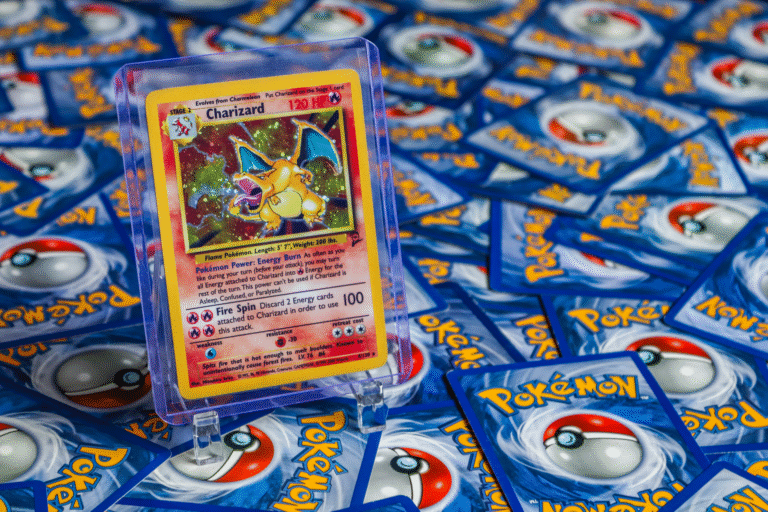
Standard set cards, by contrast, face a sustainability problem. The Pokémon Company’s stated capacity increase—doubling production by 2028-2029—will directly undermine scarcity narratives for products printed before that expansion. A card currently priced at $20 because supply is constrained relative to demand might trade at $12 once capacity doubles, all else equal. Vintage products with established scarcity histories offer a different dynamic. A Base Set Charizard holds its value not because demand exceeds current production (production ended 25 years ago), but because a fixed population of copies will never increase. Collectors should compare: Are you buying scarcity that is permanent, or scarcity that expires in 2028?.
The Market Correction vs. Collapse Distinction
Market participants in early 2026 classified the environment as a “market correction rather than crash.” This distinction is crucial. Prices declined from 2025 peaks, particularly for modern cards, but the underlying demand for Pokémon cards remained robust. Collectors continued purchasing; secondary-market trading volume remained elevated. The correction was a repricing mechanism, not evidence of sector collapse.
However, volatility remains elevated, and scarcity narratives can amplify both gains and losses. A card experiencing rapid price appreciation attracts investor capital, which drives further appreciation—until secondary-market supply catches up and the narrative reverses. Umbreon ex SIR navigated this risk better than most because of artwork prestige and relative scarcity, but even that card experienced downward pressure as more copies entered circulation and market enthusiasm cooled. Collectors pursuing scarcity narratives should assume that volatility will persist and position accordingly. Avoid concentrating capital in products reliant solely on short-term narrative momentum.

The 30th Anniversary Catalyst and Uncertainty
The Pokémon Company announced a 30th anniversary set releasing in October 2026 worldwide simultaneously, spanning all ten generations with new Mew and Mewtwo key art. This release represents a significant market catalyst. The simultaneous worldwide launch reduces regional arbitrage opportunities and ensures that English and Japanese collectors compete for the same product, amplifying demand concentration.
Special editions, promotional variants, and chase cards from this release could experience the familiar spike-and-correct pattern—potentially more dramatic given the anniversary significance and cross-generational appeal. The scale of this release introduces uncertainty into scarcity narratives. Will the Pokémon Company increase production to meet anticipated demand surge? Will secondary-market supply flood the market within weeks, triggering corrections? Or will genuine scarcity components (premium sets, special illustrations) hold value while standard variants correct sharply? The anniversary release could serve as a test case for everything outlined above. Collectors interested in this release should wait for secondary-market supply to stabilize before drawing conclusions about long-term price appreciation.
Long-Term Outlook and Structural Changes Ahead
The trajectory through 2028 and beyond hinges on capacity expansion. Until Millennium Print Group’s new facility becomes operational, scarcity narratives retain structural validity. Supply constraints are real and measurable. However, collectors should begin mental preparation for the 2028-2029 transition. Capacity will double. Secondary-market inventory will increase.
Prices for modern products will normalize downward unless demand simultaneously expands to absorb additional supply. This doesn’t mean Pokémon cards stop appreciating. Genuine scarcity products—Japanese exclusives, vintage sealed boxes, special illustrations from popular characters—should maintain premiums indefinitely. But broad-based price appreciation fueled purely by supply constraints will face headwinds. The collected market of 2030 will likely resemble the collectible card market of other games: stratified between highly sought chase products commanding premiums and bulk products trading near print-run value. Positioning ahead of this transition separates successful collectors from those caught holding overvalued inventory.
Conclusion
Scarcity narratives will continue shaping Pokémon card prices throughout 2026, but their impact is highly selective. Genuine scarcity—driven by regional exclusivity, format mechanics, or fixed populations—justifies premium prices and should persist. Modern cards released under current production constraints experience temporary scarcity premiums that typically correct within 60 days as secondary-market supply normalizes. The critical skill for collectors is distinguishing between permanent scarcity and temporary supply constraints masquerading as scarcity narratives.
The broader market context reinforces this distinction. Production capacity will double by 2028-2029, fundamentally reshaping scarcity dynamics. Collectors should assess their Pokémon card positions with this timeline in mind. Are your holdings positioned for a 2028 capacity expansion? Do you own products whose appeal transcends scarcity mechanics? The next two years will reward selectivity and penalize overreliance on scarcity narratives alone.