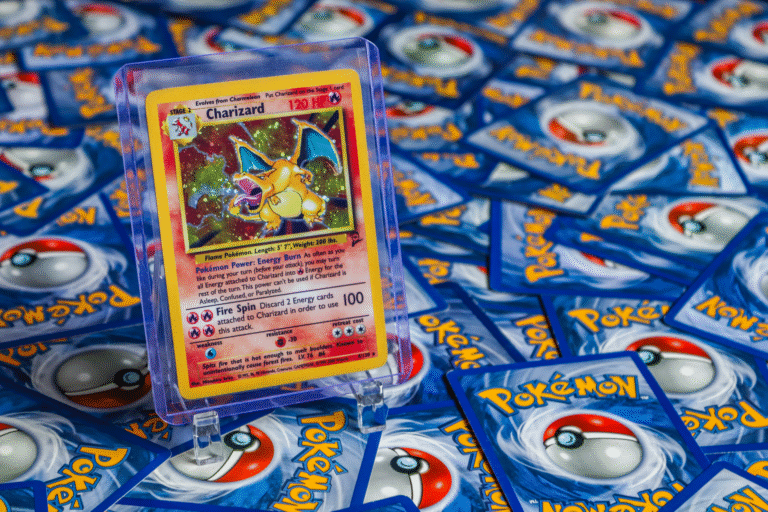
The value of Blastoise from the Pokémon Base Set in 2026 depends entirely on which specific version you own. A raw, unlimited edition Blastoise #2/102 might sell for one price, while a PSA 10 graded first edition shadowless copy could command multiple times that amount. The difference between these scenarios can be hundreds or thousands of dollars—which is why condition, edition, and grading status matter far more than the card itself being a Blastoise. To understand what your particular Blastoise is worth, you need to know three things: whether it’s 1st Edition or Unlimited, what condition it’s in, and whether it’s been professionally graded.
A raw unlimited edition Blastoise in decent condition might fetch anywhere from modest three-figure sums to lower four figures, depending on how strictly you define “decent.” But if you own a pristine, PSA 10 first edition shadowless Blastoise, you’re looking at a significantly different price category entirely. The Pokémon Trading Card Game Base Set from 1999 created the card market as collectors know it today. Blastoise, as one of the final evolution stage starter Pokémon with holo rarity, has remained desirable for 27 years. Current price tracking across multiple platforms confirms active market demand, though specific dollar amounts fluctuate based on real-time supply and sales data.
Table of Contents
- How Edition Type Affects Your Blastoise’s Value
- Why Card Condition Creates Enormous Value Gaps
- Using Price Tracking Services to Find Current Market Value
- Evaluating Whether a Specific Blastoise Is Priced Fairly
- Common Pitfalls When Buying or Selling Blastoise Cards
- How Blastoise’s Value Compares to Other Base Set Cards
- Future Value Outlook for Base Set Blastoise
- Conclusion
How Edition Type Affects Your Blastoise’s Value
First Edition and Unlimited editions represent the primary split in base Set Blastoise pricing. A first edition Blastoise, marked with a “1st Edition” stamp on the left side of the card, consistently trades at a significant premium compared to an unlimited copy of the same card in the same condition. This premium exists because first edition prints are mathematically rarer—the Unlimited run, printed to meet ongoing demand years after the set’s initial release, created vastly more copies than the first printing. Shadowless versions, which predate the holographic stamp artwork and lack the shadow effect around the holo image, represent an even earlier and smaller production run.
These are considerably more difficult to find and typically command the highest premiums of any raw, ungraded Blastoise from Base Set. When comparing three raw cards in the same condition—shadowless, first edition, and unlimited—the shadowless example would likely be worth substantially more. The practical implication for collectors is that two Blastoise cards that look visually similar to an untrained eye can have dramatically different values. Many collectors mistake their unlimited Blastoise for a more valuable first edition without examining the card’s production markings. Always verify which edition you own before pricing your card, as this single factor can shift the value by 50-200% or more depending on market conditions.
Why Card Condition Creates Enormous Value Gaps
Condition is the most dramatic value driver in Base Set collecting. The same first edition Blastoise in near-mint condition versus one with visible creasing, stains, or edge wear might differ by a factor of five or more in market value. Professional grading services like PSA and BGS exist precisely because condition matters this much—collectors will pay premium prices for cards that have been certified and protected against further deterioration. A PSA 10 graded Blastoise represents a card that barely shows any wear under magnification. These pristine examples command multiple times the value of raw, ungraded cards, even first editions. The grading process involves detailed inspection under lighting, evaluation of centering, surface quality, corners, and edges.
For a card that’s now 27 years old, achieving a 10-grade is genuinely rare. An ungraded first edition Blastoise might be worth $500-1500 depending on condition, while that same card professionally graded as a PSA 10 could fetch $5000+ or substantially more, depending on timing and market activity. The limitation of this system is that grading costs money. A fresh Blastoise grading submission typically costs $15-50 depending on turnaround time and the grading company you choose. If you own a card that’s only worth $200-300 raw, sending it for grading might cost more than the potential increase in value. This is why most casual collectors only grade their highest-condition, highest-value examples. Lower-grade or unlimited edition Blastoise cards are rarely worth the grading investment.
Using Price Tracking Services to Find Current Market Value
Multiple websites actively track and monitor Blastoise Base Set prices in real time. The price guide maintains historical pricing data for both standard Unlimited and first Edition Blastoise, allowing you to see not just current asking prices but trends over time. PokeCYC similarly aggregates pricing information specifically for Base Set cards. For sellers listing completed sales, TCGPlayer provides marketplace data from actual transactions, while eBay’s listings show what collectors are currently asking for raw cards. For graded cards, specialist sites like Sports Card Investor and PokeScope focus on PSA and BGS graded copies, which tend to have tighter pricing ranges because the grading is standardized.
A PSA 8 graded Blastoise, for example, should trade within a relatively narrow range because collectors understand exactly what they’re buying. Raw, ungraded cards have wider price variance because condition assessment is subjective between sellers. The critical limitation here is that published prices represent asking prices, not final sale prices. A seller might list a Blastoise for $2000, but if it doesn’t sell for six months, that doesn’t mean the card is worth $2000 to the broader market. Look for actual completed sales or average selling prices rather than just listing prices. eBay’s “sold listings” filter and TCGPlayer’s transaction history give you real market data rather than aspirational pricing.
Evaluating Whether a Specific Blastoise Is Priced Fairly
When you encounter a Blastoise for sale, quickly check three criteria. First, verify the edition by looking at the card text area—do you see “1st Edition” printed? Second, examine apparent condition under good lighting or with a magnification tool if you’re buying in person. Look for creases, corner wear, surface scratches on the holo, and centering issues. Third, determine whether the price quotes you’re seeing include professional grading or if you’re comparing raw cards. A common mistake is comparing a graded, high-value card to raw card prices.
If you see a PSA 9 Blastoise listed for $3500 and find a raw Blastoise for $400, those aren’t comparable—the graded card has certification, protection, and potential resale value to collectors who exclusively buy graded cards. Similarly, comparing a first edition to an unlimited price without accounting for edition is a frequent source of overpaying or undervaluing your card. Before making a purchase, check current listings across multiple platforms. If you see the same card (same edition, similar condition) priced at $800 on one site and $2200 on another, the discrepancy is worth investigating. Sometimes a seller simply priced high relative to market; sometimes the cheaper listing has an issue (damage not visible in photos, condition worse than described) that explains the gap. Don’t assume the cheapest price is always a bargain.
Common Pitfalls When Buying or Selling Blastoise Cards
Sellers sometimes misidentify their cards’ condition or edition. A card described as “near mint” might have visible scratches or creases that only become obvious in person. Always request close-up photographs, ideally from multiple angles and under proper lighting, before committing to a purchase. Shadowless and first edition claims should be verifiable through clear card photos—if a seller can’t easily prove their card is first edition, assume it’s unlimited. Another pitfall is assuming all PSA grades are equivalent. A PSA 8 and PSA 9 carry very different price tags, even though visually they might appear nearly identical to an untrained collector.
If you’re buying a graded card, verify the actual grade on the slab label and understand what that grade typically costs on the current market. Buying a “PSA 8” that turns out to be a PSA 7 is a significant financial mistake. Condition can also worsen unexpectedly. If you purchase a raw Blastoise, store it in a hard plastic sleeve with a backing board, not in a regular card sleeve or unprotected. Base Set cards from 1999 have already survived 27 years—one year of improper storage could damage a valuable card. If you plan to grade your card eventually, keep it as protected as possible until it reaches the grading company.
How Blastoise’s Value Compares to Other Base Set Cards
Blastoise is one of the most iconic and desirable Base Set cards, but it’s not the rarest or most expensive. Charizard, the third stage fire-type starter, commands significantly higher prices due to extreme popularity and cultural cachet from the Pokémon trading cards game. Mewtwo and Gyarados are also highly sought after Base Set holographics. However, Blastoise consistently ranks among the most actively traded Base Set cards after the most expensive tier, meaning liquidity is usually strong—you can find willing buyers relatively easily.
Comparing raw condition, a first edition Blastoise typically trades at similar levels to first edition Poliwrath or first edition Magneton, other holo rares from the set. But when you grade cards, the comparison becomes more fragmented. A PSA 10 Blastoise might exceed the value of PSA 10 cards in comparable rarity simply because Blastoise has more collector demand. This illustrates that scarcity isn’t the only value driver—collector preference and competitive demand play substantial roles.
Future Value Outlook for Base Set Blastoise
Base Set Pokémon cards from 1999 have increased in value over the past decade, driven partly by nostalgia among adult collectors and partly by legitimate scarcity as high-grade examples become increasingly rare and get locked away in collections. Whether this trend continues at its current pace is speculative, but the factors supporting Base Set card values—limited original print runs, sealed first edition boxes becoming extremely scarce, and consistent collector interest—don’t appear to be weakening.
For Blastoise specifically, the card’s status as one of three starter evolution Pokémon and its iconic holo artwork from the foundational set position it well for long-term collector interest. Cards that were common in 2000 are now genuinely difficult to find in high condition, which mathematically supports value floors even if enthusiasm cycles. New collectors discovering the original card game, legacy collectors selling out of collections, and investors seeking tangible assets all participate in the market, creating relatively stable demand across market cycles.
Conclusion
Blastoise from the Pokémon Base Set is worth checking current pricing on multiple platforms because the market is active and transparent. Your specific card’s value depends on edition (1st Edition or Unlimited), condition, and whether it’s been professionally graded. Rather than expecting a single answer to “what is it worth,” understand the factors that drive value and use that knowledge to either price a card you own or evaluate whether a Blastoise for sale matches its asking price.
To find your card’s value, visit the price guide, TCGPlayer, eBay’s completed listings, and PokeScope for reference data. Examine your card’s condition honestly, verify its edition through clear photography, and compare against recent sales of similar cards rather than just asking prices. Most importantly, don’t store valuable Blastoise cards carelessly—27-year-old cards that have survived to the present day deserve protection to preserve whatever value they’ve accumulated.