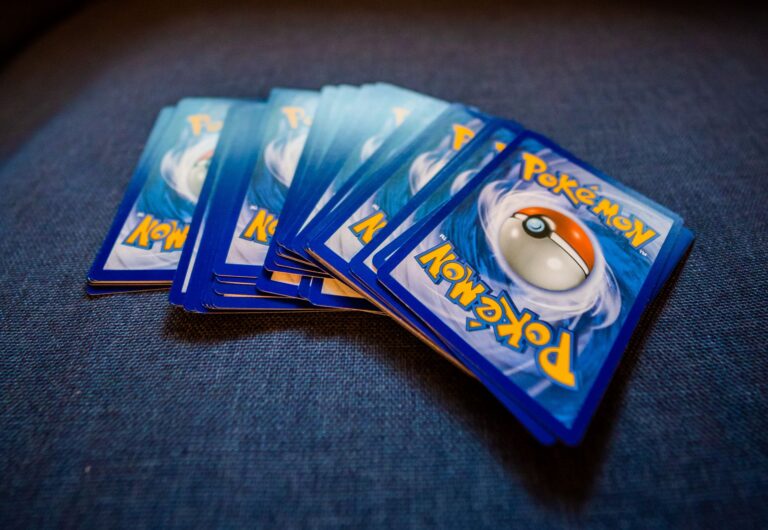
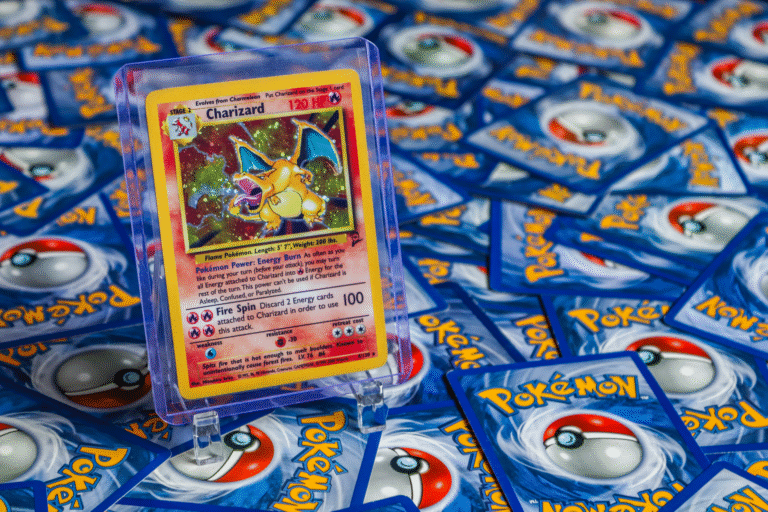
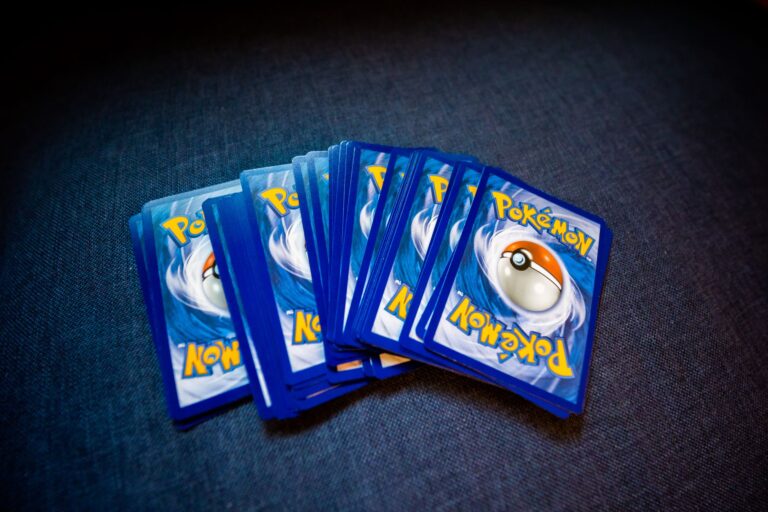
Common Base Set Pokémon cards absolutely have benefited from the vintage boom—but not equally, and with significant nuance. While rare holos and first editions have captured most of the attention and price appreciation since 2020, common Base Set cards have experienced modest but real gains. A commons card like Pikachu or Squirtle that sold for $1-3 five years ago now regularly commands $5-15 in high grades, representing a meaningful increase even if it pales compared to the explosive growth in vintage rares.
The key difference is that common Base Set cards have enjoyed the rising tide of the overall vintage Pokémon market—increased collector interest, improved grading availability, and broader market recognition of 1990s cards as legitimate collectibles. However, their upside is fundamentally constrained by their rarity and print runs. Millions of common Base Set cards were produced, which is both their limitation and their appeal to a certain type of collector.
Table of Contents
- What’s Actually Driving the Vintage Pokémon Card Market?
- The Hard Limitation of Print Volume and Realistic Price Ceilings
- Which Common Base Set Cards Actually Gained Value, and Why?
- The Practical Economics of Owning and Selling Common Base Set Cards
- The Grading Bubble Risk and Overproduction of Service
- Condition and Authenticity as the Real Determinant of Value
- Where Are Common Base Set Cards Headed?
- Conclusion
- Frequently Asked Questions
What’s Actually Driving the Vintage Pokémon Card Market?
The vintage Pokémon boom that started around 2020 was driven by several converging factors: nostalgia-driven demand from millennials with disposable income, YouTube and social media content featuring expensive cards, institutional investment interest, and a shortage of newly printed vintage stock due to decades of circulation and disposal. When Logan Paul opened sealed 1999 booster boxes on YouTube in 2021, it wasn’t just entertainment—it signaled to millions that old Pokémon cards were worth serious money, shifting them from forgotten childhood collectibles to investment assets. This price acceleration created a downstream effect across the entire vintage card ecosystem. Higher rares pulled more eyes and money into the category, which in turn drove increased interest in lower-tier cards. Grading services like PSA and BGS expanded their capacity and added modern card assessment, making it economical to grade commons that previously would have been too inexpensive to justify the cost.
For commons, this availability of grading and the general market awareness has created real value that didn’t exist before. However, the driving mechanism differs fundamentally between rares and commons. With a first edition Charizard, scarcity is the primary driver—PSA has graded fewer than 10,000 copies across all grades since 1999. With a base set Pikachu or Bulbasaur common, the driving factor is more about standardization and portfolio interest. Dealers and collectors now see commons as a lower-entry-point way to own vintage cards, which provides some demand floor.

The Hard Limitation of Print Volume and Realistic Price Ceilings
Common Base set cards face a mathematical constraint that separates them from rares: the original print run was massive. Pokémon Company produced approximately 2-3 billion Base Set packs worldwide between 1999 and 2001. Even accounting for cards that were destroyed, lost, or separated from their sets, the available supply of commons is functionally endless. This reality creates a hard ceiling on appreciation potential compared to rares. To illustrate: a Base Set Charizard (holo, non-shadowless) graded PSA 8 has appreciated from roughly $1,500-2,000 in 2016 to $25,000-40,000 in 2024. A Base Set Pikachu common card graded PSA 8 has moved from approximately $2-5 to $15-25 in the same period.
The Charizard’s supply constraint allowed for roughly 20x appreciation, while Pikachu’s unlimited supply path allows perhaps 5-7x. This isn’t speculation—it’s basic supply and demand. When supply is effectively infinite, prices stabilize. The warning here is critical: collectors who purchase commons expecting them to follow rare-card trajectories are likely to be disappointed. The real appreciation in commons has already occurred—moving from “worthless” to “worth grading.” Future appreciation will likely be much slower, driven by inflation and modest increases in collector engagement rather than genuine scarcity-driven gains. If you’re buying commons as an investment, you should be prepared for 2-4% annual growth rather than the 15-25% annual growth rares experienced from 2020-2023.
Which Common Base Set Cards Actually Gained Value, and Why?
Not all commons have appreciated equally. Popular Pokémon—Pikachu, Squirtle, Bulbasaur, Charmander—have significantly outperformed truly obscure commons like Spore or Kakuna. A near-mint graded Pikachu common might now be worth $20-30, while an equally well-preserved Kakuna commons typically sells for $3-8. The difference comes down to character recognition and collector demand, even at the commons level. There’s also a meaningful distinction between cards that have recognizable artwork versus purely functional cards. Base Set commons with iconic Ken Sugimori art or memorable character moments—like a dynamic action pose—have outperformed generic stat-heavy commons by a factor of 2-3.
A collector buying common cards wants visual appeal, character recognition, and displayability, not just portfolio diversification. This means Pikachu commons appreciate; Lickitung commons do not, even if both were printed in equal quantities. The clearest example is the difference between shadowless and unlimited Base Set commons. A shadowless Pikachu common in psa 8 might fetch $40-60, while an unlimited Pikachu common of the same grade sells for $15-20. This reflects both genuine collector preference for the shadowless aesthetic and the fact that shadowless commons are legitimately scarcer—fewer packs were printed with the shadowless print line. For common collectors operating on a real budget, this illustrates an important principle: even within commons, selection matters dramatically.

The Practical Economics of Owning and Selling Common Base Set Cards
If you’re considering purchasing common Base Set cards, the economics are mixed. A popular graded commons might have a $5-10 profit margin above purchase and grading costs if held for a few years, which equates to an annual return of perhaps 3-6% depending on your entry price. Compared to equity markets averaging 10% annually long-term, this is underwhelming. However, commons offer something stocks don’t: tangible ownership, no counterparty risk, and no fee-based drag beyond the initial acquisition and eventual resale expenses. The practical challenge is that common cards have thin spreads between bid and ask prices.
A $15 card might have a $12-13 bid and a $17-18 ask, meaning you need 30-50% appreciation just to break even after buying, grading, and selling costs. For rares, which might have $1,000 bid-ask spreads, the percentage drag is much lower. This creates a fundamental economic inefficiency: selling commons takes time, effort, and transaction costs that often eliminate margins. A more realistic approach for common Base Set cards is to view them as portfolio diversification within a broader vintage Pokémon collection, or to focus on truly exceptional common cards—those that are condition-rarity combinations (a PSA 9 or 10 of a popular character) or unusual early printing variations. A shadowless Pikachu common in PSA 9 might legitimately appreciate to $100+ because so few exist in that condition. That’s a different economic calculation than the typical commons.
The Grading Bubble Risk and Overproduction of Service
A significant warning: the vintage Pokémon market, including commons, experienced a grading capacity crisis around 2021-2022 when PSA and other services were overwhelmed with submissions. This created what some collectors call a “grading bubble”—cards were assigned grades based on rushed assessment during peak demand periods. As grading turnaround normalized and services stabilized standards, some cards originally graded as PSA 8 in 2021 would likely receive a 7 or 6.5 if resubmitted today. For common cards, this risk is elevated because the profit margin is so thin. A commons card graded during the boom period might have a speculative grade attached.
If you’re purchasing common cards, especially at higher grades, you should assume that older PSA 8s might represent genuine 7.5-8 territory, and price accordingly. The market has begun adjusting for this, but price adjustment lags grading standard clarification. Additionally, there’s rising competition from modern grading services and the potential for BGS/Beckett to undercut PSA on commons cards since their margins are thinner. If you’re betting on commons appreciation, you’re also implicitly betting on continued PSA dominance in grading authority. That’s a reasonable bet, but it’s an assumption worth acknowledging.

Condition and Authenticity as the Real Determinant of Value
The most important factor driving commons appreciation isn’t demand for the card itself—it’s demand for authentic, high-condition examples. A Base Set Pikachu common in raw (ungraded) condition, even if near-mint, has virtually no secondary market. The same card graded PSA 8 has genuine value. This gap reflects the market’s need for certification of authenticity and condition, not actual demand for the card as a physical object.
This creates opportunity and risk. If you have a collection of Base Set commons in genuinely high condition (PSA 8 or better), they’re worth grading and selling. Raw commons, no matter their condition, are worth much less. The flip side is that counterfeit base set cards do exist, and commons have become targets for counterfeiting because the profit margins on individual rares are much higher. Before grading or purchasing common cards, verify authentication through visual inspection of print quality, paper stock, and ink attributes if you’re buying raw cards.
Where Are Common Base Set Cards Headed?
Looking forward, common Base Set cards will likely continue to appreciate modestly—perhaps 2-4% annually—driven by gradual increases in hobby participation and inflation. They won’t experience the explosive growth of rares, and they certainly won’t experience the contraction that would occur if the vintage Pokémon market collapsed. They’ve found an equilibrium in the collector ecosystem as an accessible entry point.
The real growth opportunity in commons is in rare conditions. A PSA 9 or PSA 10 of a popular character remains genuinely scarce and will likely appreciate faster than lower grades because the condition itself becomes the scarcity driver. If you’re betting on commons, bet on exceptional condition, not on generic examples. The market’s future for commons is in specialization and curation, not in broad-based appreciation.
Conclusion
Common Base Set Pokémon cards have absolutely benefited from the vintage boom, but as participants in a rising market rather than as genuine appreciating assets. They’ve moved from essentially worthless to collectible, which is real value creation, but future appreciation will be modest and dependent on condition, character popularity, and grading authority stability. The honest assessment is that common cards are useful for completing collections or as lower-cost entry points to vintage cards, not as meaningful investment vehicles.
If you’re considering common Base Set cards, frame them correctly: they’re collector pieces, not wealth creation. Invest in rares if you want dramatic appreciation potential. Buy commons if you want to own a piece of vintage Pokémon history at a reasonable price point, and focus on condition and popular characters when you do.
Frequently Asked Questions
Should I grade all of my Base Set commons?
No. Only grade popular characters (Pikachu, Charizard, Blastoise, Venusaur) or shadowless printing variants in genuinely exceptional condition (PSA 8 or higher raw estimate). Obscure commons and lower grades lose money through grading costs relative to their market value.
What’s the difference between shadowless and unlimited commons?
Shadowless Base Set commons were printed first and in smaller quantities. A shadowless Pikachu common might be worth $40-60 graded, while unlimited is worth $15-20. The shadowless print line is genuinely scarcer and preferred by collectors.
Can I make money flipping common Base Set cards?
Realistically, no—margins are too thin after grading and transaction costs. You’d need 30-50% appreciation to break even, and commons appreciate slowly. Rares have better margins and appreciation potential.
Are common Base Set cards being counterfeited?
Yes, though less frequently than rares. Before purchasing raw commons, inspect print quality, paper stock, and ink attributes. Counterfeits typically show visible quality issues under magnification.
What’s driving the difference in common card prices?
Character popularity, artwork quality, and print variant (shadowless vs. unlimited) are the primary drivers. Pikachu commons significantly outperform obscure Pokémon commons regardless of rarity.