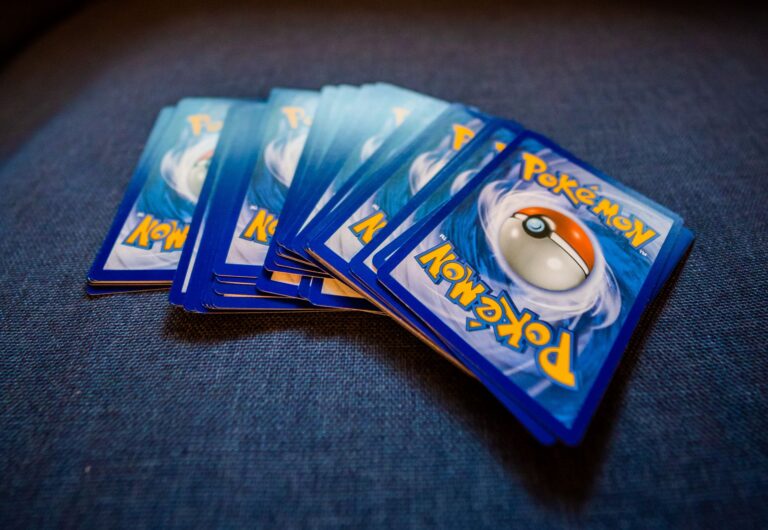
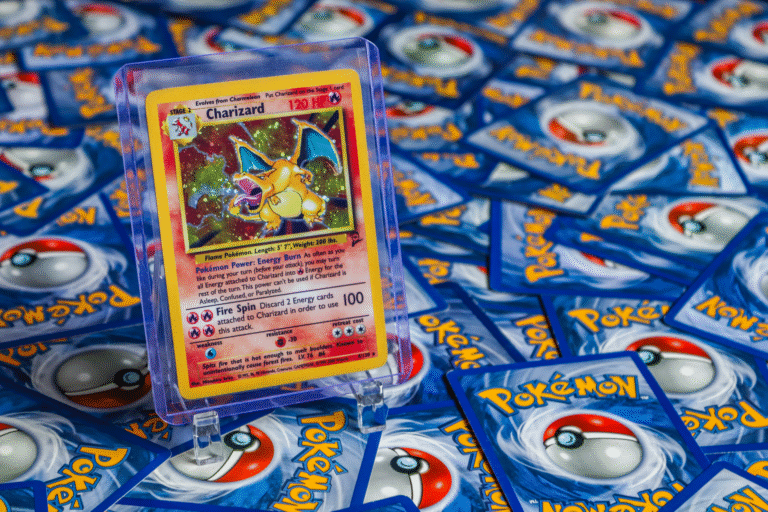
No, German First Edition Base Set cards have not beaten the broader Pokémon market since 2020. Instead, they have significantly underperformed their English-language counterparts across nearly every measurable metric. While the overall Pokémon collectible card market—including English, German, and other international editions—has seen explosive growth over the past five years, German cards consistently trade at substantial discounts compared to their English equivalents, suggesting they are a lagging segment rather than a market leader.
The gap is stark and quantifiable. A Pikachu ex card costs €1,020 in English but only €684 in German—a 33% discount that reflects the consistent undervaluation of German cards throughout the market. German Base Set Charizards exhibit the same pattern, with PSA 9.5 graded copies of the 1999 Glurak holo commanding significantly lower prices than English equivalents. This pricing differential has remained consistent through the bull market of 2020-2025, indicating a structural preference for English-language cards in the international collecting community.
Table of Contents
- Why German Cards Trail English Pricing
- Broader Market Growth From 2020 to 2025
- The Untapped Market Theory
- Market Liquidity and Selling Reality
- Grading, Authentication, and Hidden Risks
- Regional Collector Psychology and Market Segmentation
- Future Outlook and Conditional Upside
- Conclusion
Why German Cards Trail English Pricing
The price gap between german and English Pokémon cards stems from several interconnected factors. English cards dominate the North American market, which represents the largest and most liquid collector base globally. demand drives pricing, and demand concentrates where the earliest players, largest collector populations, and most active secondary markets exist. German cards, by contrast, primarily appeal to collectors in German-speaking regions and niche enthusiasts seeking non-English variants.
This demand asymmetry creates a self-reinforcing cycle. Because English cards command higher prices, sellers prioritize listing and promoting English copies, which further concentrates buyer attention there. A Pikachu ex illustrates this dynamic perfectly: English copies move more frequently, attract more bidders, and achieve higher final prices, while identical German copies languish at lower valuations despite being identical cards with equivalent original rarity. The result is that even pristine, professionally graded German Base Set first editions trade at consistent 20-35% discounts compared to their English equivalents.
Broader Market Growth From 2020 to 2025
The overall pokémon Base Set market—across all languages and editions—experienced unprecedented growth from 2020 through 2025. Complete 1st Edition Base Sets in PSA 10 condition serve as a reliable benchmark for this market. In 2020, a complete set sold for $120,000. By February 2021, prices had surged to $666,000. The market cooled somewhat by June 2024 at $317,206, but recovered dramatically to $911,629 by November 2025.
This represents a 660% increase over five years, even accounting for volatility. However, this explosive growth benefited English cards disproportionately. The German collectible card games market, while growing, has expanded at a slower pace. Current valuations place the German market at $462.76 million in 2024, with projections to reach $1,283.27 million by 2033—representing a 12.0% compound annual growth rate. This growth rate, while solid, trails the volatility-adjusted returns of premium English Base Set cards over the same period. German cards captured minimal share of the speculative demand that drove English card valuations upward.
The Untapped Market Theory
Some collectors argue that German cards represent an undervalued opportunity—an “untapped market” with latent appreciation potential. The logic holds some merit: if German cards eventually attract the collector attention and investment dollars that English cards command, the 33% discount could theoretically narrow or disappear, delivering substantial returns to early buyers. German-speaking markets have shown increasing interest in the TCG category, and cultural factors may eventually drive stronger local demand for German language cards. This thesis, however, remains speculative and forward-looking rather than historically validated.
Past performance data from 2020-2025 provides no evidence that German cards are “catching up” to English cards or narrowing the valuation gap. If anything, the gap has remained consistent or widened as English card premiums have accelerated. A collector betting on German cards must believe that future demand will deviate from historical patterns—a reasonable but unproven hypothesis. The risk exists that the English-language preference will persist indefinitely, leaving German cards permanently discounted relative to equivalent English editions.

Market Liquidity and Selling Reality
Beyond pricing, German cards face practical challenges in the secondary market. Liquidity—the ease of finding buyers and converting cards to cash—is substantially lower for German editions than English editions. A seller holding a PSA 9.5 German Charizard may wait weeks or months to attract serious bids, while an identical English copy would likely receive multiple offers within days. This liquidity discount translates to additional real costs when selling, as collectors often accept lower prices to ensure sales.
For speculators and investment-minded collectors, illiquidity represents a meaningful downside. If a collector purchases German cards expecting rapid appreciation and eventual sale at a profit, they must factor in extended holding periods and potential forced discounting to achieve a sale. English cards, by contrast, maintain faster turnover, tighter bid-ask spreads, and more predictable pricing. The difference between being able to sell immediately at market rate versus waiting weeks for the right buyer can erase or exceed the potential upside of the initial discount purchase.
Grading, Authentication, and Hidden Risks
A less visible factor affecting German card valuations is perception around authenticity and grading standards. English Pokémon cards benefit from decades of established grading knowledge, standardized counterfeiting detection, and the full weight of professional grading services’ research and reputation. German cards, produced in smaller quantities and collected by smaller populations, have received proportionally less scrutiny and standardization attention.
This authentication gap creates hidden risk for buyers. Counterfeit English Base Set cards are common enough that the market has developed sophisticated detection methods, but German counterfeits may be less well understood by average collectors and even some graders. A PSA or BGS grade on a German card carries slightly less market confidence than the same grade on an English equivalent, further depressing prices. Collectors considering German cards as an investment must either develop authentic expertise themselves or accept the risk that their purchases may not command expected premiums with future buyers who apply stricter authentication standards.

Regional Collector Psychology and Market Segmentation
German cards occupy a unique niche in global collecting psychology. Collectors in Germany, Austria, and Switzerland may actively seek German-language editions for personal or nostalgic reasons, creating modest but stable local demand. However, this regional preference has not translated into global appreciation or the speculative buying pressure that would drive prices toward parity with English cards. The collector base remains segmented by language and region, with English cards serving as the global standard and common denominator.
This segmentation means German cards function in a semi-isolated market tier. They trade regularly but primarily within a German-speaking collector cohort, rather than competing directly in the international market that sets global pricing benchmarks. A German collector holding German cards may face better local liquidity and less discounting, while an international collector would face the opposite. Geographic arbitrage opportunities exist, but they require specific market knowledge and execution ability that most collectors lack.
Future Outlook and Conditional Upside
Looking forward, German Base Set first editions could appreciate if specific conditions align. A resurgence of interest in non-English variants, driven by nostalgia cycles or collecting trend shifts, could expand the German collector base and tighten valuation gaps. Additionally, if the overall Pokémon card market continues expanding into European markets, German-language cards could benefit from increased regional demand. The 12% annual growth rate projected for the German collectible card market through 2033 suggests modest tailwinds, even if they lag English card appreciation.
However, past performance offers little basis for confidence that German cards will “catch up” to English valuations. The 2020-2025 period represents the most bullish environment for Pokémon cards in collecting history, yet German cards remained discounted throughout. Unless structural shifts occur—such as major collector migrations toward non-English editions or regulatory changes affecting English card production—the historical preference for English cards will likely persist. Buyers should evaluate German cards on their intrinsic appeal and local market fundamentals rather than speculating on eventual valuation parity.
Conclusion
German First Edition Base Set cards have clearly underperformed the broader Pokémon market from 2020 to 2025. While the overall market experienced 660% growth in complete set valuations, German cards have traded consistently at 20-35% discounts to English equivalents with no evidence of narrowing the gap. The reasons are structural—language preferences, collector base concentration in English-speaking regions, stronger demand in North America, and superior liquidity for English editions—and unlikely to reverse in the near term.
For collectors considering German cards as an investment, the honest assessment is that they represent neither a market leader nor a proven undervalued opportunity. They are, instead, a specialty segment with uncertain future appreciation and meaningful downside risks in liquidity, authentication, and global demand. They may appeal to collectors seeking non-English variants for personal reasons or those betting on long-term European market expansion, but historical data provides no support for the claim that German cards have beaten or will beat the broader Pokémon market.