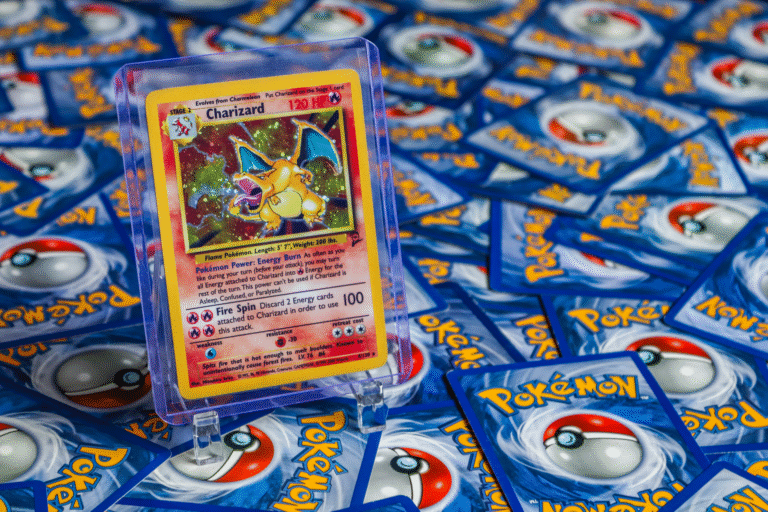
Pokémon fossils became a museum exhibition story through a unique convergence of paleontological interest and trading card game popularity. Starting with the fossil-themed card sets released in the late 1990s, particularly the Pokémon Fossil and Fossil Expansion sets, Game Freak and The Pokémon Company incorporated real paleontological concepts into their card designs and game mechanics. This authenticity caught the attention of natural history museums, which recognized that the Pokémon brand could serve as an educational bridge to introduce younger audiences to actual paleontology and fossil science.
Museums began curating exhibitions that paired original Pokémon fossil cards with real fossils and paleontological information, creating educational experiences that legitimized both the trading card hobby and scientific inquiry. The turning point came when institutions like the American Museum of Natural History in New York and several regional science museums began featuring Pokémon fossil exhibits alongside traditional paleontological displays. Rather than treating Pokémon as frivolous pop culture, curators strategically positioned the cards as gateways to understanding how real fossils are identified, preserved, and studied. This approach proved remarkably effective: families visited museums not just to see dinosaur skeletons, but to understand the real science behind creatures like Aerodactyl, Kabuto, and Omanyte—Pokémon that were directly inspired by actual fossil species.
Table of Contents
- What Made Pokémon Fossil Cards Scientifically Credible?
- How Museums Structured Fossil Exhibitions Around Pokémon
- The Role of Fossil Card Sets in Collectors’ Understanding of Paleontology
- How Collectors Navigate Fossil Card Value and Scientific Interest
- The Authentication Challenge in High-Value Fossil Card Markets
- The Educational Impact of Fossil Exhibitions on Young Paleontologists
- The Future of Pokémon Fossils in Museums and Paleontological Education
- Conclusion
- Frequently Asked Questions
What Made Pokémon Fossil Cards Scientifically Credible?
The credibility of pokémon fossil cards stemmed from the careful research embedded in their design. When Game Freak created fossil Pokémon, they consulted with paleontology resources to ensure the creatures’ characteristics reflected actual prehistoric animals. Aerodactyl, for instance, draws from pterosaurs with its flying abilities and predatory nature. Kabuto and Kabutops are based on trilobites, ancient arthropods that actually did exist for hundreds of millions of years.
This attention to detail meant that the cards weren’t purely fantastical—they represented educated extrapolations of real paleontology, which gave museums legitimate educational content to work with. The mechanical gameplay around fossils also reinforced scientific accuracy. In the Pokémon Trading Card Game, fossil Pokémon required special cards—literally labeled “Fossil”—to be summoned, which served as a clever game mechanic that also subtly taught players that these creatures required reconstruction from incomplete remains. This mirrored the real paleontological process where scientists must reconstruct full organisms from fragmentary fossil evidence. Museums leveraged this mechanic in educational materials, explaining how paleontologists piece together incomplete skeletons just as trainers must use fossil cards to complete their teams.
How Museums Structured Fossil Exhibitions Around Pokémon
Museums approached Pokémon fossil exhibitions with careful curation, often separating educational value from commercial appeal. The most effective exhibitions created three parallel learning paths: one focused on the real fossil it was based on, one explaining the Pokémon card itself, and one connecting both through paleontological principles. The American Museum of Natural History’s exhibitions, for example, displayed actual fossilized trilobite specimens alongside Kabuto and Kabutops cards, with interpretive text explaining how modern paleontologists classify and date such finds. However, one significant limitation museums faced was the challenge of authenticating and preserving the trading cards themselves.
Unlike museum-quality fossils stored in controlled climate conditions, trading cards are vulnerable to deterioration, moisture damage, and fading. Museums had to invest in specialized card storage to prevent degradation during exhibition runs, which created unexpected conservation challenges. Some institutions discovered that displaying high-value vintage fossil cards—particularly first-edition Fossil set cards—posed security and insurance concerns, leading some to use high-quality reproductions instead of originals in public exhibitions. This trade-off between authenticity and preservation became a recurring tension in how museums approached these exhibits.
The Role of Fossil Card Sets in Collectors’ Understanding of Paleontology
The 1999 Pokémon Fossil set and its later expansions introduced collectors to paleontological terminology that they might not otherwise encounter. Card descriptions included scientific names alongside Pokémon names, explaining concepts like “prehistoric flying Pokémon” or “ancient shellfishlike Pokémon.” For many collectors who were children at the time, these cards served as informal educational tools, introducing paleontological vocabulary in an accessible format. A collector might learn the word “fossilization” through a Pokémon card before encountering it in a science class textbook.
Museums recognized this educational pathway and began inviting collectors to contribute to their knowledge of how Pokémon had influenced scientific literacy. Some institutions created outreach programs where serious collectors would speak about how specific cards sparked their interest in paleontology, creating compelling narratives about informal learning pathways. These personal stories provided museums with evidence of Pokémon’s genuine educational impact, not just its entertainment value.

How Collectors Navigate Fossil Card Value and Scientific Interest
For collectors today, fossil-themed cards occupy an interesting intersection: their monetary value is driven both by card rarity and condition, but also increasingly by the scientific interest and museum validation these cards have received. A first-edition Holographic Aerodactyl from the Fossil set can command prices in the hundreds or thousands of dollars, with value influenced not just by scarcity but also by its iconic representation in paleontological education.
Museums’ adoption of these cards has indirectly elevated their perceived cultural significance, which translates to collector demand. However, this creates a practical trade-off for collectors: holding high-value fossil cards for investment purposes means keeping them in protective storage where they can’t be displayed or enjoyed, while allowing them to be seen and appreciated—whether at home or loaned to institutions—carries preservation risks and potential depreciation if they become damaged. Many serious collectors now photograph their rare fossil cards and donate high-resolution images to museums while keeping the originals in climate-controlled vaults, balancing accessibility with asset protection.
The Authentication Challenge in High-Value Fossil Card Markets
As fossil cards gained attention through museum exhibitions and collector demand, the authentication market expanded significantly. Counterfeit Pokémon fossil cards emerged, particularly targeting valuable cards like Holographic fossils from the first-edition Fossil set. Museums implementing exhibitions had to learn how to verify card authenticity before accepting loans from private collections.
Third-party grading services like PSA and BGS became essential partners in this process, offering certified authentication that museums could trust when displaying collector-owned cards. One major warning for collectors: purchasing “investment-grade” fossil cards without professional authentication can result in ownership of worthless counterfeits. The proliferation of high-quality fakes—some using period-appropriate cardstock and printing techniques that closely mimic originals—means that buying directly from unknown sources, particularly online marketplaces without seller verification, carries substantial risk. Museums have documented instances where institutions received “donated” cards that proved to be sophisticated counterfeits, creating embarrassing situations where fake cards were temporarily displayed as authentic pieces before authentication revealed the deception.

The Educational Impact of Fossil Exhibitions on Young Paleontologists
Museums observed a measurable increase in youth interest in paleontology following Pokémon fossil exhibitions. Some institutions tracked visitors who attended fossil exhibits and subsequently enrolled in paleontology camps or pursued science tracks in school. This correlation suggested that the bridge between pop culture and scientific inquiry was genuinely functional—Pokémon fossil cards had created a culturally relevant entry point for scientific learning that transcended traditional museum engagement.
A child interested in collecting Kabuto cards might visit a museum exhibition, discover that trilobites are real creatures with complex evolutionary history, and develop a sustained interest in paleontology. This effect has influenced how other science museums approach popular culture exhibits. Rather than maintaining strict separation between commercial entertainment and serious science education, progressive institutions now recognize that meeting audiences where their interest already exists—even if that interest originates in a trading card game—can enhance educational outcomes.
The Future of Pokémon Fossils in Museums and Paleontological Education
Looking forward, the trajectory of Pokémon fossil exhibitions suggests an increasingly sophisticated integration between pop culture and scientific inquiry. Newer Pokémon generations continue to introduce fossil-themed creatures with paleontological grounding, and museums have begun planning longer-term installations rather than temporary exhibitions.
Some institutions are developing interactive experiences where visitors can compare fossil Pokémon cards to 3D models of actual fossils, or participate in citizen science projects that connect Pokémon lore to real paleontological research. The long-term significance of this trend lies not in the cards themselves, but in what they represent: a demonstration that commercial entertainment properties can serve legitimate educational functions when institutions approach them thoughtfully. As museums continue to evolve and younger audiences maintain engagement with Pokémon, fossil cards will likely remain fixtures in natural history exhibitions—not as curiosities or gimmicks, but as documented cultural artifacts that measurably enhanced public understanding of paleontology.
Conclusion
Pokémon fossils became a museum exhibition story because Game Freak’s commitment to paleontological accuracy created cards that museums could legitimately incorporate into science education. The combination of authentic design, effective game mechanics, and collector enthusiasm created an unexpected bridge between trading card culture and formal paleontological study. Museums recognized this opportunity and structured exhibitions that validated both the entertainment value and the educational potential of fossil cards.
The legacy of this development extends beyond museum walls. It demonstrates that trading card games can function as genuine educational tools when designed with scientific rigor, and that popular culture can enhance rather than diminish public engagement with scientific topics. For collectors, it means that fossil-themed cards now carry cultural and historical significance that supports their value. For museums and educators, it provides a template for incorporating contemporary popular culture into scientific literacy initiatives—treating audiences not as passive consumers of education, but as people whose existing interests can become pathways to deeper scientific understanding.
Frequently Asked Questions
Which Pokémon fossil cards are most valuable to collectors?
First-edition Holographic cards from the 1999 Fossil set command the highest prices, particularly Aerodactyl, Kabutops, and Omastar. Condition dramatically affects value—PSA-graded 9 or 10 specimens can sell for hundreds or thousands of dollars, while heavily played copies may sell for a fraction of that amount.
Can I donate my fossil card collection to a museum?
Yes, many natural history museums accept Pokémon card donations, particularly sets with paleontological themes. Contact your local museum’s collections department to discuss your cards. They will likely ask about card condition, completeness of sets, and historical information about your collection.
How do museums verify that Pokémon cards are authentic?
Museums typically use third-party authentication services like PSA or BGS, or consult with expert graders who can examine cardstock, printing quality, and other details. They may also refuse to display cards without professional certification to ensure exhibition integrity.
Are fossil Pokémon cards a good investment?
Like all trading cards, fossil cards are subject to market fluctuations. Historically, first-edition Holographic cards have appreciated significantly, but this depends on condition, authentication, and sustained collector demand. Cards should be professionally graded and stored properly to maintain value.
What makes Pokémon fossil cards scientifically credible?
The Pokémon designers researched actual paleontology when creating fossil creatures, basing them on real prehistoric animals like trilobites, pterosaurs, and ammonites. The accurate characteristics of these creatures—combined with proper scientific naming—gave museums confidence in using the cards for education.
Can I see Pokémon fossils in museums near me?
Major natural history museums periodically feature Pokémon fossil exhibitions, though these are often temporary. Check your local museum’s website or contact their education department to learn about upcoming exhibits or permanent Pokémon collections.