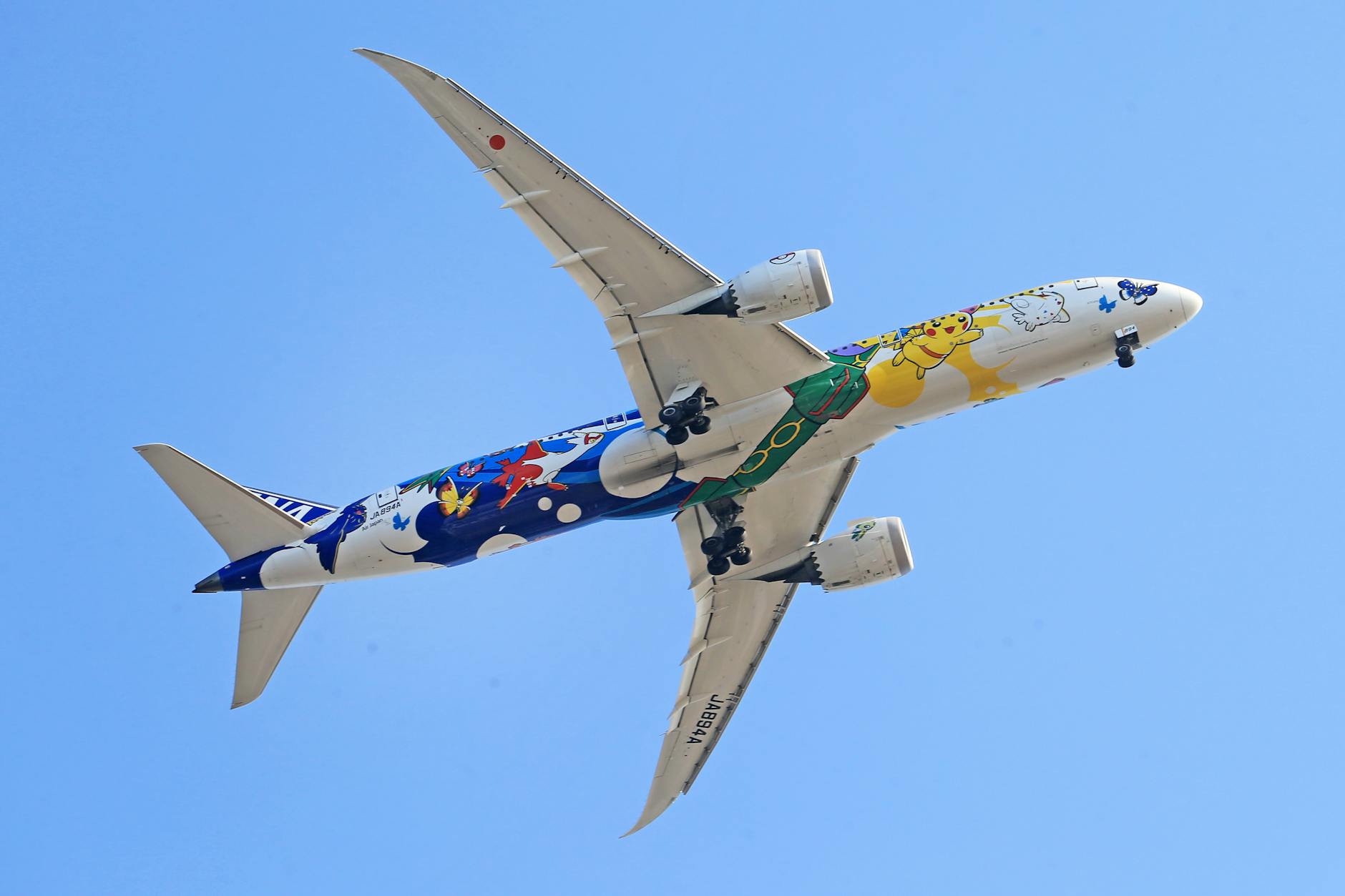
Pokémon’s travel partnerships work as a branding experience by transforming physical locations into immersive touchpoints where the brand becomes inseparable from place itself. Rather than simply selling products in new markets, Pokémon collaborates with airports, hotels, regional tourism organizations, and transit hubs to create destination-specific experiences that turn abstract brand loyalty into concrete memories. When a traveler visits Japan’s Narita Airport and enters a Pokémon Center designed around regional Pokédex entries, or explores a Pokémon-themed pop-up in Paris linked to local architecture, they’re not just consuming branded merchandise—they’re creating a personal connection to both the destination and the brand that the company wouldn’t achieve through traditional advertising alone. The most tangible example of this strategy is Pokémon’s partnership with regional Japanese tourism boards and international airports.
A traveler passing through Tokyo’s Haneda Airport doesn’t simply see Pokémon products on a shelf. They encounter a curated space celebrating Tokyo’s neighborhoods through Pokémon characters, with exclusive regional cards that commemorate their visit. These limited-edition cards become physical proof of the experience, creating both immediate purchase motivation and long-term collector value. For card collectors, these travel-exclusive releases represent the intersection of experience marketing and investment—a location-tied release automatically gains scarcity and provenance that increases its collectibility.
Table of Contents
- How Do Location-Based Partnerships Create Lasting Brand Engagement?
- The Economics of Scarcity Through Geographic Limitation
- How Travel Partnerships Generate Secondary Market Demand Among Collectors
- What Makes Travel Partnerships More Effective Than Standard Retail Distribution?
- The Dark Side of Exclusivity: Access Inequality and Market Manipulation
- Real-World Examples of Successful Travel Partnership Campaigns
- The Future of Experiential Branding in Pokémon Collecting
- Conclusion
How Do Location-Based Partnerships Create Lasting Brand Engagement?
Location-based partnerships force pokémon to think beyond product placement and instead design the entire environment around why someone is there—whether they’re traveling, catching a flight, or exploring a new city. This approach works because it addresses a fundamental truth: experiences stick in memory longer than advertisements. A collector who obtained a rare Pikachu card at an exclusive Pokémon Center in Rome will remember that card not just as a collectible, but as a souvenir of an actual moment in their life. The brand becomes part of their travel narrative. The mechanics of these partnerships typically involve limited-edition card releases, region-specific merchandise, and physical spaces designed to feel distinct from standard retail. A Pokémon partnership with a high-end hotel, for instance, might include exclusive cards in guest welcome packages, or rare trading cards available only at the hotel’s gift shop.
These constraints—location-based, time-limited—naturally create the conditions for scarcity that collectors value. Unlike mass-produced cards found in big-box retailers, travel partnership cards carry inherent authenticity markers: they’re tied to a specific place, a specific moment, and a specific partnership announcement. The limitation here is visibility. These partnerships only reach people already traveling to those destinations, which dramatically narrows the audience compared to traditional distribution. A collector in rural Montana may never have the chance to visit the Tokyo Pokémon Center or the Lisbon airport partnership. This exclusivity raises the card’s value for those who do obtain it, but simultaneously frustrates the broader collecting community and creates secondary market inflation. Cards from these partnerships often sell for 3-5x their original retail price, which prices out many collectors who missed the original opportunity.

The Economics of Scarcity Through Geographic Limitation
Pokémon’s travel partnerships deliberately weaponize geographic scarcity as a pricing mechanism. By limiting card availability to specific physical locations with defined time windows, the company creates artificial scarcity that drives both immediate demand and long-term collector value. A card released exclusively during a six-month pop-up in Barcelona will always have fewer copies in circulation than a standard retail release, which means that card inherently becomes rarer over time as copies are damaged, lost, or kept in collections and never resold. This strategy has worked exceptionally well for Pokémon because it aligns with how collectors actually behave. Rather than feeling like they’re being manipulated, collectors frame these releases as achievements—”I was in Japan and managed to get this card” becomes part of their collection story. The Travel Partnership cards function as both collectible and trophy, which explains why they consistently command premiums in secondary markets.
A standard Pikachu card might sell for $5, but a location-specific Pikachu from a Mumbai airport partnership could sell for $80-150, depending on demand. The warning: this strategy only works if the brand maintains strict scarcity discipline. If Pokémon begins re-releasing travel partnership cards through standard channels, or prints excessive quantities during partnerships, the value proposition collapses overnight. Collectors will quickly abandon these releases if they become widely available. Additionally, geographic scarcity creates inequality in access—wealthier collectors with resources to travel internationally gain disproportionate access to these cards, while collectors with geographic or economic constraints are permanently locked out. This has created a real divide in the collecting community between those who can afford to hunt for cards internationally and those who cannot.
How Travel Partnerships Generate Secondary Market Demand Among Collectors
The secondary market is where travel partnership cards truly prove their worth as a branding tool. Pokémon doesn’t directly profit from resales—they make money from the initial retail transaction. But the promise of secondary market value drives primary purchase behavior. A collector visiting an airport knows they can either keep the card they purchase or sell it later for a significant markup, and this knowledge influences whether they decide to buy. The most instructive example is Pokémon’s collaboration with luxury shopping destinations and hotel chains in Europe. A limited Charizard card released exclusively at a Monaco luxury resort sold for approximately $200 at retail (an elevated price justified by the location’s prestige) and resold for $400-600 within weeks. That secondary market activity gets publicized, which drives tourism and hotel bookings from collectors specifically hoping to obtain these cards.
The partnership amplifies itself—the card becomes a story, collectors plan trips around it, and the hotel or destination gains brand-new visitors who wouldn’t have come otherwise. For card pricing databases and investment-focused collectors, these travel partnership releases represent some of the most predictable value-holding assets in the entire hobby. However, secondary market value is speculative. Coins, bonds, and traditional collectibles have inherent material or cash-flow value. Trading cards do not. The only reason a travel partnership card holds value is because future collectors believe other future collectors will pay for it. If collecting trends shift, or if Pokémon the franchise declines in cultural relevance, these cards lose value rapidly. Cards that seemed like $300-500 investments can become worthless in a year if demand evaporates.

What Makes Travel Partnerships More Effective Than Standard Retail Distribution?
Standard retail distribution is efficient but invisible. A collector walks into Target, sees a new Pokémon product, buys it, and moves on. There’s no story, no memory attached beyond the product itself. Travel partnerships invert this dynamic—the story precedes the product. A collector hears about an exclusive card release in Barcelona, decides to plan a trip, experiences the city, and the card becomes a souvenir. The brand is woven into the travel narrative, which means it gets far more mental real estate and emotional attachment than a standard retail purchase. The tradeoff is scalability. Pokémon can serve millions of customers through retail distribution but can only serve tens of thousands of travelers through partnership-based distribution.
This is why Pokémon doesn’t abandon standard retail—it can’t. But the partnership approach allows the company to create premium, high-margin products that serve the most engaged collectors while simultaneously driving tourism and destination marketing. A location partner like an airport or hotel gets increased foot traffic and media coverage (“Rare Pokémon cards now available exclusively at our location”), while Pokémon gets brand amplification through travel media and collector communities. This also means travel partnership releases are inherently event-based rather than continuous. A standard retail card might be available for months or years. A travel partnership card might be available for only two months during the pop-up duration. This temporal scarcity, combined with geographic scarcity, creates a multiplier effect on perceived value. Collectors don’t have unlimited opportunities to obtain these cards—the window closes, and the product is gone forever from its primary source.
The Dark Side of Exclusivity: Access Inequality and Market Manipulation
Travel partnerships create significant access problems in the collecting community. A collector in Southeast Asia might have zero practical way to access a card released exclusively at JFK Airport in New York, even if they’re willing to pay. This isn’t theoretical scarcity—it’s geographic impossibility. Over time, this creates a two-tier collecting world: collectors with resources and mobility who can pursue travel partnership releases, and those without. The hobbyist in rural areas will never build the same collection as the collector with means to travel internationally. This also creates opportunities for market manipulation. Secondary market resellers specifically target travel partnership releases because they know demand will exceed supply.
Collectors have reported instances where scalpers line up at airport Pokémon Centers, purchase the maximum allowed quantity of limited cards, and immediately list them on eBay at 3-4x markup. Pokémon’s attempts to limit per-customer quantities (often 2-5 cards of a specific type) slowed this but didn’t stop it. The fundamental problem—extreme scarcity plus high demand—creates profitable arbitrage opportunities for anyone willing to camp out or coordinate with others to exploit the limitation. The warning for collectors: treating travel partnership cards as investments is high-risk. Yes, some appreciate significantly, but the market is thin, based on speculative demand, and subject to manipulation. A collector buying a $250 travel partnership card at secondary market prices hoping for appreciation is speculating on both continued cultural relevance for Pokémon and sustained collector demand for these specific releases. If either changes, the card becomes difficult to sell. Additionally, the environmental and ethical costs of travel-based collecting are real—some collectors have acknowledged the carbon footprint of international travel specifically to acquire limited cards, and the fairness question of whether hobby participation should be tied to travel budget remains unresolved.

Real-World Examples of Successful Travel Partnership Campaigns
Pokémon’s collaboration with Japan Airlines and Narita Airport remains the gold standard for travel partnership effectiveness. For a limited three-month period, first-class passengers received exclusive cards commemorating the partnership, while the airport gift shops released location-specific card packs. The campaign drove collectible demand, generated social media content from collectors sharing their travel experiences, and positioned the brand as aspirational and place-specific. Secondary market data showed these cards appreciated 200-400% within six months, creating a feedback loop where collectors specifically booked flights hoping to access these cards.
Another successful example is Pokémon’s pop-up partnerships with luxury shopping districts in European cities. A six-month activation in London’s Harrods department store released exclusive card designs incorporating London landmarks and regional Pokédex variations. The partnership drew collectors from across Europe, generated international media coverage, and the cards still command premiums in secondary markets. This model works because it combines geographic authenticity (the cards look and feel tied to the location), limited availability (Harrods pop-up only, six months), and heritage (partnering with an iconic retailer amplifies the cards’ perceived legitimacy).
The Future of Experiential Branding in Pokémon Collecting
As travel becomes costlier and environmental concerns mount, Pokémon’s partnership strategy is likely to evolve beyond purely geographic exclusivity. Future partnerships may emphasize the experience component more heavily—creating reasons for collectors to visit destinations rather than selling scarce cards as the primary draw. This could mean more collector festivals, tournament events at specific locations, or immersive exhibitions where the card release is supplementary to the broader experience.
Digital integration will also reshape travel partnerships. Pokémon may begin offering digital collectibles or hybrid physical-digital releases tied to travel locations, expanding access beyond those who can physically visit while maintaining the scarcity principle. The company could also expand partnerships with non-travel destinations—museums, cultural institutions, national parks—creating location-tied releases that serve collectors while enriching communities that aren’t primarily tourism-focused. The strategy’s core principle—making brand loyalty location-specific and experience-based—will likely persist, even if the execution evolves.
Conclusion
Pokémon’s travel partnerships succeed because they invert the typical retail relationship. Rather than asking customers to come to the brand, they make the brand inseparable from meaningful destinations. For collectors, this creates cards that hold value not just as products but as evidence of experiences and stories—a Pikachu card from a Tokyo airport partnership isn’t fungible the way a standard Pikachu card is. It’s tied to a specific moment, location, and personal narrative. This is why these cards command premiums and why collectors specifically plan trips to obtain them.
The broader lesson for collectors is that travel partnership cards represent both opportunity and risk. The premiums are real, secondary market appreciation can be substantial, and the storytelling angle is genuinely compelling. But the foundation is entirely speculative—these cards hold value only because other collectors believe they will, not because of intrinsic properties or cash flow. Access inequality, market manipulation risks, and the unsustainability of travel-based collecting for many communities remain unresolved tensions. For those pursuing these releases, the key is balancing the hobby’s experiential value with realistic assessment of investment potential and honest acknowledgment of the privilege required to participate.
You Might Also Like
- How Pokémon Rankings Turn Into Massive Online Debates
- How Pokémon Fans Turn Rankings Into Arguments and Memories
- Why Pokémon Jets Are Becoming a Global Travel Story