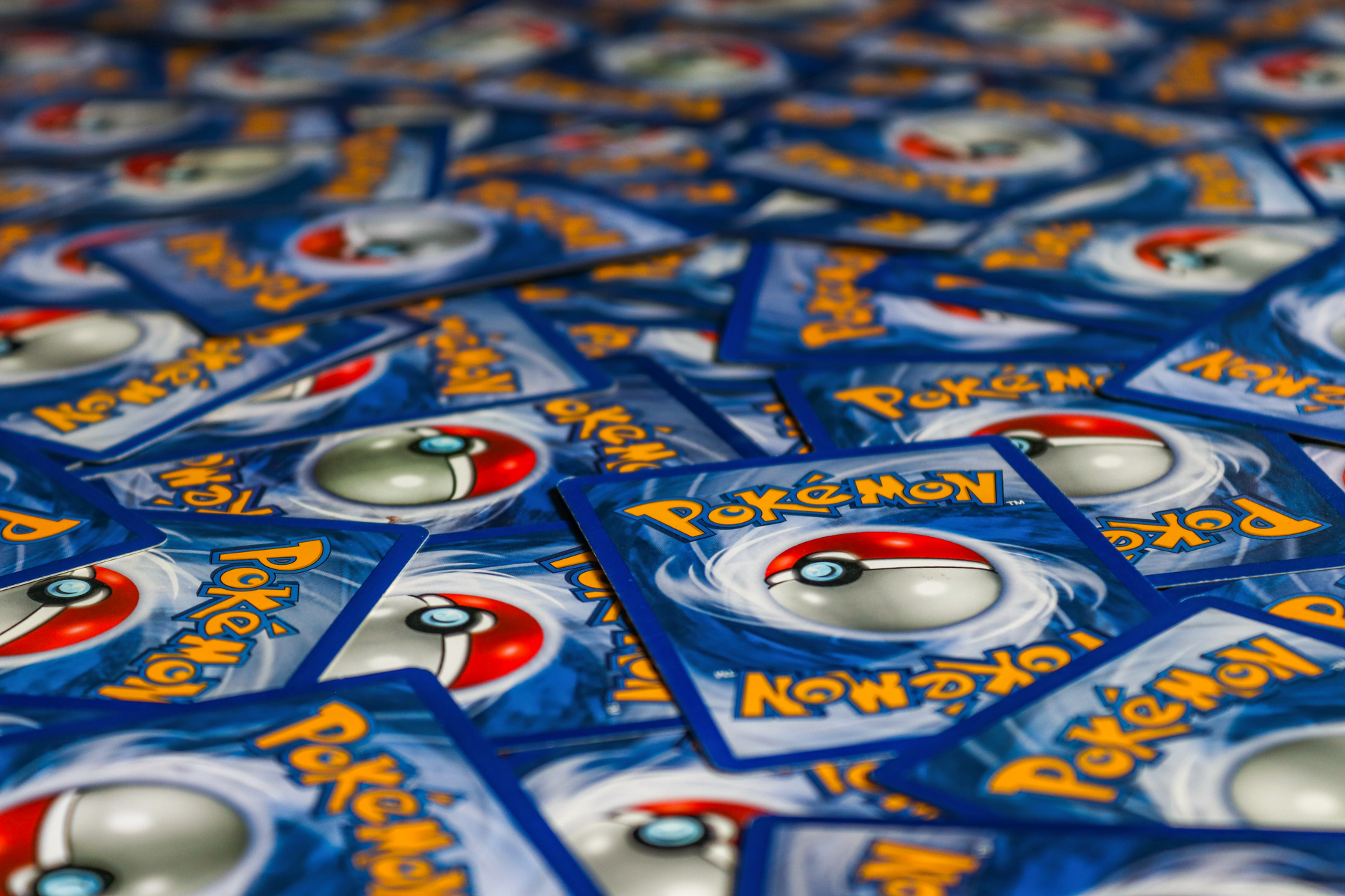
Base Set starter Pokémon cards—Charizard, Blastoise, and Venusaur—are positioned to continue climbing in price because they exist in fixed, finite supply with no possibility of reprints, while demand from both serious collectors and casual nostalgic buyers continues to grow. The market fundamentals are straightforward: WOTC (Wizards of the Coast) produced Base Set cards only in 1999 and 2000, every card that gets lost, damaged, or removed from circulation is gone forever, and prices have already documented 30-50% increases through early 2026 as institutional buyers and collector networks solidify demand. A first edition Charizard reached an all-time record of $550,000 in 2025, far surpassing its 2021 peak, while even raw unlimited copies trade around $458 on average—signals that the market has moved decisively beyond speculation toward genuine collector-driven bidding. The shift from speculation-driven demand to sustained collector interest marks the critical turning point. In the early 2020s, Pokémon cards were treated like a quick flip—buy, hold briefly, sell high.
Today’s market is different. Players who missed Base Set when it was current are now in their 40s with disposable income. Institutional investors view vintage Pokémon as an alternative asset class similar to rare coins or vintage baseball cards. The 2026 Pokémon 30th anniversary is amplifying this nostalgia, creating fresh urgency among collectors to secure starter cards before prices fully adjust to their scarcity value. The key question isn’t whether prices will climb, but how much, how fast, and which versions hold value best.
Table of Contents
- Why Supply Can Never Increase and Demand Keeps Growing
- Graded vs. Raw Cards—Different Trajectories, Same Direction
- The 30th Anniversary Catalyst—Short-Term Boost, Long-Term Floor Lift
- Buyout Strategy and Market Manipulation—Real Risk or Natural Price Discovery?
- Institutional Buyers and Market Maturation—Legitimacy and Stability
- How Starter Cards Compare to Other Base Set Holos in Price Trajectory
- Long-Term Outlook—Will Base Set Starters Keep Climbing?
- Conclusion
Why Supply Can Never Increase and Demand Keeps Growing
The core reason starter cards will likely keep climbing is brutally simple: the supply is mathematically fixed and shrinking. Charizard, Blastoise, and Venusaur from base Set were printed roughly 25 years ago. WOTC will never reprint these exact cards—newer sets feature reprints of these pokémon, but they lack the iconic 1999-2000 copyright and the “first-ever” status that drives collector passion. Every year, some portion of the remaining cards gets damaged in storage, lost in house fires or moves, or consumed by players who opened packs without preservation in mind. The total pool of high-grade, tournament-quality Base Set starters has only contracted since 2000. Demand, by contrast, is accelerating.
The TCG player base has grown from roughly 2 million in 2020 to over 9 million by 2025. More people means more collectors competing for the same shrinking inventory. Younger collectors want first-edition versions to own a piece of Pokémon history. Older collectors are rediscovering the hobby and upgrading from worn copies to graded, near-mint examples. Institutional buyers—pension funds, alternative investment vehicles, sports memorabilia firms—are now entering the space with capital to purchase significant collections. This collision of fixed supply and expanding demand is the textbook setup for sustained price appreciation. The math works even without speculation: if 10 million people are interested in Base Set cards and perhaps 500,000 high-quality copies exist, simple competition for access ensures prices can only move upward.

Graded vs. Raw Cards—Different Trajectories, Same Direction
Understanding the difference between graded and raw cards is essential for predicting which starter cards will climb. A first edition Charizard in PSA 10 condition hit $550,000 in 2025—the pinnacle of collector demand. That same card in PSA 9 (slight wear, one or two minor flaws) might trade for $200,000 to $300,000. In PSA 8, you’re looking at $80,000 to $120,000. Raw unlimited Charizards in near-mint condition average around $458 on TCGPlayer, roughly 300 times cheaper than the graded first edition. The price structure reveals where collectors are really concentrated: at the top of the grading scale and the first edition printing.
For starter cards, this matters because raw unlimited versions have significant room to climb without hitting the same ceiling as first editions. A raw unlimited Venusaur currently trades for $30-$32, while shadowless versions (an earlier, rarer variant) fetch $70-$108. That $35-$75 gap shows the market still differentiates between variants, but both tiers have climbed steadily as collector awareness spreads. The limitation here is that raw cards are vulnerable to future supply shocks—if someone discovers a storage unit with thousands of vintage starter cards, the near-mint raw market could face immediate downward pressure. Graded, slabbed cards are more insulated from this risk because the grader’s assessment is locked in and cannot be disputed by new supply. Blastoise occupies a middle ground: listed among the top-tier Base Set holos with enduring investment appeal, but not as scarce or culturally dominant as Charizard, allowing slower but steadier appreciation without the volatility.
The 30th Anniversary Catalyst—Short-Term Boost, Long-Term Floor Lift
Pokémon’s 30th anniversary in February 2026 is already driving prices upward. Recent months have seen measurable increases in anniversary-related cards as nostalgic collectors and speculators anticipate higher engagement with Base Set material. The anniversary effect typically includes major media coverage, retrospective content, celebrity endorsements, and coordinated marketing campaigns—all of which remind casual fans and dormant collectors that Pokémon cards exist and that certain vintage copies are genuinely rare. Historical precedents (like the 25th anniversary in 2021 and Logan Paul’s high-profile Base Set purchases) showed that celebrity involvement and media saturation can drive 20-50% overnight price spikes for minor cards and sustained 10-30% climbs for premium starter cards. The risk is that the anniversary effect is time-limited.
Once the 30th anniversary year concludes, some of the speculative premium may deflate. However, the important distinction is that the base floor—the price at which collectors will still buy—has likely been permanently raised. A Charizard that trades at $400 during anniversary mania might cool to $320 six months later, but it’s unlikely to drop back to pre-anniversary levels of $250 because the collector base is now larger and more informed. The anniversary effect acts as a stepping stone that pulls forward new entrants and validates the cards’ value to skeptics. Venusaur and Blastoise, while less iconic than Charizard, still benefit from this anniversary momentum because they complete the starter trifecta and appeal to nostalgia-driven buyers who want all three.

Buyout Strategy and Market Manipulation—Real Risk or Natural Price Discovery?
One underappreciated dynamic driving starter card prices is coordinated small-copy buyouts. In August-November 2025, a collector effort dubbed “Kabuto King” (targeting first edition Kabuto and triggering wider Gen I first edition interest) demonstrated that acquiring 6+ high-condition copies of a specific card can create a visible supply bottleneck, trigger viral trading communities, and spark copycat targeting of related cards. The strategy works because Pokemon TCG has relatively thin liquidity compared to equities markets—if someone accumulates most available first edition Venusaurs in PSA 8 or higher, legitimate collectors seeking to complete a set will bid up the remaining copies sharply. This is a double-edged sword for prices. On one hand, buyouts artificially accelerate appreciation and validate the cards’ scarcity to newcomers.
On the other hand, they introduce volatility. A coordinated buyout might push a starter card up 40% in two weeks, attracting panic-buying and media attention, but then trigger a 15-25% correction as speculators take profits. For long-term collectors, this volatility is a minor concern—if you’re holding the card for five years, a three-month spike followed by a minor correction is noise. For traders hoping to time the market, it’s treacherous. The practical implication: starter card prices will likely keep climbing on a 2-5 year horizon, but expect quarterly volatility of 10-20% driven by buyout cycles and macro market conditions. The underlying appreciation (30-50% per year, as documented through early 2026) is real, but the path will be choppy.
Institutional Buyers and Market Maturation—Legitimacy and Stability
The entry of institutional buyers into the Pokémon TCG space represents a fundamental shift in how starter cards are valued and priced. As of late 2025, institutional investors treat vintage Pokémon cards similarly to rare coins, comic books, or fine art—as alternative assets with low correlation to equities and bonds, positive long-term returns driven by scarcity, and cultural significance. This legitimacy attracts wealth advisors, pension funds, and insurance-backed investment vehicles that would never have considered Pokémon cards five years ago. Institutional participation has two stabilizing effects. First, it reduces the likelihood of sudden panics or mass sell-offs because institutions are buying for portfolio diversification, not looking to day-trade.
Second, it establishes professional grading, insurance, and custody standards that make the market more transparent and reduce fraud risk. A collector can now insure a $10,000 Base Set Charizard through major fine-art insurance providers, giving buyers confidence that the asset is recognized and protected. This maturation of infrastructure—professional authentication, insurance, custody services—has lifted the valuation floor by making large transactions less risky. The limitation is that institutional buyers compete directly with collectors, driving prices upward faster than traditional supply-and-demand curves might predict. If pension funds decide to allocate 0.5% of their $100 billion portfolio to alternative assets and allocate 10% of that to Pokémon cards, the sudden $50 million inflow will create temporary supply shortages and spike prices. Starter cards, being the most liquid and culturally recognizable, will see outsized appreciation from institutional flows.

How Starter Cards Compare to Other Base Set Holos in Price Trajectory
To understand why starter cards will keep climbing, it’s helpful to compare them to other valuable Base Set holos. Charizard is the undisputed heavyweight—the $550,000 record price reflects its status as the most iconic card ever printed. Blastoise and Venusaur, while less expensive, still command premium prices and tight supply because they appeared on the booster box artwork and represent the first-generation starter experience. Other desirable Base Set holos like Machamp, Alakazam, or Articuno trade for significantly less and lack the same cultural imprint.
The price gap reveals buyer hierarchy: starter Pokémon (especially Charizard) are bought by casual collectors, serious investors, and institutions. Other holos are bought primarily by completionists and Pokémon TCG specialists. Casual collectors have deeper pockets and longer investment horizons, which supports sustained price appreciation. For example, a raw unlimited Charizard at $458 versus a raw unlimited Machamp at roughly $12-15 shows that starters command a 30-35x premium over comparably conditioned non-starters. That premium will likely hold or widen as the collector base expands and casual buyers continue to prioritize nostalgia over completionism.
Long-Term Outlook—Will Base Set Starters Keep Climbing?
The five-to-ten-year outlook for Base Set starter cards is overwhelmingly positive, absent a major supply shock or macroeconomic collapse. The fundamentals—fixed supply, expanding collector base, institutional legitimacy, nostalgia, and the 30th anniversary momentum—all point to sustained appreciation. Historical precedent supports this: vintage Magic: The Gathering cards and vintage Pokémon non-Base Set cards (like Shadowless and 1st Edition holos from Jungle and Fossil) have appreciated 8-15% annually over the past decade, driven by the same supply-and-demand dynamics. However, the path forward likely includes a moderation from the 30-50% annualized gains of recent years.
As prices rise and valuations become more rational, annual appreciation will probably settle into a 5-12% range—still handily outpacing inflation and most traditional investments, but less explosive than the 2020-2025 spike. Charizard, Blastoise, and Venusaur will remain the most resilient because they benefit from the strongest cultural gravity and the broadest collector base. Raw unlimited versions will likely outpace graded first editions in percentage gains because they have lower entry costs and more room to run. And buyout-driven volatility will remain a feature, creating opportunities for patient buyers to acquire cards during post-spike corrections.
Conclusion
Base Set starter Pokémon cards may keep climbing because they represent a perfect convergence of scarcity, demand, and legitimacy. The supply will never increase, the collector base will continue to expand, and the cultural cachet of Charizard, Blastoise, and Venusaur ensures they will remain accessible entry points for newcomers and trophy pieces for serious investors.
Even with moderated appreciation rates, starter cards offer better long-term prospects than most alternative investments, particularly for buyers with five-plus year horizons. The practical takeaway: if you’re considering acquiring Base Set starters, focus on condition and rarity (first edition and shadowless variants over unlimited), avoid trying to time volatile buyout cycles, and treat the investment as a 5-10 year hold rather than a speculative flip. The prices may climb, but the climb will reward patience far more than panic-buying during hype spikes.
You Might Also Like
- Why Base Set Pokémon Cards May Be Worth Far More by the Time Pokémon Turns 50
- Why Future Collectors May Chase Base Set Pokémon Cards Like Historic Artifacts
- Why Base Set Pokémon Cards May Become More Valuable With Every Anniversary