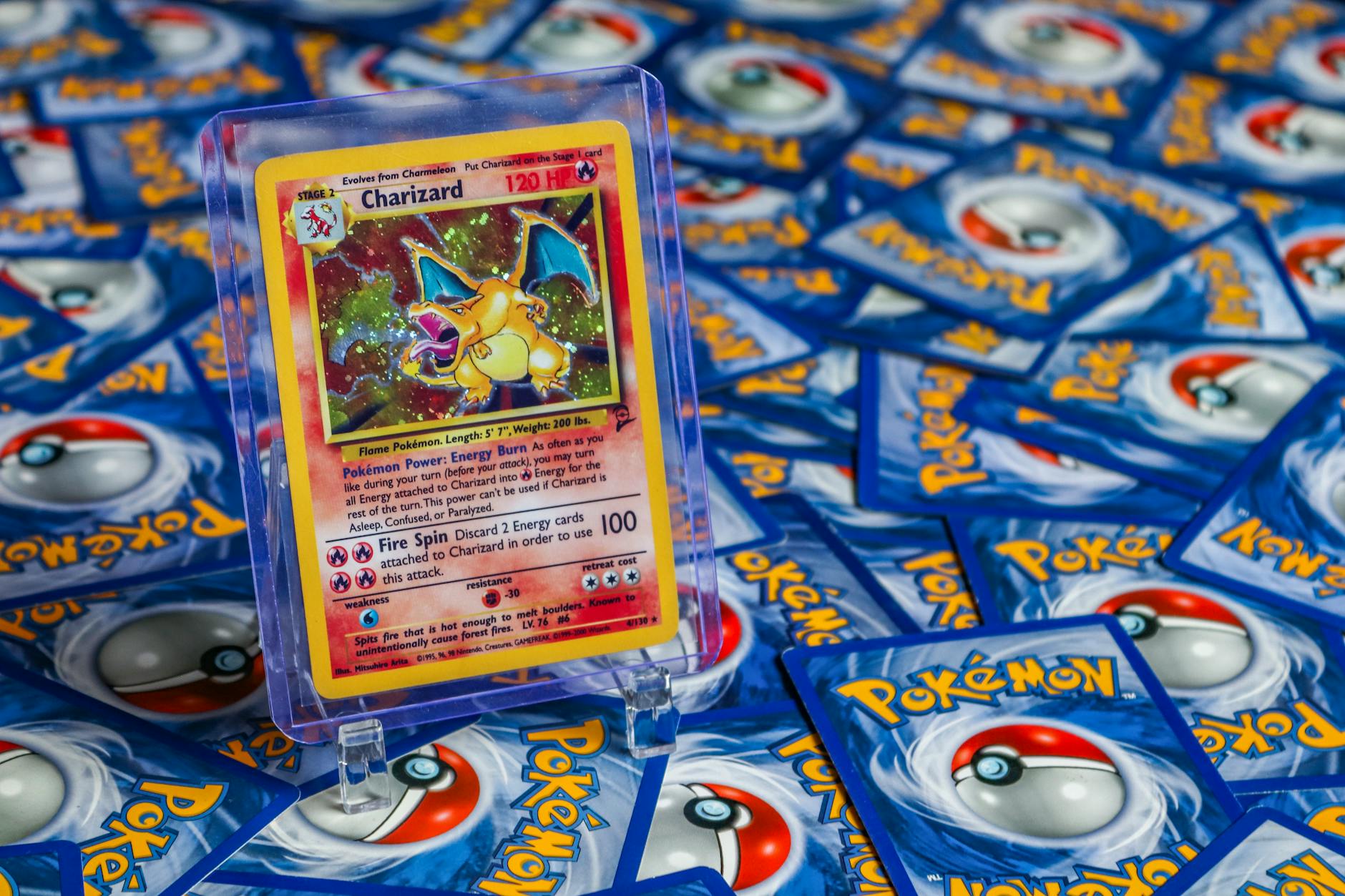
First Edition Pokémon cards occupy a unique position in trading card collecting that separates them from all other TCG assets: they represent a finite window of production from the earliest days of the franchise. A first print run of the Base Set in 1999 lasted only a few months before the “Unlimited” edition replaced it, which means the total population of first editions is inherently capped and will never grow. This scarcity combined with increasing collector demand and sustained institutional investment has positioned these cards as genuine blue-chip collectibles rather than speculative assets. A Charizard Holographic First Edition from Base Set has appreciated from roughly $50 in 2010 to reliably trading above $100,000 in high grades today—a trajectory that mirrors rare fine art and vintage commodities more than typical trading cards. The crown jewels comparison isn’t hyperbole.
Just as royal gemstones command premium prices due to proven scarcity and historical significance, First Edition Pokémon cards benefit from a combination of factors that competing TCGs cannot replicate. The Base Set was the only print run that experienced the original cultural phenomenon before the market became fragmented. Vintage Magic: The Gathering cards exist in greater quantities. Yu-Gi-Oh first editions arrived later in the collectibles timeline. Digimon never achieved First Edition status in a way that mattered. This timing advantage, combined with Pokémon’s documented cultural longevity, has created a collectibles category with structural advantages that only strengthen as time passes and population counts decline through collector attrition and conservation losses.
Table of Contents
- What Elevates First Edition Pokémon Cards Above Other TCG Formats
- The Rarity Mechanism Behind First Edition Pricing Stability
- Market Dynamics and First Edition Investment Potential
- Building and Positioning a First Edition Collection
- Risks and Common Pitfalls in First Edition Collecting
- Grading, Authentication, and Preservation Standards
- The Future of First Edition Cards in Pokémon and the Broader TCG Market
- Conclusion
What Elevates First Edition Pokémon Cards Above Other TCG Formats
The fundamental difference between First Edition cards and later printings comes down to production volume and market awareness. The original base Set first edition print run included approximately 51 million cards across all rarities, which sounds enormous until you account for 25 years of destruction, loss, and consumption. Conservative estimates suggest fewer than 1% of all first edition cards still exist in collectible condition, and graded specimens in gem-mint condition (PSA 9-10) represent perhaps 0.01% of the original population. Compare this to modern booster boxes, where tens of millions of copies are deliberately preserved by collectors and investors specifically because scarcity became the purchase motivation. A player who bought a Base Set first edition booster box in 1999 for $100 likely opened most or all of the packs without expectation of future value; today’s collectors approach vintage products with preservation as the primary goal.
The psychological and cultural component matters equally. Collectors who lived through Pokémon’s 1999-2001 peak developed emotional attachments to these specific cards that subsequent generations simply cannot replicate. This isn’t true of every TCG—Magic players have equally dedicated communities across multiple eras, but no single Magic product carries the cultural weight of Base Set First Edition. Millennials and older Gen-X collectors now have purchasing power and are actively returning to the hobby they left in their childhood, creating a demand curve that simultaneously operates on nostalgia, status signaling, and legitimate investment mechanics. A Blastoise or Venusaur First Edition commands less premium than Charizard specifically because cultural memory encoded Charizard as the most desirable card, and that 25-year-old perception hasn’t weakened—if anything, it’s amplified as these cards genuinely become rarer through time and handling losses.

The Rarity Mechanism Behind First Edition Pricing Stability
The mathematical reality of first Edition cards works in their favor in ways that most collectibles don’t experience. With each decade that passes, more cards are damaged, lost, or destroyed. A card stored in a shoebox in a basement for 20 years without acid-free sleeves has degraded significantly. Cards in attics experienced temperature and humidity cycling that reduces grade potential. Cards simply thrown away during childhood cleanings are permanently removed from the population. This attrition is not replaced—no new first editions are being printed, and even if they were, a reprint loses all of the authenticity premium.
This creates a genuine scarcity curve where the population available for collection genuinely declines each year without exception. However, the limitation here is that grade inflation and collector expectations can destabilize valuations if the market suddenly shifts. A card graded PSA 8 in 2015 might grade as PSA 6 under today’s tighter standards, which would immediately reduce its market value by 40-50%. collectors who bought Charizards at the 2021 market peak ($250,000 for gem examples) have experienced significant drawdowns as the speculative bubble deflated and casual resellers dumped inventory. First Edition cards also depend on sustained interest in Pokémon itself. A major franchise failure or permanent decline in collecting interest would break the demand side of the equation, transforming these cards from appreciating assets into legacy collectibles with ceiling valuations. The crown jewel status requires both scarcity and desirability—one without the other becomes a worthless rarity.
Market Dynamics and First Edition Investment Potential
The investment case for First Edition Pokémon cards rests on three pillars: proven demand from multiple buyer categories, documented supply scarcity, and increasing accessibility via grading companies. In 2024, a high-grade Charizard First Edition sells faster and more reliably than most real estate parcels. The buyer pool includes collectors (people who love the cards), investors (people betting on appreciation), dealers (people reselling for inventory), and institutional buyers (funds treating TCG assets as alternative investments). This diversity of buyers creates liquidity that other vintage cards struggle to match. A rare Magic card might have five potential buyers worldwide; a Charizard First Edition has thousands, which translates to price stability even during market downturns. Specific examples illustrate the market depth.
A PSA 9 Base set charizard Holographic First Edition consistently sells for $60,000-$120,000 depending on market conditions. Meanwhile, PSA 8 versions of the same card have proven support in the $35,000-$60,000 range, and even PSA 7 cards command $15,000-$35,000. This price consistency at multiple grade levels suggests genuine value discovery rather than speculative pricing. However, the tradeoff with this investment category is the capital requirement—meaningful First Edition collections require $10,000+ investments for even modest acquisitions, and elite examples demand six figures. A collector without $50,000 to deploy cannot access the best Charizards or Blastoise cards that truly represent the category’s apex. Additionally, the market remains heavily dependent on a handful of high-grade specimens actively trading. A record sale of a PSA 10 Charizard at auction can spike comparable prices upward for months, but these auctions happen infrequently and don’t guarantee sustained momentum.

Building and Positioning a First Edition Collection
The practical approach to First Edition collecting varies dramatically based on budget and time horizon. Collectors with $100,000+ can pursue a true blue-chip strategy: identify the five most important cards (Charizard, Blastoise, Venusaur, Pikachu in high grades, and possibly a Machamp or Alakazam), acquire them in high grades (PSA 8 minimum), and hold long-term as portfolio assets. This approach treats First Editions similar to vintage watches or contemporary art—illiquid assets expected to appreciate over decades. A collector with $10,000-$50,000 should consider a more diversified approach: accumulate multiple cards across different grades and rarities rather than concentrating capital into one mega-card. A collection of twelve cards graded PSA 6-7 across various holos (Charizard, Blastoise, Venusaur, Pikachu, Machamp, Alakazam, Dragonite, Arcanine, Lapras, Magneton, Jolteon, Flareon) provides exposure to First Edition appreciation without the concentration risk. The comparison between grade pursuit and card diversity reveals important tradeoffs.
Spending $40,000 on a single PSA 9 Charizard means owning one card with substantial downside if that specific card’s market value contracts. Spending the same $40,000 on eight PSA 7 Charizards from different collections creates redundancy—if the Charizard market softens, the loss is distributed rather than concentrated. However, multiple cards demand more storage and insurance costs, and selling becomes more complex. A single exceptional card can be sold through major auction houses with high visibility and premium buyer participation. Eight good cards require retail distribution or breaking them into multiple lots, which reduces per-unit pricing and increases friction. The optimal choice depends on whether the collector values asset concentration and simplicity or prefers diversification and hedging.
Risks and Common Pitfalls in First Edition Collecting
The counterfeit risk in high-value First Edition cards has increased dramatically as prices have escalated. Sophisticated counterfeits of PSA-graded Charizards exist in the market, complete with fraudulent labels and backing. A counterfeit card can look virtually identical to a real one to the naked eye, which means buyer vulnerability has never been higher. Some of these fakes have been submitted to grading companies themselves, and occasional examples slip through and receive genuine PSA labels, which then circulate at full market value. This risk is not theoretical—multiple documented cases of fake PSA-graded cards have been discovered and subsequently regrade as counterfeits when sent in for verification. Collectors purchasing high-value First Editions should exclusively buy from established dealers with 10+ year track records, directly from collectors with documented collections, or through major auction houses with buyer protections. Another significant limitation is the grade rarity cliff.
The difference between a PSA 8 and PSA 9 Charizard First Edition often represents $30,000-$50,000 in value but requires only marginally better centering, corners, and surface condition. Very few Charizards achieve PSA 9 or higher because the card was printed in 1999 with inconsistent quality and then handled by children. Population reports show perhaps 100-150 PSA 9 Charizard First Edition holograms known worldwide. This creates a scarcity premium that is genuine but also brittle—prices for these elite examples can experience sharp movements on limited trading volume. Additionally, collector burnout is underestimated in the First Edition market. Cards that were purchased at peak prices in 2020-2021 by new collectors have experienced 30-60% value reductions as the initial speculative enthusiasm waned. Collectors who bought thinking they were making a safe investment have lost confidence, and some have dumped collections into the market, creating further downward pressure. This suggests the market can overshoot both directions, and timing a purchase for maximum returns is exceptionally difficult.

Grading, Authentication, and Preservation Standards
The certification and grading of First Edition cards has become central to their status as crown jewels. PSA (Professional Sports Authenticators) and BGS (Beckett Grading Services) are the two dominant graders, and the label on a card has become nearly as important as the card itself. A First Edition Charizard without a PSA or BGS label has substantially reduced market value—potentially 50% less even if the card is demonstrably authentic and high-grade. This label dependency is because buyers need confidence in grade assessment when spending four and five figures, and the major graders have built sufficient track records that their assessments command trust. However, this creates a system where the grader’s reputation is paramount and any loss of confidence (such as through counterfeit labels or grade inflation allegations) can destabilize entire categories of cards. Preservation of First Edition cards requires more diligence than most collectibles.
The card itself has three critical vulnerabilities: the surface (affected by handling, scratches, oxidation), the corners (prone to rounding from shuffling or storage), and the centering (determined at manufacturing and unchangeable). A first edition card stored in a standard penny sleeve and cardboard box will degrade visibly within 5-10 years. The proper setup includes individual card sleeves (acid-free, preferably Archival Quality), backing boards designed for long-term preservation, and storage in temperature and humidity-controlled environments. For truly valuable cards, collectors invest in UV-blocking display cases or safes. This ongoing preservation cost compounds over time—insurance premiums for a $100,000 card run $500-$1,200 annually, and secure storage (safe deposit box or vault) adds another $500-$2,000 per year. A collection of five crown-jewel cards carries annual overhead of $5,000-$15,000 when accounting for insurance, storage, and periodic professional inspection.
The Future of First Edition Cards in Pokémon and the Broader TCG Market
The trajectory for First Edition Pokémon cards over the next 10-20 years appears structurally sound despite short-term volatility. The global population is aging into higher wealth brackets, and Pokémon nostalgia remains culturally powerful across multiple demographics. Major auction houses like Heritage Auctions and Sotheby’s have committed significant resources to TCG and vintage card sales, which suggests institutional belief in sustained demand. Additionally, the absolute population of high-grade First Editions continues to decline through attrition, which means scarcity is genuinely improving for cards that survive to 2035, 2045, and beyond. A PSA 7 or 8 Charizard that survives three more decades will be measurably rarer than today’s specimen, and rarity has historically commanded premium valuations.
However, the forward-looking case depends on several assumptions holding true. Pokémon must maintain cultural relevance across generations, which it has done remarkably well but cannot be guaranteed indefinitely. The grading market must avoid either collapsing in credibility or becoming fragmented across competing standards, which would reduce label trust. Most importantly, the collector base must remain large and affluent enough to support these valuations, which is fundamentally an economic question that depends on broader wealth distribution and discretionary spending patterns. If a significant recession occurs, high-priced collectibles often experience sharp corrections as investors liquidate for cash. Cards that traded at $100,000 can rapidly decline to $40,000-$60,000 valuations during liquidity events, which is why the “crown jewels” analogy has limits—unlike gemstones or real property, cards have no intrinsic utility and depend entirely on continued collector enthusiasm.
Conclusion
First Edition Pokémon cards have earned their position as crown jewels in the trading card collecting world through a combination of genuine scarcity, cultural significance, and sustained demand that other collectibles struggle to match. The fundamental mechanics—a finite population that only decreases over time, combined with iconic card designs from the franchise’s peak cultural moment—create structural advantages that support long-term value stability. A collector who purchases a high-grade Charizard or Blastoise First Edition today is acquiring an asset that has demonstrated 20+ years of appreciation and has proven liquidity across multiple buyer categories.
However, prospective collectors should approach First Edition cards with realistic expectations about volatility, concentration risks, and ongoing preservation costs. The crown jewel status is real but depends on sustained economic conditions, collector enthusiasm, and grading market credibility. Collectors should invest capital they can afford to hold long-term, avoid concentration into a single card, and purchase exclusively from reputable sources to mitigate counterfeiting risks. For collectors who meet these criteria, First Edition Pokémon cards represent a defensible alternative investment category with historical precedent and documented demand that justifies their premium positioning in the TCG market.
You Might Also Like
- Why Vintage Pokémon Base Set Cards Could Become the Next Big Generational Collectible
- Could Vintage Pokémon Cards Become the Next Category of Museum-Level Collectibles?
- Could 1999 Pokémon Cards Become the Defining Collectibles of the 21st Century?