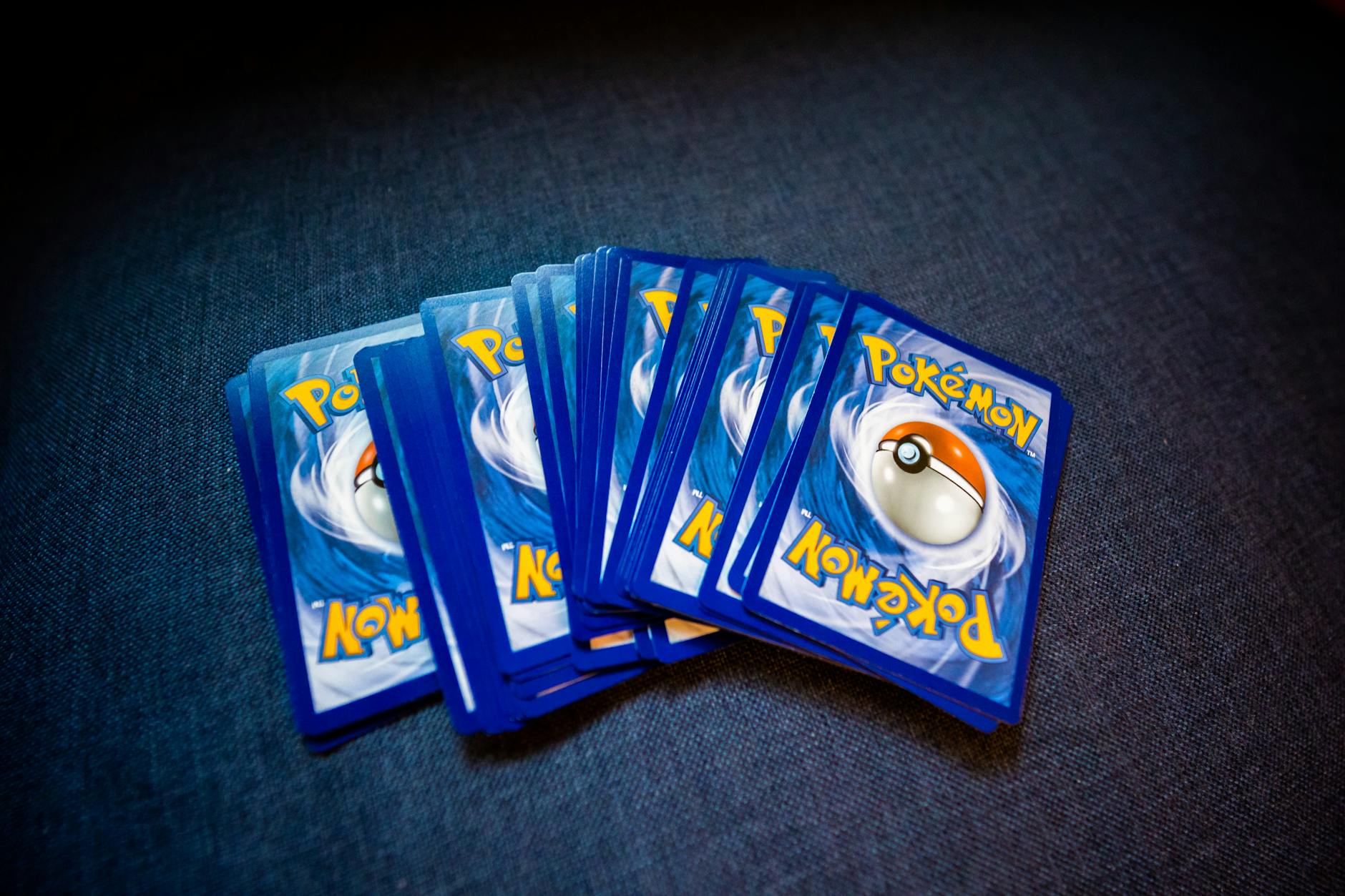
No, you shouldn’t trust Buy It Now prices alone for Pokemon cards. BIN listings represent what sellers are asking for a card, not what collectors are actually paying. When you see a 1st Edition Charizard listed for $5,000, that’s an aspiration—the seller’s hope, not the market reality. To find true market value, you need to check what cards have actually sold for in the past 90 days, not just what’s currently listed for sale.
This distinction is the difference between overpaying by hundreds of dollars and making an informed purchase. The Pokemon card secondary market hit $2.1 billion by mid-2026, with massive trading volume across eBay, TCGPlayer, and specialized collectors’ platforms. That scale means plenty of data exists to show what cards genuinely sell for—but only if you know where to look. A single BIN listing is just one seller’s opinion; actual sold listings show the consensus of the market.
Table of Contents
- Why Buy It Now Prices Don’t Reflect Real Market Value
- Market Volatility and the Danger of Assuming Stability
- Graded Cards and the Premium Market
- Using Multiple Price Sources for Accuracy
- Common Pricing Mistakes Collectors Make
- Regional Market Variations and Price Increases
- The Future of Pokemon Card Pricing
- Conclusion
Why Buy It Now Prices Don’t Reflect Real Market Value
The core problem is simple: sellers set BIN prices based on hope, not transactions. They might price a card high hoping to catch a desperate buyer, or they might undervalue it because they’re unfamiliar with current market trends. Neither reflects what the card will actually sell for. eBay’s “sold Items” filter, filtered to the past 90 days, shows you the real story—a sequence of actual transactions where buyers and sellers agreed on a price.
The median of those sold prices is your baseline for what the card is worth. Consider a practical example: in April 2026, Dachsbun ex from the Stellar Crown set doubled in price to become the third-most valuable card in the set. If you’d relied on BIN listings from early April, you’d have seen prices all over the map—some sellers hadn’t updated yet, holding at $40, while others had jumped to $80. Only by checking sold listings could you have seen that the market was actually moving and that $60-70 was the emerging real price. Sellers who didn’t check sold listings got left behind.
Market Volatility and the Danger of Assuming Stability
The pokemon card market is volatile. A card worth $40 today might drop to $28 within three weeks based on a meta shift, a new set release, or simply changing collector preferences. This volatility makes BIN prices particularly dangerous—they’re a snapshot of a moment, but collectors often treat them as if they’re durable truth. Shiny Pokemon cards from Paldean Fates more than doubled in price between March and April 2026, yet many BIN listings didn’t update for weeks, leaving buyers confused about what was reasonable.
This volatility means relying on a single listing is risky. If you see a card for sale at one price and assume that’s the market rate, you’re making an assumption with real financial consequences. The card might have been listed three weeks ago before the price spike, or the seller might be uninformed about recent market movements. Real-time price tracking is essential, but “real-time” doesn’t mean the first listing you see—it means checking multiple sold transactions across recent dates.
Graded Cards and the Premium Market
When you move into higher-value cards, especially graded examples, pricing becomes even more complex. Professionally graded cards from PSA, Beckett, or CGC have their own pricing tiers entirely separate from raw (ungraded) cards. A raw Charizard might be worth $2,000, but the same card graded PSA 9 could command $8,000 or more. Condition assessment directly affects value, and graded cards are significantly more trustworthy for high-value purchases because the grade is certified.
However, graded card pricing is even more volatile than raw cards, especially at the high end. A PSA 10 can fluctuate thousands of dollars based on market demand and the scarcity of that particular grade. BIN prices for graded cards are nearly useless—you absolutely must check recent sales of the same grade and condition. A graded card listed for $5,000 might be overpriced if no PSA 10 has sold for more than $3,500 in the past three months.

Using Multiple Price Sources for Accuracy
The most reliable approach is combining data from multiple sources. TCGPlayer, eBay sold listings, and the price guide historical data together provide the highest confidence in valuation. Card Value’s app updates pricing hourly from real marketplace transactions, showing 30-day average sale prices for Near Mint condition cards. When three sources align on a price range—say TCGPlayer shows $150-180, eBay sold listings cluster around $165, and Card Value shows a $160 30-day average—you have confidence.
Single-source pricing is misleading. If you check only TCGPlayer, you might miss a surge in prices on eBay. If you check only one eBay listing, you’re missing the full picture of the market. Spend five minutes cross-referencing before making a purchase decision, especially for expensive cards. This is the collector’s equivalent of getting a second opinion: it takes minimal time and saves money.
Common Pricing Mistakes Collectors Make
One of the most frequent mistakes is confusing “listing price” with “market price.” A card listed at $200 doesn’t mean it’s worth $200—it means someone is asking for $200. If that same card hasn’t sold in weeks, it’s probably overpriced. Another mistake is updating your collection valuation based on a single high BIN listing. You spot a Charizard listed for $3,000 and suddenly think your copy is worth that.
In reality, if comparable cards are selling for $1,800, that $3,000 listing is a wishful seller, not evidence of market value. Condition assessment errors are equally costly. A card you think is Near Mint might be Lightly Played, and the price difference is substantial—sometimes 30-50% lower. If you’re relying on BIN prices without assessing condition carefully, you’re missing a major variable. Always compare cards of the same condition grade across sources; a Near Mint card’s price means nothing if you’re comparing it to a Mint listing.
Regional Market Variations and Price Increases
The Pokemon card market isn’t monolithic—Japanese and English markets have different pricing dynamics. In 2026, Creatures Inc. raised pack prices from ¥180 to ¥200 for booster packs (boxes from ¥5,400 to ¥6,000), citing rising material costs. This is the second price increase in four years, and it signals that supply costs are climbing.
Japanese secondary market prices are rising in response, which eventually influences English card prices as well. A collector comparing prices between markets needs to account for these regional dynamics. If you’re pricing a Japanese card, don’t rely solely on English market comparisons. Japanese cards often command different prices than English equivalents, and recent supply cost increases mean values are shifting. This is another argument for using multiple sources—regional differences mean no single pricing source tells the full story.
The Future of Pokemon Card Pricing
As the secondary market matures and becomes increasingly professionalized, price data will likely become more transparent and stable. The market’s shift toward graded cards, the rise of apps like Card Value that track real-time pricing, and the emergence of data-driven collectors all point toward a future where actual transaction prices dominate over aspirational asking prices. For now, the gap between BIN and real market value remains wide, but it’s narrowing.
The collectors who thrive will be those who treat pricing research as part of the hobby. You wouldn’t buy a car without checking the actual sale prices of comparable models—the same principle applies to cards. The market is large enough and active enough that good data exists; you just have to look for it.
Conclusion
Buy It Now prices are a starting point for research, not a destination. Use them to identify cards and see what sellers think they’re worth, but verify every price with sold listings and multiple sources. The 90-day sold listings on eBay, combined with TCGPlayer trends and Card Value’s hourly updates, give you a realistic picture of the market.
A few minutes of cross-referencing saves you hundreds of dollars on high-value purchases. Trust the market, not the ask. Let actual transactions—the prices collectors have already paid—guide your buying decisions. That’s how you avoid overpaying and build a collection based on real value instead of seller optimism.
You Might Also Like
- Should You Open a Vintage Pokemon Pack or Keep It Sealed?
- What Makes Moonbreon Different From Other Modern Pokemon Chase Cards?
- Is Beckett Still Worth Considering for High End Pokemon Cards?