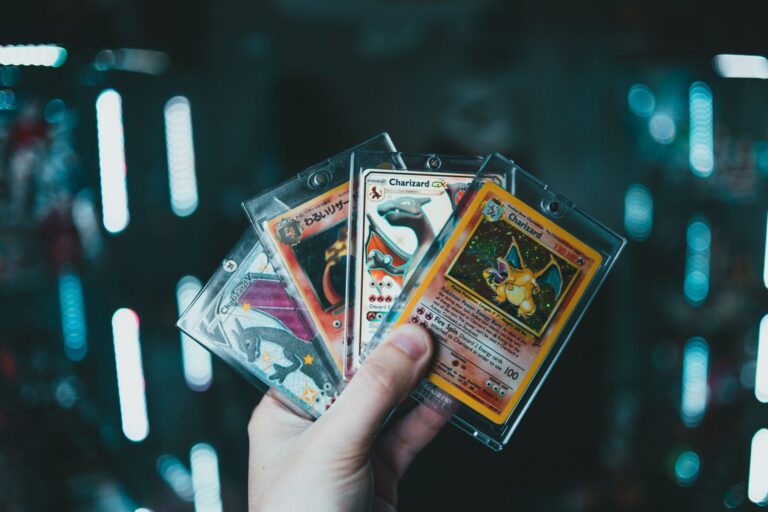
Spotting a fake Pokémon card listing requires attention to multiple red flags that work together, not just one obvious sign. A fake listing typically combines unusual pricing far below market value with poor image quality, vague descriptions, new or unverified seller accounts, and suspicious grading claims—sometimes all in the same auction. For example, a 1999 Base Set Charizard graded PSA 8 that appears priced at $200 when the market rate is $8,000 to $12,000 isn’t a bargain; it’s almost certainly a listing by someone misrepresenting the card’s authenticity, grade, or condition.
The good news is that with practice, you can identify these fraudulent listings before placing a bid. Most fake listings fail on several fronts: the seller profile appears hastily created, the photographs show watermarks from stock image sites or are suspiciously unclear, the grading claim lacks proper certification numbers, or the listing description avoids specific details that legitimate sellers provide. By learning what legitimate listings look like and training yourself to spot inconsistencies, you can dramatically reduce the risk of losing money on counterfeit cards.
Table of Contents
- What Are the Most Common Red Flags in Suspicious Pokémon Card Listings?
- How Do Fake Grading Claims and Certification Numbers Work?
- How Can You Verify a Seller’s Legitimacy and Track Record?
- What Are the Telltale Signs of Counterfeit Cards in Listings?
- What Should You Know About Platform Protections and Buyer Recourse?
- How Do Stock Images and Photo Manipulation Appear in Fake Listings?
- What’s the Future of Pokémon Card Authentication and How Should It Affect Your Buying Decisions?
- Conclusion
What Are the Most Common Red Flags in Suspicious Pokémon Card Listings?
The most immediate red flag is a price that seems too good to be true—and usually is. A graded First Edition Base Set Charizard card should never sell for $500 when verified copies consistently move at $10,000-plus. Scammers often use rock-bottom pricing to create urgency and bypass the critical thinking that collectors would otherwise apply. They’re betting that the appeal of a “deal” will override your skepticism. Seller account age matters significantly. A seller with zero feedback history or an account created days before listing high-value cards is a warning sign.
Legitimate collectors and dealers build reputation over months and years. If the seller’s profile shows they’ve only recently started selling, or if their previous sales involved entirely different product categories, proceed with extreme caution. New accounts selling expensive graded cards are often fronts for card counterfeiting operations or resellers unloading stolen merchandise. Poor-quality photographs are another critical indicator. Legitimate sellers of high-value cards always provide clear, well-lit images showing the card’s front, back, and sometimes multiple angles. A fake listing might use blurry photos, images taken in dim lighting, close-ups that hide the card’s full appearance, or stock photos that have been altered with filters. Some counterfeiters deliberately use low-resolution images to make grading inconsistencies and printing errors harder to spot.

How Do Fake Grading Claims and Certification Numbers Work?
Many fraudulent listings claim a card is graded by a major authentication company like PSA, Beckett (BGS), or CGC without providing a valid certification number. A legitimate graded card always includes a tamper-evident case with a printed label that displays a unique certification number. If a seller cannot or will not provide this number for you to verify on the grader’s website, the card is almost certainly ungraded or counterfeit. Some scammers provide fake certification numbers—sequences of digits that sound plausible but don’t actually exist in the grading company’s database. You can verify any legitimate certification number in seconds by visiting the grader’s website (PSA.com, Beckett.com, or CGC.com) and searching their registry.
If the number doesn’t return a result or returns a different card entirely, you’ve identified a fraud. Scammers count on buyers not taking this simple verification step. Other listings will claim high grades like PSA 9 or PSA 10 on cards that show obvious signs of wear—creased corners, visible printing defects, or off-center images. A PSA 10 card is essentially in pristine, museum-quality condition; a photograph showing visible wear contradicts this claim. This inconsistency is a warning that the seller either doesn’t understand grading or is deliberately misrepresenting the card’s condition.
How Can You Verify a Seller’s Legitimacy and Track Record?
Before bidding, review the seller’s complete feedback history and recent sales. On eBay, look at what they’ve sold in the past thirty days—do they consistently sell Pokémon cards, or are they flipping random items? Legitimate dealers develop expertise in specific categories and maintain consistent selling practices. A seller who lists electronics, furniture, and collectible cards indiscriminately is less trustworthy than one who specializes in graded sports cards or Pokémon exclusively. Check for detailed seller information on their profile. Reputable dealers usually include a shop description, contact information, and clear return policies.
If the profile is nearly blank, if they list no return policy, or if all their recent listings are high-value items from multiple different categories, these are signs of an account that may be compromised or dedicated to short-term fraud. Additionally, look at the seller’s average response time and communication quality in buyer feedback. Scammers often don’t respond to pre-bid questions, or they provide evasive, non-specific answers. Contact the seller before bidding and ask specific questions: Can they provide the PSA certification number? Will they take additional photos at different angles? Can they describe the card’s print lines, centering, and any visible flaws? Legitimate sellers answer these questions promptly and in detail. Scammers often don’t respond, or they respond with vague statements like “the card is nice, you’ll be happy with it.”.

What Are the Telltale Signs of Counterfeit Cards in Listings?
Counterfeit Pokémon cards often have printing quality differences that show up in photographs—colors that are too bright, text that appears fuzzy or slightly misaligned, or a card back that lacks the correct holo pattern. If you zoom in on the listing photos and notice the card’s printed text has uneven borders or the colors appear washed out or oversaturated, this can indicate a forgery. Real Base Set cards have crisp, consistent printing; counterfeits often have subtle but detectable inconsistencies. Another telltale sign is incorrect card stock or thickness. Vintage Pokémon cards from the 1990s have a specific weight and texture that counterfeiters struggle to replicate perfectly.
However, you can’t assess this from a photograph alone—which is why you should never commit significant money to a high-value card without seeing it in person or receiving it from a verified seller with a proven track record. Some counterfeiters deliberately provide only wide-angle or low-quality photos to obscure these physical details. Listings that claim “near mint” or “gem mint” condition but show no actual certification should raise your suspicion immediately. These are subjective terms with no standard meaning outside of professional grading. When a seller uses these terms instead of providing a PSA grade, they’re often covering for condition issues they don’t want to fully disclose. Legitimate sellers either provide official grades or use honest descriptions like “light play wear on corners” or “small crease on back.”.
What Should You Know About Platform Protections and Buyer Recourse?
eBay offers buyer protection programs, but these protections have limits. If you receive a counterfeit card, you can file a claim, and eBay will likely refund your money—but this process takes weeks, and you’ll need to return the card to a potentially untrustworthy seller. It’s far better to avoid the problem entirely than to rely on dispute resolution. Additionally, if a seller’s account is shut down after you’ve won an auction but before the item ships, you may have difficulty recovering funds. Some dedicated Pokémon trading platforms and reputable dealer websites offer better protections than general marketplaces.
Platforms that specialize in card sales often vet sellers more carefully and maintain higher standards for listing accuracy. However, even on these platforms, you should apply the same verification steps: check the seller’s history, ask clarifying questions, and never assume that a listing is accurate without corroborating evidence. The limitation of platform protection is that it assumes the seller acts in bad faith knowingly. Some sellers are simply uninformed about grading, condition assessment, or correct market pricing. They may genuinely believe they have a PSA 8 card when it’s actually an ungraded card in played condition. In these cases, you might win a dispute, but you still lose time and potentially money on shipping and restocking.
How Do Stock Images and Photo Manipulation Appear in Fake Listings?
Some counterfeiters use stolen photographs from legitimate listings or even stock image websites. You can reverse-search any listing image using Google Images, TinEye, or other reverse image search tools. If the exact same photo appears in multiple unrelated listings, or if it appears on a stock photo site with a watermark that’s been clumsily removed, you’ve found strong evidence of fraud.
Scammers often don’t bother to take their own photographs—they steal or buy generic images. Look for signs of image manipulation, such as obvious cropping, blurring that extends to areas that should be clear, or shadows that don’t match the lighting direction. Some fake listings use the same photo for multiple different cards, simply relabeling them with different grades or variations. If you find the exact listing photo on three different cards supposedly from different sellers, you’ve identified a coordinated fraud network.
What’s the Future of Pokémon Card Authentication and How Should It Affect Your Buying Decisions?
Professional grading services are evolving their security features to stay ahead of counterfeiters. Newer PSA and Beckett cases include enhanced holograms, QR codes, and tamper-evident packaging that’s harder to fake. However, this also means that older graded cards from the early 2000s may lack these advanced security features, which counterfeiters exploit. When buying vintage graded cards, understand that older cases have fewer security features and carry higher risk.
Blockchain authentication and digital certificates are beginning to appear in the collector market, though adoption is slow. Some dealers now provide digital receipts or authentication documents alongside physical cards. As technology evolves, relying on in-person inspection or purchasing exclusively from established, reputation-based dealers remains your safest approach. The more expensive the card, the more you should insist on direct interaction with the seller or purchase through platforms with strong seller verification.
Conclusion
Spotting a fake Pokémon card listing is a skill built on recognizing patterns: impossible pricing combined with account inexperience, vague descriptions paired with poor photography, and grading claims without verifiable certification numbers. Every warning sign on its own can be innocent—new sellers exist, people sometimes misjudge prices, and not all sellers take professional photos. But when multiple red flags appear in the same listing, your instinct to avoid bidding is correct.
Your best defense is to verify before you bid. Check the seller’s history, ask specific questions, demand a certification number and confirmation from the grading company’s database, and use reverse image searches to spot stolen photos. For high-value cards, the few minutes you spend on verification can save you hundreds or thousands of dollars. Trust your skepticism, and never let the promise of a deal override the evidence that something is wrong.