Pokémon holofoil patterns are the surface textures and visual designs that create the distinctive shine and shimmer across holographic cards. These patterns vary significantly depending on the era and set a card was printed in, ranging from the iconic starlight effects of early Base Set cards to the more geometric designs seen in modern releases. Understanding these patterns is essential for collectors because they affect both card authenticity and value, and they’re often one of the first visual clues about which set or era a card originates from.
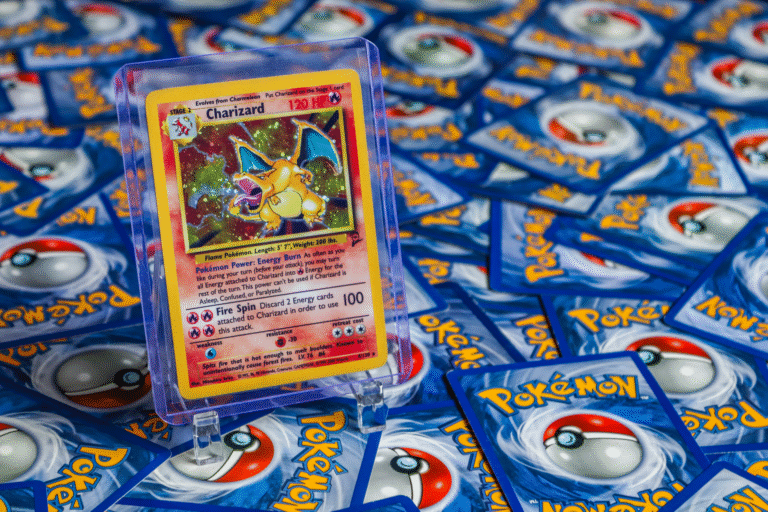
Different holofoil patterns also carry collector preferences and market implications. A Base Set Charizard with its original starlight holo pattern commands significantly different prices and collector enthusiasm than a later reprinting with a different pattern, even if the card is otherwise identical. The holo pattern essentially becomes a fingerprint of that card’s printing, making it a crucial consideration when evaluating, purchasing, or grading Pokémon cards.
Table of Contents
- What Are the Main Holo Patterns in the Pokémon Trading Card Game?
- The History and Evolution of Holofoil Patterns Since 1999
- Cosmos, Cracked Ice, and the Most Recognizable Patterns Among Collectors
- Understanding Reverse Holofoil Cards and How They Differ from Standard Holos
- Grading, Condition Issues, and Holofoil-Specific Problems
- Modern Era Holo Patterns and Recent Technological Advances
- What Holofoil Patterns Tell Collectors About Card Authenticity and Era
- Conclusion
- Frequently Asked Questions
What Are the Main Holo Patterns in the Pokémon Trading Card Game?
The pokémon TCG has used several distinct holofoil patterns across its decades of releases, each with recognizable visual characteristics. Starlight Holofoil, used in Base Set, Jungle, and Fossil sets from the original 1999 release onwards, features different-sized stars scattered across the card’s image. These stars vary in size and create a dynamic, eye-catching effect that many collectors consider the most nostalgic and desirable. Cosmos Holofoil appears as dots and circles of varying sizes spread across the Pokémon image and was first introduced in Base Set 2 in 1999, continuing through HeartGold & SoulSilver to Call of Legends.
Among modern collectors surveyed, Cosmos Holofoil is widely considered the most popular holo pattern due to its balanced visual appeal and the nostalgia factor of its early introduction. Cracked Ice Holofoil features triangle-like shapes arranged to resemble cracked ice or shattered glass, first used in Platinum Series Theme Decks and continuing through Sword & Shield Series promotional releases. Water Web Holofoil displays wavy patterns resembling flowing water and became the standard holofoil from Sun & Moon expansion through Cosmic Eclipse. Tinsel Holofoil shows horizontal stripes across the image and was used from Black & White through Legendary Treasures sets. Each pattern creates a distinctly different visual impression when light hits the card, affecting both how collectors perceive the card and how it appears in photographs and grading photos.

The History and Evolution of Holofoil Patterns Since 1999
The evolution of holofoil patterns reflects both technological advancement in printing processes and changing aesthetic preferences within the Pokémon Company. The earliest patterns, Starlight and Cosmos, dominated the foundational era of the tcg and established what collectors expected from a “holo” card. As production techniques improved and the company sought to differentiate newer sets, patterns became more varied and sometimes more intricate. Sheen Holofoil, introduced during the XY era, features diagonal light-refracting patterns with variations depending on language edition—Japanese, Korean, and International versions sometimes display notably different appearances due to printing facility differences.
A significant limitation of older holofoil patterns, particularly Starlight and Cosmos, is that they show wear more visibly than some modern patterns. The edges of these early cards often develop whitening or chipping that catches light at different angles than the deliberate holofoil pattern, making condition assessment more subjective. This means a Base Set card graded as “Near Mint” with Starlight holofoil may still show subtle wear that affects its visual appeal more dramatically than a Sheen holofoil card in the same condition grade. Collectors should examine high-resolution photos of early holofoil cards before purchasing, as the pattern can mask or emphasize condition issues depending on how the light strikes the card.
Cosmos, Cracked Ice, and the Most Recognizable Patterns Among Collectors
Cosmos Holofoil stands out as the most beloved pattern among serious collectors, appearing on some of the most valuable cards in the hobby. Its dot-and-circle design works well across virtually any card art, from simple character illustrations to complex multi-Pokémon scenes, which partly explains its broad appeal. Cards from the Cosmos era—roughly 1999 through the early 2000s—form the backbone of many vintage collections. Cracked Ice Holofoil, while arriving later (Platinum Series era), has developed its own devoted following.
The geometric triangle pattern creates an almost crystalline appearance when light hits it, and some collectors prefer it specifically because its distinct pattern makes it easier to immediately identify the card’s printing era. The visual impact of these patterns differs significantly in person versus in photographs. Cosmos Holofoil tends to photograph well and maintain clarity across different lighting conditions, which is why it’s frequently featured prominently in collection showcases and sales listings. Cracked Ice Holofoil, by contrast, can appear muddy or unclear in some photographs but often looks more impressive under direct, angled light in person. This creates a practical consideration for online buyers: a Cracked Ice card that looks underwhelming in seller photos may actually be in better condition than the photos suggest, while a Cosmos card that looks perfect online should match that appearance when received.

Understanding Reverse Holofoil Cards and How They Differ from Standard Holos
Reverse holofoil cards represent a distinct category within the holo market, featuring foil on the background, border, and text boxes while the artwork itself remains matte rather than shiny. The Pokémon Company introduced reverse holos during the Legendary Collection set in 2002, offering collectors an alternative aesthetic that became increasingly significant over time. Most modern sets now guarantee one reverse holo card per pack, making them far more common than standard holofoil versions of the same card. This accessibility means reverse holos generally carry lower prices than their standard holo counterparts, though rarity within a set can still make certain reverse holos valuable.
The practical tradeoff between standard and reverse holos affects both collecting goals and display preferences. A standard holofoil Charizard features the iconic starlight pattern across Charizard’s body, creating a bright, eye-catching appearance that draws attention to the Pokémon illustration. A reverse holofoil version of the same Charizard shows a matte illustration but displays shimmering holofoil across the card’s background and borders, creating an entirely different visual effect. For grading and value, standard holofoils typically command premiums in the current market, but reverse holos have gained collector appreciation as alternative versions become trendier. Recent releases like Prismatic Evolutions (2024) have pushed innovation further, featuring three distinct reverse holofoil patterns—Poké Balls, Master Balls, and the standard reverse holofoil pattern featuring the type symbol in the background—offering collectors even more variations to pursue.
Grading, Condition Issues, and Holofoil-Specific Problems
Holofoil condition assessment presents unique challenges because the reflective surface makes certain defects more or less visible depending on viewing angle and lighting. Holofoil scratches, sometimes called “holo bleed” or surface wear, can severely impact a card’s grade and value. A card with extensive light scratches across its holofoil will receive a significantly lower grade than a card with the same type of scratches elsewhere on the card, because the scratches become visible every time light hits the surface. This means condition is even more critical for holofoil cards than for non-holofoil versions of the same card, and grading services typically penalize surface issues more heavily on holographic cards.
Another warning: counterfeit holofoil patterns have become increasingly sophisticated. Early Base Set reprints sometimes display holofoil patterns that don’t exactly match original printings, creating confusion about authenticity. Buyers comparing original Base Set Starlight holofoil cards against later reprints or shadowless printings need to be aware that minor holofoil pattern variations can occur between legitimate printings from different eras or production facilities. When purchasing valuable holographic cards, reference multiple authenticated examples and research the specific set’s known holofoil characteristics rather than relying on a single photo or seller listing. Professional grading services can help definitively establish authenticity, particularly for high-value vintage holofoil cards.
Modern Era Holo Patterns and Recent Technological Advances
The current era of Pokémon TCG printing has introduced additional holofoil variations and innovations that reflect modern production capabilities. Water Web Holofoil and other contemporary patterns create different aesthetic experiences than vintage cards, with some players and collectors preferring the cleaner, more minimalist appearance of modern holofoils. Sheen Holofoil, with its diagonal light-refracting properties, brought a more refined shine that works well on cards with complex artwork.
These patterns are intentionally designed to be less visually chaotic than earlier options like Cosmos or Starlight, reflecting an industry-wide shift toward sophistication in card design and printing aesthetics. Prismatic Evolutions and other 2024-2025 releases demonstrate that the Pokémon Company continues actively experimenting with holofoil presentation. The introduction of multiple distinct reverse holofoil patterns—rather than the single standard reverse holo pattern used for years—signals a market where even reverse holos are being differentiated and celebrated. This suggests that future releases will likely continue introducing new pattern variations, making current collecting strategies centered on acquiring “all versions” of a card increasingly complex and potentially more expensive for completionists.
What Holofoil Patterns Tell Collectors About Card Authenticity and Era
Holofoil patterns serve as reliable authentication markers because changing the holo pattern requires entirely different printing plates and production setup. If you’re examining a card purported to be from Base Set Jungle, its holofoil should show the characteristic Starlight pattern. If it displays Cosmos holofoil or any other pattern, something is incorrect—either it’s from a different set, or the card is counterfeit.
This makes holofoil pattern knowledge one of the practical tools collectors can use to verify their purchases without relying solely on third-party grading. Looking forward, the variety of holofoil patterns available likely means the collecting hobby will continue to fragment into sub-categories based on aesthetic preference. Some collectors will pursue only original Starlight holofoil cards, others will focus on complete pattern collections, and newer collectors will naturally gravitate toward more contemporary patterns like Sheen or Water Web. This diversification actually strengthens the collector market by creating multiple collection goals and paths, ensuring cards from nearly every era remain relevant and desired by someone.
Conclusion
Pokémon holofoil patterns are far more than cosmetic details—they’re essential markers of a card’s age, authenticity, and printing characteristics. From the iconic starlight of early Base Set cards to the geometric precision of modern releases, each pattern tells a story about when and where a card was produced. Understanding these patterns allows collectors to make informed purchasing decisions, authenticate questionable cards, and appreciate the subtle evolution of printing technology across the TCG’s 25-plus year history.
Whether you’re building a vintage collection centered on original Cosmos holofoil cards, pursuing modern reverse holo variations, or assembling a comprehensive pattern collection, the holofoil is an integral part of your card’s identity and value. Take time to examine holofoil patterns in person when possible, research the specific patterns for sets you’re interested in, and use this knowledge as both a collecting filter and an authentication tool. The right holofoil pattern can transform a good card into an exceptional one in the eyes of fellow collectors.
Frequently Asked Questions
What’s the difference between Starlight and Cosmos holofoil?
Starlight holofoil features different-sized stars scattered across the card image and appears on Base Set, Jungle, and Fossil cards from 1999. Cosmos holofoil uses dots and circles of varying sizes and first appeared in Base Set 2. Both are vintage patterns, but Cosmos is generally considered more popular among current collectors.
Is Cracked Ice holofoil less valuable than Starlight?
Not necessarily. Value depends on the specific card, rarity, and condition rather than the holofoil pattern alone. However, Starlight and Cosmos patterns command premium prices due to age and collector nostalgia, while Cracked Ice is more recent and therefore generally valued lower on comparable cards.
Should I prefer standard holo or reverse holo cards?
That depends on personal preference and budget. Standard holofoil cards typically cost more and feature the shine on the Pokémon image itself. Reverse holos have foil on the background and borders with matte artwork, often cost less, and appeal to collectors who prefer that aesthetic. Both have collector value.
How can I tell if a holofoil pattern is authentic?
Research the specific holofoil pattern for the set in question by examining multiple authenticated examples. Holofoil patterns are highly standardized within a set, so significant deviations suggest counterfeiting or misidentification. For valuable cards, professional grading services can definitively verify authenticity.
Are newer holo patterns like Sheen and Water Web less desirable?
Not inherently. Modern patterns are newer and therefore less scarce, which affects pricing. However, many contemporary collectors prefer the cleaner aesthetics of modern patterns, and rarity of specific modern cards still determines individual card value regardless of the holofoil type.
Will holofoil patterns continue to change in future Pokémon releases?
Yes. The Pokémon Company has demonstrated consistent innovation in holofoil design, with recent releases like Prismatic Evolutions introducing multiple new reverse holo variations. Future sets will likely introduce additional patterns, expanding the varieties available to collectors.