
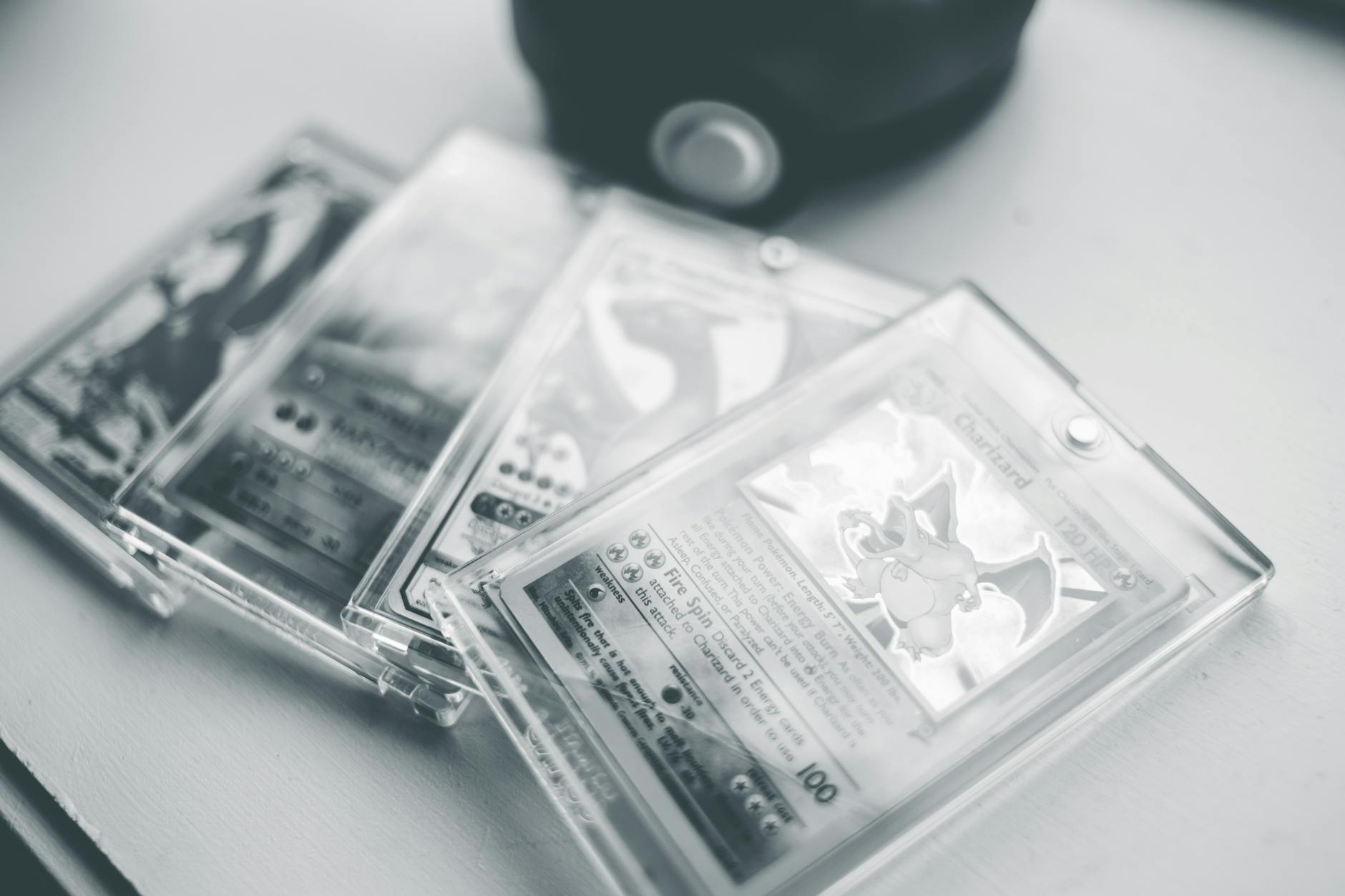
The 2000 Pokémon Game Base Set II #4 Charizard-Holo is trading in a robust price range this week, with near mint raw ungraded copies selling for approximately $387.97—a 3.98% increase over the past month according to current market data. This iconic card continues to hold strong value across both graded and ungraded markets, reflecting its status as one of the most recognizable Pokémon cards in existence.
Whether you own a lightly played copy worth around $350 or a pristine PSA 10 gem mint example valued at over $17,000, understanding current market conditions is essential for collectors making buy or sell decisions this week. The Base Set II Charizard represents the second official printing of this legendary card in English, making it slightly more accessible than the scarce Base Set I version but no less significant in collector appeal. A moderately played raw copy typically trades around $210, while the broad market range spans from $259.99 at the lower end to $407.10 for near mint specimens, giving collectors and investors multiple entry points depending on condition tolerance and budget.
Table of Contents
- What Is the Current Market Value for Base Set II Charizard-Holo Cards?
- Understanding Graded Versus Ungraded Pricing for This Card
- How Has the Base Set II Charizard Performed This Month?
- Comparing Base Set II Charizard to Other High-Value Pokémon Cards
- Why Condition Assessment Matters More for Base Set II Cards
- Tracking Price Movements with Professional Resources
- Market Outlook and Long-Term Value Considerations
- Conclusion
What Is the Current Market Value for Base Set II Charizard-Holo Cards?
The pricing for Base Set II Charizard varies dramatically depending on condition grade and whether the card has been professionally graded. Ungraded near mint copies currently sit at $387.97 according to Card Codex, while professionally graded PSA 10 cards command a premium of over $17,000—a stark 44x multiplier that underscores how condition impacts this card’s market value. For collectors working with moderate budgets, a lightly played example represents a practical middle ground, with recent sales data from April 2026 showing prices around $350 on the secondary market.
The $210 price point for moderately played raw cards reflects the reality that many collectors prioritize owning the card itself over achieving museum-quality condition. This tier captures cards with visible wear, edge whitening, and possible corner softening, yet they remain fully playable for constructed formats and visually recognizable as legitimate vintage Charizards. The 4% monthly appreciation noted in the raw near mint market suggests steady, if not explosive, price momentum heading into late May.

Understanding Graded Versus Ungraded Pricing for This Card
The dramatic price difference between raw and graded cards—$387.97 for ungraded near mint versus $17,202.47 for PSA 10—reflects the commercial reality that grading adds both authentication and collectibility premium. A PSA 10 designation guarantees that third-party experts have verified the card’s authenticity and assessed it at the highest standard of collectibility, a certification that institutional buyers and serious collectors demand. However, this comes with significant costs: grading fees, potential shipping damage during the slabbing process, and the reality that most collectors will never own a $17,000 card.
One critical limitation of the raw market is the absence of authentication verification. A $387.97 purchase assumes you’re buying from a reputable dealer or have personal expertise in identifying counterfeit Base Set II Charizards, a skill that requires familiarity with printing patterns, paper stock, and hologram characteristics unique to 1990s Wizards of the Coast production. Many collectors find the peace of mind from PSA grading worth the investment, even if it prevents them from ever recouping the full grading cost at resale.
How Has the Base Set II Charizard Performed This Month?
The 3.98% increase in near mint raw card value over the past 30 days indicates modest but consistent bullish momentum in the ungraded market. This appreciation outpaces typical inflation and suggests growing collector interest in Base Set II cards as more people discover Pokémon cards through pop culture resurgence and competitive play revival.
The $387.97 current price represents the accumulation of several years of steady demand for this particular printing, especially as newer players seek vintage cards without paying first edition Base Set I premiums. The recent lightly played sale at $350 on April 20 confirms that the raw card market is functioning efficiently across multiple condition tiers. Three weeks later, near mint examples have appreciated slightly, suggesting buyers continue entering the market despite the relatively high price point for an ungraded card.

Comparing Base Set II Charizard to Other High-Value Pokémon Cards
The Base Set II Charizard occupies a middle tier in vintage Pokémon card valuation—less scarce and expensive than Base Set I Charizard or holographic Blastoise, but substantially more valuable than most other Base Set II holos. Where a Base Set I Charizard in near mint raw condition can exceed $1,000, the Base Set II version’s $387.97 price point makes it significantly more accessible while still conveying legitimate vintage collectibility. This accessibility paradoxically strengthens demand, as players and casual collectors with $400 budgets can own an authentic early-era Charizard without pursuing a second mortgage.
The practical tradeoff here involves player preference versus investment positioning. Competitive players can confidently sleeve a $387 near mint copy for tournament play, knowing that losing it wouldn’t bankrupt them as a graded $17,000 card would. This dual-use appeal—legitimate card for play plus investment asset—drives consistent demand in ways that unplayable high-grade specimens cannot match.
Why Condition Assessment Matters More for Base Set II Cards
The $177 difference between a moderately played card at $210 and a near mint at $387.97 highlights why careful condition assessment is crucial before purchase. Base Set II Charizards, printed in 2000, are now 26 years old, and paper degradation becomes increasingly visible at each condition tier. A “lightly played” card might display only slight corner wear and minor surface marks, while a moderately played example could show obvious creasing, edge whitening across multiple borders, or a dinged corner that affects overall eye appeal.
One critical warning: photographs in online listings often misrepresent condition, particularly with vintage holos. The holographic pattern on Base Set II Charizards can hide or exaggerate damage depending on lighting angle, and sellers occasionally use generous angles to minimize visible wear. Always request multiple photos including direct overhead lighting, and understand your own condition tolerance before committing funds. The price guide and Card Codex both provide detailed condition descriptions, but independent verification through trusted dealers remains the safest approach.
Tracking Price Movements with Professional Resources
Collectors serious about understanding Base Set II Charizard valuations should leverage platforms like PokeData.io, which aggregates pricing across multiple grading services and marketplaces, providing trend analysis that individual sales cannot supply. Card Codex similarly maintains historical pricing data that reveals seasonal patterns—whether Charizards appreciate more in summer months, which educational value for timing buy or sell decisions.
the price guide’s market-based estimates reflect actual transaction data rather than asking prices, offering a grounded reality check when navigating private sales. For graded cards specifically, PSACard.com maintains auction price records for every PSA 10 Charizard sold at auction, enabling detailed analysis of whether the current $17,202.47 valuation represents fair market value or an outlier. Comparing this to recent auction results within the past 30 days provides crucial context for grading investment decisions.
Market Outlook and Long-Term Value Considerations
The steady 4% monthly appreciation in near mint raw card values suggests the collector market remains healthy and patient, willing to support vintage Pokémon cards despite macro economic uncertainty. As Pokémon TCG competitive play expands through official tournaments and streaming platforms, vintage cards like Base Set II Charizard may experience accelerated demand from players seeking authentic period pieces for constructed formats.
The psychological appeal of owning a 26-year-old card that shaped early competitive Pokémon remains powerful, particularly among millennial collectors with nostalgia for the original trading card game era. Long-term positioning should account for the potential that PSA grading becomes further saturated with 1990s-era cards, possibly reducing the premium for high-grade vintage copies as supply increases. Simultaneously, the accessibility of near mint raw cards at $387.97 creates opportunity for collectors to own legitimate vintage without committing to grading speculation, a positioning that may ultimately prove more durable than the graded market’s premium-dependent valuation structure.
Conclusion
The 2000 Pokémon Game Base Set II #4 Charizard-Holo maintains robust market positioning at approximately $387.97 for near mint raw copies, with documented recent appreciation of nearly 4% over 30 days. Whether you approach this card as a playable vintage treasure, investment asset, or completion piece for a Base Set II collection, multiple pricing tiers accommodate different financial commitments—from $210 for moderately played copies to $17,202 for museum-grade PSA 10 specimens.
The market data confirms consistent collector demand for this printing across all condition categories. Your next action depends on your collection goals and timeline: raw card buyers should monitor the $259.99 to $407.10 market range for opportune entry points, while investors considering grading should consult PSACard.com for recent PSA 10 auction results before committing funds to slabbing. Regardless of direction, the Base Set II Charizard’s 26-year track record, enduring cultural significance, and dual appeal to players and collectors position it as a stable collector asset heading into summer 2026.
You Might Also Like
- How Much is a 2000 POKEMON GAME BASE II #4 CHARIZARD-HOLO PSA 5 Card Worth – Week of 5/25/2026 Update
- 1999 POKEMON GAME #4 CHARIZARD-HOLO PSA 6 – Why It is Worth $1000 Now – Update for June 2026
- Price for 2000 POKEMON BASE SET 2 #1 ALAKAZAM CGC 10