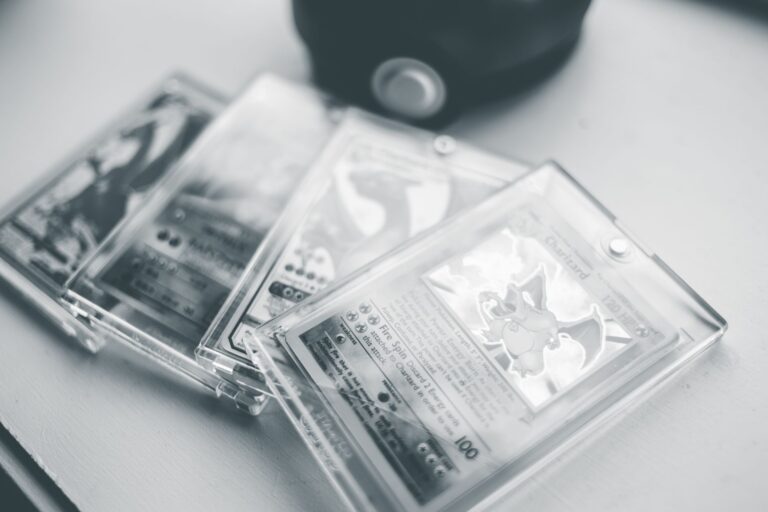
Clean raw Base Set Pokémon cards are becoming more attractive to collectors and investors as grading standards tighten and trust in major grading companies erodes. As PSA, BGS, and other graders raise their standards—particularly for centering and corners—the gap between what can be graded and what remains raw is widening. Meanwhile, trust in the grading industry itself has been shaken by fraud allegations, making collectors question whether paying premium prices for slabs still makes sense. A raw Base Set Charizard in near-mint condition can sell for $300–$500, while a graded PSA 9 of the same card commands $1,500–$2,500, and a PSA 10 reaches $5,000–$8,000.
But if getting that PSA 10 has become nearly impossible due to stricter standards, raw cards start to look like a smarter investment. The core issue is simple: corners have become the critical bottleneck in grading. Across 840 Base Set cards evaluated recently, corners averaged only 7.87 out of 10, significantly dragging down overall grades compared to centering (8.78), edges (8.45), and surface (8.28). This means that even high-quality raw cards often fall short of the centering and corner standards required for a PSA 10, which demands extremely tight centering of 55/45 or better on the front and 75/25 or better on the back. As standards tighten, the percentage of raw cards that qualify for top grades shrinks, and collectors holding ungraded near-mint Base Set cards may find themselves sitting on increasingly valuable assets.
Table of Contents
- Why Grading Standards Are Getting Stricter and What That Means for Raw Cards
- The PSA Fraud Crisis and Its Impact on Collector Trust
- Market Consolidation and the Shift Away from PSA’s Dominance
- The Economic Case for Raw Cards: Price, Risk, and Flexibility
- The Reality of Grading Logistics and Why Standards Will Likely Stay Tight
- Real-World Example: The Base Set Charizard Market Evolution
- Where the Market Is Heading and What Collectors Should Expect
- Conclusion
Why Grading Standards Are Getting Stricter and What That Means for Raw Cards
Grading standards have not remained static over the past decade. The major grading companies—PSA, BGS, and the rising competitor CGC—have all tightened their criteria, particularly in the areas that matter most for vintage Pokémon cards. BGS, for instance, has proven to be stricter than PSA on centering standards, meaning an identical raw card might receive a lower grade depending on which grader you submit it to. This inconsistency is a hidden problem: a card that looks centered to your eye might fail BGS’s stricter centering threshold but pass PSA’s standards. This unpredictability makes grading feel like a gamble rather than an objective process, which is exactly why raw cards are becoming more appealing to savvy collectors. The stricter corner grading is particularly important for base Set cards, which are now 25+ years old.
Manufacturing inconsistencies in the 1990s meant that many Base Set cards came out of the pack with soft or slightly rounded corners. What PSA might have graded as a 9 ten years ago now struggles to meet a 9 standard, let alone a 10. The difference between a PSA 9 and a PSA 8 in the marketplace is dramatic—a raw Base Set Charizard worth $300–$500 becomes a $1,500–$2,500 card if graded PSA 9, but if corner standards were tighter in 2026 and your card gets an 8.5 instead, you could be looking at $600–$900. That variance creates significant financial risk, especially for cards near the 9/10 borderline. This tightening of standards creates an interesting paradox: the older the card and the more impossible a 10 becomes, the more valuable a raw card in truly excellent condition appears to be. You bypass the grading lottery entirely and retain optionality—you can sell the raw card to a collector who trusts their own eye, or you can hold it knowing that as grading becomes even stricter, the raw version will feel more valuable relative to the unattainable graded alternative.

The PSA Fraud Crisis and Its Impact on Collector Trust
In December 2025, psa, the most trusted grading company in the sports card world, was revealed to have engaged in secret grade upgrades for card buybacks. This scandal shook the entire $5 billion sports card market and damaged the legitimacy of PSA slabs—the very graded cards that collectors had been paying premiums for. If a grading company is willing to secretly upgrade grades, how can you trust the grade on the slab you bought three years ago? That question has no good answer, and it has directly impacted the market. The secondary-market fallout was swift and significant. Listings for PSA slabs dropped 10–20% on eBay following the scandal announcement, with modern Pokémon cards seeing the largest declines. This means that even newly graded cards felt the impact—PSA’s reputation hit extended to all slabs, not just the ones involved in the fraud.
For collectors and investors, this created a window of opportunity to reconsider their strategy. Why pay a premium for a PSA slab when the company behind it has demonstrated that its grades may not be trustworthy? A raw card, by contrast, has no trust risk. What you see is what you get, and no company can retroactively change the card itself (though they could regradeably if you’re worried about the slab’s future value). One critical limitation to understand: raw cards lack the insurance and authentication that a slab provides. If you purchase an expensive raw card and later discover it’s counterfeit or has been altered, you have little recourse beyond the seller. Slabs, despite their now-compromised grading standards, do provide at least a layer of authentication. This is why raw card purchases require more due diligence—detailed photos, reputation of the seller, and often a willingness to send the card for a second opinion from a trusted grading company if you plan to resell it later.
Market Consolidation and the Shift Away from PSA’s Dominance
For decades, PSA was synonymous with Pokémon card grading. A PSA 10 was the standard of excellence, and collectors accepted paying steep premiums for the label. But that dominance is eroding. CGC has captured 25% market share in 2025, a remarkable gain in a short time, and the PSA premium—the extra money collectors will pay for a PSA slab versus an equivalent CGC slab—has shrunk to just 5–10% for modern cards, down from 30%+ just two years ago. For vintage Base set cards, the premium remains higher, but the trajectory is clear: PSA’s authority is waning. BGS, which was previously the second-most trusted grader, is now in a precarious position. CGC’s parent company owns Beckett (BGS’s parent), and industry insiders expect BGS to either be integrated into CGC or rebranded entirely within the next 12–24 months. This consolidation creates uncertainty: if you bought a BGS 10 three years ago expecting it to hold its value, you now face the possibility that BGS will cease to exist as an independent brand.
That uncertainty translates directly into weakness in the BGS secondary market. Raw cards, by contrast, face no such brand risk. A clean raw Base Set Charizard will be just as authentic and desirable in 2030 regardless of what happens to PSA, BGS, or CGC. The diversity of graders—while good for competition—has also exposed how subjective grading really is. PSA might slab a card as a 9 while BGS (stricter on centering) would give it an 8.5. This inconsistency makes the whole enterprise feel less authoritative and more like a commodity service. Raw cards sidestep this problem entirely. You’re not betting on which grader will give you the best mark; you’re holding the actual card.

The Economic Case for Raw Cards: Price, Risk, and Flexibility
The financial incentive to hold raw Base Set cards has shifted in favor of the raw holder. A raw Base Set Charizard in near-mint condition can sell for $300–$500 today. If graded PSA 9, that same card jumps to $1,500–$2,500. A PSA 10 reaches $5,000–$8,000. On the surface, grading looks like an obvious win—you turn a $400 card into a $2,000 card by paying $20–$30 for grading. But that calculation ignores the increasing scarcity of 10s and the risk of getting an 8 or 8.5 instead of the 9 you expected. If your $400 raw card comes back graded PSA 8.5, you might only get $800–$1,200 on the secondary market, meaning you’ve spent $500+ (grading, potential resubmission, shipping, and fees) to lose money. The comparison is even starker when you factor in trust erosion.
If you grade a card today and it comes back PSA 9, you know there’s a 10–20% chance that slab loses value over the next two years as more collectors question what PSA grades actually mean. That risk is priced into slabs today, and smart collectors recognize it. A raw card doesn’t carry that execution risk. It will still be a near-mint Base Set Charizard in 2027 and 2028, and at that point, depending on how the grading market evolves, it might be worth more than a graded card that’s now under a cloud of doubt. The flexibility argument is equally important. A raw card can be submitted to CGC, or Hybrid Grading Approach (HGA), or any new grader that emerges. A PSA slab locks you into PSA. If PSA’s market share continues to decline and CGC becomes the standard, your PSA 9 might become a curiosity—still authentic, but in a less desirable format. Raw card holders have optionality; slab holders have commitment.
The Reality of Grading Logistics and Why Standards Will Likely Stay Tight
PSA announced plans to open a grading facility in Frankfurt in summer 2026, suggesting continued operational expansion. However, this expansion does not signal a loosening of grading standards—if anything, it signals confidence that PSA will maintain its current standards globally. The lesson to understand is that while grading capacity may increase, the willingness of graders to hand out 10s and 9s will not. Corners will remain the bottleneck. Centering will continue to be scrutinized. Raw cards will continue to represent a real alternative for collectors who can’t or won’t subject their cards to the increasingly stringent submission process. One important limitation: some collectors and investors will always prefer slabs. There’s a psychological comfort in having an objective third party’s opinion on record. It also makes selling easier—you don’t have to convince a buyer of your assessment; the slab does the talking.
That comfort is real, even if it’s now slightly misplaced given recent fraud revelations. Raw cards require more seller credibility and more detailed transparency. If you’re selling a $3,000 raw card, expect buyers to ask a lot of questions and request extensive photos. If you’re selling a PSA 9 slab, they might take a glance and buy it. The friction is lower with slabs, even in a market shaken by fraud. The other limitation is liquidity. While extremely high-end raw cards (near-mint Base Set holos) do sell readily, mid-tier raw cards can be harder to move than their graded equivalents. A PSA 8 Blastoise has a clear market; a “nice-looking” raw Blastoise might sit on your hands for months. This gap in liquidity favors slabs for casual collectors and disfavors raw cards. Only experienced collectors with patience and social media reach should heavily pursue raw cards.
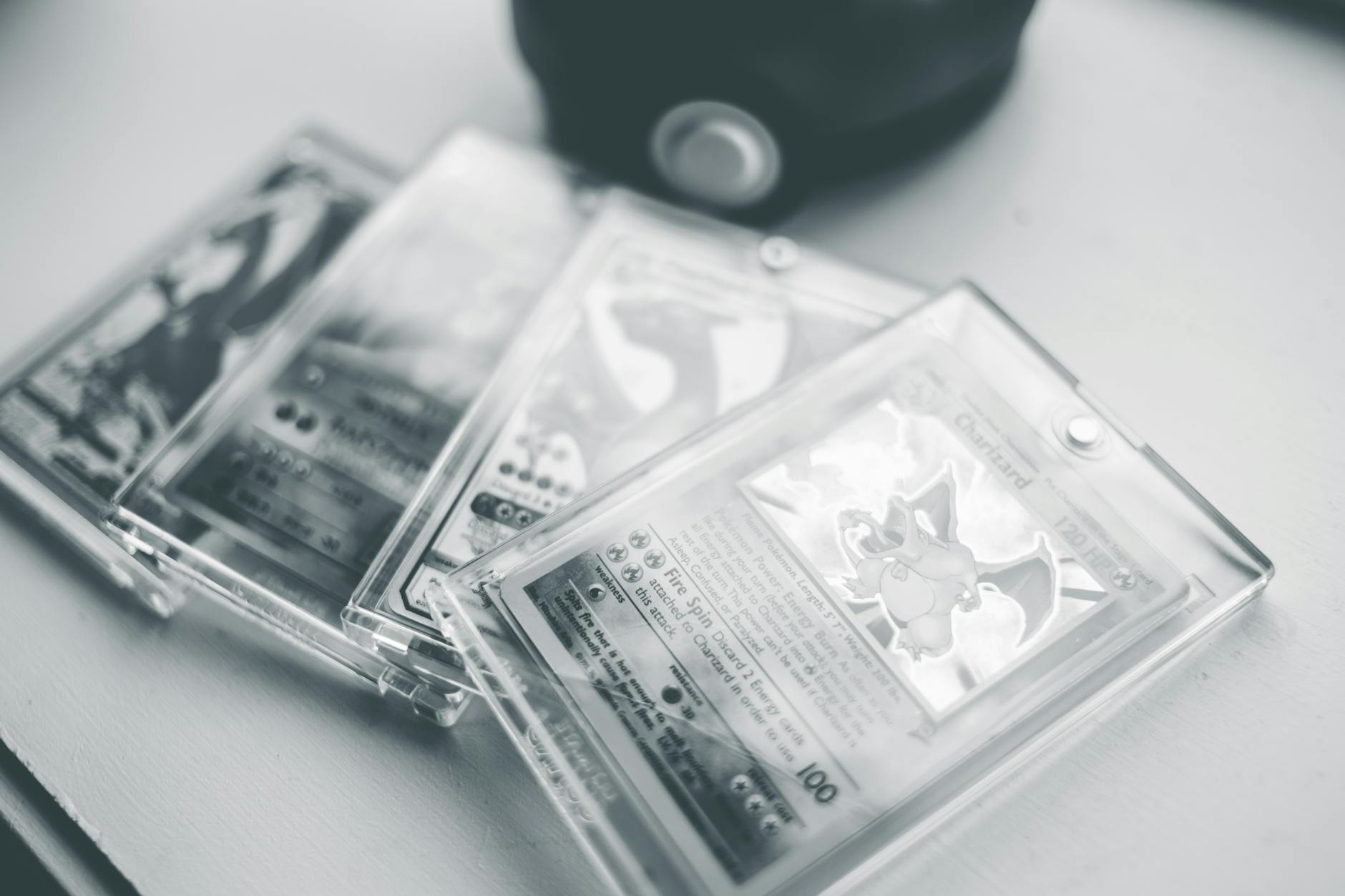
Real-World Example: The Base Set Charizard Market Evolution
The Base Set Charizard is the perfect case study for this trend. Three years ago, a raw base set non-holo Charizard in near-mint condition sold for $150–$250. The holo version in the same condition went for $300–$500. A PSA 9 holo was comfortably in the $1,500–$2,000 range.
Today, the raw cards have appreciated slightly (to $200–$350 for non-holo, $300–$500 for holo), but the graded versions have stagnated or retreated due to market uncertainty. If you held a raw holo Charizard since 2023, you’ve seen relatively steady appreciation. If you graded that same card into a PSA 9 in 2024, you might now find it worth the same or less in real terms when accounting for grading costs and the 10–15% haircut buyers now apply to PSA slabs due to fraud concerns. The holo Charizard also reveals another important dynamic: as rarity increases, raw card premiums become even more attractive. There are fewer near-mint copies of the holo Charizard than there are PSA 9 slabs, which creates natural demand for raw versions among collectors who know the card’s pedigree and condition firsthand.
Where the Market Is Heading and What Collectors Should Expect
The trajectory is becoming clear: as grading standards tighten, trust in graders erodes, and market consolidation makes the grading landscape less stable, raw Base Set cards are reclaiming their place as a legitimate store of value. The days when every serious collector felt obligated to slab their cards are ending. In their place, a bifurcated market is emerging where extremely rare cards get graded (because the premium for authentication is justified) and common cards remain raw (because the grading premium no longer exceeds the risk). Looking forward, expect the PSA premium to continue compressing.
Expect BGS to either vanish or be rebranded, creating confusion and reducing demand for BGS slabs. Expect raw card prices to appreciate relative to graded cards as the market rebalances. For collectors investing in Base Set cards today, holding raw near-mint copies is a lower-friction, lower-risk strategy than attempting to grade them. The optionality alone—the ability to grade later if you change your mind or if a new trusted grader emerges—makes raw cards strategically superior in an unstable grading market.
Conclusion
Clean raw Base Set Pokémon cards are becoming more desirable as grading standards tighten and trust in major grading companies declines. The PSA fraud scandal of December 2025, combined with stricter corner and centering standards, has reduced the appeal of paying steep premiums for slabs. Meanwhile, CGC’s gains and BGS’s uncertain future have fractured the market consensus around which grader’s label matters most. For investors and collectors, this creates an opportunity: a raw Base Set Charizard in near-mint condition offers stability, authenticity, optionality, and appreciation potential with less execution risk than submitting the same card for grading. The key takeaway is not that grading is worthless or that slabs will disappear.
Rather, the calculus has shifted. Raw cards are no longer the default choice only for budget-conscious collectors—they’re now a sophisticated choice for anyone who understands that grading grades are subjective, graders are fallible, and the premium for a slab may not be worth the risk in a market where trust has eroded. If you own clean raw Base Set cards, hold them. If you’re thinking about grading your cards, reconsider. The market is rewarding patience and skepticism, and raw cards embody both.