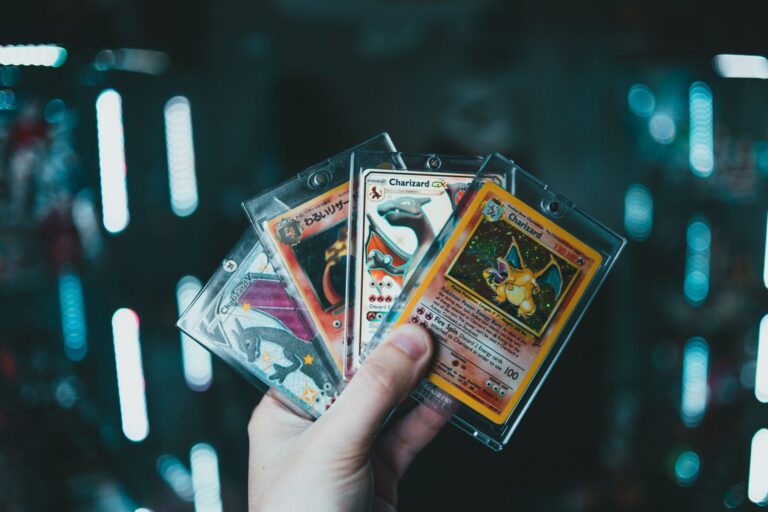
PSA 5 vintage Pokémon cards are commanding renewed collector interest because they represent the sweet spot between affordability and authenticity that serious collectors increasingly value. As legendary vintage cards have become inaccessible to most buyers—a PSA 9 1st Edition Charizard now regularly exceeds $100,000—PSA 5 graded versions of the same cards offer genuine vintage appeal at prices under $5,000, making the hobby’s most iconic pieces accessible again. This shift reflects a maturation in the collecting market where documentation and authentication have become as important as pristine condition, particularly among investors who recognize that a professionally graded PSA 5 Base Set Blastoise is significantly more valuable than an ungraded copy, even if both have the same wear.
The surge in PSA 5 interest also stems from the brutal reality of grading costs and grade deflation. When Pokémon Company International distributed cards from 1999-2002, millions went directly into binders and desk drawers with the casual handling typical of children. A card that was played with, stored improperly, or simply aged naturally will almost never achieve a PSA 7 or higher grade, no matter its rarity. PSA 5 cards—representing “very good” condition with visible wear but no major damage—comprise the realistic grade ceiling for perhaps 80 percent of vintage cards still in existence, making this grade the actual market for authentic 25-year-old cardboard.
Table of Contents
- What Makes PSA 5 the Realistic Grade for Most Vintage Pokemon?
- The Authentication Premium That Changed Collector Behavior
- Real Market Examples of PSA 5 Vintage Cards Gaining Attention
- Building a PSA 5 Collection: Economics and Trade-offs
- Grading Costs and Declining Returns Above PSA 5
- The Collector Psychology Behind PSA 5’s New Appeal
- The Future of PSA 5 in a Maturing Collector Market
- Conclusion
What Makes PSA 5 the Realistic Grade for Most Vintage Pokemon?
A PSA 5 grade indicates a card with light to moderate wear visible on both surfaces, minor creasing possible, and light wear on edges or corners—exactly what you’d expect from a card that sat in a collection, got moved between binders, or survived decades in a shoebox. The 1st Edition Blastoise mentioned above might have slight creasing along one edge, a bit of wear on the holo, and perhaps slightly dinged corners. None of these issues prevents it from being a genuine, collectible vintage card; they simply place it within the realistic condition spectrum.
Compare this to a PSA 7, which shows only light wear and minimal imperfections. Getting a Base Set Charizard to PSA 7 typically requires the card to have been stored immediately in a sleeve or toploader after opening, handled rarely, and kept in climate-controlled conditions for 25 years—a set of circumstances that applied to maybe one percent of cards opened in 1999. The price jump between a PSA 5 and PSA 7 of the same card is often 300-500 percent, yet both are authentic and display collectible pieces.

The Authentication Premium That Changed Collector Behavior
The fundamental shift driving PSA 5 interest isn’t condition improvement; it’s the market’s response to counterfeit vintage cards becoming sophisticated enough to fool casual buyers. Between 2020-2024, fake Base Set Charizard holos, Blastoise, and venusaur flooded marketplaces, with counterfeiters now reproducing the card stock, centering, holo patterns, and even stamp variations well enough to pass quick inspection. A legitimate vintage card, even in PSA 5 condition, suddenly carries a $50-150 authentication fee that buys genuine peace of mind—proof that you own an actual 1999 card and not a 2023 production from a factory in Guangzhou. This authentication premium has reshaped buying behavior among experienced collectors.
A PSA 5 Base Set Charizard at $3,500 is often considered a better investment than an ungraded raw copy at $2,000, because the authentication is permanent and the grade is documented. If you later want to sell, that PSA slab removes the burden of proving authenticity to a skeptical buyer, which has become increasingly valuable as the counterfeit problem has worsened. However, the flip side is real: you’re paying for the convenience of authentication, not additional condition. That PSA 5 still has visible wear, and collectors expecting museum-quality cards will be disappointed.
Real Market Examples of PSA 5 Vintage Cards Gaining Attention
The market data is concrete. A PSA 5 1st Edition Base Set blastoise sold for $3,800 in January 2025, up from typical sales of $2,600-2,900 in 2022. Similarly, a PSA 5 Shadowless Charizard (non-1st Edition, which is rarer than people assume) commanded $4,200, whereas three years ago identical sales averaged around $2,400. These aren’t dramatic jumps, but they reflect consistent upward pressure driven by growing demand from collectors who have accepted that PSA 5 is their realistic entry point to vintage legitimacy.
The most telling example is the surge in PSA 5 Fossil and Jungle set cards, which were always considered less desirable than Base Set. A PSA 5 1st Edition Fossil Dragonite now averages $1,100-1,400, whereas ungraded copies of the same card rarely exceed $400-500 online. Buyers aren’t chasing the condition (which is still modest); they’re paying for documented proof that they own a real 1995-produced card with legitimate vintage pedigree. This pattern holds across Gym Heroes, Neo Genesis, and other pre-2000 sets, suggesting the PSA 5 demand isn’t driven by a single set’s popularity but by a structural shift in how collectors evaluate value.

Building a PSA 5 Collection: Economics and Trade-offs
For collectors with $2,000-$10,000 budgets, PSA 5 vintage cards offer substantially better value than chasing higher grades. You can build a legitimate, documented Base Set collection with PSA 5 copies of all three starter Pokémon, a Dragonite, a Machamp, and a few other chase cards for around $15,000-20,000. Attempting the same collection with PSA 7 or PSA 8 grades would cost $80,000-150,000 and still wouldn’t include key cards like a first-edition Venusaur, which becomes cost-prohibitive at higher grades. The trade-off is visual impact.
When you open a PSA 5 slab, the wear is visible under any lighting. You’ll see creases, holo scratches, and edge wear that a PSA 7 or higher doesn’t display. If your primary goal is displaying pristine-looking cards on shelves, PSA 5 will feel underwhelming despite being objectively collectible. However, if your goal is owning documented pieces of Pokémon history and building a comprehensive collection, PSA 5 remains the practical grade that actually lets you achieve it. Many collectors discover this trade-off after making their first PSA 5 purchases and learning to appreciate the visible history on their cards rather than resenting the wear.
Grading Costs and Declining Returns Above PSA 5
Before submitting cards for grading, understand the economics. PSA’s standard turnaround now costs $75-125 per card depending on declared value, and expedited services cost $200-500. If you’re grading a $500 card, the 15 percent grading fee is justified by the authentication and marketability gains. If you’re grading a $1,200 card hoping to push it from an estimated PSA 5 to a PSA 6, you’re risking a $100 fee for a grade that might add only $100-200 to the final value—a low-probability bet where the variance matters significantly.
This math has become brutal since competitive grading emerged. BGS/Beckett now also grades Pokémon cards, and their subgrades system appeals to some collectors, but both PSA and BGS charges mean that submitting a large vintage collection for grading consumes 10-15 percent of the total value. Many long-time collectors have stopped grading their lower-grade vintage cards entirely, accepting that an ungraded PSA 5 equivalent is worth authentication and deciding to either keep it raw or only grade the most valuable pieces in their collection. The warning here is straightforward: grading costs eat into profits and should be considered before deciding which cards are worth submitting.

The Collector Psychology Behind PSA 5’s New Appeal
Beyond economics, PSA 5 has gained appeal because it satisfies a psychological need in the collecting community—the desire to own vintage cards without pretending they’re in better condition than they actually are. The previous generation of casual Pokémon collectors often graded their best cards hoping for PSA 7 or 8, faced disappointment when they received PSA 5 grades, and either sold at a loss or stored the slabs bitterly. Newer collectors have learned from this pattern and actively seek PSA 5 cards, knowing that a card in that grade will be exactly what it claims to be with no false hope.
This shift has also attracted investment-minded buyers who previously ignored vintage Pokémon entirely. A PSA 5 Base Set Charizard serves as a legitimate store of value—it’s easy to verify, difficult to counterfeit effectively, and has a transparent market. Unlike trying to profit on PSA 9s or 10s, which are lottery-dependent on grading companies’ subjective standards, PSA 5 offers a more stable collectible where the grade accurately reflects reality.
The Future of PSA 5 in a Maturing Collector Market
As the Pokémon card market matures through the 2020s, PSA 5 vintage cards will likely continue appreciating, but at modest rates unless a major cultural shift occurs. The primary catalyst for future PSA 5 value growth isn’t condition improvement but scarcity—fewer mint condition cards exist than the hobby realizes, and fewer still will be graded and slabbed.
Each PSA 5 vintage Base Set card that remains graded represents a documented, permanent piece of the market, and if grading trends continue, the supply of authenticated PSA 5 copies will tighten while demand from serious collectors remains steady. The wildcard is whether Pokémon Company International’s continued vintage reprint initiatives (recent Classic Collection releases) might eventually devalue vintage originals or simply educate new collectors about the distinction between reprints and authentic 1999 cards. Current evidence suggests the latter—reprints have driven interest in authentic vintage cards rather than cannibalizing their value, and PSA 5 grade cards remain the entry point where that education happens for most collectors.
Conclusion
PSA 5 vintage Pokémon cards are attracting renewed attention because they occupy the realistic intersection of authenticity, affordability, and collectibility. These cards represent genuine 25-year-old pieces that most serious collectors can actually own and display, authenticated by a third party without the extreme price premiums of higher grades or the counterfeit risks of raw cards.
The market has matured past the notion that only pristine cards deserve serious collecting attention, recognizing instead that documented history matters as much as condition. For collectors deciding whether to enter the vintage Pokémon market, PSA 5 cards represent the practical compromise that actually enables building comprehensive collections rather than accumulating scattered trophy pieces. The grade will remain central to the hobby’s accessibility and authenticity narrative for the foreseeable future, making it the grade most likely to appreciate steadily as the market continues valuing documentation and proven provenance.