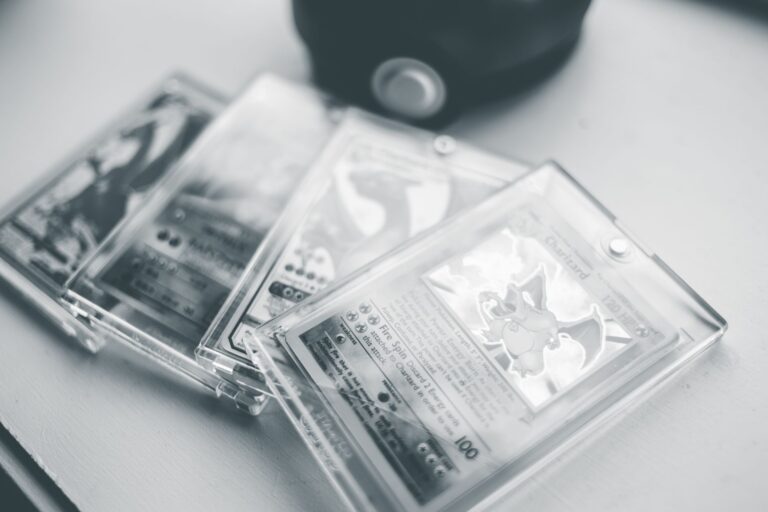
PSA 10 Base Set holos are setting new records because extreme scarcity combined with surging collector demand creates a perfect storm for price appreciation. In February 2026, a PSA 10 1st Edition Charizard sold for $954,800 at a Goldin Auctions break—an all-time record for any Charizard card. This wasn’t an isolated spike; the previous record holder, a PSA 10 1st Edition Charizard sold by Heritage Auctions in December 2025, fetched $550,000, demonstrating that the market for pristine vintage Base Set cards remains robust and accelerating rather than cooling. The trajectory from $550,000 to $954,800 in just two months signals that collectors and investors are becoming increasingly aggressive in pursuit of the highest-graded vintage holos.
The reason these records will likely continue is structural: only 9 complete PSA 10 1st Edition Base Sets exist globally, and individual Base Set holos have single-digit or low double-digit PSA 10 populations. When supply is this constrained and demand is this intense, there’s little ceiling on what a record-breaking sale might look like. The entire grading market expanded dramatically in 2025—26 million cards were graded that year—but Base Set holos haven’t become more common at PSA 10. If anything, the demographic of wealthy collectors entering the market has intensified competition for these cards, pushing prices higher faster.
Table of Contents
- What Makes PSA 10 Base Set Holos Scarcer Than Other High-Grades?
- The Market Backdrop: Why Records Are Accelerating Now
- Understanding the Value Multiplier: Why PSA 10 Commands Such Outsized Premiums
- Why Complete Sets Are Breaking Records Alongside Single Cards
- The Grading and Authentication Risk: What Could Derail the Record Streak
- How Logan Paul and High-Profile Breaks Changed the Market
- What’s Next for PSA 10 Base Set Records?
- Conclusion
What Makes PSA 10 Base Set Holos Scarcer Than Other High-Grades?
The key difference between PSA 10 base Set holos and other vintage cards lies in the condition sensitivity of 1990s production. Base Set cards were printed on thinner cardstock than later sets, and the foiling on holos is more prone to wear, scratches, and chipping. Even minor flaws—a speck of dust during the packing process, light edge wear from play or handling, or centering issues from the printer—can drop a card from a potential 10 to a 9 or lower. This means that out of thousands of Charizards, Blastoises, and Venusaurs that were printed, perhaps a handful in each print run ever made it to a 10.
The 1st Edition designation compounds this: fewer 1st Edition packs were produced than Unlimited versions, so the population is even tighter. Compare this to PSA 10 modern holos, where improvements in card manufacturing and storage practices mean the grade is achievable by many more cards. A modern holo might have 100 or 200 PSA 10 copies in the population; a base Set holo might have 3 to 8. That difference is not linear—it’s exponential when it comes to price. A PSA 10 with a population of 5 will always command a premium over a grade 9 because there’s simply no alternative if you want that specific card at that specific grade.

The Market Backdrop: Why Records Are Accelerating Now
The overall graded card market exploded in 2025, with TCG and non-sports cards up 97% in value year-over-year. That surge reflects both new collectors entering the market and established collectors upgrading their collections to higher grades. For Base Set specifically, demand from wealthy high-profile collectors—demonstrated by Logan Paul’s break at Goldin Auctions in February 2026, where he pulled the record-setting Charizard and a PSA 10 1st edition Blastoise at $138,880—has created media attention and FOMO (fear of missing out) among investors. The limitation to be aware of is that this growth rate is unlikely to sustain indefinitely.
The market for vintage Pokémon reached mainstream awareness only recently; as prices climb above $1 million for a single card, the pool of buyers naturally shrinks. At some point, the question becomes whether growth is driven by fundamental collector interest or speculative froth. Additionally, PSA’s own market dominance—it controls 70%+ of graded Pokémon cards—means that if confidence in PSA’s grading standards wavers, the entire premium structure could compress. A 2024 authentication scandal at another major grader serves as a cautionary tale about how quickly a grading company’s reputation can erode.
Understanding the Value Multiplier: Why PSA 10 Commands Such Outsized Premiums
A PSA 10 vintage WOTC holo can command up to 20x the price of the same card ungraded, depending on the card. The 1st Edition Base Set charizard is a case study: an ungraded copy might sell for $1,900, while a PSA 10 brings $16,270—an 8.5x multiplier. This gap exists because a PSA 10 is not just a better card; it’s certifiably the best version of that card that most collectors will ever see. For a card that cost $0.15 to pull in a $4 pack in 1999, a PSA 10 represents the absolute ceiling of condition preservation and thus scarcity. The multiplier works because authentication and condition verification have become as important as the card itself.
A collector paying six figures for a card needs certainty that they own what they think they own. PSA’s reputation and holder design provide that certainty in a way that buying raw (ungraded) cards at those price points never could. However, the flip side is that this multiplier only holds when the underlying card is truly iconic or rare. A PSA 10 1st Edition Wigglytuff might not command the same 20x premium as a Charizard because demand is lower. The grade alone does not create value; it amplifies the value of cards that collectors already want.

Why Complete Sets Are Breaking Records Alongside Single Cards
In November 2025, a complete PSA 10 1st Edition Base Set sold for $911,629, representing a 50% jump from the $317,206 paid for a comparable set in June 2024. This is significant because complete sets are even scarcer than individual cards—only 9 exist at PSA 10 globally. A collector assembling a full set would need to source 102 holos and non-holos, each at PSA 10, which realistically means buying 8 of the 9 sets that exist rather than piecing one together from singles.
The buyer is essentially paying a premium not just for the cards but for the convenience and historical significance of owning a complete sealed set. For individual collectors, the practical implication is that buying a single high-grade holo is more achievable than assembling a complete set, yet single-card records are climbing just as steeply. This creates a dilemma for investors: is it better to chase individual iconic cards (Charizard, Blastoise, Venusaur) or to aspire to a complete set? The data suggests that if you can afford one record-breaking Charizard, you should, because those three to five cards in a set will always be worth most of the set’s value. A complete set’s advantage is scarcity and the psychological satisfaction of owning a “finished” product, but it also requires capital to sit in non-performing assets (the lower-value holos like Jolteon or Magneton don’t appreciate as fast).
The Grading and Authentication Risk: What Could Derail the Record Streak
As prices climb, the stakes for authentication have never been higher. A counterfeit PSA 10 Base Set card would be worth almost nothing if discovered, yet the potential profit from faking a card at this price level is enormous. PSA has largely avoided the authentication crises that plagued competitors, but the company is also the main target for counterfeiters simply because it’s the market leader. Recent high-profile cases of vintage Pokémon card fraud—while rarer than in other collectibles markets—show that the risk is non-zero.
Another risk is grade compression or controversy. If PSA were to announce that its 1990s grading standards were too lenient and that previously graded PSA 10s should be re-evaluated, it would crater the market for those cards overnight. This scenario is unlikely but not impossible, especially if the company comes under pressure to maintain consistency as submission volumes grow. Collectors betting on $1 million Base Set cards should verify provenance, understand the chain of custody, and ideally have cards authenticated by an independent expert before committing generational wealth to a single card. The grade and authentication are only as valuable as the trust placed in the institution behind them.
How Logan Paul and High-Profile Breaks Changed the Market
The February 2026 Goldin Auctions break where Logan Paul pulled the record-setting PSA 10 Charizard ($954,800) and PSA 10 Blastoise ($138,880) represents a watershed moment: celebrity wealth entering the Pokémon market at scale. Paul’s break generated massive social media attention and signaled to other high-net-worth individuals that vintage Pokémon cards are a legitimate collectible asset class, not a niche hobby. The record Charizard sale was immediately covered by mainstream outlets like The Gamer, extending reach far beyond the typical card enthusiast audience.
This visibility is a double-edged sword. On one hand, it accelerates the influx of capital into Base Set holos, pushing prices higher. On the other hand, it attracts speculators who may not understand the long-term fundamentals of Pokémon collecting, potentially creating unsustainable bubbles in particular cards. When a celebrity-adjacent record sale becomes the story rather than the underlying scarcity, it invites the question of whether the market is driven by intrinsic value or hype.
What’s Next for PSA 10 Base Set Records?
If the pattern holds, PSA 10 Base Set holo records will likely keep climbing, but the pace and scope of new records will eventually slow. The $954,800 Charizard sale was extraordinary, but the next all-time record will likely require a particularly historic or unusual card—perhaps a PSA 10 1st Edition holographic Charizard with unusual provenance, or a complete set sale that breaks the $911,629 baseline. Smaller records within the ecosystem (PSA 10 1st Edition Blastoises, Venusaurs, or shadowless cards) will continue to reset expectations.
The longer-term outlook depends on whether the graded Pokémon market remains a legitimate alternative asset class or reverts to a speculative bubble once retail enthusiasm cools. Current fundamentals—extreme scarcity, robust demand from collectors and investors, and institutional validation through auction houses—suggest that Base Set PSA 10 holos have genuine staying power. However, the cyclical nature of collectibles means that today’s record could be tomorrow’s overvalued artifact if market conditions shift. Collectors should treat these purchases as long-term holdings, not quick flips, and should prioritize iconic cards with undeniable collector demand.
Conclusion
PSA 10 Base Set holos are setting new records because the supply of pristine 1990s cards is genuinely exhausted—only single-digit or low double-digit copies exist of each major holo—while demand from collectors, investors, and high-profile buyers continues to grow. The February 2026 record of $954,800 for a PSA 10 1st Edition Charizard is not an outlier; it reflects a structural reality where fewer than 10 complete sets exist globally and where each PSA 10 holo carries the weight of scarcity and authentication. The 50% increase in complete set prices year-over-year and the 97% growth in the overall TCG market demonstrate that this is not a niche phenomenon but a mainstream shift in how wealth is allocated to collectibles.
For collectors and investors considering this space, the key takeaway is that records will continue because the supply truly cannot be increased—these cards are 25+ years old, and no new Base Set cards will ever be printed. However, sustainability depends on maintaining confidence in PSA’s grading standards and on the cards remaining relevant to future generations of collectors. Start with the iconic cards (Charizard, Blastoise, Venusaur), verify provenance carefully, and treat purchases as long-term holdings rather than speculative vehicles. The next record is likely already in someone’s hands; whether you pursue it depends on your risk tolerance and your belief in the long-term value of vintage Pokémon.