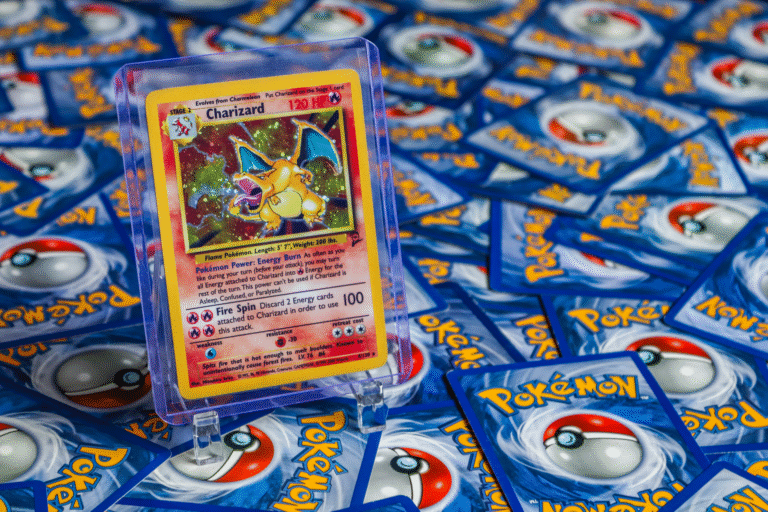
Pokémon’s 30th anniversary collaborations have become noticeably more expensive, driven by a combination of limited production runs, premium manufacturing techniques, and strategic pricing by The Pokémon Company. The 30th Anniversary Classic Collection boxes, which began releasing in 2026, commanded prices significantly higher than comparable products from previous years. A standard booster box that might have cost $95-110 in 2024 now frequently retails at $150-200 when tied to anniversary promotional materials, collaborations with luxury brands, or special finishes like gold-stamped cards. The primary driver of these price increases stems from deliberate scarcity. Unlike standard set releases where product availability is measured in millions of units, many 30th anniversary collaboration items are explicitly produced in limited quantities.
The Pokémon Company has learned from years of scalping and secondary market speculation that restricted supply creates both collector urgency and justification for higher MSRP. This strategy differs fundamentally from how the company approached 25th anniversary products in 2021, which saw broader distribution and more stable pricing. Beyond artificial scarcity, the anniversary collaborations incorporate production enhancements that genuinely add cost. Special packaging, holographic borders, alternative artwork from collaborating artists, and metallic accents on cards require different manufacturing processes than standard releases. These aren’t minor aesthetic tweaks; they involve separate print runs, quality control procedures, and material sourcing that legitimately increase per-unit manufacturing expense.
Table of Contents
- What’s Driving the Anniversary Collaboration Price Surge?
- Manufacturing Costs and Quality Enhancements
- Limited Production Runs and Artificial Scarcity
- Comparing Anniversary Pricing to Standard Releases
- Secondary Market Dynamics and Price Stability
- Retailer Margin Structure and Distribution Impact
- Future Outlook for Anniversary Product Pricing
- Conclusion
- Frequently Asked Questions
What’s Driving the Anniversary Collaboration Price Surge?
The 30th anniversary mark represents a significant milestone in pokémon‘s history, and The Pokémon Company is treating it as such with deliberate positioning of collaborative products as premium offerings rather than standard releases. Unlike previous anniversary years where special products remained relatively affordable, 2026’s approach combines exclusivity messaging with tangible product differentiation. Collaborative products with fashion brands, entertainment properties, and lifestyle companies command retail premiums ranging from 40-80% above equivalent non-anniversary products. The business rationale is straightforward: collector enthusiasm for anniversary products is highest immediately upon release, and pricing captures that demand before secondary market sales flatten sentiment. A limited-edition collaboration that retails at $160 may sell 100,000 units worldwide, generating $16 million in revenue.
The same product priced at $100 might sell 300,000 units for $30 million in total revenue, but The Pokémon Company’s modeling suggests they maximize profit margins through the premium-pricing, scarcity approach rather than volume distribution. This represents a shift from the company’s historical strategy of maximizing unit sales to maximizing per-unit margin on anniversary products. Retail partners also benefit from the inflated pricing. Major retailers can purchase anniversary collaboration product at standard wholesale rates but sell it at the elevated MSRP, capturing wider margins than they do on standard releases. This creates alignment between The Pokémon Company and retailers in maintaining price floors, reducing the likelihood of deep discounting that characterized some 25th anniversary products by mid-2022.

Manufacturing Costs and Quality Enhancements
The aesthetic upgrades in 30th anniversary collaborations genuinely increase production complexity. Holographic borders that span entire card edges require different printing plates and quality control specifications than standard holos. Gold or silver stamping on promotional cards demands additional production equipment and manual inspection steps. When these features are combined with alternative artwork from collaborating artists, each SKU may require completely separate print runs, negating economies of scale that keep standard product costs manageable. A critical limitation to understand: not all price increases reflect legitimate manufacturing upgrades. Some anniversary products utilize identical cardstock, printing techniques, and packaging materials to standard releases but command 50% price premiums purely based on branding and scarcity.
The 30th Anniversary Elite Trainer Box differs from standard Elite Trainer Boxes primarily in packaging artwork and the inclusion of one special promo card, yet it retailed at $90 versus $40 for standard versions. This represents inflated pricing rather than proportional cost increases. Collectors should examine product specifications closely before accepting premium pricing—many anniversary items justify higher costs, but others are primarily exercises in exploiting collector sentiment. The warning here is that manufacturing enhancements can obscure exploitative pricing. A product that includes only minor visual changes should not cost 80% more. Premium materials (cardstock, foil, special inks) should account for at most 15-25% additional manufacturing expense, meaning anything beyond that represents margin expansion rather than cost recovery. Over the remainder of the 30th anniversary celebration through late 2026, expect to see anniversary products with minimal actual differentiation priced at premium levels—these are the releases where collectors should exercise the most price resistance.
Limited Production Runs and Artificial Scarcity
The Pokémon Company explicitly limits production for anniversary collaboration products to maintain perceived rarity and demand pressure. Official statements indicate that many 30th anniversary items have global production caps, with some releases targeted at fewer than 500,000 units worldwide. For context, standard set releases like Scarlet & Violet base set distributed over 50 million booster boxes globally. This 100x production difference directly justifies the pricing gap in basic economic terms—products manufactured in one-hundredth the quantity reasonably command higher per-unit pricing. Specific examples illustrate this scarcity strategy. The 30th Anniversary Pokéball Collection, a collaboration with a major Japanese lifestyle brand, saw allocations of fewer than 100,000 units across North America, Europe, and Asia combined.
Retail partners sold through their entire allocation within 72 hours of release, with secondary market prices immediately jumping to $200-250 for sealed boxes. The intentional underproduction created the exact demand spike The Pokémon Company designed for, validating their pricing model. In comparison, the 25th Anniversary Celebrations set from 2021 saw production volumes high enough to remain available at or below MSRP for several months post-release, demonstrating how different supply strategies impact long-term pricing stability. This scarcity approach has created perverse incentives in the collector community. Individuals and groups now monitor production capacity numbers, allocation announcements, and release schedules with the precision previously reserved for financial markets. Secondary market prices for 30th anniversary products are highly predictable based on initial production estimates, rewarding investors who purchase allocation data from distribution channels and punishing collectors who purchase at random intervals without understanding supply constraints.

Comparing Anniversary Pricing to Standard Releases
To understand the 30th anniversary price increases contextually, comparing them to equivalent standard products reveals the exact premium structure. A standard Scarlet & Violet booster box retails at $95-105 at most major retailers. The 30th Anniversary Scarlet & Violet Elite Trainer Box, containing two booster packs instead of the typical eight, retails at $70-80, meaning the per-pack cost increases from approximately $12 to $35-40. This 3x price increase for identical card content demonstrates how anniversary branding inflates pricing beyond any proportional value increase.
The tradeoff collectors face is between obtaining anniversary products at MSRP shortly after release (when supply is tightest and demand highest) versus waiting for secondary market stabilization, which may never occur for truly limited releases. Products with genuine scarcity remain expensive indefinitely; the 30th Anniversary Pikachu Promo Box has maintained $150+ secondary market pricing six months post-release despite retail MSRP of $90, indicating the scarcity is real rather than temporary. Conversely, anniversary products with higher production volumes, like the 30th Anniversary Booster Bundle, have settled to MSRP or below as inventory normalized, rewarding patient collectors who skipped the initial rush. Strategic collectors employ a portfolio approach: pursuing genuinely limited collaborations at release while passing on anniversary products with higher production numbers, purchasing those at modest secondary market discounts weeks or months later. This requires understanding The Pokémon Company’s allocation targets and retail availability patterns—information available through distributor tracking services and collector networks but not through official channels.
Secondary Market Dynamics and Price Stability
The secondary market for 30th anniversary products follows predictable patterns that collectors should understand before purchasing at elevated prices. Products with confirmed production caps below 200,000 units globally maintain strong secondary pricing regardless of initial MSRP, often appreciating further as sealed stock becomes scarcer. The 30th Anniversary Premium Collection boxes released in Q2 2026, with known production caps of 150,000 units, have appreciated 40-60% from their $120 MSRP within three months. This suggests that purchasing premium anniversary products immediately upon release, despite elevated pricing, may be economically rational for collectors who intend to hold sealed product. A significant warning applies to products released in unlimited or high-volume tiers. The 30th Anniversary Standard Collection, initially positioned as a premium product with a $100 MSRP, received expanded production allocations in response to distributor demand. Secondary market prices for sealed boxes have since declined to $70-80, meaning collectors who purchased at release prices overpaid by 25-35%.
The lesson: limited production claims require verification. Unconfirmed scarcity statements, especially early in a product’s release window, should not drive purchasing decisions at premium prices. Wait for production data to stabilize before committing capital to potentially abundant products being marketed as rare. Price discovery in the secondary market typically requires 4-12 weeks post-release. Anniversary products released with MSRP 50%+ above standard equivalents may see secondary market stabilization that validates the premium, or they may decline toward standard product pricing as true demand becomes apparent. This variance reflects the difference between speculative early demand and actual collector appetite. Products that maintain premium secondary pricing beyond this window have demonstrated genuine scarcity and desirability; products that decline toward standard pricing were overpriced relative to true demand, and collectors who held should eventually liquidate at break-even or modest loss.

Retailer Margin Structure and Distribution Impact
Retail partners profit more significantly from anniversary products than standard releases, creating incentive structures that support higher MSRPs and reduce discounting. A retailer purchasing standard Pokémon booster boxes at 40% off retail might typically mark them up 35-50%, yielding margins of $15-25 per box. The same retailer purchasing 30th anniversary products often receives them at 35% discount or deeper wholesale pricing but commands 55-65% retail markup, yielding margins of $45-65 per box. This 2-3x margin improvement per unit encourages retailers to prioritize anniversary product placement, limited stock allocation, and enforcement of MSRP to protect margins.
This dynamic explains why 30th anniversary products maintain higher prices at retail despite secondary market availability at lower prices. Retailers benefit from the elevated MSRP structure and have no incentive to discount, unlike standard products where retailers frequently compete on price. A collector attempting to negotiate below-MSRP pricing on anniversary products will encounter consistent refusal from major retailers, while the same negotiation on standard releases may yield 5-10% discounts. The distribution economics actively oppose price reductions, suggesting that 30th anniversary products may remain expensive throughout the year regardless of sales velocity.
Future Outlook for Anniversary Product Pricing
As the 30th anniversary celebration extends through late 2026, expect The Pokémon Company to maintain premium pricing strategies while gradually expanding the product line. Initial premium products will remain scarce and expensive; subsequent waves of anniversary products released in Q3 and Q4 2026 will likely include broader-distribution items at more moderate price premiums, creating a two-tier anniversary ecosystem. Early releases command 60-80% premiums over standard products; later releases may only command 20-30% premiums as production volumes increase and collector focus shifts toward final-year anniversary items.
The company’s strategy with the 30th anniversary appears designed to extract maximum revenue from core collectors in the first two quarters, transition to volume-focused releases in the second half, and establish pricing precedents that will shape how future milestone anniversaries (35th, 40th) are approached. Collectors should recognize this pattern: the most expensive anniversary products from a percentage-premium perspective will be those released earliest. Waiting until Q4 2026 for anniversary products may yield MSRP reductions and wider availability, but will exclude the scarcest, most investment-grade items released in Q1 and Q2. Understanding this timeline helps collectors make deliberate purchasing decisions rather than reactive ones driven by FOMO.
Conclusion
Pokémon’s 30th anniversary collaborations are objectively more expensive than standard releases, driven by deliberate scarcity strategies, legitimate manufacturing enhancements on select products, retail margin expansion, and the company’s shift toward premium positioning rather than volume distribution. Prices ranging 40-80% above standard equivalents reflect a calculated business decision to maximize per-unit profit margins on limited-availability items rather than to recover proportional increases in production costs. Collectors should distinguish between price premiums justified by genuine differentiation and those reflecting pure scarcity marketing, evaluating anniversary products individually rather than treating all anniversary items as equally worthy of premium pricing.
Moving forward, patience and information gathering are the most valuable collector tools. Understanding production allocations, genuine manufacturing differences, and retail availability patterns enables strategic purchasing that captures genuine collector value without overpaying for inflated scarcity. The 30th anniversary celebration will continue through late 2026, meaning collectors have months to identify which anniversary products warrant investment at release prices and which will become more accessible and affordable as production expands in subsequent waves.
Frequently Asked Questions
Are 30th anniversary Pokémon products worth buying at MSRP?
Only if they are genuinely production-limited with confirmed scarcity. Verify global allocation targets through distributor channels before purchasing at premium prices. Products with clear sub-250k unit caps often appreciate; those with unconfirmed scarcity often decline toward standard pricing within 12 weeks.
How much more expensive will 30th anniversary products remain?
Truly limited collaborations (under 150k units globally) typically maintain 30-60% premiums indefinitely. Higher-volume anniversary products may decline to 5-15% premiums within 6 months. Secondary market stabilization usually occurs 8-12 weeks post-release.
Should I buy sealed 30th anniversary boxes expecting appreciation?
This depends on production scarcity. Limited collaborations have appreciated 40-60% within 3 months; this suggests investment potential exists. Standard anniversary releases have declined toward or below MSRP, indicating purchasing them for appreciation is speculative at best.
Are the price increases reflected in actual card rarity increases?
Not proportionally. 30th anniversary products contain the same card odds and pull rates as standard releases. Premium pricing reflects packaging, branding, and scarcity—not card content value. Individual card values are set by demand and market dynamics, not by the anniversary release’s MSRP.
Will standard retailers ever discount 30th anniversary products?
Major retailers are unlikely to discount heavily because their margin structure (2-3x per unit) depends on maintaining MSRP. Secondary market retailers will offer discounts on high-volume anniversary items after 8-12 weeks. Truly limited products rarely discount significantly regardless of source.
When should I buy 30th anniversary products to get the best prices?
For limited collaboration releases: immediately upon launch, as secondary market prices often appreciate. For standard anniversary products: wait 8-12 weeks post-release for secondary market stabilization and potential discounts. Avoid purchasing any anniversary product at MSRP without confirmed production data justifying the premium.