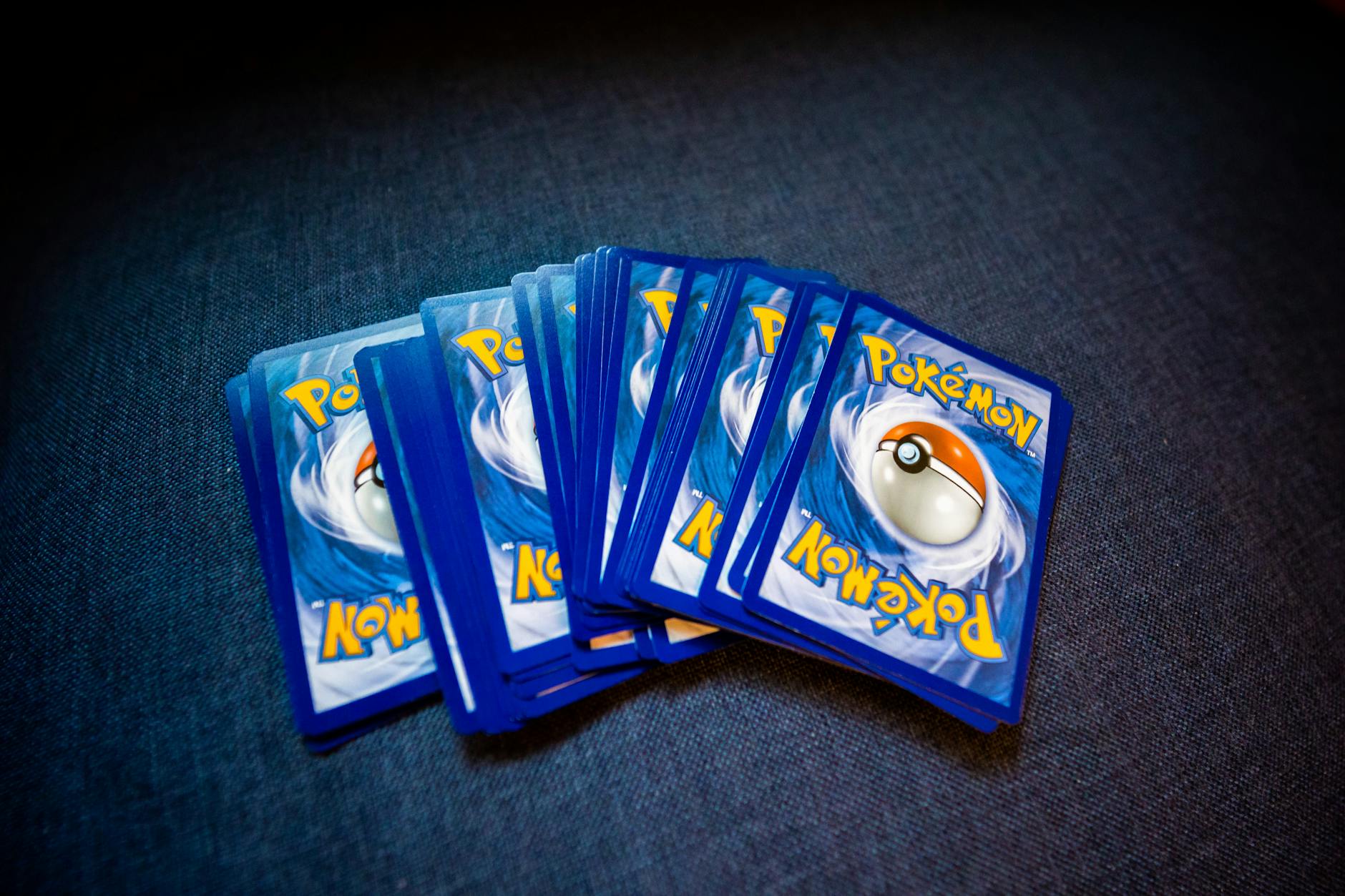
Base Set cards are poised to become the “Original Era” that collectors and investors will covet for decades because they represent the true genesis of the Pokémon Trading Card Game—the only cards that can claim authentic first-generation status. When a complete 1st Edition Base Set graded at PSA 10 across all cards sold for $911,629.69 in 2025, the market wasn’t just paying for cardboard; it was pricing in historical irreplaceability. With only 121 examples of 1st Edition Base Set Charizard achieving PSA 10 status out of 2,300+ submissions since 1999, these cards have created a scarcity profile so extreme that future collectors will likely view them the way today’s collectors view first-edition books or early automobiles—as artifacts that launched an entire category. The distinction matters because Base Set occupies a unique position in collecting history.
Released in Japan on October 20, 1996, and in the United States on January 9, 1999, Base Set predates every other Pokémon card era and every variant that followed. Nothing came before it. This isn’t nostalgia-driven demand or manufactured rarity; it’s the simple, unassailable fact that Base Set sits at the origin point of the entire hobby. As the 30th anniversary of the franchise approaches on February 27, 2026—marked by over 100% year-over-year price increases in the vintage market—it’s becoming clear that collectors are beginning to view these cards differently: not as vintage commodities, but as the foundational originals around which all future collecting will be measured.
Table of Contents
- Why Base Set Occupies an Unreplicable Position in Pokémon TCG History
- The Scarcity Crisis—Why Condition Premiums Have Become Extreme
- Market Growth Patterns—The 20-40% Annual Growth of Vintage Era Cards
- The Psychology Behind “Original Era” Collecting—Why Future Buyers Will Prioritize Base Set
- The Grading and Authentication Risk—Why Condition Assessment Matters More Than You Think
- Print Variations and Edition Status—The Hidden Value Multipliers
- Market Maturation and Long-Term Outlook—From Speculation to Fundamentals
- Conclusion
Why Base Set Occupies an Unreplicable Position in Pokémon TCG History
The original Base Set represents the only era of pokémon cards that can never be recreated, replicated, or reissued as an original product. Wizards of the Coast’s 1999 print run happened once, and every card from that original print run carries a timestamp that no modern reprint can ever replicate. This is fundamentally different from how the market has treated other vintage sets—where reprints, special editions, and re-releases have diluted historical uniqueness. But Base Set stands alone: the cards you collect today are the exact same physical objects that launched the entire hobby 27 years ago.
This irreplaceability has a direct effect on market psychology. Collectors who purchase high-grade Unlimited Base Set cards today understand they’re acquiring pieces from a production run that happened in specific factories, under specific conditions, at a specific moment in time. The Shadowless variants—printed before the Pokémon Company added its shadow logo—sell for 2-10× the price of Unlimited versions specifically because they represent an even earlier and more limited window of production. A Shadowless 1st Edition Charizard PSA 10 commands six figures at auction partly because of condition, but largely because fewer than 50 may exist at that grade level globally.
The Scarcity Crisis—Why Condition Premiums Have Become Extreme
The gap between a high-grade Base set card and a lower-grade example has become so severe that it’s creating a two-tier market. A 1st edition Base Set Charizard graded PSA 9 sells for approximately $50,000, while the same card at PSA 10 reaches $510,000—a 10-fold jump for a single grade point. This isn’t standard variation in the card market; it’s a reflection of how desperately scarce PSA 10 copies have become. With only 121 PSA 10 copies of 1st Edition Base Set Charizard in existence out of 2,300+ submissions, collectors face a genuine scarcity cliff where the highest grades are effectively museum-level rare.
One critical limitation to understand: not all Base Set cards follow the Charizard price trajectory. Commons and uncommons from the set, even in high grades, remain relatively affordable. The premium scarcity applies primarily to the holographic rare cards, with Charizard, Blastoise, and Venusaur commanding the highest valuations. A collector seeking to build a diverse Base Set collection should expect to encounter a bifurcated market where Charizard and a handful of other high-demand holos define the pricing ceiling, while other cards offer more accessible entry points. This also creates a risk: if you’re banking on mass appreciation across all Base Set cards, you may be disappointed with cards outside the top-tier collectibles.
Market Growth Patterns—The 20-40% Annual Growth of Vintage Era Cards
The Wizards of the Coast era (1999-2003) has demonstrated compound annual growth rates of 20-40% across multi-year holding periods, and high-grade Base Set cards are projected to appreciate 15-25% annually through 2026. These aren’t speculative estimates; they’re derived from documented auction results and sales data tracking. A Charizard that sold for $200,000 in 2023 may have reached $350,000-$400,000 by 2025, reflecting consistent demand from both collectors and investment-grade buyers seeking hard assets.
The 30th anniversary celebration of Pokémon on February 27, 2026, has already catalyzed significant market momentum, with year-over-year price increases exceeding 100% in the months leading up to the milestone. This suggests that Base Set cards are currently in an acceleration phase driven by renewed mainstream attention and the symbolic weight of the franchise reaching maturity. However, it’s important to recognize that this growth period may be partially ephemeral—tied to anniversary marketing and the influx of new collectors entering the market. Long-term appreciation will likely moderate once the anniversary period concludes, though the underlying scarcity fundamentals should support continued steady growth beyond the initial spike.

The Psychology Behind “Original Era” Collecting—Why Future Buyers Will Prioritize Base Set
As the Pokémon TCG matures as a collectible category, future buyers will increasingly distinguish between “original era” cards and everything that came after. This is a pattern seen across all collectible markets: first-generation items command premium valuations not because they’re mechanically superior, but because they possess historical primacy. A collector who enters the market in 2030 or 2035 will face a portfolio of options—modern holographic variants, special editions, reprinted anniversary sets—but only one category will carry the authenticity of origin: Base Set.
The upcoming “Eternals” set, featuring stamped reprints of Base Set holos including Charizard, actually reinforces this dynamic. By offering modern collectors access to these iconic cards in stamped form, the market is implicitly acknowledging that originals and reprints are separate tiers of desirability. A collector acquiring a stamped Charizard from the Eternals set will own a functional piece of Pokémon history, but they won’t own what an original 1st Edition Base Set Charizard owner possesses: the actual card that launched the category. This distinction will likely become more pronounced as future generations of collectors seek authenticity over novelty.
The Grading and Authentication Risk—Why Condition Assessment Matters More Than You Think
One of the most consequential but underappreciated aspects of Base Set collecting is the critical importance of professional grading. With a PSA 10 Charizard valued at $510,000 and a PSA 9 at $50,000, the difference between professional assessments can represent a $460,000 swing in value. This creates a real vulnerability: if you’re considering acquiring high-grade Base Set cards as a long-term holding, the reputation and reliability of the grading company becomes part of your investment thesis. Any future concerns about grading company standards or scandals could theoretically impact the market’s confidence in grades assigned a decade ago. Additionally, the concept of “vintage wear” adds complexity to Base Set grading.
Collectors must understand that Base Set cards from 1999 have been stored, handled, and aged for 27 years. Centering issues, edge wear, and corner wear that might seem minor to a new collector are actually the primary factors separating PSA 9 from PSA 10 at the high-grade spectrum. There’s also the storage risk going forward: acquiring a PSA 10 card today requires acknowledging that you’re responsible for maintaining that grade if you ever intend to sell. Any damage—whether from environmental exposure, improper handling, or natural degradation—could reduce the card’s value catastrophically. For this reason, serious Base Set collectors often invest in specialized storage and insurance as part of their collection maintenance strategy.
Print Variations and Edition Status—The Hidden Value Multipliers
Within Base Set itself, there are distinct print variants that create pricing tiers. 1st Edition cards, identified by the “1st Edition” stamp on the left side of the card front, sell for dramatically higher prices than Unlimited editions (printed after the 1st Edition run sold through). Shadowless cards—printed before the Pokémon Company added its shadow logo around the Pokémon illustration—are the rarest and most valuable. A Shadowless 1st Edition Base Set Charizard represents the absolute top tier of collectibility within the set, though examples at PSA 10 are so rare that published pricing becomes almost theoretical. Understanding these variants is essential for collectors, because the price difference between editions can be as significant as the condition difference.
An Unlimited Base Set Charizard PSA 10 might sell for $50,000-$100,000, while a 1st Edition version of the same card at the same grade reaches $300,000+. For newer collectors, this means it’s possible to enter Base Set collecting at different price points depending on variant preference. Some collectors choose Unlimited versions specifically because they can acquire high-grade examples at more accessible prices while still owning original, non-reprinted Base Set cards. Others view 1st Edition as the only authentic vintage experience. Both approaches have merit depending on budget and collecting philosophy.
Market Maturation and Long-Term Outlook—From Speculation to Fundamentals
The Pokémon TCG market has undergone a significant maturation between 2024 and 2026. Early in the pandemic boom, prices were driven by speculative fever and scarcity marketing. Today, the market has largely shifted toward fundamentals: genuine collectors driving sustained demand, increased transparency in pricing through public auction results, and appreciation based on authentic scarcity and condition rather than hype cycles. Base Set cards, particularly high-grade examples, have become recognized as belonging in the “fundamentals-driven” category because their scarcity is absolute rather than manufactured.
Looking forward to 2027 and beyond, Base Set cards will likely continue appreciating at moderate to strong rates as the original-era designation becomes more culturally embedded in collector consciousness. The set’s position at the historical origin point of Pokémon TCG, combined with its genuine scarcity (you cannot manufacture more authentic Base Set cards from 1999), creates a supply-demand dynamic that should remain favorable for holders. However, the highest growth rates have likely already been captured; future appreciation will probably moderate from the 20-40% compound annual growth rates of recent years to more sustainable 10-15% annual increases as the market price approaches equilibrium. For collectors and investors viewing Base Set as a long-term multi-generational holding, this more measured growth trajectory is actually preferable because it suggests the market is building a durable, rational foundation for these cards’ status as “original era” collectibles.
Conclusion
Base Set cards are becoming the “Original Era” that future buyers will want because they possess the singular, irreplaceable quality of authenticity—they are the only cards that can claim to be the genuine originators of the entire Pokémon Trading Card Game. The combination of historical significance (launched in 1999), extreme scarcity (only 121 PSA 10 Charizards exist), and documented appreciation (20-40% compound annual growth) creates a collectible profile that will almost certainly be valued for generations to come. As the market matures and collectors gain sophistication, the distinction between “original era” and everything else will become sharper, and Base Set will stand alone as the foundational set against which all other eras are measured.
For collectors considering entering this market, the path forward requires both patience and strategic clarity. Determine your budget tier—whether you’re pursuing premium 1st Edition Charizards or building a broader collection of Unlimited high-grades—and understand that condition and variant status will matter as much as the card itself. The 30th anniversary momentum of 2026 will likely create a temporary surge, but the long-term value of Base Set rests on its unassailable historical position. Original era status doesn’t fade; it deepens.
You Might Also Like
- Why Future Collectors May Chase Base Set Pokémon Cards Like Historic Artifacts
- Why Base Set Pokémon Cards May Become More Valuable With Every Anniversary
- Why High-Grade Base Set Cards May Be Treated Like Historical Collectibles