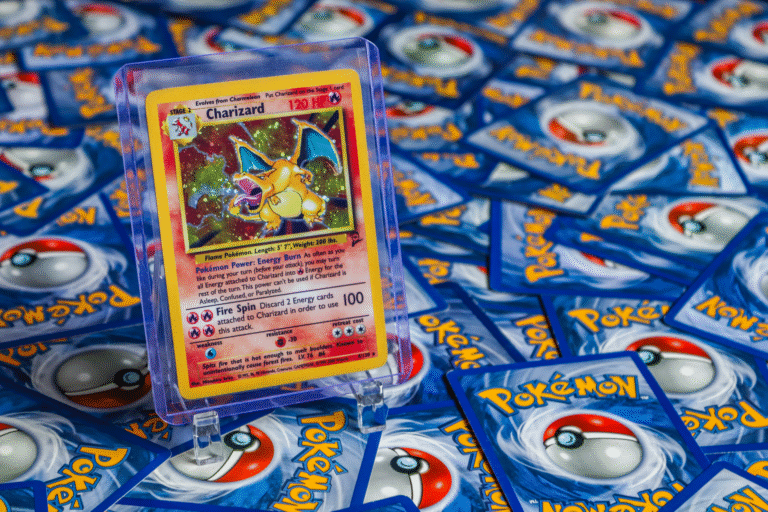
The Pokémon Trading Card Game’s Mysterious Treasures set, released in August 2007, contains cards that remain enigmatic investments for modern collectors in 2026. Several cards from this 143-card set have demonstrated unexpected price appreciation and collector interest, particularly high-grade specimens like Garchomp #9, which commands $590 in PSA 9 condition. The real surprises aren’t necessarily the chase cards everyone knows about—they’re the mid-tier rare holos and sealed product that veterans overlooked a decade ago, now surfacing as forgotten gems with genuine upside potential.
The market conditions in 2026 favor rediscovered vintage sets like Mysterious Treasures. The global trading card games market is projected to reach $16.9 billion by 2035, growing at a 6.9% compound annual rate, creating sustained demand for rare Pokemon cards from the Diamond and Pearl era. Mysterious Treasures, being the third set in that beloved generation, carries nostalgic weight and limited print runs relative to modern products. The real question for collectors isn’t whether Mysterious Treasures cards will appreciate—it’s which specific cards will outpace market expectations and by how much.
Table of Contents
- What Makes Mysterious Treasures Cards Stand Out in 2026’s Collector Market?
- The Hidden Tiers of Rarity Within Mysterious Treasures
- Condition, Print Quality, and the 2007 Manufacturing Variance Problem
- Blockchain Authentication and Modern Verification Standards for Mysterious Treasures
- The Mystery and Chase Mechanic Problem in Vintage Sets
- The Role of Sealed Product and Case Studies in 2026 Appreciation
- What the 2026 Market Signals About Mysterious Treasures’ Future Trajectory
- Conclusion
- Frequently Asked Questions
What Makes Mysterious Treasures Cards Stand Out in 2026’s Collector Market?
mysterious Treasures occupies a unique position in the diamond and Pearl lineup. The set contains 102 cards derived from the Japanese Secret of the Lakes set, supplemented by 41 additional cards exclusive to the English release. This hybrid composition means certain cards have print frequency variations that modern collectors are only now cataloging systematically. Cards that appeared in both versions often have different pull rates, creating unexpected rarity tiers within the same set number. Garchomp #9, the set’s marquee character, exemplifies this dynamic—its PSA 9 valuation of $590 reflects both scarcity and iconic species appeal, but lesser-known holo rares in similar condition often trade for a fraction of that price despite comparable artwork and condition difficulty.
The collector psychology around Mysterious Treasures differs from newer sets because the card pool doesn’t benefit from present-day speculation. When a modern set releases, speculators immediately identify chase cards and drive prices up. Mysterious Treasures, by contrast, has already experienced its major speculation cycles. The surprise cards are those that were commons or uncommons when the set released but possess unexpected modern appeal—either through newly discovered tournament playability in retro formats, or through subtle print variations that grading companies have only recently begun evaluating. Gyarados #26, a rare holo from the set, trades for $12.99 ungraded, suggesting room for upside if near-mint copies enter the market and attract competitive bidding.

The Hidden Tiers of Rarity Within Mysterious Treasures
Not all cards in the set present equal investment potential, and this is where most collectors make costly mistakes. The commons like Kricketot #86 trade for $0.35 ungraded, reflecting genuine abundance from mass production nearly two decades ago. However, certain reverse holo commons and uncommons have demonstrated unexpected demand because they appear in fewer graded copies than standard versions. This counterintuitive dynamic—where a reverse foil uncommon might trade for more than a regular foil rare—confuses newer collectors accustomed to straightforward rarity hierarchies in modern sets. Grading introduces a significant limitation to Mysterious Treasures value calculations.
Approximately 67% of collectors prefer graded cards for quality assurance and long-term asset value, according to 2026 market data. This preference creates a brutal reality: ungraded Mysterious Treasures cards trade at steep discounts relative to their graded equivalents. A Garchomp #9 in raw condition might sell for $200, but that same card in PSA 9 reaches $590. The grading cost—typically $15 to $50 per card depending on turnaround—represents real friction when evaluating whether a card is worth the certification process. Many collectors hold back-catalog Mysterious Treasures cards in raw condition, betting that eventual grading will unlock substantial value. This is a speculative wager that doesn’t always pay off if the card’s eye appeal has deteriorated or if grading subs return lower-than-expected grades.
Condition, Print Quality, and the 2007 Manufacturing Variance Problem
Cards from Mysterious Treasures frequently exhibit the manufacturing inconsistencies characteristic of the mid-2000s pokemon TCG. Centering issues, light surface wear from factory packaging, and off-color printing appeared regularly during this production era. Professional graders now account for these period-specific defects, but they still penalize cards relative to modern production standards. A Mysterious Treasures holo rare with light wear might receive a PSA 8, while a near-identical modern card would command a PSA 9. This ceiling effect means collectors can’t always expect raw Mysterious Treasures cards to grade higher simply because they’ve been stored well.
The specific example of reverse holos illustrates this variance problem acutely. Reverse holo cards from Mysterious Treasures sometimes exhibit “holo bleed” or uneven foil application—a known quirk of the production methods used in 2007. When these cards are eventually graded, the holo quality itself becomes the limiting factor, not wear on the face or edges. A collector holding a Crobat reverse holo might assume it will grade highly because the card itself was carefully preserved, only to receive a PSA 7 or 8 because the holo pattern itself grades as a limiting factor. This creates a scenario where expectations don’t match reality, and the card’s resale value disappoints.

Blockchain Authentication and Modern Verification Standards for Mysterious Treasures
The 2026 collector market is beginning to adopt blockchain authentication for secure card ownership verification and permanent digital fingerprints. This technology doesn’t replace traditional grading companies but complements them by creating immutable ownership records tied to physical cards. Collectors of vintage Mysterious Treasures cards—where provenance can be unclear—benefit from this emerging standard because it establishes chain-of-custody documentation that increases buyer confidence. A high-value Garchomp #9 equipped with blockchain authentication commands a premium versus an identical graded card without such documentation.
The tradeoff is that blockchain adoption remains voluntary and inconsistent across the collector marketplace. A Mysterious Treasures card with blockchain authentication might appeal to institutional collectors and serious investors, but retail collectors often don’t care about or understand the technology. This creates a bifurcated market where the same card can trade at different price points depending on buyer sophistication and authentication preference. Collectors considering significant purchases of expensive Mysterious Treasures cards should be aware that authentication technology is evolving, and cards without blockchain records might face headwinds in future sales if the technology becomes the market standard for high-value vintage cards.
The Mystery and Chase Mechanic Problem in Vintage Sets
The 2026 collector market identifies mystery and chase mechanics as the main sales driver in trading card games. This dynamic applies to modern products but creates a paradox for Mysterious Treasures. The set is nearly two decades old, so the “mystery” is long gone—every card has been discovered, cataloged, and priced. Collectors can’t experience the original excitement of pulling an unexpected chase card because the set isn’t in circulation anymore. Instead, the appeal of Mysterious Treasures hinges on owning cards others don’t have, or holding cards that have appreciated beyond their original market value. This means the surprise factor for Mysterious Treasures collectors isn’t rooted in product freshness but in market inefficiency—finding cards priced below their true demand.
The warning here is crucial: not every Mysterious Treasures card represents an undervalued gem. Many cards remain affordable because collector demand is genuinely modest. Obscure holographic rares, cards without competitive appeal, and artwork that hasn’t aged well remain low-value even in near-mint condition. Collectors often conflate “rare” with “valuable,” assuming that scarcity automatically creates price appreciation. In reality, Mysterious Treasures cards are valuable only when they combine rarity with collector desirability, competitive playability, or iconic artwork. A card that meets none of these criteria stays inexpensive regardless of how long you hold it.
The Role of Sealed Product and Case Studies in 2026 Appreciation
Sealed Mysterious Treasures product—unopened booster boxes, theme decks, and sealed cases—represents a different investment category than individual cards. These sealed products have appreciated substantially because opening them destroys their value proposition. A sealed Mysterious Treasures booster box from 2007 likely cost $100-120 at retail. Today, sealed boxes trade for thousands of dollars, depending on condition and authenticity verification.
The appreciation reflects scarcity combined with the collector preference for graded cards—sealed product guarantees that the contents haven’t been cherry-picked or damaged. However, sealed product holds its own risks. Counterfeit sealed boxes and boosters circulate in the vintage Pokemon market, and authentication becomes more critical for high-value sealed purchases. A collector buying a sealed Mysterious Treasures box should demand clear provenance, ideally from reputable dealers with long track records. The appeal of sealed product is its potential to contain high-value chase cards in unmolested condition, but this benefit evaporates if the box turns out to be fake or if the cards inside grade poorly due to manufacturing defects or storage conditions.
What the 2026 Market Signals About Mysterious Treasures’ Future Trajectory
The sustained interest in Mysterious Treasures cards, despite their age, suggests that the set will continue to hold collector attention. The combination of nostalgic appeal, scarcity, and competitive pricing in the broader TCG market creates ongoing demand. Diamond and Pearl generation nostalgia is now mainstream among collectors in their mid-30s with disposable income—a demographic that prioritizes sentimental cards alongside investment potential. Mysterious Treasures benefits from this cohort’s willingness to pay premium prices for cards that shaped their childhood hobby.
Looking forward, the most likely surprise cards are those that combine undervalued current pricing with emerging competitive demand or newly recognized print variations. The market will continue to discover subsets within Mysterious Treasures that display unexpected scarcity, driving selective price increases. Collectors should monitor grading population data and recent auction results rather than relying on list prices, as these real-time signals reveal where actual demand is shifting. The set’s future upside depends less on the cards themselves and more on macro trends in collector spending and the continued cultural prominence of Pokemon nostalgia.
Conclusion
Mysterious Treasures cards surprise collectors in 2026 not through sudden discovery but through patience and selective evaluation. The most appreciable cards combine rarity, condition grading access, and genuine collector desirability—a trinity that’s often missing in vintage card pricing. Garchomp #9 exemplifies this dynamic: it’s expensive because it’s rare, it’s iconic, and high-grade copies exist in countable numbers.
Lesser-known holos in similar condition offer more upside because fewer collectors have yet identified their value, but they also carry the risk of remaining overlooked indefinitely. For collectors evaluating Mysterious Treasures as both hobby purchases and investments, the key strategy is to buy cards with clear demand signals—recent sales at rising prices, strong condition grades, and artwork or competitive appeal that resonates beyond pure rarity. Avoid chasing bulk lots of ungraded commons in hopes of discovering hidden gems; the real surprises have already been identified by serious collectors. Instead, focus on selective high-value purchases of graded rares and reverse holos, ensure proper authentication and documentation, and hold patiently as the broader TCG market appreciation tide lifts these vintage cards.
Frequently Asked Questions
Is Garchomp #9 from Mysterious Treasures a good investment in 2026?
Garchomp #9 in PSA 9 condition commands $590, reflecting both its iconic status and scarcity. It’s already expensive, meaning upside is modest. If you’re buying for portfolio diversification, stick to lower-grade copies ($200-400) where appreciation potential is higher. If you’re buying for collection completion, the PSA 9 is the goal, but recognize you’re paying premium pricing for the best example available.
What’s the difference between regular holos and reverse holos from Mysterious Treasures?
Regular holos have foil backgrounds with regular card faces, while reverse holos invert this design. Both exist in Mysterious Treasures, but reverse holos are often scarcer because fewer were pulled and preserved. Reverse holos from this era frequently exhibit holo quality issues, so grading matters more for them than for regular holos.
Should I grade ungraded Mysterious Treasures cards?
Only grade if the card is either very valuable (worth $100+) or in exceptional condition. Grading costs $15-50 per card, which cuts into potential profits on mid-range cards. Cards like Gyarados #26 at $12.99 ungraded don’t justify grading fees unless you believe they’ll receive a high grade and substantial value increase.
How do I authenticate sealed Mysterious Treasures products?
Buy from reputable dealers with documented track records. Examine packaging for period-accurate printing, proper font weight, and correct color profiles. Counterfeit sealed boxes are common in the vintage Pokemon market. If a price seems too good to be true, it probably indicates a fake. High-value sealed purchases should include certificates of authenticity or blockchain verification where available.
Will Mysterious Treasures prices continue to rise?
The set benefits from Diamond and Pearl nostalgia and sustained collector demand, suggesting continued appreciation. However, prices won’t rise uniformly—only cards with genuine demand signals will appreciate significantly. Common cards and obscure rares will likely remain affordable indefinitely.
What makes a Mysterious Treasures card valuable if it’s ungraded?
Rarity, iconic artwork, and competitive playability matter, but condition is critical. An ungraded Garchomp #9 in near-mint condition might reach $200, but a played copy could fall to $50-75. For ungraded cards, assess condition carefully and research recent comparable sales. List prices often overstate true ungraded value.