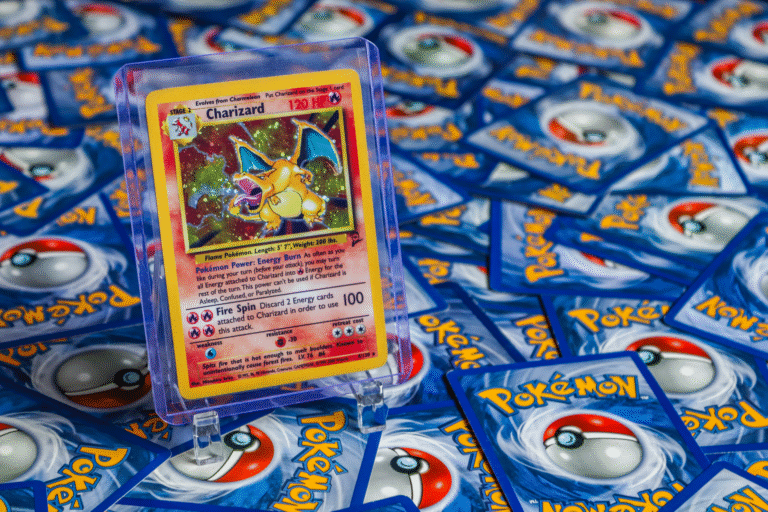
Base Set Electabuzz rare cards have experienced modest price stability over the past twelve months, with the Unlimited edition trading between $7.79 and roughly $51 depending on condition, while 1st Edition variants command a significant premium ranging from $25 to $600 at PSA-graded levels. If you’re looking to buy right now, an ungraded Unlimited copy will cost you under $8 from dealers like Troll and Toad, but the market’s real story lies in the dramatic spread between different condition grades—a PSA 9 Mint example sold for just $17.50 in January 2025, while a PSA 10 Gem Mint brought $182.50 only three months earlier.
This wide variance means your purchase decision hinges almost entirely on condition grade and edition type rather than on any significant market surge or crash. Over the twelve-month period tracking these cards, the takeaway for buyers is clear: Electabuzz from the Base Set remains an affordable entry point into vintage Pokémon collecting, but condition matters exponentially more than inflation or market hype. Whether you’re assembling a collection or making an investment, understanding the relationship between grade, edition, and actual market sales—not wishful asking prices—is what separates smart purchases from overpaid acquisitions.
Table of Contents
- How Much Has Base Set Electabuzz Actually Cost Buyers?
- How Does Card Condition Change What You’ll Actually Pay?
- Are 1st Edition Cards Really Worth the Premium?
- How Do You Know You’re Getting Authentic Base Set Cards?
- Has the Market Been Volatile or Stable This Year?
- Where Can You Actually Track and Compare Prices?
- What Does the Coming Year Look Like for Electabuzz Collectors?
- Conclusion
How Much Has Base Set Electabuzz Actually Cost Buyers?
The retail landscape for Unlimited base Set Electabuzz #20/102 has held remarkably consistent, with dealer pricing settling around $7.79 as of mid-2026. This stability reflects a card that has genuine collector demand but no artificial scarcity driving rapid appreciation. When you compare this to secondary market sales data from the past year, the picture becomes more nuanced: a PSA 7 (Near Mint) sold for $51 in August 2024, the same month another PSA 7 was listed, suggesting the $50-60 range represents a fair market value for cards in that grade.
Meanwhile, a PSA 9 (Mint) that changed hands for $17.50 in January 2025 indicates some variance between individual sales, though generally staying under $20 for that grade. The key limitation here is that auction prices represent individual transactions at specific moments, not comprehensive market trends—a single high or low sale doesn’t predict future prices. Dealers track these sales across platforms: the price guide, TCGPlayer, CardTrader, and eBay all maintain historical pricing data that collectively show Electabuzz has neither surged nor collapsed over the past year. For buyers, this means you can purchase with confidence that you’re not catching a speculative peak, but you also shouldn’t expect rapid appreciation.

How Does Card Condition Change What You’ll Actually Pay?
Grading stands as the single most important factor in Electabuzz pricing, and the numbers tell a striking story about condition’s financial impact. A 1st Edition PSA 10 commands $600 on average, while the same 1st Edition card in PSA 7 condition averages $65—a 90% price reduction for moving down three grades. Even within Unlimited cards, the jump from PSA 9 ($17.50) to PSA 10 ($182.50) represents more than a tenfold increase, illustrating why a card can swing from affordable to premium-priced based almost entirely on whether it qualifies as Gem Mint or Mint.
The critical warning for buyers: many sellers list raw (ungraded) cards with optimistic condition assessments that don’t hold up under professional grading standards. A card described as “Near Mint” by a seller might grade as PSA 6 or 7 when submitted to PSA, immediately adjusting your actual investment downward by 30-50%. Unless you’re willing to accept the variance of raw cards, budgeting for professional grading fees ($10-20 per card depending on bulk and turnaround) becomes essential to protecting your purchase. The $7.79 Unlimited card at retail doesn’t account for these hidden costs if you plan to grade it yourself.
Are 1st Edition Cards Really Worth the Premium?
Yes, but the premium is substantial and justified by scarcity. A 1st Edition PSA 3 averages $25—more than three times the cost of an Unlimited ungraded example—yet still remains entry-level for variant collectors. Move to PSA 7, and you’re at $65 average. Jump to PSA 10, and you’re at $600, the price point where serious collectors and investors separate from casual buyers.
These aren’t arbitrary markups; 1st edition cards represent approximately 20% of Base Set print runs, making them genuinely scarcer than Unlimited editions that were printed in much larger quantities throughout the 1990s. The practical tradeoff many buyers face: spending $600 on a single 1st Edition PSA 10 Electabuzz versus acquiring multiple Unlimited copies in varying conditions for the same total budget. For someone building a personal collection focused on owning the card rather than investment, the Unlimited route offers more flexibility and less pressure to maintain a single high-value asset. The market data shows roughly 64 Electabuzz cards tracked across all variants (Unlimited, 1st Edition, Shadowless) through sources like Sports Card Investor, indicating active collecting interest without the frenzied competition that can drive rarer Pokémon cards into five-figure territory.

How Do You Know You’re Getting Authentic Base Set Cards?
Authentication hinges on visual and tactile verification before purchase, with several red flags experienced collectors watch for on Base Set Electabuzz. The card should feature the distinctive 1999 print date on the bottom edge, centered Base Set symbol, and properly aligned text and artwork—counterfeits often display misaligned printing, incorrect font weights, or wrong card stock thickness. If you’re purchasing raw (ungraded) cards from less-established sellers, requesting high-resolution photos of both sides and the card’s edges costs nothing and reveals most amateur counterfeits immediately.
For higher-value purchases, particularly 1st Edition examples nearing the $65-600 price range, professional grading through PSA, BGS, or CGC provides the authentication guarantee you need. These services examine the card against extensive reference databases and won’t grade obvious counterfeits at all. The limitation is that grading adds both time and cost—a $65 1st Edition PSA 7 becomes a $75-85 investment once you factor in grading fees, though the authentication certificate protects resale value. Many buyers of Unlimited examples at $7.79 skip grading due to the disproportionate fee cost, accepting the authentication risk as part of the raw card purchase model.
Has the Market Been Volatile or Stable This Year?
The twelve-month sales history shows remarkable stability, with no dramatic seasonal spikes or crashes in Electabuzz pricing. A PSA 7 in August 2024 sold for $51, and a PSA 9 in January 2025 sold for $17.50, following logical condition-based pricing rather than trending upward or downward based on external market factors. The retail price of $7.79 for Unlimited copies has remained consistent through dealers, indicating that speculators haven’t driven artificial demand nor has oversupply crushed prices—Electabuzz occupies a stable middle ground in the Pokémon card market.
The warning here applies specifically to buyers tempted by FOMO (fear of missing out) rhetoric: anyone claiming Electabuzz prices are “skyrocketing” or positioning these cards as a short-term investment opportunity is either uninformed or deceptive. Stable pricing actually favors patient buyers, who can wait for optimal condition/price combinations without racing against upward market trends. If you spot significant variation between dealers—say one selling at $12.99 while another asks $5.50 for comparable raw cards—the difference reflects dealer markup strategy and overhead rather than market consensus shifting.
Where Can You Actually Track and Compare Prices?
Four primary platforms maintain historical and current Electabuzz pricing data that help you make informed purchase decisions: the price guide (focused on collectibles pricing history), TCGPlayer (TCG-specific marketplace with dealer inventory), CardTrader (international trading platform), and eBay (auction and fixed-price listings showing completed sales). Each platform reveals different data—the price guide shows price averages over time, TCGPlayer displays current dealer inventory across multiple sellers allowing side-by-side comparison, CardTrader provides international options if domestic prices seem high, and eBay’s “Sold” listings show actual transaction prices rather than asking prices. Using these sources together provides protection against overpaying.
For example, if a local card shop lists an Unlimited Electabuzz at $14.99, cross-checking those four platforms immediately shows whether that’s premium pricing or competitive. The limitation is that each platform reflects its own user base and sales velocity—a card sitting unsold on one platform doesn’t mean it’s overpriced, only that it hasn’t found its buyer in that specific marketplace yet. For 1st Edition examples nearing the $65+ range, checking at least three sources before committing prevents paying $100 for what markets elsewhere for $65.
What Does the Coming Year Look Like for Electabuzz Collectors?
Base Set Electabuzz will likely maintain its current price range through 2027, barring any sudden Pokémon Company announcements or cultural shifts that reignite mainstream card collecting mania. The card has established itself as a solid mid-tier vintage piece—desirable enough to collect seriously, affordable enough to not require major financial commitment.
No imminent reprint threatens Unlimited copies’ value since Base Set printings ended in the early 2000s, and 1st Edition variants remain legally scarce due to their limited original production window. For buyers looking forward, the most likely scenario is continued slow appreciation driven by population decline—as cards are lost, damaged, or removed from circulation over time, surviving near-mint examples become relatively scarcer. The focus for collectors and investors should remain on condition and authentication rather than speculating on explosive price increases, which the past twelve months of stable pricing suggests aren’t on the horizon for this particular card.
Conclusion
Base Set Electabuzz represents an accessible entry point into vintage Pokémon card collecting where your purchase decision should prioritize condition grade and authentication over market timing. The consistent retail pricing around $7.79 for Unlimited examples and the established value hierarchy ($17.50 for PSA 9, $182.50 for PSA 10, $65-600 for 1st Edition depending on grade) reflects a mature market with genuine collector interest but no speculative bubble.
Your next step as a buyer is to determine your budget and condition threshold—casual collectors often find maximum value in Unlimited copies around $7.79 to $50, while serious variant collectors budgeting $65+ should explore 1st Edition options. Use the four primary tracking platforms (the price guide, TCGPlayer, CardTrader, eBay) to verify current market pricing before any purchase over $30, and consider professional grading for higher-value acquisitions to protect both authentication and resale value.