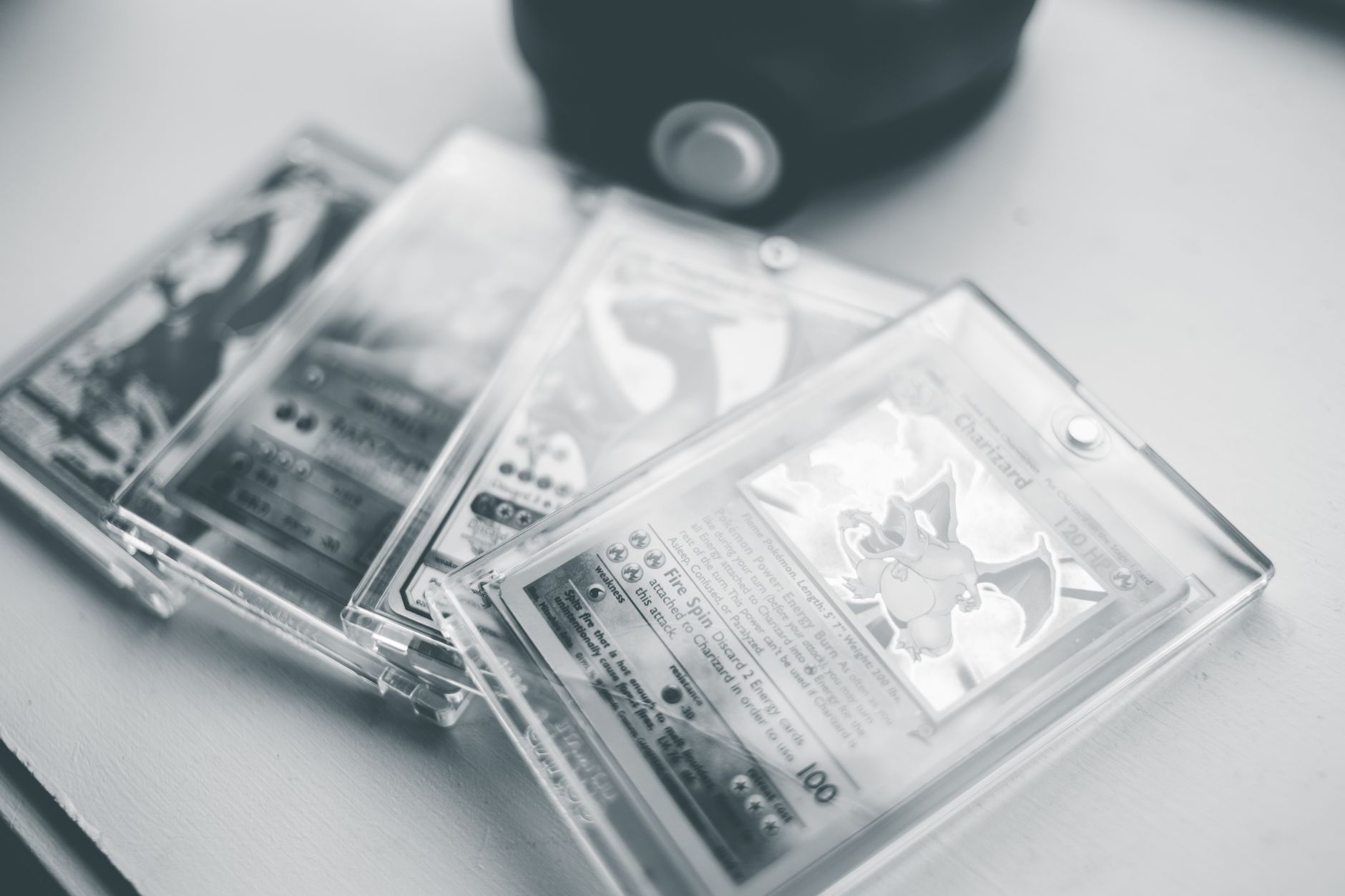
The non-holo Gengar EX from FireRed & LeafGreen (card #108/112) remains one of the more elusive and underpriced variants of this iconic Pokémon card, largely because pricing data for non-holo versions rarely appears prominently in market listings. While the holofoil variant commands a market average of around $1,399.99—with recent sales ranging from $1,175 to $2,499.99—the non-holo version typically sells for a fraction of that price, though exact current prices require checking individual marketplace listings where you can filter by variant type. This discrepancy exists because holofoil cards dominate collector interest, and non-holo versions are treated as secondary market offerings despite their actual rarity and collectibility.
For collectors seeking a non-holo Gengar EX, the lack of readily available pricing data creates both an opportunity and a challenge. You’ll find holofoil sales tracked consistently across TCGPlayer, Cardmarket, eBay, and specialty price guides, but non-holo variants are scattered across these same platforms without aggregated pricing summaries. This means you must do manual research across multiple sellers to establish a realistic value range for the condition and edition of the card you’re looking at.
Table of Contents
- Understanding Non-Holo Gengar EX FireRed & LeafGreen Variants
- Non-Holo vs. Holofoil Pricing Structure
- Where to Find Actual Non-Holo Pricing Data
- Factors That Influence Non-Holo Gengar EX Value
- Grading Considerations and the Hidden Costs of Non-Holo Ownership
- FireRed & LeafGreen Set Context and Print History
- Real-Time Market Behavior and Seasonal Pricing Shifts
Understanding Non-Holo Gengar EX FireRed & LeafGreen Variants
The firered & LeafGreen set (2006) included multiple printings and variants of Gengar EX, but the non-holo version refers specifically to cards without the characteristic holographic sheen across the entire card face. Unlike modern reverse-holo cards—which have holo on the background but not the artwork—a true non-holo Gengar EX from this era is a standard card with no reflective surface. These were produced in smaller quantities than holofoil versions and distributed primarily in booster packs as pull rates were weighted toward holographic cards.
The card itself features the EX designation, which in the Fire Red/Leaf Green era meant a card with elevated attack power and a built-in drawback: if Gengar EX is knocked out, your opponent takes two prize cards instead of one. This mechanic affected competitive play and casual demand differently. Competitive players wanted the holofoil version for tournament play, while collectors of the era often kept non-holo copies as cheaper alternatives for binder completion. Today, that distinction has blurred—many collectors recognize non-holo versions as legitimate variants worth owning.
Non-Holo vs. Holofoil Pricing Structure
The gap between non-holo and holofoil Gengar EX pricing is substantial, though exact non-holo averages aren’t published in the same consolidated way as holofoil data. Based on typical market patterns for high-value EX-era cards, non-holo versions typically trade for 20-40% of the holofoil price depending on condition and edition status. Using the holofoil market average of $1,399.99 as a reference point, a non-holo Gengar EX in comparable condition might reasonably be expected to fall somewhere in the $280-$560 range, though actual listings vary considerably.
This pricing gap exists because holofoil cards have always been the default standard for high-end collecting, particularly in the EX era when the contrast between common and holo versions was visually dramatic. Furthermore, condition grading becomes more critical for non-holo cards because any wear becomes immediately visible without the reflective properties of holo to obscure surface damage. A mint non-holo card might command a premium relative to its damaged counterparts, whereas a damaged holofoil card sometimes sells for higher than expected because the holo obscures minor scratches. This creates an important caveat: on individual marketplace listings, you may see non-holo cards priced higher than some lower-condition holofoil versions, so condition is the primary price driver, not variant type alone.
Where to Find Actual Non-Holo Pricing Data
Locating reliable non-holo pricing requires checking multiple platforms since none aggregate non-holo data the way they do holofoil. TCGPlayer allows you to filter by condition and variant type, making it the most practical starting point for establishing a price range. Enter “Gengar ex 108 FireRed LeafGreen” into TCGPlayer’s search, then filter for non-holo variants in the condition tiers you’re interested in (near mint, lightly played, moderately played, heavily played).
You’ll see individual seller listings with prices and condition notes that give you a real-time snapshot of what non-holo copies are actually selling for. Cardmarket (the European standard for card pricing) also lists FireRed & LeafGreen Gengar EX variants separately, though non-holo inventory may be more limited than on TCGPlayer given regional demand differences. eBay completed listings offer another data point, particularly if you sort by “sold items” rather than current listings, which reveals what non-holo Gengar EX cards actually sold for rather than their asking prices. A third-party source like PokemonWizard tracks broader set data but typically focuses on holofoil variants, so use it as a secondary reference only.
Factors That Influence Non-Holo Gengar EX Value
Condition and grading are the primary drivers of price for non-holo Gengar EX cards. Unlike holofoil cards, where minor surface wear is often forgiven due to the reflective properties obscuring defects, non-holo cards show every detail of handling and storage. A non-holo card graded PSA 9 (mint condition) will command significantly more than a PSA 7 (near mint-mint) version of the same card because the jump in visual quality is immediately apparent. Creasing, corner wear, and edge wear are all visible at a glance on a non-holo card, whereas a holofoil version of the same card in the same condition can sometimes hide those same imperfections.
Edition status also affects pricing, though less dramatically than condition. FireRed & LeafGreen had unlimited print runs for most of its commercial life, so unlimited non-holo copies typically cost less than first-edition non-holo versions, but the gap is smaller than it would be for more valuable holofoil cards. If you’re comparing prices and one seller lists a first-edition non-holo and another lists unlimited, expect a 10-20% premium for the first-edition version, though some listings may not clearly specify edition status. This is where manually reviewing eBay and TCGPlayer listings becomes essential—you need to see how each card is actually described and priced in real time.
Grading Considerations and the Hidden Costs of Non-Holo Ownership
One limitation collectors often overlook is that non-holo cards, while potentially cheaper to acquire, may require professional grading to authenticate or increase perceived value. A holofoil Gengar EX that’s obviously authentic because of its distinctive holo pattern can sometimes be sold raw (ungraded) at reasonable prices. A non-holo version faces more skepticism from potential buyers because the card is visually identical to a print-and-play forgery except for the card stock itself. If you plan to resell a high-value non-holo Gengar EX, especially one in premium condition, obtaining a professional grade (PSA, BGS, CGC) may be necessary to justify the price and protect against buyer suspicion.
This introduces an additional cost layer. Professional grading fees typically range from $15-$30 per card depending on turnaround time and card value tier. For a non-holo card that might realistically sell for $300-$400 raw, a $25 grading fee represents a 6-8% investment that must be recovered in the sale price. If the non-holo market price doesn’t jump proportionally after grading (as it does more dramatically for holofoil cards), the math may not work in your favor unless the card is in exceptional condition where grading unlocks a significant premium.
FireRed & LeafGreen Set Context and Print History
FireRed & LeafGreen was released in March 2004 and represents one of the most significant Pokémon TCG sets of the early-2000s because it introduced the EX mechanic to the English-language market. Gengar EX was a chase card in the set and was produced in substantially larger quantities than truly rare cards, but still in far smaller quantities than common cards. The set had multiple printings and long commercial availability, meaning print runs were not as restricted as earlier sets like Base Set, which contributes to why even holofoil Gengar EX is priced in the high hundreds rather than tens of thousands like Base Set holos.
The existence of multiple printings within FireRed & LeafGreen itself (often determined by subtle changes to the set number or back-of-card text) can affect pricing, though these distinctions are less pronounced than edition status differences. Non-holo cards from later printings of the set may be slightly cheaper than non-holo from earlier printings, though the difference is usually minimal unless you’re tracking a very specific variant. For most non-holo collectors, the printing distinction matters less than condition and availability on the marketplace.
Real-Time Market Behavior and Seasonal Pricing Shifts
Non-holo Gengar EX prices fluctuate seasonally in ways that differ from holofoil variant behavior. During peak collecting season (typically summer and holidays), demand for any Gengar EX version increases, and non-holo versions sell more quickly at market rates. During slower periods, you may find sellers reducing non-holo prices to move inventory. This creates a practical advantage for patient buyers: waiting for off-peak seasons or checking marketplaces on weekday mornings rather than weekends may reveal lower-priced non-holo listings before demand drives prices up.
Individual seller behavior also matters more for non-holo cards because lower transaction volume means each listing remains visible longer. A holofoil Gengar EX listed on TCGPlayer at $1,300 may sell within hours during active selling periods. A non-holo listing at $350 might remain active for weeks, giving you time to research the seller’s feedback, request condition photos, and verify authenticity before committing. This illiquidity is a tradeoff: non-holo cards are cheaper to buy initially but may take longer to sell if you decide to liquidate your collection later.
You Might Also Like
- Price Charting for EX FireRed and LeafGreen Gengar Holo
- Price Charting for EX FireRed and LeafGreen Electrode Non-Holo
- Price Charting for EX FireRed and LeafGreen Clefable Non-Holo