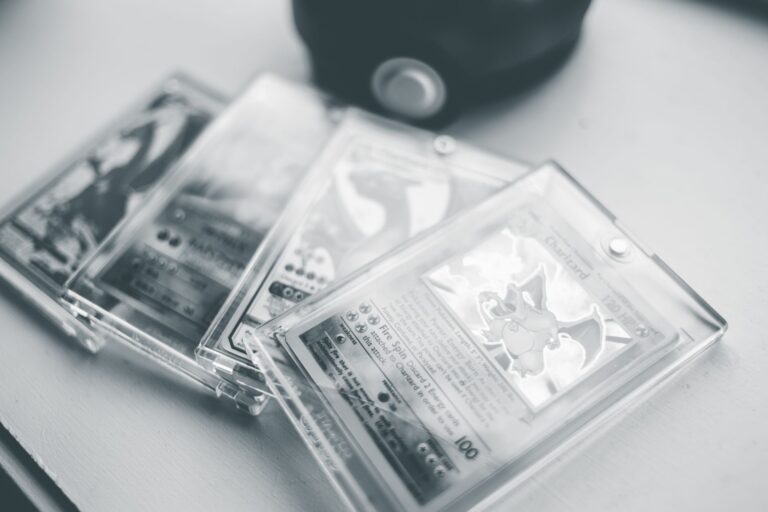
Pokemon Trader from Base Set Unlimited typically costs between $2.60 and $7.49, depending on the retailer and card condition. As of 2026, you’ll find the card listed at Troll and Toad for $4.99, TCGPlayer averaging $2.60, and Cool Stuff Inc offering the most aggressive pricing at $0.99. This wide spread reflects not a pricing disagreement, but rather different business models and inventory turnover strategies among card retailers.
The reason Pokemon Trader remains affordably priced compared to holographic base set cards lies in its nature as a non-holographic rare. During the Base Set era, Pokémon Company printed non-holographic rares extensively across both Shadowless and Unlimited print runs, making them common in the secondary market today. Understanding where to source this card and why its price hovers in this range requires looking at retailer positioning, card condition, and the broader context of Base Set pricing.
Table of Contents
- How Retailer Pricing Varies for Pokemon Trainer Base Set Unlimited
- Why Base Set Unlimited Pokemon Trader Stays Affordable
- Condition’s Impact on Pokemon Trader Pricing
- Finding the Best Price for Pokemon Trader Unlimited
- Market Volatility and What Drives Pokemon Trader Prices
- Pokemon Trainer Compared to Other Base Set Non-Holographics
- The Future of Base Set Unlimited Trainer Pricing
- Conclusion
How Retailer Pricing Varies for Pokemon Trainer Base Set Unlimited
The $6.50 price difference between Cool Stuff Inc ($0.99) and Collector’s Cache ($7.49) for the same card tells you something important: Pokemon Trader moves differently through different distribution channels. Troll and Toad, one of the most consistent card retailers, maintains their $4.99 price point as something of an industry midpoint. Astral Games Online sits slightly below at $4.60. This clustering in the $4-5 range suggests a fair market consensus for raw, ungraded copies in typical played condition. The outliers reveal retailer strategy more than market value.
Cool Stuff Inc’s 99-cent price likely reflects older inventory, rapid clearance goals, or a loss-leader pricing strategy. Collector’s Cache’s $7.49 suggests either premium positioning, higher condition expectations, or simply less frequent price adjustments. When shopping, you should verify the condition description and compare shipping costs—a $0.99 card shipped for $6 becomes less attractive than a $4.99 card with reasonable shipping. eBay’s average of $3.54 across current listings represents what actual collectors are asking in real-time sales. This price tends to be more volatile than retailer pricing because individual sellers adjust based on weekly market movements and their own inventory needs.

Why Base Set Unlimited Pokemon Trader Stays Affordable
Non-holographic rares occupy a strange position in the Pokemon trading card market. They were printed in enormous quantities because they represented “common chase cards” rather than the marquee holographic rares that drove box purchases. A player opening a Base Set booster back in 1999 had roughly a 1 in 6 chance of pulling a non-holographic rare in any given pack. Multiply that across millions of booster boxes produced, and you understand why Pokemon Trader never became scarce. The Unlimited print run, specifically, removed any age premium that Shadowless copies might command.
While a Shadowless Pokemon Trainer (note: different card, similar role) carries significant collector value, an Unlimited copy sits in the shadow of more abundant modern printings. Condition becomes the limiting factor here—a mint condition Unlimited copy might push toward $10-15 from certain collectors, but the raw, played copies that dominate retail shelves stay anchored in the $2-5 range. This affordability actually makes Pokemon Trader useful as a reference point for understanding Base Set pricing. If you see a non-holographic rare priced at $15, it’s either graded highly, has special provenance, or the seller is mispricing. Pokemon Trader’s $2.60-$7.49 range is genuinely where Unlimited non-holographic rares belong.
Condition’s Impact on Pokemon Trader Pricing
A Near Mint Unlimited Pokemon Trader graded by PSA or BGS could easily reach $20-30, fundamentally changing the valuation equation. Grading costs $20-50 depending on the service and turnaround time, so a card purchased for $4.99 only makes economic sense to grade if you’re confident it will achieve a 8 or higher on the 10-point scale. Most copies in circulation show visible play wear—corner wear, light scratching, or slight creasing—that disqualify them from higher grades. The raw cards you’ll find at Troll and Toad, TCGPlayer, and eBay are almost exclusively in Lightly Played to Moderately Played condition. This is the honest price band: $2.60-$4.99 represents what collectors will pay for a card that has a visible history.
If you’re building a casual collection or need a play-set for constructed format, this price point is rational. If you’re hunting for investment-grade copies, you’ll need to either spend significantly more or grade multiple copies hoping one reaches mint condition. The condition bands matter because they’re not subtle. A card you consider “lightly played” might land in “moderately played” according to TCGPlayer or PSA standards, creating discrepancy between expected and actual resale value. Many sellers misdescribe condition optimistically, so buying from established retailers like Troll and Toad carries an implicit quality guarantee that a random eBay seller might not.

Finding the Best Price for Pokemon Trader Unlimited
Your sourcing strategy should start with defining what “best” means. If you want the absolute lowest dollar amount and can accept longer shipping or older stock, Cool Stuff Inc’s $0.99 is unbeatable. If you want reliability and a fair mid-market price, Troll and Toad at $4.99 represents the dealer consensus. If you’re buying in bulk or watching for deals, TCGPlayer’s $2.60 average suggests some active sellers moving inventory quickly. eBay auctions present a wild card.
A pokemon Trader that starts at 99 cents might close at $6 if two collectors bid against each other, or it might close at $1.25 if listing ends on a slow evening. Setting price alerts on the price guide helps you catch sudden drops—occasionally a retailer will mark down inventory, and the platform aggregates these changes. Patience yields results: checking back every few weeks often reveals someone willing to sell below the current market average. A practical approach: buy one copy from TCGPlayer at $2.60 to establish baseline value and condition, then use that as your benchmark for other listings. Any Pokemon Trader priced above $5 needs to justify that premium through superior condition documentation or a seller reputation you trust. Any copy under $1.50 should trigger a condition check—if they’re not describing visible flaws, they’re likely describing a problem you’ll discover after arrival.
Market Volatility and What Drives Pokemon Trader Prices
Pokemon Trader’s price doesn’t fluctuate dramatically because there’s no scarcity narrative attached to it. Unlike Shadowless holographic rares or error cards, every print run of Trainer/Supporter non-holographics remains available in reasonable quantities. However, seasonal demand does influence pricing. At the start of a new Pokemon TCG format season, demand for functional staple cards—including Pokemon Trader’s functional equivalent in modern card pools—can temporarily lift related vintage cards. This effect is usually modest for non-holo rares, but worth monitoring if you’re buying or selling. Grading submissions also impact supply. When PSA or BGS grade population reports increase dramatically, it signals people believe cards will hold or gain value.
A surge in Pokemon Trainer gradings would indicate collector confidence, potentially pushing even raw prices upward. Conversely, if grading services experience closures or delays, more copies stay in the raw market, potentially depressing prices. These are slow-moving variables, but they matter for anyone holding inventory over months. The real volatility risk isn’t price—it’s availability. A card priced at $4.99 across five retailers might suddenly disappear from two of them due to restocking delays or inventory allocation to higher-margin products. This means if you find Pokemon Trader at a price you like, buying immediately beats waiting unless you have specific condition requirements. The card itself won’t spike, but hunting for a copy later might require paying more or settling for worse condition.

Pokemon Trainer Compared to Other Base Set Non-Holographics
Pokemon Trainer sits in the middle of Base Set non-holographic rare pricing. Computer Search, another non-holographic rare from Base Set, typically commands $5-8 due to its continued utility in casual constructed formats—it’s seeing slightly more demand than Pokemon Trainer. Professor Oak, a similar utility card, hovers around $3-5. The variation stems from functional value: Computer Search and Professor Oak see play in casual decks, keeping their prices slightly elevated, while Pokemon Trader’s modern equivalent makes it more of a historical artifact.
This comparison illuminates why Pokemon Trainer costs what it does. If it were printed at extreme scarcity, it would cost $15-20 like Shadowless holographic counterparts. If it had zero historical significance, it might cost $0.50 like bulk commons. At $2.60-$7.49, it occupies the “genuinely useful card from a famous set with moderate scarcity” band. New collectors often overpay for non-holographic rares initially, then adjust expectations downward once they realize how many were printed.
The Future of Base Set Unlimited Trainer Pricing
Pokemon Trainer will likely remain in the $2-7 range indefinitely unless the broader Pokemon card market experiences fundamental shifts. Unlike holographic base set cards, which benefit from nostalgia, scarcity narratives, and investment speculation, non-holographic rares are supply-locked. No new Unlimited Base Set boxes are opening, but the existing population is so large that supply remains essentially infinite for practical purposes. Price appreciation from $4.99 to $10 is possible if demand surges, but de-appreciation is equally plausible if market sentiment shifts.
What might change the equation: Pokemon Trainer becoming legal again in a mainstream format, or a documented error variant that increases collector interest. Short of these scenarios, the card serves primarily as a reference point for set builders and casual players. For investors, it’s a poor allocation of capital. For collectors completing Base Set Unlimited playsets, it’s a reasonably priced mid-tier purchase that doesn’t require agonizing over small price differences between retailers.
Conclusion
Pokemon Trader Base Set Unlimited #77 currently trades between $2.60 and $7.49 depending on retailer, condition, and market timing. Troll and Toad’s $4.99 represents a fair middle-ground price, while TCGPlayer’s $2.60 average suggests significant price variation exists if you’re willing to shop actively. The card’s affordability reflects its status as a non-holographic rare from an extensively printed set—functional more than scarce, historical more than investment-grade.
Your next step depends on your goal. If you’re building a casual collection or completing a Base Set run, buying from any of these retailers at their quoted prices represents fair value. If you’re hunting for condition upgrades or hoping for investment returns, Pokemon Trainer isn’t the card to focus on—that energy is better spent on holographics and shadowless variants that carry genuine rarity premiums.
You Might Also Like
- verified sold listings across major TCG marketplaces for Base Set Pokemon Breeder Unlimited
- verified sold listings across major TCG marketplaces for Base Set Weedle Unlimited
- verified sold listings across major TCG marketplaces for Base Set Wartortle Unlimited
Frequently Asked Questions
How much is a PSA 10 Base Set Pokemon Trader Unlimited worth?
Base Set Pokemon Trader Unlimited PSA 10 value is tracked from verified sold listings across eBay, TCGplayer, Goldin, and Fanatics Collect. Recent sales determine the current market price, which shifts month to month based on supply, condition, and demand.
Is Base Set Pokemon Trader Unlimited a good investment?
Long-term trend data for Base Set Pokemon Trader Unlimited is on this page. Vintage Pokemon cards in PSA 10 condition have historically appreciated, but performance varies by set, popularity, and grading population. Compare the monthly trend on this chart to similar cards before deciding.
Where can I see Base Set Pokemon Trader Unlimited sold listings?
We aggregate verified sales from eBay, TCGplayer, Goldin Auctions, and Fanatics Collect. The recent-sales section on this page shows individual transactions with date and price.