
Building a valuable Pokemon card collection around scarcity and demand means understanding which cards have limited supply and strong buyer interest, then acquiring those cards strategically before prices rise further. The most straightforward approach is to research print runs and production dates—older sets like Base Set, Jungle, and Fossil had smaller print runs than modern sets, making them naturally scarcer. For example, a first edition Base Set Charizard can cost $10,000 or more today, while an unlimited print Charizard from the same set might cost $500 to $2,000, despite being functionally identical. The price difference reflects the market’s understanding that first editions were printed in smaller quantities and have lower population counts in circulation.
However, scarcity alone doesn’t drive value. Demand must exist alongside limited supply. A card can be scarce and worthless if nobody wants it. The most valuable Pokemon cards combine three elements: low print runs, genuine collector demand, and cultural significance. Charizard commands high prices not just because first editions are rare, but because Charizard is iconic—it appears on the cover of Pokemon Red, is the final evolution of one of the franchise’s most recognizable starters, and has maintained popularity across decades.
Table of Contents
- WHAT MAKES A POKEMON CARD SCARCE IN THE CURRENT MARKET?
- HOW DEMAND FLUCTUATES AND WHAT THAT MEANS FOR YOUR COLLECTION
- GRADING, CONDITION, AND THE PREMIUM FOR RARITY
- IDENTIFYING UNDERVALUED CARDS WITH SCARCITY POTENTIAL
- THE RISK OF COUNTERFEITS AND POPULATION INFLATION
- TIMING YOUR PURCHASES WITHIN MARKET CYCLES
- THE LONG-TERM OUTLOOK FOR SCARCE POKEMON CARDS
- Conclusion
WHAT MAKES A POKEMON CARD SCARCE IN THE CURRENT MARKET?
Scarcity in Pokemon cards comes from multiple sources. First edition printings are the most obvious—The Pokemon Company deliberately printed fewer cards with the “1st Edition” stamp on the left side compared to unlimited versions released after. Base Set first editions had production numbers in the hundreds of thousands, but their age (released in 1999) means many cards have been damaged, lost, or played with, reducing the number in good condition. Shadowless cards from before December 1999 are even scarcer because they predate the shadowing effect added to the card frame.
A shadowless Pikachu in mint condition has sold for over $500,000, though that extreme represents a convergence of scarcity, condition, and unprecedented demand. print runs varied dramatically between early sets and modern ones. Base Set had an estimated print run of roughly 100 million cards. By contrast, newer special sets like Crown Zenith or Scarlet and Violet reprints often see much larger numbers produced due to improved manufacturing capacity and the Pokemon Company’s response to collector demand. This means a common card from Base Set can be harder to find in good condition than a similar-rarity card from a 2024 set, even if the newer card was technically printed fewer times overall, because the 1999 card has had 25 years to degrade.

HOW DEMAND FLUCTUATES AND WHAT THAT MEANS FOR YOUR COLLECTION
Demand for Pokemon cards isn’t static. It spikes around nostalgia moments—when the anime re-releases episodes, when new Pokemon games launch, or when celebrities publicly collect Pokemon cards. In 2020 and 2021, demand exploded when COVID-19 lockdowns drove people to hobbies and when YouTubers showcased high-value openings. That surge temporarily made some lower-tier cards unprofitable to buy because the hype inflated prices beyond what collector activity alone would sustain. The warning here is clear: buying at the peak of hype is dangerous. Prices for popular modern cards dropped 50-70% after that wave settled, leaving anyone who overpaid stuck holding inventory that won’t recover for years.
Demand also splits by type of collector. Competitive players need specific cards for tournament legality, creating short-term price spikes around new set releases and championship seasons. Casual collectors focus on their favorite Pokemon or generations. Investors and speculators chase grades and rarity tiers. Each group’s behavior affects the market differently. A card that appeals strongly to just one group is more vulnerable to price drops when that group’s interest wanes compared to a card with broad appeal across multiple collector types.
GRADING, CONDITION, AND THE PREMIUM FOR RARITY
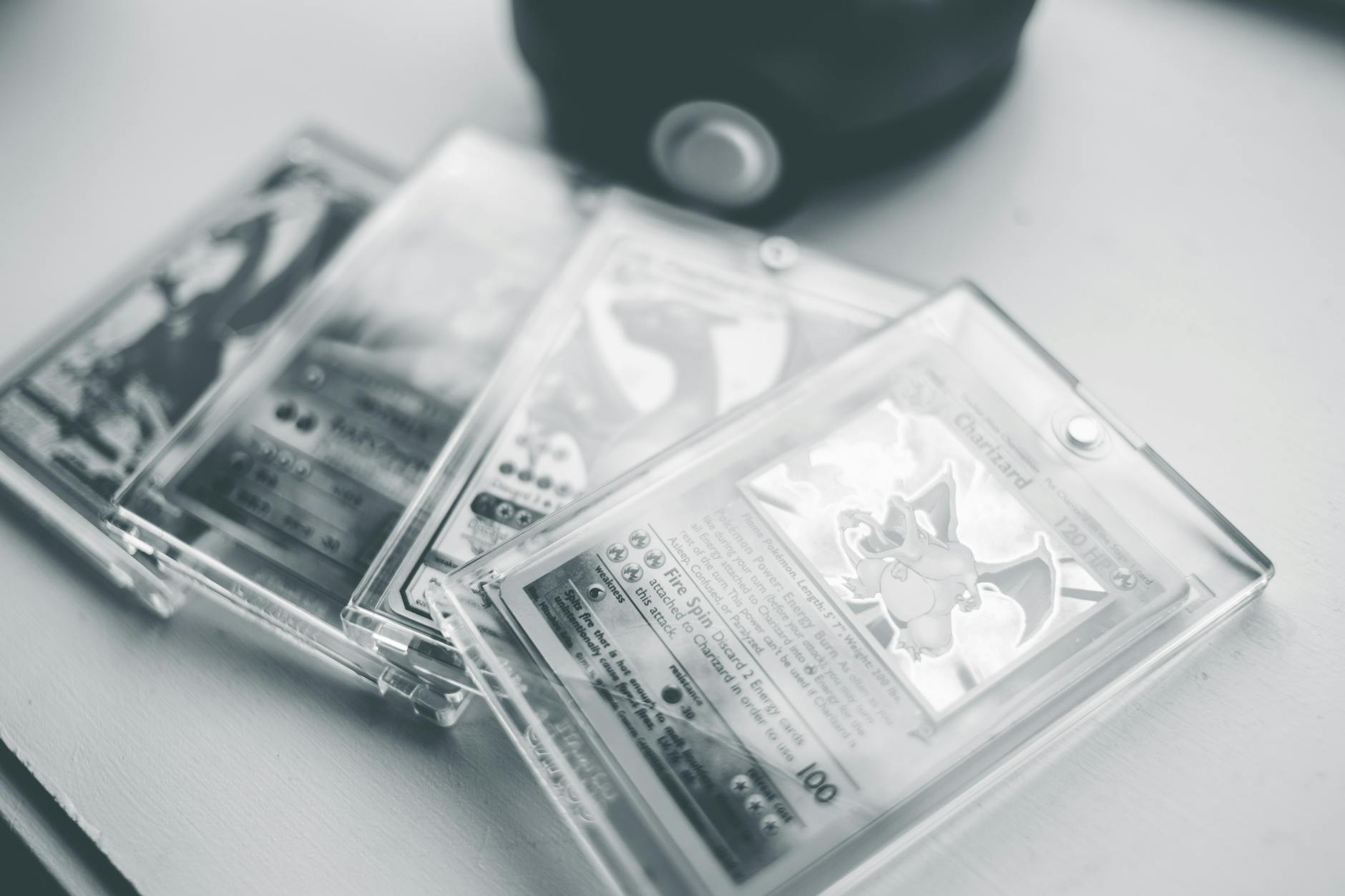
The grade of a card can create a scarcity premium that dwarfs the scarcity of the card itself. A Base Set Charizard graded PSA 9 might cost $50,000, while the same card graded PSA 7 might cost $5,000. The rarity isn’t the card—it’s the rarity of finding that card in that condition. Professional grading services like PSA, BGS, and CGC have vault populations showing exactly how many copies of a card have been submitted and graded at each grade level. These populations inform the market.
When you see “only 27 copies of this card graded PSA 9,” you’re buying that specific rarity, not just the card itself. Building a collection around condition tiers requires different capital than buying raw (ungraded) cards. A raw Shadowless Blastoise might cost $1,000 to $2,000, while a PSA 8 copy could cost $15,000 or more. The intermediate step—getting the card graded—costs money and carries risk. The card might come back graded lower than you expected, destroying your return. Alternatively, cards graded during grading expansion periods (when services relaxed standards) might be reholder candidates, meaning they could be resubmitted for higher grades today, or they might be rejected as legitimate overvaluations.
IDENTIFYING UNDERVALUED CARDS WITH SCARCITY POTENTIAL
The most profitable collections are often built on research others haven’t completed yet. Modern secret rare cards and alt art cards are intentionally limited by the Pokemon Company, but they receive high attention from collectors, so their long-term value is partially priced in already. More interesting opportunities come from overlooked cards with legitimate scarcity metrics. For example, cards from the Chinese Unlimited Base Set are far rarer than English Unlimited versions—China imported far fewer cards—but they trade at a fraction of the price because English-speaking collectors dominate online markets. A Chinese Unlimited Charizard might cost $1,000 while an English copy costs $5,000 or more, despite comparable scarcity and condition.
Another strategy involves identifying regional or language variants with lower populations. Japanese cards, especially older ones, have lower populations than English versions because they were printed in smaller quantities and fewer people collected them seriously in the West until recently. This creates pockets of underpricing. Japanese Base Set cards cost far less than their English equivalents, yet Japanese Base Set had the same or lower print runs. As the global Pokemon collector base continues to grow, these regional discrepancies may narrow, potentially creating future upside.
THE RISK OF COUNTERFEITS AND POPULATION INFLATION
A critical warning: the value of rare cards depends on their authenticity, but counterfeit Pokemon cards have become sophisticated and profitable to produce. A rare card that is counterfeited loses value because the population of genuine copies can no longer be verified. Some sellers unknowingly sell counterfeits, while others are explicit scammers. Always buy graded cards when possible, because third-party grading services employ anti-counterfeit measures and stake their reputation on authentication. Ungraded cards from unknown sellers carry higher fraud risk.
Population creep is another concern. As grading services submit more cards, population numbers increase, making previously “rare” grades less rare. If you own one of 50 copies of a card graded at a particular level, and the population climbs to 500 copies over the next few years, the grade’s rarity premium shrinks accordingly. This happens regularly in the market. Cards that seemed scarce in 2022 became common in 2024 because more people found copies and submitted them for grading.
TIMING YOUR PURCHASES WITHIN MARKET CYCLES
Pokemon card market cycles tend to follow set release schedules and pop culture moments. New set releases often create temporary price increases as players and collectors rush to buy sealed product, which drives up prices for secondary market singles. Waiting a few months after set release often yields better deals as supply stabilizes and hype cools. A specific example: Scarlet and Violet special sets saw sky-high booster pack prices at launch ($150-200 per box retail), but within two months, market supply caught up and prices dropped to $80-120. Cards from that set that were bought early at inflated expectations sometimes never recovered their initial value.
Seasonal patterns exist too. Right after major holidays, sellers often list cards at better prices as people liquidate, creating opportunities to buy low. Tournament off-season often brings price dips on competitive staples. Conversely, the month before major tournaments sees competitive staple prices rise. Understanding these patterns lets you time purchases to coincide with lower prices, maximizing what you acquire with your budget.
THE LONG-TERM OUTLOOK FOR SCARCE POKEMON CARDS
The Pokemon card market has matured significantly since 2020. Counterfeiting concerns have pushed more serious collectors toward graded, authenticated inventory. This shift supports the long-term value of scarce graded cards, because authentication becomes a product itself—you’re not just buying the card, you’re buying the assurance of its legitimacy from a trusted service. Over the next decade, graded cards from early sets will likely appreciate steadily as vintage collectors remain willing to pay premiums for condition and authenticity.
However, reprints represent an ongoing risk. The Pokemon Company has reprinted Base Set multiple times in recent years through products like Evolutions, Base Set Reprint, and other throwback sets. While reprints don’t use the original card templates, they do reduce the appeal of buying original cards for players seeking that specific card. This creates a ceiling on prices—why pay $100 for an original when you can play the card identically with a $5 reprint? Building a collection around condition, era (shadowless, first edition), and grading remains the safest bet for long-term appreciation.
Conclusion
Building a valuable Pokemon card collection around scarcity and demand requires more than just finding rare cards. You need to understand what drives demand—nostalgia, playability, cultural significance, or investment speculation—and ensure the scarce card you’re buying appeals to that demand. The most resilient collections combine multiple layers of rarity: early print runs, limited quantities produced, condition preservation, or specialized variants like first editions and shadowless versions. Research population reports, authentication grades, and market cycles before committing capital.
Your long-term success depends on buying strategically, not emotionally. Focus on cards with proven demand histories and authentic scarcity metrics rather than following hype spikes. Authenticate everything you buy, understand counterfeiting risks, and recognize that market cycles create regular opportunities to acquire quality pieces at discounts. A well-researched, patiently built collection of genuinely scarce, genuinely demanded cards will hold value far better than a collection of oversold hype plays.
You Might Also Like
- Why Some Pokémon Opportunities Need Calm Thinking
- Why Eye Appeal Can Matter More Than the Number on the Slab
- Why Buyers Who Understand Print Runs Have an Edge