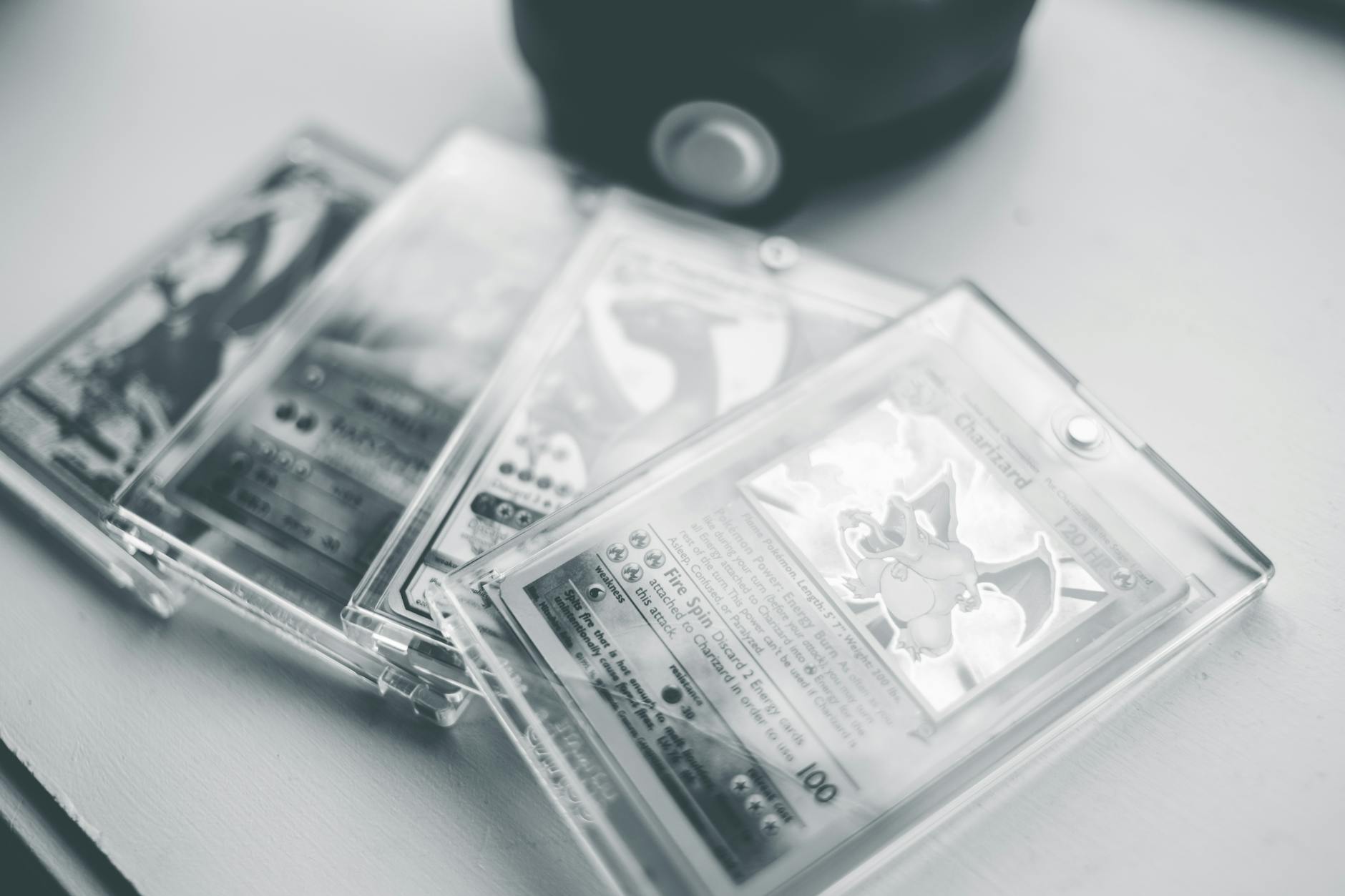
Pokémon’s global dominance in entertainment creates a powerful foundation for Base Set price stability and growth. With the franchise generating $2.9 billion in revenue in FY2024-25—up 38% in a single year—and video game sales exceeding 489 million units, the consistent flow of new players and collectors entering the ecosystem ensures sustained demand for original cards. The Base Set, which contains 102 cards with a current aggregate market value of $999.19, benefits directly from this expanding audience, as new collectors inevitably seek the foundational cards that started the phenomenon.
The numbers support this thesis convincingly. The Pokémon card market is projected to grow from USD 52.1 billion in 2026 to USD 90.2 billion by 2034, representing a 7.1% compound annual growth rate. This expansion isn’t driven by speculation alone—it reflects genuine demand from an increasingly global population of collectors. When you consider that Base Set’s Charizard card alone maintains a price of $377.50 in typical market conditions, and that even common Base Set cards see steady interest, you’re looking at an asset class supported by fundamental demographic growth rather than a temporary bubble.
Table of Contents
- Why Does Pokémon’s Entertainment Dominance Matter for Card Prices?
- Base Set as the Foundation of an Ever-Expanding Market
- Anniversary Cycles as Demonstrated Price Catalysts
- How Sustained Video Game Success Translates to Card Valuations
- Risks and Market Saturation Concerns for Long-Term Pricing
- Regional Growth as a Price Support Factor
- The 30th Anniversary and Decade Ahead
- Conclusion
Why Does Pokémon’s Entertainment Dominance Matter for Card Prices?
pokémon‘s influence extends far beyond trading cards. With over 489 million video game units sold and the franchise’s consistent ability to capture new audiences, each major media release—whether a new video game generation, animated series, or film—introduces a fresh wave of potential collectors to the hobby. These aren’t isolated spikes; they’re generational introductions that permanently expand the collector base. A teenager discovering Pokémon through a video game release today becomes a card investor for the next 20 years. The Asia-Pacific region exemplifies this dynamic. Accounting for 46.56% of the global trading card game market in 2025 and advancing at an 11.04% compound annual growth rate, this region demonstrates how regional popularity fuels international price floors.
base set cards command comparable prices across different markets, meaning that as Asia-Pacific demand grows, it creates a global price foundation that local American or European market weakness cannot easily undermine. This geographic diversification is a crucial difference from boom-bust collectibles that rely on a single regional market. The comparison to other collectibles reveals the advantage of Pokémon’s reach. Sports cards fluctuate based on individual athlete performance and team loyalty. Comic books depend on superhero film cycles that are unpredictable. Pokémon, by contrast, has created an ecosystem where the trading card game reinforces the video game, which reinforces the media, which reinforces the card game—a self-reinforcing loop that has sustained itself for nearly 30 years. Base Set prices reflect this structural advantage.

Base Set as the Foundation of an Ever-Expanding Market
The base Set occupies a unique position as the origin point of Pokémon collecting. Every serious collector aspires to own at least some Base Set cards, and the cultural weight of these cards—Charizard, Blastoise, Venusaur, and the first-edition Machamp—creates persistent demand that newer sets simply cannot replicate. This nostalgic anchor means that Base Set prices are supported not just by new collectors entering the hobby, but by established collectors looking to upgrade their collections over time. However, there’s a critical limitation to this price support: supply constraints work both ways. The Base Set had a single initial printing (followed by subsequent reprints that are now 25+ years old and equally scarce). Unlike stocks or bonds, where new shares can be issued, Base Set supply is fundamentally fixed.
This means that as the collector base grows and purchasing power increases, Base Set prices face upward pressure simply from scarcity mathematics. The flip side is that any significant competitor product that captures collector attention—alternative TCGs or massive reprints—could theoretically divert capital away from Base Set purchases. So far, this hasn’t materialized, but it remains a tail risk for long-term price projections. The distinction between the aggregate market growing and individual card values appreciating is also crucial. A 7.1% annual growth in the Pokémon card market doesn’t guarantee 7.1% annual appreciation in Base Set cards specifically. Newer sets and special editions sometimes appreciate faster due to lower initial print runs and manufactured scarcity, while Base Set prices tend to move more deliberately. This slower appreciation is actually a sign of maturity—volatile spikes followed by corrections are riskier than steady, modest gains supported by expanding demand.
Anniversary Cycles as Demonstrated Price Catalysts
The 25th anniversary in 2021 provided concrete evidence of how Pokémon’s cultural moments translate into Base Set price surges. During that period, psa 10 Base Set cards surged 40-60% in value, sealed booster boxes tripled overnight, and an entirely new wave of collectors flooded the market. This wasn’t artificial hype; it reflected genuine media coverage, celebrity interest, and a coordinated marketing push that reminded people why Pokémon matters. The Base Set benefited directly because it represents the “authentic” Pokémon that everyone remembers from their childhood. The 30th anniversary, arriving in 2026, is expected to generate even larger effects. Early 2026 data shows unprecedented demand for anniversary-related products, with sealed Celebrations (25th anniversary) products having nearly doubled from retail pricing.
The pattern is becoming predictable: major milestones drive mainstream media attention, which drives collector interest, which drives prices upward. For Base Set specifically, anniversary cycles create inflection points where casual interest converts to serious collecting. The question isn’t whether the 30th anniversary will impact prices, but whether collectors can sustain their interest between these milestone events. The limitation here is obvious: not every collector will time their purchases at anniversary peaks, and not every anniversary generates equal impact. The 25th and 30th anniversaries are round numbers with media appeal; the 31st anniversary likely won’t move markets the same way. This suggests that price support from anniversaries follows a boom-bust pattern rather than a smooth upward trend. Collectors betting purely on anniversary cycles are effectively making a timing bet, which is riskier than betting on sustained demand from demographic growth.

How Sustained Video Game Success Translates to Card Valuations
The relationship between Pokémon video game performance and trading card prices is more direct than many investors realize. Each major video game release introduces millions of new players to the franchise, a percentage of whom eventually purchase trading cards. With video game sales at 489 million units and continuing to grow, you have a permanent pipeline of potential new collectors. This is fundamentally different from collectibles dependent on a stable, aging audience. Consider the practical mechanics: a teenager plays Pokémon Scarlet or Violet in 2023-2024, falls in love with the franchise, and by 2025 is purchasing booster boxes and hunting for Base Set cards. By 2030, they’re comparing PSA 10 grades and making five-figure purchases of original cards.
This progression is already happening at scale, with the Card Ladder Pokémon Index showing a 116% increase year-over-year as of January 2026, with average card prices rising 46% in the same period. These aren’t theoretical projections; they’re measured current reality. The comparison to gaming peripherals or merchandise illustrates a key difference. When a video game goes out of style, related merchandise becomes worthless quickly. Trading cards resist this because they’re dual-purpose assets: playable cards for competitive players and investment pieces for collectors. A Base Set Charizard serves both functions, which means demand has multiple sources. This dual utility isn’t unique to Pokémon, but Pokémon’s massive video game installed base ensures that demand will remain robust from both player and collector perspectives simultaneously.
Risks and Market Saturation Concerns for Long-Term Pricing
A significant risk that receives less attention in optimistic price projections is market saturation. The global trading card game market is expected to grow to USD 16.9 billion by 2035, but Pokémon’s dominance at roughly 52% of the market is vulnerable to new entrants or market consolidation. If a competing TCG achieves significant market share—as did Magic: The Gathering for decades—collector capital could diversify, reducing demand for Pokémon specifically and Base Set cards generally. This is a low-probability scenario given Pokémon’s entrenched position, but it’s not impossible. A more immediate warning concerns grading bottlenecks and authentication. As Base Set card prices have climbed, counterfeit cards have proliferated, creating a bifurcated market where grading services (PSA, BGS, CGC) become essential for valuable cards. However, these services have experienced turnaround delays and pricing increases that can complicate the investment thesis.
A Base Set PSA 10 card is worth significantly more than the same card graded PSA 8, but the difference is entirely dependent on continued collector confidence in the grading service. Any major authentication scandal or service failure could destabilize pricing across the category. The final structural risk is print-on-demand or reprint announcements. Pokémon Company has released various Base Set reprints over the years, most recently the 1999 edition products. While these reprints are clearly differentiated from originals, each new reprint potentially diverts collector capital and attention. If Pokémon Company were to release higher-quality, more accessible reprints of Base Set cards—a purely speculative scenario but not impossible—the value proposition for original Base Set cards would shift dramatically downward. Collectors should view this as a tail risk but not dismiss it entirely when building multi-decade price forecasts.
Regional Growth as a Price Support Factor
The Asia-Pacific region’s 46.56% share of the global TCG market and 11.04% annual growth rate provides a concrete mechanism for Base Set price support that doesn’t depend on North American market dynamics alone. This geographic diversification is crucial. A collector in Japan or South Korea viewing a Base Set Charizard as a cultural artifact and investment vehicle creates demand completely independent of American nostalgia. As middle-class expansion continues in Asia, and as Pokémon’s appeal in these regions deepens through local media and esports initiatives, the global demand curve for scarce cards like Base Set originals moves consistently upward.
A specific example: Japanese collectors have historically valued base set cards differently than American collectors, often preferring non-English versions and grading cards to different standards. This created market friction initially but now represents additional demand sources. As regional markets mature and connect through global trading platforms, Base Set prices increasingly reflect a global consensus rather than a regional bubble. This consensus-building mechanism means that localized price weakness (which does occur) is increasingly offset by strength in other regions, creating a price floor that’s harder to break through arbitrage or market timing.
The 30th Anniversary and Decade Ahead
The 30th anniversary of Pokémon, centered in 2026, represents the next major inflection point for Base Set pricing. Based on historical patterns from the 25th anniversary and the unprecedented demand for early 2026 anniversary products, collectors should expect notable price movement through 2027 as mainstream attention peaks. The Pokémon Company has typically supported anniversaries with special sets, promotions, and media campaigns that drive collector enthusiasm.
Base Set cards, as the “original” and most authentic expression of Pokémon, benefit disproportionately from this attention. Beyond 2026, the decade ahead offers structural price support from three converging forces: continued global market expansion, the permanent entrance of younger generations into the collector base via video games and media, and the mathematical reality of fixed supply meeting growing demand. The Pokémon card market’s projected growth to USD 90.2 billion by 2034 doesn’t guarantee Base Set appreciation at that rate, but it does suggest a market environment where collectible scarcity becomes increasingly valued. Base Set cards, as the foundational and most historically significant cards in this market, should capture a meaningful portion of this growth.
Conclusion
Pokémon’s global popularity provides substantial support for Base Set prices over the long term, driven by expanding markets, continuous new collector onboarding through video games and media, anniversary-driven spikes, and fundamental supply constraints. The 7.1% projected annual growth in the Pokémon card market, combined with the franchise’s demonstrated ability to capture new audiences across age groups and regions, creates an environment where Base Set cards function as both cultural artifacts and appreciating assets. The recent 46% year-over-year price increases and 116% indexing gains demonstrate that demand is currently outpacing supply significantly.
However, long-term Base Set investment success depends on sustained interest rather than speculative timing. Collectors should understand the risks: market saturation from competing TCGs, grading service vulnerabilities, potential reprints, and the reality that price appreciation will likely track market growth rather than exceed it dramatically. For those building long-term collections, focus on acquisition of genuinely scarce cards in strong condition, geographic diversification of demand, and realistic expectations about annual appreciation rates. The Base Set isn’t a get-rich-quick vehicle, but it is a collectible with genuine demographic and market tailwinds that support values in ways that most collectibles cannot claim.
You Might Also Like
- How Pokémon’s 30-Year Brand Power Could Push Base Set Prices Higher
- What a Sudden Charizard Price Jump Usually Means
- What TCGplayer Market Price Does and Does Not Tell You