Pokémon’s anime has remained on air for 30 years by doing something most franchises fail at: willing to leave behind its own past. While the franchise could have simply rehashed the Kanto region forever, it instead introduced new protagonists every few generations, migrated to different regions every few years, and gradually evolved its visual style and storytelling structure to match both technological advances and shifting audience expectations. The shift from Ash Ketchum’s journey through Kanto to protagonists like Goh, Liko, and Roy exploring new regions with entirely different narrative frameworks shows a fundamental understanding that reinvention isn’t a break from identity—it’s the only way to preserve it.
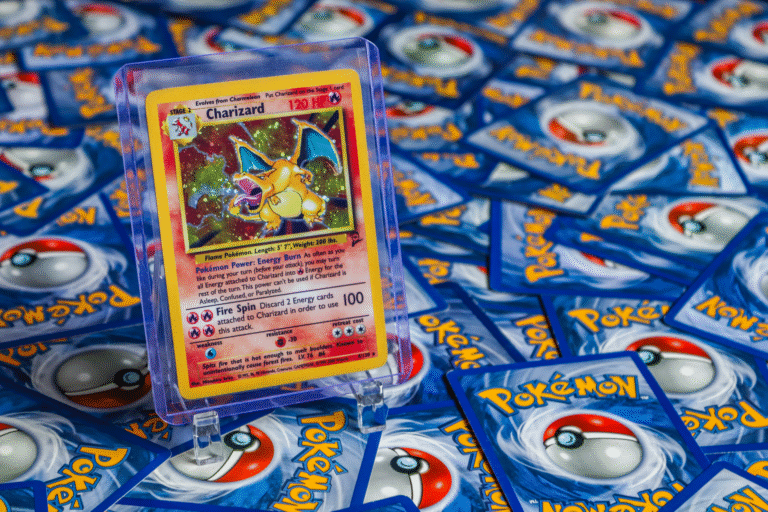
The anime’s willingness to evolve has directly influenced the collectible card market, with older series commanding nostalgia premiums while newer generations establish fresh reasons to engage with Pokémon properties. The core strategy behind Pokémon’s longevity involves rotating both the human and Pokémon cast, updating technical production alongside story ambitions, and most importantly, trusting that audiences will follow change when the foundation remains solid. This stands in stark contrast to many long-running franchises that either stagnate with the same characters or attempt radical overhauls that alienate established fans. Pokémon has managed both stability and transformation simultaneously—a balancing act worth examining for how it’s shaped not just the anime’s success, but the entire collecting ecosystem around it.
Table of Contents
- How Pokémon Replaced Its Core Protagonist Without Losing Momentum
- Animation Evolution and the Risk of Over-Modernization
- Rotating Regions Keeps the World Feeling Infinite
- How Anime Success Drives Card Collectibility and Market Value
- Failed Reinventions and What Pokémon Learned
- Narrative Parallelism and Multi-Protagonist Storytelling
- Technological Advancement and Future Evolution
- Conclusion
How Pokémon Replaced Its Core Protagonist Without Losing Momentum
Ash Ketchum carried the anime from 1997 to 2022, across 25 seasons and over 1,200 episodes. When the franchise finally retired him in favor of new protagonists Liko and Roy in 2023, the move represented the single largest creative reset in the show’s history—yet it also felt inevitable. Rather than kill the character, Pokémon elevated Ash to champion status in his final arc, giving him a narrative conclusion that honored 25 years of storytelling while explicitly signaling that the series belonged to a new generation. This wasn’t a sudden decision; the show had gradually introduced rotating secondary characters like Goh starting in 2019, testing whether audiences would accept protagonists beyond Ash before fully committing to the transition. The mechanics of this replacement teach a crucial lesson about franchise sustainability.
Pokémon doesn’t discard its old protagonists—it promotes them, gives them closure, or repurposes them in supporting roles. Misty and Brock evolved from traveling companions into gym leaders and mentors. Dawn became a traveling consultant. This creates a narrative ladder where aging out isn’t failure; it’s advancement. For the card-collecting community, this strategy has tangible effects: vintage Ash cards remain desirable because they represent a closed era, while new protagonist cards enter the market with fresh momentum, creating distinct collecting categories rather than cannibalistic competition.

Animation Evolution and the Risk of Over-Modernization
Pokémon’s visual style has shifted dramatically since 1997, from the hand-drawn, sometimes awkwardly-paced animation of early Kanto episodes to the hybrid CGI-and-2D approach of contemporary seasons. Studios have progressively incorporated 3D rendering, expanded battle sequences, and cinematic framing techniques that rival theatrical releases. The 2023 relaunch with Liko and Roy introduced noticeably refined character designs and more fluid animation, comparable to modern anime standards. These upgrades keep the series visually competitive in an era where competing entertainment is exponentially more polished.
However, there’s a genuine risk in modernizing too aggressively. Fan communities remain deeply attached to the aesthetic of specific eras—Kanto’s imperfect charm, the Johto region’s warmer color palette, or the Sinnoh era’s balance between character-driven storytelling and action spectacle. When animation becomes too slick or character designs shift too dramatically, longtime viewers report feeling alienated. The anime’s current strategy of respecting previous visual languages while incrementally improving technical execution has worked better than wholesale redesigns, which explains why early Pokémon episodes still hold cultural weight rather than feeling immediately obsolete. This aesthetic loyalty directly influences trading card values: cards from “prettier” eras command premiums even when game mechanics are identical to less visually distinctive generations.
Rotating Regions Keeps the World Feeling Infinite
Every three to five years, the Pokémon anime relocates to a new region—from Kanto to Johto to Hoenn to Sinnoh, and so on through Unova, Kalos, Alola, and Galar. Each region introduces not just new Pokémon and gyms, but distinct cultural aesthetics, architectural styles, and sometimes radical shifts in how trainers approach their journeys. The Alola region, inspired by Hawaii, fundamentally changed the gym-badge system by replacing it with island challenges. Galar brought Dynamax mechanics and modern British aesthetics. These aren’t cosmetic changes—they’re genuine narrative and mechanical reinventions that prevent the show from ever feeling like a pale repetition of what came before.
The limitation here is that constantly introducing new regions can overwhelm casual viewers and fragment the fan community. Someone passionate about Hoenn’s story might find the jump to Alola alienating. Geographic diversity, while refreshing for engaged audiences, creates higher barriers to entry for newcomers who suddenly face 1,000+ hours of prerequisite episodes. Pokémon mitigates this risk by designing each region’s arc as somewhat self-contained, with the show’s internal mythology gradually explaining how all these worlds fit together. For collectors, the regional structure creates natural tiers of nostalgia and investment: players who grew up in Johto are nostalgic for Johto card sets, while Millennials aged 25-35 feel attachment to Hoenn or Sinnoh cards, ensuring that different age cohorts maintain parallel but distinct collecting focuses.

How Anime Success Drives Card Collectibility and Market Value
The relationship between anime prominence and card market vitality is measurable. When the Pokémon anime featured heavy focus on a particular region or Pokémon species, trading card prices for that era’s sets consistently outperformed baseline growth. The Galar region, which received significant anime coverage, saw supporting Sword and Shield era cards maintain stronger secondary market prices than the less heavily promoted Sword and Shield expansion sets that lacked anime integration. Conversely, regions or Pokémon that received minimal anime attention sometimes stagnated in the collectible market despite having identical game mechanics and rarity distributions.
The anime essentially functions as a perpetual marketing engine that reactivates interest in specific card sets and Pokémon families. A new protagonist encountering a Pokémon species for the first time on screen can temporarily spike demand for that species’ vintage cards as viewers seek to understand the evolutionary history. This dynamic has created a collector’s advantage: understanding upcoming anime plotlines based on announced regions or protagonists can provide early signals for which card categories might appreciate. The tradeoff is that this dependency means anime cancellation, major format shifts, or franchise transitions could theoretically destabilize card markets—though 30 years of continued production suggests this remains theoretical rather than imminent.
Failed Reinventions and What Pokémon Learned
Not every reinvention attempt succeeded equally. The Unova region, which deliberately reduced the number of accessible pre-Unova Pokémon to reset the roster psychologically, alienated many fans who felt the restrictive Pokédex was punitive rather than refreshing. The anime’s Sun and Moon era, which dramatically shifted character design aesthetics and prioritized comedy over traditional gym battles, developed a divisive reputation—beloved by some for its creative boldness, resented by others for abandoning core formula elements.
These experiments taught Pokémon that radical departures required stronger narrative justification and clearer communication of intent to succeed. The warning here applies to any long-running franchise: novelty without grounding fails, but repetition without growth fails equally. Pokémon’s solution has been calibrated evolution—changing specific elements while maintaining others, introducing new concepts while preserving foundational mechanics, and always providing narrative rationale for departures rather than simply declaring “we’re different now.” For the card market, this conservative-but-progressive approach creates stability; collectors can trust that fundamental mechanics will persist even as visual presentation and story focus evolve, reducing the risk that a format shift will suddenly render their collections obsolete or irrelevant.

Narrative Parallelism and Multi-Protagonist Storytelling
Recent Pokémon anime seasons have experimented with narrative parallelism, showing multiple protagonists’ journeys simultaneously within the same region rather than following a single lead character. The Scarlet and Violet seasons introduced Liko, Roy, and Dot as co-protagonists with distinct goals—Liko seeking Pecharunt mythology, Roy pursuing a legendary Pokémon, Dot documenting scientific discoveries. This multi-protagonist structure mirrors narrative approaches successfully deployed in ensemble shows and allows the series to explore a region from multiple perspectives simultaneously, reducing the “one trainer’s view of the world” limitation that older seasons carried.
This approach expands collectibility across different audience demographics without requiring them to follow a single character’s journey. Viewers might primarily follow Liko’s character arc while appreciating Roy’s Pokémon-focused storyline or Dot’s research angle. Card collectors similarly benefit from increased protagonist diversity, as multiple central characters create more merchandise opportunities and allow different demographic groups to find representation. The challenge is maintaining narrative cohesion across multiple storylines—a problem the anime hasn’t entirely solved, with some viewers reporting that shared-protagonist seasons occasionally feel fragmented or struggle to give equal screen time to all three.
Technological Advancement and Future Evolution
The anime’s future reinvention will likely be shaped by technological shifts that don’t yet exist in the format. Augmented reality integration, interactive viewing experiences, and potential branching narrative structures enabled by streaming platforms could redefine how Pokémon storytelling unfolds. The franchise has already experimented with transmedia approaches where anime events connect to card game mechanics, video games, and trading card releases; future iterations might deepen these connections until the boundaries between formats become intentionally blurred rather than compartmentalized.
The franchise’s 30-year survival suggests that Pokémon understands a principle that transcends technology and aesthetics: adaptation itself is the product. It’s not about preserving Ash forever or maintaining Kanto forever; it’s about proving that Pokémon can survive in any iteration, with any characters, in any region, because the underlying appeal—capturing, training, and bonding with creatures—transcends any single presentation. This philosophy positions the anime for potentially another 30 years of relevance, with whatever visual formats, narrative structures, and cast rosters future technology enables.
Conclusion
Pokémon’s anime has sustained itself for three decades by treating reinvention not as a risk but as a requirement. Each protagonist replacement, region rotation, and stylistic evolution has been deliberately calibrated to honor the franchise’s foundation while refusing to remain static. The strategy works because Pokémon invests in narrative closure for retiring elements rather than simply discarding them, ensures technical production evolves with industry standards, and trusts that audiences follow change when that change is grounded in respect for what came before.
For card collectors, this stability-through-evolution has created a surprisingly durable market. Different eras command distinct premiums based on nostalgia and cultural moment; cards from visually distinctive periods hold value; and the regular introduction of new regions, protagonists, and story arcs ensures continuous market renewal rather than dependence on a single generation’s buying power. As the anime enters its next evolution with multi-protagonist storytelling and technological integration, the same principle that sustained 30 years will likely carry it forward: Pokémon thrives precisely because it refuses to pretend it only belongs to one era, one protagonist, or one version of itself.