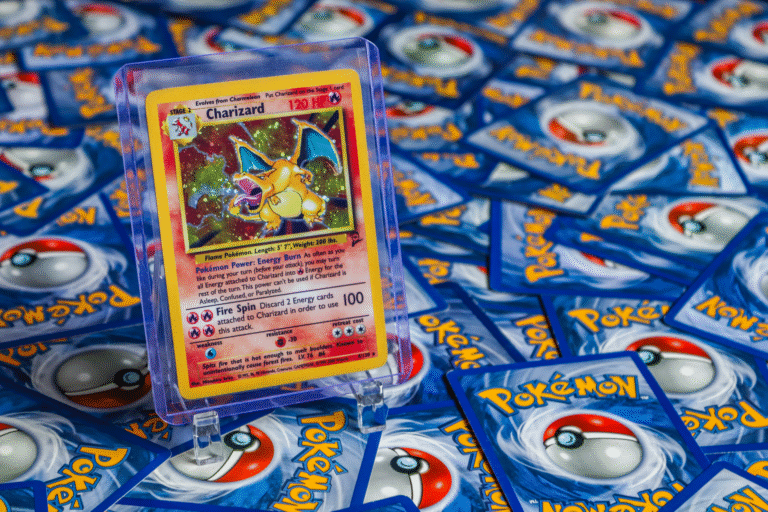
Dark Charizard pricing varies dramatically across different grades, with raw cards typically selling between $102 and $461, while the same cards in perfect condition can command anywhere from $1,728 to over $16,730. The grading difference creates a substantial multiplier effect on value—most notably, a first-edition Dark Charizard #4 increases from a $461 raw market price to $16,730 when graded PSA 10, representing a 36-fold increase in value. This massive swing is why condition and grading have become central to how serious collectors evaluate and price these sought-after Team Rocket cards.
The pricing structure for Dark Charizard cards reflects a broader pattern in the Pokemon collecting market: raw cards and professionally graded cards operate in almost entirely different markets. A collector looking at a raw Dark Charizard #4 in unlimited edition might find it listed around $311, but the same card in near-mint condition commands that price, whereas a lightly played copy drops to roughly $227, and a heavily played example bottoms out near $120. This tiered pricing approach allows collectors at different budgets and with different goals to participate in the market simultaneously.
Table of Contents
- What Grading Means for Dark Charizard Card Values
- Understanding Raw Card Pricing Across Condition Levels
- Edition and Printing Impact on Dark Charizard Pricing
- Evaluating the Cost-Benefit of Professional Grading
- The Grading Turnaround and Market Timing Risk
- Portfolio Strategy for Dark Charizard Collectors
- The Future of Dark Charizard Pricing and Grading
- Conclusion
What Grading Means for Dark Charizard Card Values
Professional grading companies like PSA assign numerical scores from 1 to 10, with 10 being a perfect card. For dark Charizard cards, the leap between even high raw condition and a PSA 10 is extraordinary. A first-edition Dark Charizard #21, for instance, trades at about $102.50 raw, but when graded PSA 10, it reaches $1,728—a 17-fold increase in value. These numbers illustrate why collectors obsess over sending cards for grading: the difference between holding an ungraded card and a properly authenticated, slabbed example can represent tens of thousands of dollars for premium versions.
The progression through lower grades shows more modest increases. A first-edition Dark Charizard #4 graded PSA 9 sells for $2,415, which is meaningful but substantially less than the PSA 10 price of $16,730. This suggests that the final point of grading quality carries disproportionate market weight. Many collectors discover that the cost of grading combined with potential downgrades or the risk of the card not receiving the expected grade can make grading a speculative decision rather than a guaranteed value increase. Some sellers hold multiple raw copies and only send the highest-quality examples for grading, recognizing that a mediocre grade may not justify the grading fees and turnaround time.

Understanding Raw Card Pricing Across Condition Levels
The ungraded market segment operates as its own ecosystem, with clear pricing tiers based on visual condition even without professional certification. For unlimited Dark Charizard #4 cards, collectors use standard condition descriptors—Near Mint at approximately $311, Lightly Played at $227, Moderately Played at $163, and Heavily Played at $120. These distinctions matter because they allow casual collectors and budget-conscious buyers to enter the market at accessible price points, whereas the same card in raw Heavily Played condition costs less than half the Near Mint equivalent. A significant limitation of raw pricing is the subjectivity involved.
Two collectors may disagree on whether a card qualifies as “Lightly Played” or “Moderately Played,” which creates friction in private sales and contributes to the appeal of graded cards among serious investors. Recent eBay data shows approximately 37 Dark Charizard cards sold in the last 30 days with an average price of $117.50, though individual sales ranged from as low as $17.50 to as high as $839.99. This wide range reflects everything from commons and heavily played copies at the low end to higher-grade unlimited or variant printings at the high end. Sellers pricing raw cards in this market should understand they’re competing with both other raw cards and the psychological appeal of ownership by collectors who’ve opted for the budget option rather than investing in grading.
Edition and Printing Impact on Dark Charizard Pricing
First-edition cards command a substantial premium over their unlimited counterparts. The first-edition Dark Charizard #4 at $461 raw substantially outpaces the unlimited version’s $311 average. This edition premium reflects collector preference for early printings and their perceived scarcity, though the difference is meaningful but not insurmountable for many hobbyists. When graded, this premium amplifies: the first-edition PSA 10 reaches $16,730, while an unlimited PSA 10 recorded a recent sale at approximately $3,300, showing that edition advantages persist across the grading spectrum.
The Dark Charizard #21 from Team Rocket represents an interesting case study in how variant cards within the same set experience different pricing dynamics. At $102.50 raw, it’s notably cheaper than the headline #4 card, yet still maintains meaningful value when graded. This suggests that not all Dark Charizard cards are equal in collector demand—artwork, card number, and rarity distinctions create separate market segments even within the same release. New collectors sometimes overlook these nuances and assume all Dark Charizards price identically, which can lead to either overpaying for a premium version or underestimating the value of a variant they own.

Evaluating the Cost-Benefit of Professional Grading
For most raw Dark Charizard cards, the decision to grade involves weighing the potential value increase against grading fees, which typically range from $20 to $100 or more depending on turnaround speed and grading company. If you own an unlimited Dark Charizard #4 in near-mint condition worth $311 raw, sending it for grading might cost $50 and result in a PSA 8 or PSA 9. A PSA 8 might be worth $500–$800, but that’s only a modest multiple of the raw value after grading costs, and there’s no guarantee the company will assign that grade. The risk-reward calculation changes dramatically at the high end: a first-edition card with PSA 10 potential represents serious money, making the grading investment more justifiable.
The comparison highlights a practical tradeoff. Raw cards offer liquidity and flexibility—you can sell quickly without waiting for grading results, and you avoid the risk of receiving a lower grade than expected. Graded cards appeal to serious collectors who want authentication and the prestige of ownership, but they move more slowly and depend heavily on the specific grade received. Many dealers and collectors maintain a mixed approach: they hold investment-grade cards for grading while selling lesser copies raw to recoup costs and maintain cash flow. This balanced strategy acknowledges that not every Dark Charizard deserves the grading treatment, even if the potential upside is theoretically significant.
The Grading Turnaround and Market Timing Risk
One overlooked element in Dark Charizard pricing is the timing risk associated with sending cards to grading companies. Standard turnaround at major services can range from weeks to months depending on demand and service level. During this period, market conditions can shift, comparable sales may change, and a collector’s personal circumstances might make liquidity suddenly valuable. Someone who sends a promising Dark Charizard for grading at the expectation of a PSA 9 might receive a PSA 8 by the time results return, only to find the market has softened or their immediate need for funds has made the slower graded market less attractive than a quick raw sale would have been.
Additionally, grading company reputation and services evolve over time. A card graded PSA 10 five years ago might not command the same premium today if the grading standard has shifted or if the company’s market position has changed. While this risk is relatively low for major companies like PSA, it’s a reminder that graded cards are ultimately only as valuable as the market’s confidence in the grading company itself. Collectors should verify recent sales of comparably graded Dark Charizards rather than assuming all PSA 9s trade at the same price point, as individual sales of high-value cards can vary significantly based on the seller, platform, and specific circumstances.

Portfolio Strategy for Dark Charizard Collectors
Advanced collectors often build Dark Charizard collections with both raw and graded cards, using each segment to achieve different objectives. A collector might own a PSA 10 first-edition #4 as a centerpiece and flagship investment piece, but also hold multiple raw unlimited copies and variant printings for enjoyment and speculation. This diversified approach lets them experience the cards across price points while spreading the risk—a graded card’s value depends entirely on that specific grade and the market’s perception of it, whereas raw cards can potentially be graded later if conditions improve or if the collector simply changes their investment thesis.
The recent sale of an unlimited Dark Charizard #4 PSA 10 at $3,299 demonstrates that even non-first-edition, professionally graded copies maintain substantial value. A collector who owns several raw unlimited Dark Charizards at $311 each might reasonably consider that the best specimen is worth grading, knowing that even a PSA 8 or PSA 9 could potentially exceed that $3,300 threshold. The key is being selective and realistic about which cards in a collection genuinely merit the grading investment and which should remain raw.
The Future of Dark Charizard Pricing and Grading
The Pokemon card market has matured significantly since Dark Charizard cards spiked in popularity during the early 2020s boom. Current pricing appears more stable and reflective of genuine collector demand rather than speculative fervor. First-edition copies command substantial premiums due to their actual scarcity and the nostalgia factor, while unlimited printings have settled into a sustainable market where serious collectors coexist with budget-conscious hobbyists.
As grading services continue to process backlog and grading turnaround times normalize, the pricing structure for graded Dark Charizards may also stabilize, potentially creating more consistent comparable sales data and reducing the volatility that characterizes high-value unique sales. The trend toward condition-based pricing tiers for raw cards suggests that the market increasingly recognizes and values professional condition assessment, even without formal grading. Collectors are becoming more sophisticated about describing their cards’ condition, and marketplaces are implementing better tools for filtering by condition. This evolution could narrow the gap between raw and graded prices for mid-tier cards by making raw pricing more transparent and trustworthy, while the ultra-premium first-edition PSA 10 segment remains its own rarefied market for collectors with serious investment capital.
Conclusion
Dark Charizard card pricing reflects a bifurcated market where raw cards and professionally graded cards serve different collector bases and investment goals. The raw market offers accessibility and liquidity, with prices ranging from roughly $120 for heavily played copies to $311 for near-mint unlimited examples, while the graded market rewards exceptional condition with exponential value increases—most dramatically in the case of first-edition PSA 10 cards reaching $16,730.
Understanding these pricing tiers and the factors that influence them is essential for collectors evaluating whether to send cards for grading, which cards are worth holding, and what price expectations are realistic for their collection. Your next step should be to assess your own Dark Charizard holdings against these pricing benchmarks, honestly evaluate their condition, and decide whether your collection goals align with the raw market’s accessibility or the graded market’s prestige and potential for larger returns. Whether you’re a casual collector enjoying the cards or an investor seeking appreciation, the data shows that Dark Charizards remain a stable and significant segment of the Pokemon card market, with clear pricing pathways at every investment level.