No, Base Set Dragonair rare cards have not beaten the broader Pokémon market since 2020. While the overall Pokémon card market experienced explosive growth from 2020 to early 2022, Dragonair has significantly underperformed both the broader market trends and especially the iconic Base Set cards that drove the boom. As of 2026, Base Set Dragonair shows a downward price trend over the past 12 months, with only modest trading activity and no meaningful recovery momentum during the vintage card stabilization that began in 2025.
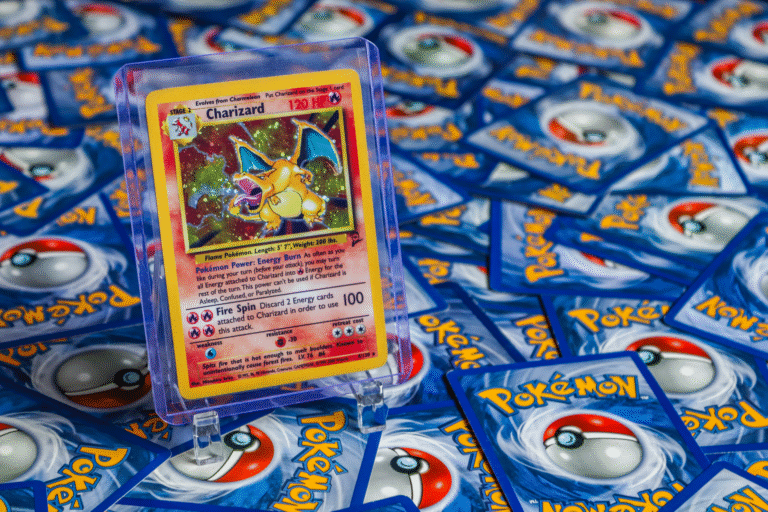
The story of Dragonair in this market cycle reveals a crucial lesson: not all vintage Pokémon cards were created equal. While a PSA 10 Charizard peaked at $360,000 in January 2022 before collapsing to below $150,000 by mid-2023, Dragonair never achieved the same speculative heights and has largely remained sidelined during both the boom and the recovery phases. The difference comes down to collector demand, cultural significance, and scarcity in high grades—factors that have consistently favored the “holy trinity” of Base Set (Charizard, Blastoise, Venusaur) over supporting cast members like Dragonair.
Table of Contents
- How Did Base Set Dragonair Perform During the 2020-2022 Market Boom?
- The Correction Phase and Dragonair’s Fragile Position
- Base Set Dragonair vs. Iconic Cards: A Performance Comparison
- Current Market Status and Liquidity Challenges in 2025-2026
- Why Dragonair Lags Behind Other Base Set Rares
- The Vintage Market Recovery and Dragonair’s Absence
- What the Future Holds for Base Set Dragonair
- Conclusion
How Did Base Set Dragonair Perform During the 2020-2022 Market Boom?
The Pokémon card market between 2020 and early 2022 was unlike anything the hobby had seen before. Driven by pandemic-era retail shortages, mainstream media attention, celebrity investors, and nostalgia-driven demand from millennials, vintage base Set cards became financial assets rather than just collectibles. During this period, the market broadly rewarded scarcity and condition, with PSA 10 graded cards commanding premium prices.
However, Dragonair—a rare card but not a headline grab—never benefited from the same speculative fervor that lifted Charizard and other chase cards. Unlike Charizard, which has been the face of the franchise since its debut in Base Set and remained prominently featured in all subsequent Pokémon TCG marketing, Dragonair occupied a middle tier of desirability. Collectors pursuing PSA 10 Base Set sets prioritized the “big three” holos, meaning demand for Dragonair was driven primarily by completionists and type collectors rather than speculators. This meant that while Dragonair prices rose during the boom, they rose at a far more modest pace than the iconic cards that captured investor attention and drove headlines.
The Correction Phase and Dragonair’s Fragile Position
The Pokémon card market experienced a dramatic correction starting in late 2023 that accelerated through 2024 and into 2025. High-grade vintage cards in PSA 10 condition dropped 25 to 40 percent from their 2022 peaks as speculative money fled and market reality reasserted itself. The Charizard example is instructive: a 58 percent decline in just 18 months. For a card like Dragonair that never had strong speculative support to begin with, the correction proved particularly damaging. When the market broadly repriced downward, Dragonair faced the dual problem of limited demand recovery potential and accumulated inventory from the boom years.
A critical limitation of the Dragonair market is its relatively low liquidity. Trading data from 2026 shows only 13 Dragonair cards sold on eBay over a 30-day period, with an average price of $17.29. This thin market depth means that any attempt to move meaningful inventory meets resistance, and price discovery becomes challenging. Compare this to Charizard, where daily sales occur at various grade levels, creating natural price support and easier exit for sellers. Dragonair’s modest trading volume suggests that even collectors who own the card struggle to find buyers at their asking prices, a warning sign for anyone considering it as a long-term store of value.
Base Set Dragonair vs. Iconic Cards: A Performance Comparison
The performance gap between Dragonair and the iconic Base Set holographics is stark and measurable. While exact historical pricing for Dragonair throughout the boom is difficult to pinpoint, current 2026 market data reveals the hierarchy clearly. A Base Set Dragonair #18/102 in standard condition trades for approximately $5.17, a 1st edition version reaches around $105.15, and a Shadowless version approximately $57.31. By contrast, a PSA 10 Base Set Charizard commands hundreds of thousands despite its recent decline, and even mid-grade Charizards (PSA 7-8) trade for thousands of dollars.
This comparison illuminates why Dragonair missed the broader market’s upward momentum. Charizard benefited from multiple demand vectors: mainstream recognition, investment money, set completion demand, and the card’s historical role as a gateway to Pokémon itself. Dragonair, while undeniably iconic within the Base Set lineup, never achieved this cultural penetration. Blastoise and Venusaur, the other two members of Base Set’s rare holo elite, similarly outperformed Dragonair because they represented equally recognizable Pokémon with equally strong collector demand. Dragonair sits a tier below these cards in the collector’s hierarchy, and the market has consistently priced it that way.

Current Market Status and Liquidity Challenges in 2025-2026
As of 2026, Base Set Dragonair is in a downward price trend for both the past 30 days and the full year. This represents a significant challenge for anyone holding the card with expectations of appreciation. The downward momentum contradicts the broader vintage market narrative, which saw PSA 9-10 graded Base Set, Jungle, and Fossil cards stabilize or appreciate during 2025 as collectors recognized the genuine scarcity of these unreprinted products and institutional buying increased.
The institutional buying trend is real and measurable: Heritage Auctions achieved $5.27 million in a single Pokémon sale in December 2025, signaling that top-tier vintage cards retain appeal to serious collectors and investors. However, this recovery has not extended to supporting cast members like Dragonair. The card lacks the condition rarity (there are simply too many Dragonairs in mid-grade existence) and the collector demand to participate meaningfully in the recovery phase. This is a crucial distinction: the market is rewarding extreme scarcity and iconic status, not simply “old Base Set cards.”.
Why Dragonair Lags Behind Other Base Set Rares
Several factors explain Dragonair’s consistent underperformance in this market cycle. First, condition rarity plays a role. Charizard, as the most pursued card in Base Set, was often kept in collections rather than played, meaning high-grade copies are more scarce relative to total print volume. Dragonair, less exciting to collectors, was more likely to see casual play and storage in less-than-ideal conditions, flooding the market with lower-grade copies that cannot command premium prices.
Second, the psychological factor matters enormously: collectors building PSA 10 sets target Charizard, Blastoise, and Venusaur as the non-negotiable chase cards, treating Dragonair as a filler card despite its actual rarity within Base Set’s holo print run. A critical warning for Dragonair investors is the absence of a clear use case for ownership. Unlike Charizard, which works simultaneously as a collectible, an investment vehicle, and a card with genuine historical significance to the franchise, Dragonair occupies an awkward middle ground. It is not rare enough in any particular grade to justify collecting it purely for condition rarity, not iconic enough to anchor a collection, and not speculative enough to attract market momentum investors. This positioning problem is difficult to solve and suggests that Dragonair’s underperformance relative to the broader market may be structural rather than cyclical.

The Vintage Market Recovery and Dragonair’s Absence
The stabilization of the high-grade vintage market in 2025 provides a clear counterfactual for evaluating Dragonair’s performance. Base Set, Jungle, and Fossil cards in PSA 9-10 grades—benefiting from genuine scarcity due to the impossibility of reprinting vintage products in their original form—have either maintained their value or appreciated modestly during the broader market decline. This recovery reflects a bifurcation in the Pokémon card market: true vintage rarity maintains value, while mid-tier commons and uncommons, even in Base Set, continue to depreciate.
Dragonair falls into an uncomfortable category. It is rare enough to have value (it’s a holo from Base Set after all), but not rare enough or iconic enough to anchor the vintage scarcity narrative that is driving the 2025-2026 recovery. A Shadowless or 1st Edition Dragonair in high grade has more claim to the scarcity argument than unlimited versions, which explains why 1st Edition examples trade for nearly 20 times the price of unlimited copies. However, even this rarity does not generate the collector enthusiasm that a 1st Edition Charizard commands, leaving Dragonair investors caught between too common (unlimited versions) and not iconic enough (1st Edition versions).
What the Future Holds for Base Set Dragonair
Looking forward to 2026 and beyond, the trajectory for Base Set Dragonair appears constrained. The card will likely continue to benefit from the long-term genuine scarcity of unreprinted Base Set product, meaning it should not collapse entirely as lower-grade modern cards have. However, meaningful appreciation seems unlikely unless two conditions shift: either Dragonair receives significant promotional attention from the Pokémon Company (appearing in a major game, anime storyline, or card product), or the market undergoes another speculative cycle that indiscriminately values all vintage cards. The first is unpredictable, the second historically unsustainable.
For collectors considering Dragonair today, the message is clear: buy if you love the card or need it to complete a Base Set collection, not if you expect it to beat the broader vintage market. The evidence from 2020-2026 is unambiguous. Dragonair has underperformed during both the boom and the recovery, maintained poor liquidity, and shown no signs of the momentum that characterizes truly scarce and truly desired cards. The “story” of Dragonair is one of a solid mid-tier vintage card that will retain some value but will never capture the speculative excitement or collector focus that has driven returns in the broader vintage Base Set market.
Conclusion
Base Set Dragonair rare cards have definitively not beaten the broader Pokémon market since 2020. While the overall market experienced explosive growth from 2020 to early 2022 followed by a significant correction and partial recovery, Dragonair remained a peripheral player throughout all three phases. The card lacked the speculative appeal during the boom, faced the same deflationary pressures as other non-iconic cards during the correction, and has failed to participate in the 2025-2026 recovery that has stabilized high-grade Base Set products.
For anyone holding or considering Base Set Dragonair, the key takeaway is that scarcity alone does not drive returns in the modern Pokémon market. Cultural significance, collector demand, and market positioning matter enormously. Dragonair sits in an uncomfortable middle tier: too common in unlimited form to command premium scarcity prices, not iconic enough to anchor serious collector portfolios, and lacking the institutional appeal that has driven some bottom-tier vintage cards to stabilize in 2025-2026. The future of Dragonair likely involves modest long-term appreciation due to the genuine scarcity of unreprinted Base Set product, but don’t expect it to beat the market.