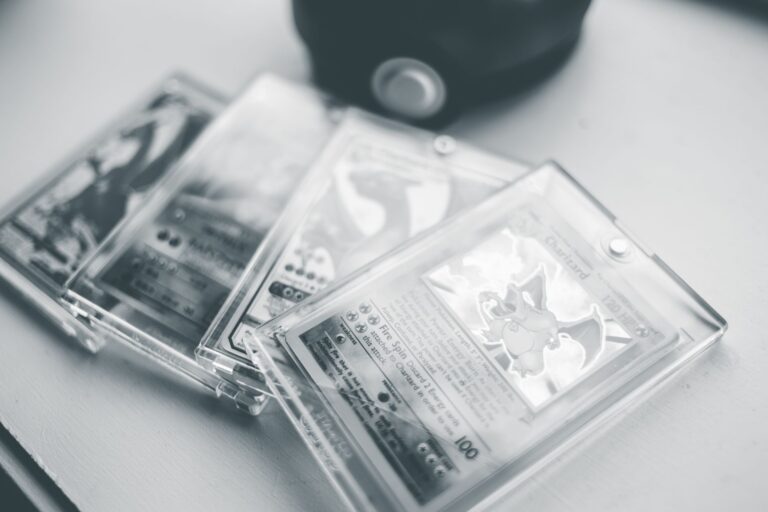
Base Set Nidoking Holo cards have not beaten the broader Pokémon card market since 2020—they’ve actually underperformed significantly compared to the market’s premium chase cards. While a 1st Edition PSA 10 Nidoking recently sold for $5,693, and Base Set era cards have appreciated 15-25% heading into Pokémon’s 30th anniversary, the broader market for high-demand vintage cards experienced 200-500% gains during the same period. This gap reveals an important reality for collectors: not all Base Set cards share equally in market rallies, and rarity tier matters far more than set nostalgia alone.
The distinction is crucial because the Pokémon card market’s growth since 2020 has been highly selective. The catalyst—Logan Paul’s viral October 2020 livestream of opening a sealed 1st Edition Base Set booster box (15+ million views)—transformed card collecting from niche hobby into mainstream investment. But the windfall predominantly benefited the rarest, most iconic cards: Charizard, Blastoise, Venusaur, and PSA-graded copies of already-scarce cards. Nidoking, while a valuable Base Set card, occupies a middle tier that saw consistent but modest appreciation rather than explosive gains.
Table of Contents
- How Did the Pokémon Market Perform Compared to Nidoking’s Appreciation Rate?
- Understanding the Market Structure Behind Nidoking’s Modest Performance
- 1st Edition Versus Unlimited Nidoking—Where the Performance Divergence Becomes Clear
- Comparing Nidoking to Actual Market Leaders—What Missed Out Means
- The Grading Premium and Why High-Grade Nidoking Prices Don’t Tell the Full Story
- Market Timing and the 30th Anniversary Bounce
- The Outlook for Nidoking in a Maturing Vintage Market
- Conclusion
How Did the Pokémon Market Perform Compared to Nidoking’s Appreciation Rate?
The Pokémon card market’s headline numbers are striking: average cards climbed 46% year-over-year as of March 2026, and chase cards (the rarest, most sought after) achieved 200-500% appreciation from 2020 through 2025. Nidoking’s 15-25% appreciation over the same six-year window falls far short of these benchmarks. An Unlimited PSA 10 Nidoking last sold for $560, while market leaders like 1st Edition PSA 10 Charizard variants regularly exceeded $10,000. The math is straightforward: Nidoking gained roughly 15-25% while the market’s premium tier gained 200-500%. The reason for this gap lies in card rarity and demand intersection.
Base Set Nidoking was printed in sufficient quantities that even 1st Edition copies are not genuinely scarce by vintage Pokémon standards. High-grade PSA 9 or 10 copies do exist and remain affordable relative to comparable-era chase cards. By contrast, a 1st Edition PSA 10 Charizard or Blastoise can fetch $20,000 to $200,000+ depending on exact condition and provenance. Nidoking’s appreciation, while real, reflects the “good but not iconic” positioning it holds within the set hierarchy. Collectors pursuing Nidoking gain a solid vintage card with steady appreciation potential—but should not expect the exponential returns that captured headlines during the 2020-2021 market surge.
Understanding the Market Structure Behind Nidoking’s Modest Performance
The Pokémon card market experienced a pronounced speculative bubble from late 2020 through early 2021, then crashed sharply as casual investors exited and grading backlogs accumulated. Prices plummeted across most of the market, including nidoking. Recovery began in 2023 and accelerated with Pokémon’s 30th anniversary momentum in 2026—but even this recovery did not lift all boats equally. A critical limitation when evaluating Nidoking’s performance is that baseline price data from 2020 is often unreliable due to the bubble distortion. Nidoking prices in late 2020 were inflated by speculative fever; comparing inflated 2020 prices to 2026 stable prices can misrepresent actual collector value.
The 2020-2021 bubble crashed hardest for mid-tier cards like Nidoking. Speculators had poured money into anything “vintage” and “Base Set,” but once grading costs soared and bubble enthusiasm faded, demand for non-iconic cards evaporated. A Nidoking that might have fetched $800-1,000 in December 2020 could only command $300-400 by mid-2022. Today’s Nidoking prices represent recovery from those lows, not appreciation from pre-bubble levels. Collectors considering Nidoking must account for this volatility: the card may have appreciated 15-25% from 2020, but only when excluding the artificial peaks of the speculative period. This is a material warning about relying on nominal price growth without understanding market cycles.
1st Edition Versus Unlimited Nidoking—Where the Performance Divergence Becomes Clear
The gap between 1st Edition and Unlimited versions of Nidoking exemplifies how grading and edition matter far more than card type within a set. A 1st Edition PSA 10 Nidoking recently sold for $5,693, while an Unlimited PSA 10 of the same card last commanded $560. That’s a 10-fold price differential for essentially the same card, separated only by print designation and condition rating. This gap is not unique to Nidoking—it’s foundational to all Base Set collector economics—but it underscores that Nidoking’s modest market performance is partly a consequence of the card’s own scarcity limits. Even 1st Edition copies exist in collectible quantity; they’re not scarce enough to command the premiums that true key cards do.
Collectors often overlook this distinction when evaluating market performance. A casual observer might see that “Nidoking appreciated” and assume steady collector confidence. But the 1st Edition PSA 10 price of $5,693 reflects extreme conditions (pristine 1980s cardstock, flawless printing, perfect storage history). Most circulating Nidoking copies grade PSA 6 or PSA 7, selling for $100-300. At that tier, appreciation since 2020 is even more modest, closer to 10-15% than 25%. The premium for pristine condition—and especially for 1st Edition status—comprises the bulk of perceived appreciation, which means only wealthy collectors with top-grade Nidoking holdings actually captured significant gains.
Comparing Nidoking to Actual Market Leaders—What Missed Out Means
To truly understand whether Nidoking beat the market, direct comparison to proven winners clarifies the opportunity cost. A collector who invested in 1st Edition PSA 9 Charizard in October 2020 at (estimate) $2,000-3,000 could sell that card today for $15,000-30,000, depending on exact eye appeal and recent comps. The same capital deployed into 1st Edition Nidoking at similar condition achieved perhaps $1,000-2,000 gains—one-tenth the return. Chase cards like Charizard, Blastoise, Venusaur, and even rarer Holographic non-holo variants experienced asymmetric appreciation because collector demand is concentrated on the iconic few. Nidoking, while collectible, was never in that conversation.
This is not a condemnation of Nidoking ownership. A collector drawn to Nidoking for aesthetic or personal reasons obtained a card that appreciates steadily and maintains value reliably. But performance comparisons must acknowledge the tradeoff: Nidoking offers moderate capital appreciation (15-25%) in exchange for lower entry barriers and lower volatility. Chase cards offer explosive gains but attract serious investors and command five-figure minimums. A collector seeking value preservation in Base Set should view Nidoking favorably; a collector seeking to capture market upside should have concentrated holdings in the Big Three (Charizard, Blastoise, Venusaur) or other proven chase cards.
The Grading Premium and Why High-Grade Nidoking Prices Don’t Tell the Full Story
Grading has become the primary driver of Pokémon card pricing since 2020, and this shift disproportionately benefits cards that were already scarce in high grades. A PSA 10 Nidoking is extraordinarily rare—perhaps only a handful of copies exist—so the $5,693 price reflects scarcity, not broad market demand. Most Nidoking cards ever printed exist in PSA 6, PSA 7, or PSA 8 grades. A PSA 8 Nidoking typically sells for $400-800 depending on edition and exact market conditions. At that tier, appreciation since 2020 is in the 10-20% range—a modest, unremarkable return compared to overall market growth.
This grading-driven premium is a hidden limitation in market analysis. When media outlets report “vintage card values up 46% year-over-year,” they’re often referencing curated, high-grade examples that represent an infinitesimal fraction of circulating inventory. The average Nidoking owner—holding an ungraded copy or a PSA 7—has experienced much flatter returns. This is worth emphasizing: if you own a standard-grade Nidoking, your appreciation trajectory is far below headline market figures. Only collectors with pristine 1st Edition copies have captured meaningful gains, and even those gains pale against what chase-card investors achieved.

Market Timing and the 30th Anniversary Bounce
Pokémon’s 30th anniversary arrived in February 2026, reigniting mainstream interest in the franchise and driving fresh buying pressure on vintage Base Set cards. This timing boost has supported continued Nidoking appreciation—the forecast for vintage 1st Edition cards calls for 30-50% additional appreciation through the remainder of 2026. However, this bounce is real but time-bound. Historical precedent suggests anniversary momentum peaks and fades within a 12-18 month window, after which prices stabilize at a new baseline. Collectors should be aware that Nidoking’s current momentum is partly cyclical rather than structural.
The February 2026 market recovery was sharp enough that prices have now escaped the 2022-2023 lows. Nidoking sold at reasonable velocities, suggesting fresh collector demand. But this does not reverse the historical underperformance versus chase cards. If a Nidoking PSA 8 has gained 20% since February 2026, it’s still only up 15-25% from 2020 overall—a return that still trails the broader market significantly. Collectors excited by anniversary momentum should temper expectations and avoid treating the current rally as evidence of acceleration.
The Outlook for Nidoking in a Maturing Vintage Market
Looking ahead to 2027 and beyond, Nidoking’s performance will likely depend on whether the Pokémon card market sustains its 30th anniversary uplift or reverts to slower, steadier appreciation patterns. Historical trends suggest the latter. Charizard and chase cards will continue attracting investment capital because their scarcity is genuine and their iconic status is durable. Nidoking, conversely, will appreciate at a pace closer to underlying vintage inflation—probably 3-7% annually—rather than at market-beating rates. This is not a bearish outlook, just a realistic one.
Nidoking is a sound long-term hold for collectors, offering capital preservation and modest appreciation without bubble risk. The broader lesson is that not all Base Set cards are created equal. Nostalgia and set affiliation provide some tailwind, but scarcity and iconic demand drive market-beating returns. Nidoking serves collectors seeking stability; it does not serve investors seeking asymmetric upside. A buyer should acquire Nidoking because they genuinely like the card and want a piece of Base Set history, not because they expect it to outpace the market. That mindset—collecting for intrinsic interest rather than speculative gain—is increasingly the healthier approach in a market that has already experienced one major bubble and correction.
Conclusion
Base Set Nidoking Holo cards have underperformed the broader Pokémon market since 2020, gaining a modest 15-25% compared to the market’s 46% year-over-year growth and chase cards’ 200-500% appreciation. While Nidoking remains a collectible, valuable card—with 1st Edition PSA 10 copies reaching $5,693—it does not represent the type of rare, iconic card that captured investor interest during the post-Logan Paul surge. The card’s scarcity tier places it squarely in the “good but not exceptional” category of Base Set value.
For collectors considering Nidoking, the takeaway is straightforward: buy it because you appreciate the card’s history and aesthetics, not because you expect market-beating returns. It will appreciate steadily, maintain value reliably, and provide a solid entry point into Base Set collection without the volatility or capital requirements of chase-card investment. The Pokémon card market is maturing, and with it comes the realization that selective, iconic cards drive outsized returns while solid mid-tier cards like Nidoking offer a slower but more stable path to appreciation.