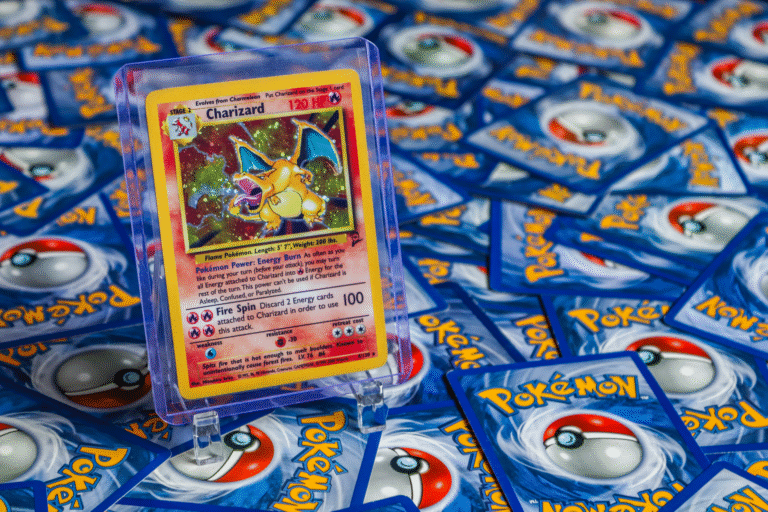
Paldean Fates singles cannot consistently keep up with vintage Pokémon cards when it comes to long-term value retention and market demand. While modern sets like Paldean Fates offer beautiful artwork and competitive playability that drive initial collector interest, they lack the historical significance, supply constraints, and proven appreciation trajectory that make vintage cards—particularly 1st Edition Base Set or Shadowless cards from 1999—so valuable. A PSA 9 Charizard from Base Set regularly commands $50,000 to $100,000+, while even the most sought-after Paldean Fates holos stabilize in the $100-500 range for the same grade. That said, the comparison isn’t quite apples-to-apples.
Paldean Fates singles occupy a different niche in the collecting market. They appeal to active competitive players, art collectors, and younger collectors with smaller budgets. Some specific cards from the set—like graded copies of popular Full Art trainer cards or special illustration rares—have shown stronger secondary market persistence than typical modern set singles. The key difference is that vintage cards appreciate primarily because of rarity and age, while modern cards (when they hold value at all) do so based on artwork quality and playability relevance.
Table of Contents
- What Makes Vintage Pokémon Cards Hold Value Better?
- The Reality of Modern Card Grading and Market Saturation
- Specific Paldean Fates Cards That Have Held Value
- Comparing Investment Timelines and Exit Strategy
- The Trap of Confusing Playability with Collectibility
- Niche Segments Where Paldean Fates Competes Better
- The Future of Paldean Fates in the Broader Market
- Conclusion
What Makes Vintage Pokémon Cards Hold Value Better?
Vintage cards benefit from several structural advantages that paldean Fates singles simply cannot replicate. The most important factor is supply. When Pokémon Trading Company printed Base Set in 1999, production was limited compared to modern standards. Unlimited printings existed, but 1st Edition runs were genuinely scarce, and even Unlimited copies are finite. The population of high-grade vintage cards is tiny—there are fewer PSA 9 or 10 Base Set Charizards in the world than there are actively trading Paldean Fates reverse holos. This scarcity is locked in and can never be expanded, giving vintage cards a hard floor of demand from museums, institutional collectors, and wealthy enthusiasts willing to pay premium prices. Paldean Fates, by contrast, was printed aggressively in 2024 and continues to be restocked at retail.
The Pokémon Company learned from 2021-2022 supply constraints and intentionally increased production to prevent shortages. This abundance means that even a “hard to pull” card from Paldean Fates will eventually be more available than most vintage equivalents. A special illustration rare from Paldean Fates might cost $200-400 today, but as more people open boxes and sell their duplicates over the next five years, supply pressure will likely depress prices unless the card remains competitively relevant or develops strong cross-collecting appeal. Historical prestige compounds this advantage for vintage cards. Collecting a 1st Edition Base Set card connects you to the beginning of Pokémon itself—to the moment when trading cards became a cultural phenomenon. Vintage cards carry provenance and story that modern cards, no matter how attractive, cannot claim yet. This intangible factor drives serious collectors to vintage, even when the artwork or gameplay of modern cards is objectively superior.

The Reality of Modern Card Grading and Market Saturation
Modern cards face a headwind that vintage cards avoided: oversaturation of grading submissions. When PSA and BGS grade millions of modern cards annually, the relative scarcity of high grades diminishes dramatically compared to vintage, where the entire population ever printed is measured in the thousands. A PSA 10 Paldean Fates card, while still respectable, will eventually exist in numbers that are hard to monetize relative to acquisition cost. Vintage PSA 10s are rare enough that every copy maintains collector attention and liquidity. This grading saturation also creates a psychological barrier. Collectors understand that opening Paldean Fates and grading pulls is a low-probability game with poor expected value.
The odds of hitting a card valuable enough to justify grading costs are slim. With vintage, collectors accept that raw cards or lightly played copies might appreciate significantly, but grading a modern $30 card for $25+ in fees only makes sense for premium pulls. Most Paldean fates singles won’t justify professional grading, which means they trade in the raw market where pricing is more fragmented and margins smaller. Another limitation is the condition floor. Vintage cards in low grades—PSA 4-6 played condition—still command respect and sell at reasonable prices because of age and scarcity. A played 1st Edition Venusaur might fetch $400-800 despite visible wear. A played Paldean Fates card in the same condition category would struggle to sell for 10% of that, because modern cards in played condition signal “someone actually opened and used these,” which dampens collector appeal for non-gameplay purposes.
Specific Paldean Fates Cards That Have Held Value
Not all Paldean Fates singles are equal in the market. Full Art trainer cards, particularly those featuring popular characters like Cynthia or Penny, have shown more stability than regular holos. A PSA 9 copy of the Penny full art trainer from Paldean Fates has traded consistently in the $80-150 range six months post-release, suggesting some collector staying power. This is well below where a comparable vintage full art would trade, but it’s notably stronger than the trajectory of typical modern holos, which often crater to $10-30 within a year. Special illustration rares have also performed better than expected.
These cards, which feature alternative artwork with Japanese artist signatures, appeal to both art collectors and Pokémon fans. The Arven special illustration rare, for instance, has maintained a $50-100 price floor because of genuine cross-collector interest. However, even these outliers pale compared to their vintage equivalents—a special illustration rare Pikachu might sell for $100-150, while a vintage shadowless Pikachu holofoil of similar condition easily reaches $1,000+. The difference in trajectory matters. Vintage cards generally move on a 5-10 year timeline before appreciating meaningfully, but they appreciate from a stable baseline. Paldean Fates cards, if they hold value at all, typically do so in the first 12-24 months after release and then face downward pressure unless they develop secondary reasons for collectibility (competitive staples, cultural moments, etc.).

Comparing Investment Timelines and Exit Strategy
If you’re buying either vintage or modern cards as an investment, the timelines and exit strategies are fundamentally different. Vintage cards can be held for 10+ years with confidence that you’ll have a liquid market and likely positive returns. A Pokémon collector buying a Blastoise from Base Set for $300 in 2025 could reasonably expect it to be worth $400-600 by 2035, assuming reasonable condition maintenance. The institutional collector base and nostalgia-driven demand provide a safety net. Paldean Fates cards require active management and shorter holding periods. If you’re speculating on a modern card, your realistic timeline is 6-18 months to identify whether it’s appreciating or depreciating.
If it’s trending upward based on gameplay relevance or cross-collector appeal, you can hold or sell for profit. If it’s trending down—which is the default for most modern cards—you want to exit before losses compound. This is less investing and more active trading, which carries higher fees and psychological burden. A practical example: if you bought a full art Cynthia from Scarlet & Violet Gym Heroes at $200 in 2023 expecting vintage-like appreciation, you’re now sitting on a card worth $40-60. That same $200 in a PSA 7 Base Set Blastoise would likely be worth $250-350 today. The difference isn’t just in returns but in required attention—vintage cards forgive years of inattention, while modern cards punish it.
The Trap of Confusing Playability with Collectibility
Many newer collectors assume that because Paldean Fates cards are tournament-legal and actively played in competitive Pokémon TCG, they’ll appreciate like vintage cards did. This is a critical misconception. Playability creates short-term demand during an active format, but once a card rotates out of competitive viability, that demand vanishes almost instantly. A card that was a $50 staple might drop to $5 in weeks once a new set rotates it out. Vintage cards like the original Machamp or Charizard hold value independently of current tournament legality.
Most competitive players have moved to modern formats, but the vintage Charizard commands astronomical prices because of collector prestige, not gameplay. A Paldean Fates staple that loses competitive relevance loses its primary demand driver and rarely recovers. This is the collector market’s dirty secret: a beautiful modern card is still just a beautiful modern card if nobody needs it for gameplay, and beauty alone doesn’t sustain value the way rarity does. The warning here is clear: don’t buy Paldean Fates singles intending to hold them long-term as an investment unless they offer additional collectibility (special art, character appeal, gradeability). If you’re buying to play, accept that resale value will depreciate rapidly. If you’re buying for aesthetics, that’s fine, but don’t confuse that with an investment thesis.

Niche Segments Where Paldean Fates Competes Better
There are specific collector categories where modern Paldean Fates cards hold their own against vintage competition. Character-focused collectors who prioritize owning the best available art of their favorite Pokémon sometimes prefer modern specials because the art quality and printing technology exceed vintage. A trainer character collector might prefer a modern Cynthia full art to a vintage Erika because the modern card shows the character more clearly and beautifully.
Another segment is international collectors. Japanese Pokémon cards, particularly vintage ones from early Japanese sets, command premium prices in the Western market, making them inaccessible to many collectors. Paldean Fates is globally available and affordable, so collectors on tighter budgets use modern cards to build competitive art-focused collections. This doesn’t make Paldean Fates more valuable than vintage—it makes them more accessible, which is a different advantage.
The Future of Paldean Fates in the Broader Market
As Pokémon TCG continues evolving, Paldean Fates will eventually transition from “current set” to “older modern set,” a category where most cards stabilize at low values ($2-10) unless they have exceptional artwork, playability endurance, or character appeal. The set will likely be remembered well because of high artwork quality and popular character representation, which might preserve slightly higher floor prices compared to forgettable modern sets. But “slightly higher” still means a 90%+ depreciation from release prices for average cards.
The long-term position of Paldean Fates in collector portfolios will probably mirror other well-regarded modern sets: a small subset of cards (maybe 2-5% of the set) maintain $20-100+ value, while the rest fade to bulk pricing. None of this approaches the legacy or price stability of vintage. However, this doesn’t make Paldean Fates a bad collecting choice—it just means setting realistic expectations about what these cards actually are and will become.
Conclusion
Paldean Fates singles cannot keep up with vintage Pokémon cards in terms of value retention, investment potential, or long-term market demand. Vintage cards benefit from limited supply, historical significance, institutional collector interest, and proven appreciation over decades. Paldean Fates, produced abundantly and without the prestige of age, will experience rapid depreciation for most cards unless they develop secondary collectibility reasons like gameplay relevance or exceptional character art. A few special illustration rares and full art trainers will outperform typical modern cards, but even the strongest Paldean Fates performers are a fraction of what vintage equivalents command.
This doesn’t mean Paldean Fates is a poor collecting choice—it means collectors should understand what they’re actually buying. If you love the art or want to play competitively, modern cards offer tremendous value and enjoyment. If you’re seeking investment-grade appreciation and long-term value storage, vintage cards are in a different category entirely. The collectors who avoid disappointment are those who separate the two goals from the start.