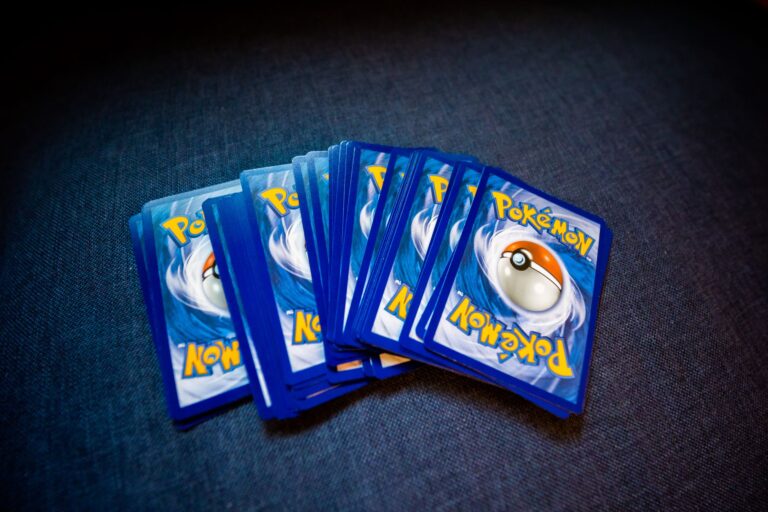
Base Set Pokémon cards have decisively outperformed Deoxys cards in both price appreciation and collector demand over the past two decades. A mint condition Base Set Charizard can fetch $300,000 to $500,000 at auction, while even pristine Deoxys holos rarely exceed $500 to $1,000. The gap in performance reflects fundamental differences in scarcity, card age, and market demand—Base Set cards benefit from being the original release with lower production runs, while Deoxys cards, despite their competitive playability and eye-catching artwork, entered the market during a period of significantly higher print volumes. The divergence in value goes beyond simple nostalgia.
Base Set represents the infancy of the trading card game when print runs were limited and few people understood long-term collectibility. Deoxys cards arrived during the EX era (2003-2008), when The Pokémon Company and printing partners ramped production to meet explosive demand, flooding the secondary market with far more copies. This supply dynamic created a permanent valuation ceiling for Deoxys cards compared to their older predecessors. Understanding which factors drive card performance helps collectors make informed decisions about where to allocate their resources. Base Set’s dominance isn’t inevitable or guaranteed to continue forever, but historical trends strongly favor the original release.
Table of Contents
- Why Do Base Set Cards Command Higher Prices Than Deoxys?
- The Print Volume Explosion and Market Dynamics
- Condition Variance and Grading Sensitivity
- Collectibility vs. Competitive Playability as Performance Drivers
- Grading Company Influence and Market Manipulation Risks
- Set-Specific Factors: Charizard vs. Deoxys as Flagship Cards
- Future Outlook and Shifting Collector Demographics
- Conclusion
Why Do Base Set Cards Command Higher Prices Than Deoxys?
Base Set’s scarcity advantage is the primary driver of its outperformance. The first English Pokémon release in 1999 shipped in far smaller quantities than later sets. Most copies have been played with heavily, stored poorly, or lost entirely over the past 25 years. Mint graded examples are genuinely rare—CGC and psa reports show that finding a Base Set Charizard in PSA 9 or higher requires extensive searching or substantial capital. Deoxys cards, by contrast, were printed abundantly between 2004 and 2006 across multiple products and set variants, meaning mint copies remain relatively available even today. Temporal rarity compounds the scarcity advantage. Base Set carries the weight of being the original, the cards that introduced millions to the hobby. Collectors who grew up in the late 1990s and early 2000s often view Base Set ownership as a milestone and status symbol.
Deoxys, despite featuring a popular legendary Pokémon, is simply one of many sets from a prolonged EX-era run. The emotional connection to Base Set—”the cards that started it all”—creates demand that transcends pure gameplay value. A played Base Set Pikachu might fetch $100, while a mint Deoxys Pikachu holofoil sells for $15 to $20. The nostalgia premium on Base Set is substantial and unlikely to diminish as original collectors age and accumulate wealth. Print technology and card quality also contributed to the performance gap. Base Set cards were printed by Chameleon Printing, with inconsistent centering and occasional printing defects that make high-graded copies genuinely scarce. Deoxys cards, printed later with more standardized processes, achieved better average quality, further reducing the rarity of mint examples. Ironically, the manufacturing flaws in Base Set—sloppy centering, light print lines—became desirable traits among graders and collectors, elevating the perceived value of well-centered copies.

The Print Volume Explosion and Market Dynamics
The Pokémon Trading Card Game experienced explosive growth in production capacity during the early 2000s. When Deoxys released in 2004-2005, the game was at peak popularity—mainstream celebrities were collecting, retail shelf space was guaranteed, and printing partners were operating at maximum capacity. A single booster box run of Deoxys likely included millions of cards. Compare this to 1999 Base Set, where japanese production constraints and limited English distribution meant most retail stores received only a few cases per set. The difference in total supply is probably 50-to-1 or higher, and this creates an insurmountable valuation gap. However, there’s an important limitation to acknowledge: print volume alone doesn’t guarantee poor performance. The Pokémon TCG has experienced cyclical print runs, with some modern sets becoming unexpectedly scarce due to printing stoppages or supply chain issues.
Limited Edition Pokémon Snap promo cards, for instance, massively outperformed expectations despite being printed years after Base Set. Similarly, first-edition printings of Deoxys and later EX sets are significantly scarcer than unlimited editions, creating micro-hierarchies within the same set. A first-edition Deoxys holofoil commands 2-3x the price of unlimited, though both still pale next to Base Set equivalents. The lesson here is subtle but important: scarcity relative to demand matters more than absolute print volume. Base Set benefits from genuine extreme scarcity combined with high demand. Deoxys suffers from ample supply but still commands respect among EX-era collectors and competitive players. Neither is a “poor investment,” but Base Set’s structural advantages are likely permanent.
Condition Variance and Grading Sensitivity
The condition sensitivity of Base Set cards creates both opportunities and risks that differ markedly from Deoxys. A Base Set Charizard graded PSA 9 might cost $20,000 to $40,000, while a PSA 8 drops to $8,000 to $12,000—a 50-60% variance for a single grade difference. Deoxys Ex Deoxys holofoil experiences far gentler grade curves: a PSA 9 might sell for $300 to $400, while a PSA 8 might fetch $150 to $200. The percentage variance is similar, but the absolute pricing power of each grade increment is much smaller. This creates a psychological and financial asymmetry. Base Set collectors obsess over centering, print lines, and surface wear because these factors translate into five-figure differences.
Deoxys collectors, even those who grade their cards professionally, are optimizing for $50 to $100 differences. This intensity of focus on Base Set has driven prices higher, but it’s also created a fragile market where a single grade dispute or authentication controversy can tank values. The professional grading companies (PSA, CGC, SGC) have disproportionate influence over Base Set valuations because the stakes are so high. Condition variance also means that raw (ungraded) Base Set cards are essentially illiquid at premium price points. No serious buyer will purchase a raw Base Set Charizard sight unseen or without professional evaluation. Deoxys cards, by contrast, have robust raw markets on platforms like TCGPlayer and eBay, where buyers freely trade cards based on photographs and descriptions. For someone seeking liquidity or avoiding grading fees, Deoxys represents a more forgiving category.

Collectibility vs. Competitive Playability as Performance Drivers
Base Set’s performance advantage emerges partly because the cards are no longer playable in official tournament formats. Base Set Pokémon cannot be used in Standard or Expanded legal decks, severing any connection to competitive demand. This might sound like a disadvantage, but it’s actually a strength—it forces Base Set to live purely in the collectibles market, where rarity and historical significance reign. Deoxys cards, conversely, remained tournament-legal through 2007 in Standard and until 2015 in Expanded, creating competing demand streams. Some players bought Deoxys cards to use in decks rather than preserve them, reducing the pool of mint copies. However, competitive demand also buoyed Deoxys prices during its legal window in ways that Base Set no longer experiences.
A mint Deoxys Ex sold for $400 to $600 during the 2005-2007 competitive window because players needed four copies for tournament decks. Today, those same cards sell for $50 to $150 as the competitive player base has aged and retired. Base Set avoids this kind of deflation because it never had a competitive floor supporting its prices—value derived purely from scarcity and collectorship. The practical takeaway is that collectible cards and playable cards follow different valuation trajectories. Base Set benefited from being cut off from competitive demand, leaving only collectors in the market. Deoxys experienced a price plateau once it rotated from legality, shedding players who sold their collections. For future predictions, cards that are designed to be played (modern competitive staples) face greater risk of price collapse than cards that are inherently collectible only.
Grading Company Influence and Market Manipulation Risks
Both Base Set and Deoxys valuations depend heavily on the opinions and decisions of professional grading companies like PSA and CGC. A highly publicized regrade or tier adjustment can swing prices by 20-50% overnight. Base Set cards face higher risk here because individual grade changes carry dollar-amount consequences so large that even small shifts in grading standards create panic. In 2020-2021, PSA faced substantial criticism for inconsistent grading, particularly on high-value cards. Base Set Charizards graded during this period were later disputed, and some collectors experienced significant realized losses. Deoxys cards are less vulnerable to this grading volatility simply because the absolute dollar swings are smaller.
A disputed PSA 9 Deoxys holofoil might represent a $100 to $150 loss to the owner—annoying, but not life-altering. A disputed PSA 9 Base Set Charizard represents a $15,000 to $20,000 loss. This asymmetry means Base Set collectors must monitor grading company decisions, news, and potential controversies more closely than Deoxys collectors. The market can move against you not because of supply or demand shifts, but because of purely subjective changes in grading standards. Additionally, counterfeiting risk exists for both, but high-value Base Set cards attract sophisticated forgers who can replicate vintage cards convincingly. Deoxys, with lower absolute values, sees far less counterfeiting activity. For someone building a collection, this means Base Set purchases absolutely require authentication and grading, while Deoxys cards purchased from reputable dealers can often be trusted on their face.
Set-Specific Factors: Charizard vs. Deoxys as Flagship Cards
Within their respective sets, Charizard and Deoxys play analogous but distinct roles. Base Set Charizard (the holographic version from the original 102-card set) is arguably the most recognized and sought-after Pokémon card in the world. Even casual collectors and non-players often know of Base Set Charizard’s value. It became a cultural artifact through The Pokémon Company’s deliberate scarcity marketing and later through viral media attention. A BGS 10 Base Set Charizard sold for $369,000 in 2021, and this wasn’t an anomaly—it was the logical endpoint of a 20-year appreciation curve. Deoxys Ex Deoxys holofoil, while a strong card mechanically and visually interesting, never achieved cultural penetration beyond the card-collecting community.
It’s valued as a competent EX card from a vintage set, but it lacks the symbolic weight of Charizard. Even among Deoxys variants, other cards like the first-edition holo or secret rare versions are functionally equivalent or superior, fragmenting demand. A mint Deoxys Ex holofoil is worth $300 to $500 today; it may appreciate modestly over time as fewer near-mint copies survive, but it will likely never become a six-figure card unless something extraordinary happens (a celebrity buys one, The Pokémon Company declares it “lost,” etc.). The flagship card phenomenon is real and measurable: the single most iconic card from a set often captures a disproportionate share of collector interest and price appreciation. Base Set has Charizard; Deoxys has nothing equivalent. This structural advantage for Base Set is permanent.
Future Outlook and Shifting Collector Demographics
The Base Set vs. Deoxys performance gap is likely to narrow modestly as millennial collectors who grew up during the Deoxys era age into wealth accumulation years. In 2040, a collector who was eight years old in 2005 will be in their 40s, potentially commanding significant disposable income. They may view Deoxys cards with the same emotional attachment that today’s collectors feel toward Base Set. If this cohort develops into a substantial wealth-holding demographic, Deoxys prices could appreciate meaningfully.
However, the scarcity advantage of Base Set is absolute and permanent—print-run differences cannot be undone, so Base Set cards will retain a structural valuation advantage over Deoxys even if Deoxys appreciation accelerates. Another wildcard is competition from even older, rarer Pokémon cards. Japanese Pocket Monster (Pokémon) cards from 1996-1998, before the English release, are now becoming more visible in Western markets and commanding extraordinary prices. These cards are orders of magnitude rarer than Base Set and are pulling collector attention and capital upward. In 10-15 years, Base Set may appear “common” by comparison to Japanese 1997 first editions, just as Deoxys appears common today compared to Base Set. Relative scarcity and perceived status can shift with time.
Conclusion
Base Set Pokémon cards have outperformed Deoxys cards decisively over the past two decades due to scarcity, historical significance, and the compounding effects of age and collectibility. The price gap—measured in multiples of 50x to 100x for equivalent condition and type—reflects permanent structural advantages: vastly lower print runs, cultural resonance as the original release, and complete detachment from competitive demand. These factors created a durable floor under Base Set valuations that Deoxys, despite its own merits, cannot replicate.
For collectors evaluating where to allocate resources, the key lesson is that rarity, age, and iconic status operate as powerful forces in the card market. Base Set’s dominance is unlikely to reverse, though Deoxys and other EX-era cards may appreciate as generational wealth shifts and as these sets become genuinely scarce through attrition and player consumption. The wisest approach is to buy the best condition cards you can afford within your preferred era, rather than chasing Base Set at inflated prices if your capital is limited. A mint first-edition Deoxys might offer better long-term value per dollar invested than a heavily played Base Set card, depending on your time horizon and risk tolerance.