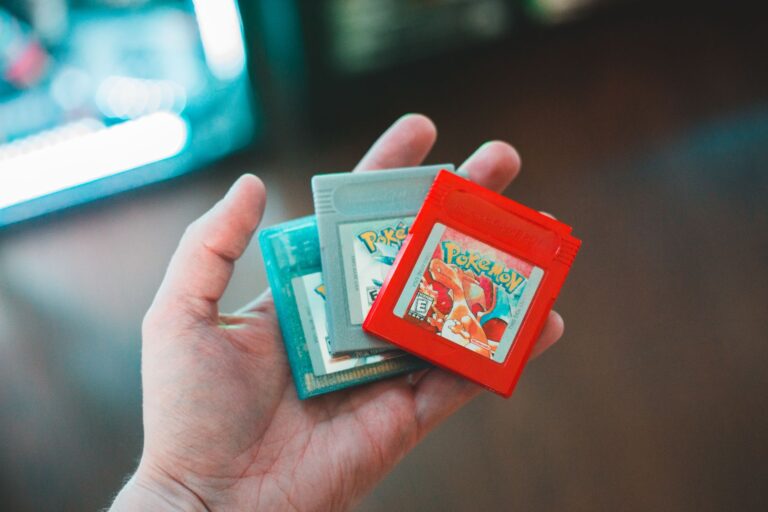
A PSA 10 Base Set Charizard occupies a unique position in modern collecting culture that mirrors the legendary status of Mickey Mantle’s 1952 Topps rookie card in baseball card history. While the Mantle card spent decades as the benchmark for rarity and desirability in its field, the Base Set Charizard—particularly in high grades—has the trajectory to become the defining card not just of Pokémon, but of collecting culture itself. The PSA 10 specifically represents the sweet spot between technical perfection and accessibility, making it the card most likely to transcend collecting communities and enter mainstream cultural memory.
The comparison isn’t merely aspirational. Both cards represent a singular moment when their respective collectibles transitioned from casual products to serious investments. The Mantle card achieved this status gradually over fifty years, but the Charizard’s ascent has been compressed into two decades, suggesting the velocity of digital culture and global interest has fundamentally accelerated how cards achieve iconic status. A PSA 10 Base Set Charizard sold for $369,000 in 2021, and while the market has cooled since then, the card’s cultural footprint continues to deepen in ways that suggest lasting significance beyond short-term price fluctuations.
Table of Contents
- How Could a Charizard Card Achieve Mantle-Like Status in Collecting?
- The Condition Grade Premium and Why PSA 10 Matters More Than Higher Grades
- Rarity Factors That Drive Iconic Status Beyond Condition
- Market Dynamics and the Risk of Institutional Investment
- The Grading Service Dependency and Its Limitations
- The Anime Connection and Cultural Embededness
- The Legacy Question and Forward-Looking Considerations
- Conclusion
- Frequently Asked Questions
How Could a Charizard Card Achieve Mantle-Like Status in Collecting?
The Mickey Mantle 1952 Topps card became the standard-bearer for baseball cards through a combination of factors: it was the card of a generational talent, produced during a transformative era of the medium, and faced genuine scarcity due to printing limitations and poor preservation. The Base Set Charizard mirrors these conditions almost precisely. Released in 1999 as part of the Pokémon Trading Card Game’s inaugural set, it was the chase card in a product aimed at children, yet produced in limited quantities compared to later releases. That tension between desirability and genuine rarity created an artifact that gained meaning not just through market forces but through cultural memory—kids who owned one became adults who told the story of having owned one. The psychological architecture matters here. The Mantle card became shorthand for “the card every collector wants but can never have,” which paradoxically made it attainable for some and untouchable for most, cementing its legendary status.
The PSA 10 Charizard functions the same way in its ecosystem. A PSA 10 exists at the intersection of condition and attainability—it’s not the unicorn of a PSA 10 gem mint example (those are rarer), but it’s far rarer than a near-mint PSA 8 or excellent PSA 7. For collectors born in the 1990s, the PSA 10 Charizard has become the card they dreamed about owning, much like Boomers dreamed about Mantle. What separates sustained iconic status from temporary hype is whether the card’s appeal survives generational interest. The Mantle card has done this by becoming a cultural reference point beyond card collecting—it appears in films, documentaries, and conversations about American capitalism and nostalgia. The Charizard is beginning a similar trajectory, appearing in museum exhibitions of Pokémon history and mainstream media discussions of collecting culture. This suggests the PSA 10 specifically, as the most visually impressive grade that doesn’t demand the premium of a PSA 9 or PSA 10, may indeed be remembered as the definitive version.
The Condition Grade Premium and Why PSA 10 Matters More Than Higher Grades
Understanding why PSA 10 might matter more than PSA 9 or a theoretical PSA 10 requires understanding how grading works and where cards actually exist in the market. A PSA 10 indicates a card with nearly perfect centering, sharp corners, and minimal wear—it’s “gem mint” condition by the strictest standards, yet not quite perfect. A PSA 9 card can appear identical to the naked eye but commands significantly less money. This gap itself is telling: it suggests the premium for near-perfection is psychological as much as technical. The Mantle card’s mystique partly rests on owning an artifact in pristine condition—the grade becomes inseparable from the mythology. The limitation here is that very few Base Set Charizards have graded PSA 10. Population reports from PSA show that only a fraction of submitted cards achieve this grade, which means the supply is genuinely constrained.
However, this also creates a warning for potential buyers: as more cards from Base Set are submitted to grading services over time, the population of PSA 10s will inevitably increase. This doesn’t necessarily diminish their value—the Mantle card has only become more valuable despite the existence of multiple PSA 10 examples—but it does mean the scarcity argument weakens over time. Collectors should recognize that a PSA 10 Charizard’s iconic status isn’t purely dependent on rarity; it’s more dependent on cultural memory and narrative. The psychological shift occurs when a card transitions from being valued for condition to being valued for historical significance. The Mantle card still commands premiums for high grades, but a PSA 7 or PSA 8 example still sells at a level that would have been unimaginable fifty years ago. This suggests that even if future PSA 10 Charizards become more common, the card itself maintains iconic status regardless of grade. The real risk is not that PSA 10s become common, but that newer Charizard variants (from later sets, in higher grades) could fragment the market and dilute the Base Set card’s singular importance.
Rarity Factors That Drive Iconic Status Beyond Condition
A card becomes iconic when multiple layers of rarity converge. The Base Set Charizard benefits from being the rarest holographic card in its set, one of only 102 originally designed cards in a foundational release, and—crucially—a Pokémon with unmatched cultural recognition. Charizard is Pokémon’s most popular creature by most objective measures: it’s Ash’s primary Pokémon in the anime, it appears as a final-evolution form for a widely-available starter, and it has an aesthetic appeal that transcends card collecting. This matters because the Mantle card’s status is partly tied to Mantle’s own legendary status as a player and person. Where the Charizard actually surpasses the Mantle card is in global reach. The Mantle card was primarily significant within American baseball culture, whereas Charizard holds cultural weight across Japan, Europe, North America, and expanding markets worldwide.
A psa 10 Base Set Charizard is equally coveted by a collector in Tokyo, London, or Sydney, which creates a much deeper pool of potential demand than the Mantle card ever accessed. This global collector base actually increases the likelihood that a PSA 10 Charizard becomes the more broadly recognized artifact, even if baseball card enthusiasts remain more familiar with Mantle. The specific danger here is that Charizard itself has multiple forms and versions across the Pokémon universe. A Charizard VSTAR, or a Charizard from a different set, could theoretically capture new collector interest and fragment the market. The Base Set Charizard’s iconic status depends partly on it remaining the original, the one everyone wanted first. This is essentially the same advantage the Mantle card has—there’s only one 1952 Topps Mickey Mantle. The PSA 10 Base Set Charizard, however, isn’t unique in the same way; there are multiple PSA 10s in existence, which means its iconic status rests more on narrative and cultural memory than pure mathematical scarcity.

Market Dynamics and the Risk of Institutional Investment
One crucial difference between the Charizard’s path and the Mantle card’s historical trajectory is the role of institutional investment. The Mantle card’s value appreciation occurred largely through private collection and sporadic record-breaking sales—it was a collector’s item that occasionally made headlines. The PSA 10 Charizard has benefited from active speculation, social media visibility, and investment funds that specifically target Pokémon cards as alternative assets. This brings both benefits and risks to iconic status. The benefit is clear: mainstream awareness and cultural penetration accelerate. The Charizard has achieved broader recognition precisely because investment dollars brought it into financial discourse. A PSA 10 sold for $369,000 in 2021, and that headline reached audiences far beyond card collectors. Compare this to the Mantle card, which achieved similar prices but took fifty years to do so.
The Charizard’s compressed timeline suggests its iconic status could solidify much faster. However, the tradeoff is that investment-driven markets are cyclical. When Pokémon card investments cool—as they did after 2021-2022—the narrative shifts from “historic artifact” to “speculative bubble.” The Mantle card survived this problem because it predated the discourse of “alternative assets” and was never framed as an investment vehicle in the same way. This means a PSA 10 Base Set Charizard’s cultural status depends partly on the broader Pokémon card market stabilizing around higher prices, rather than collapsing back to pre-boom levels. If cards that sold for $100,000 in 2021 normalize back to $40,000 to $60,000 in the coming years, the mythologizing narrative becomes harder to maintain. The Mantle card achieved iconic status through sustained appreciation and cultural endorsement; a Charizard would need to do the same. Currently, the evidence suggests it’s on that trajectory, but it’s not guaranteed. A collector buying at current prices is betting not just on card value but on the card maintaining narrative importance through market cycles.
The Grading Service Dependency and Its Limitations
An often-overlooked factor in the PSA 10 Charizard’s story is that its status is partly dependent on the PSA grading system itself. The Mantle card’s prestige existed before modern card grading; it was validated by experts and tradition. The Charizard, by contrast, derives much of its credibility from PSA’s grade. A PSA 10 is only meaningful if PSA grading is considered authoritative, consistent, and trustworthy. This creates a hidden vulnerability. PSA has faced criticism and litigation in recent years regarding grading consistency and potential conflicts of interest. In 2021-2022, there were reports of inconsistent grading standards and concerns that PSA had become too lenient to meet market demand.
If PSA’s reputation were to significantly deteriorate, or if a competing service gained dominance, a PSA 10 Charizard could suddenly face credibility questions. This isn’t theoretical—the baseball card grading market has cycled through dominant services (PSA, Beckett, SGC), each period of dominance creating artifacts that hold value but also vulnerability. A Charizard graded by a service that subsequently loses market trust becomes less iconic, not more. Additionally, there’s a fundamental limitation in how grading works: two identical-looking cards can grade differently based on centering, surface quality, and corner wear that the average person cannot detect. This means a PSA 10 Charizard’s value rests partly on acceptance of expert judgment. The Mantle card also relies on grading legitimacy, but it built iconic status over decades during which grading expertise accumulated and was consistently validated. A PSA 10 Charizard achieved its status in two decades, meaning there’s less historical track record of consistency. Collectors should understand that iconic status tied to a specific grading system is more fragile than status tied to the object itself.

The Anime Connection and Cultural Embededness
What truly separates the Charizard card from nearly every other collectible is its integration into multimedia entertainment. Charizard is Ash’s most iconic Pokémon in the anime series, appearing across decades of content and remaining central to Pokémon’s marketing identity. This creates a feedback loop where the card reinforces the Pokémon, which reinforces the card. A child watching Ash’s Charizard in the anime sees the card in a different light—it’s not just a game card, it’s a gateway to a fictional universe.
The Mantle card doesn’t have this advantage. Its iconic status is tied to Mantle as a historical figure and to baseball’s cultural importance, but it’s not integrated into ongoing entertainment. A PSA 10 Charizard, by contrast, benefits from constant cultural reinforcement through Pokémon media, merchandise, and continued game releases. This suggests the Charizard has a longer potential shelf life for iconic status than the Mantle card, which is increasingly dependent on nostalgia and historical significance. For generations of collectors born in the 2000s and 2010s, the Charizard will be the card that appeared in their favorite entertainment, which is a more durable emotional anchor than “the card the guy who hit home runs owned.”.
The Legacy Question and Forward-Looking Considerations
Whether a PSA 10 Base Set Charizard becomes truly “remembered like the Mantle card” ultimately depends on what happens in the next twenty to thirty years. The Mantle card’s status was sealed by time and by its consistent cultural presence across decades. The Charizard is in the earlier stages of that process. Several factors will determine whether it achieves comparable status: the stability of Pokémon’s popularity, the integrity of PSA grading, the market’s ability to sustain higher prices without speculative collapse, and the emergence of other competing iconic cards.
One forward-looking possibility is that in fifty years, collectors will view a PSA 10 Base Set Charizard the same way we now view the Mantle card—as a foundational artifact that defined collecting culture in its era. Alternatively, the Charizard could become just one historically important card among many, valuable but not uniquely iconic. What seems certain is that it will retain significance and a premium value relative to lower grades. The real question is whether that premium transforms into genuine cultural mythology or remains a collector’s premium. The trajectory so far suggests the former, but trajectories can change.
Conclusion
A PSA 10 Base Set Charizard possesses the characteristics necessary to become the defining card of Pokémon collecting, with potential to achieve something approaching the Mantle card’s cultural status. The combination of genuine rarity, unmatched popularity, global appeal, and integration into multimedia entertainment creates a unique foundation. The comparison to Mantle isn’t hyperbolic—both represent singular moments when collectibles transcended their origins and became artifacts of cultural memory. However, achieving Mantle-level iconic status requires more than rarity and speculation.
It requires sustained narrative reinforcement, market stability, and the passage of time. Collectors considering a PSA 10 Charizard should understand that they’re betting not just on card value, but on the card’s role in collecting history. That’s a different kind of investment, one where success is measured not just in dollars but in whether future generations recognize the card as the one that mattered most. The evidence suggests that outcome is possible, perhaps even likely, but nothing is guaranteed.
Frequently Asked Questions
Is a PSA 10 Base Set Charizard worth buying as an investment?
That depends on your investment horizon and risk tolerance. As a short-term investment (1-3 years), it carries significant price volatility risk. As a long-term collectible (10+ years), the historical trajectory suggests appreciation is likely, though not certain. Treat it as either a consumption good (you’re buying cultural significance) or a very long-term store of value, not a liquid investment.
How does PSA 10 compare to PSA 9 in terms of value and collectibility?
A PSA 10 typically commands 2-4x the price of a PSA 9, despite appearing nearly identical to the naked eye. The premium reflects both technical rarity and the psychological appeal of “gem mint” condition. For iconic status, PSA 10 is the grade most likely to be remembered, as it represents the highest grade most collectors can reasonably access.
What’s the risk that PSA becomes less trusted or relevant?
It’s a real, though not immediate, concern. PSA’s dominance in Pokémon card grading is currently very high, but grading standards and company reputation can change. If PSA loses authority, a PSA 10 Charizard’s credibility takes a hit. Diversification across grading services and owning raw cards as backup reduces this risk.
Will newer Charizard cards eventually surpass the Base Set version?
Unlikely in terms of iconic status, though newer versions might achieve their own significance. The Base Set Charizard has historical priority and the “original” advantage that’s difficult to overcome. However, market fragmentation is a real possibility—collectors might split interest across multiple Charizard versions.
How does the global collector base affect a Charizard’s iconic status differently than Mantle’s?
The global reach is actually an advantage for long-term iconic status. Charizard is recognized internationally in ways baseball cards aren’t, meaning the cultural narrative can potentially deepen across more markets. The Mantle card’s iconic status is primarily American; Charizard’s is potentially global, which could make it an even more universally recognized artifact over time.
What would it take for a PSA 10 Base Set Charizard to definitively achieve Mantle-like status?
Consistent market prices above $250,000+, mainstream cultural references in media and documentation, museum exhibitions treating it as a cultural artifact, and 20+ more years of sustained collector interest. The card is approximately halfway through that process currently.