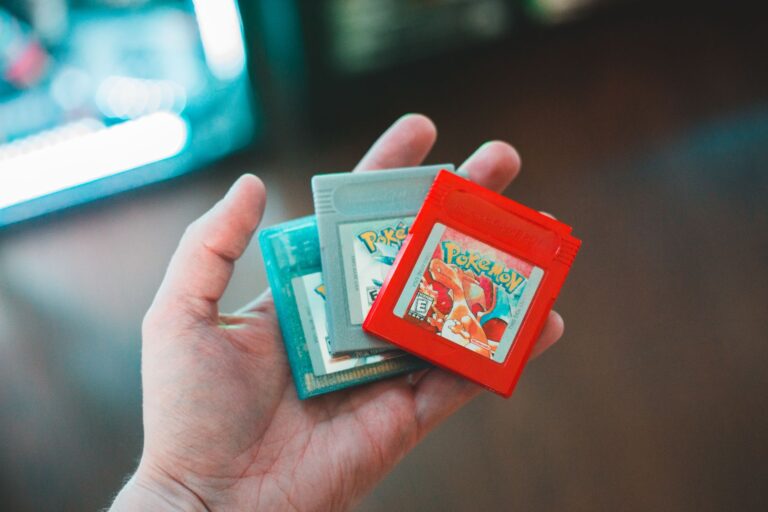
A high-grade Base Set Charizard could theoretically reach the $12.6 million price point that makes the 1952 Topps Mickey Mantle card a generational benchmark—but we’re currently still millions of dollars away from that ceiling. The highest verified sale on record is the Japanese No Rarity Base Set Charizard graded PSA 10 that sold for $1.7 million in March 2026, making it the first Charizard to breach the million-dollar threshold at public auction. That remarkable sale represents a significant milestone, yet it remains less than 15 percent of what the Mickey Mantle card commands, indicating there’s substantial distance left to travel before a Pokémon card can claim true parity with the most legendary vintage card in American sports collectibles.
The question of whether this distance can be closed depends on a combination of market growth, collector demographics, and the fundamental scarcity that underpins the Charizard’s current position. The Pokemon card market has expanded dramatically over the past five years, driven by both nostalgic millennial collectors returning to the hobby and institutional investment firms beginning to recognize rare cards as alternative assets. If these trends continue and intensify, a Charizard could eventually command prices that approach or exceed the Mickey Mantle record. However, the card would need to appreciate at a pace that outpaces historical collectibles markets, while also maintaining its cultural relevance in a landscape where new competition for collector spending emerges constantly.
Table of Contents
- Why Is the Base Set Charizard Called Pokémon’s Equivalent of the Mickey Mantle Card?
- The Rarity Factor: Why PSA 10 Is the Only Grade That Matters for Million-Dollar Cards
- Japanese No Rarity Versus 1st Edition English: Which Variant Has the Higher Ceiling?
- The Investment Timeline: How Long Would It Take to Reach $12.6 Million?
- Market Corrections and the Danger of Chasing Peak Prices
- Institutional Investment and the Charizard’s Path to Legitimacy
- The Global Collector Base and International Market Expansion
- Conclusion
Why Is the Base Set Charizard Called Pokémon’s Equivalent of the Mickey Mantle Card?
The comparison between a high-grade base Set Charizard and the 1952 Topps Mickey Mantle card is far more than marketing language—it reflects a genuine structural parallel in how these cards function within their respective markets. Both emerged during the foundational years of their collectibles categories: the Mickey Mantle card launched the modern sports trading card market in 1952, while the Charizard anchored Pokémon’s Base Set debut in 1996. Both cards achieved iconic status not simply because they were rare or valuable, but because they defined the entire category for new generations of collectors and established the benchmark against which every other card would be measured. The rarity data underscores this positioning. Of the 5,325 Charizard Base Set cards graded by PSA overall, only 124 have achieved a PSA 10 grade—the highest possible rating indicating a near-perfect card with virtually no defects.
This represents just 2.3 percent of all graded Charizards, making the PSA 10 version fundamentally scarcer than most investment-grade assets. The Mickey Mantle card occupies a similar position in its universe: there are only a handful of copies graded at the highest levels, and high-grade examples have become increasingly difficult to locate as decades pass and attrition takes its toll on surviving copies. This natural scarcity, combined with the card’s historical importance, is what transformed it from a modest fifty-cent sports card into a seven-figure collectible. Industry experts and major auction houses have formally embraced this comparison in their catalog descriptions and market analysis. Beckett News, the authoritative source for trading card grading and market data, explicitly refers to the 1st Edition and Japanese No Rarity Base Set Charizards as the “Pokémon equivalent of the 1952 Topps Mickey Mantle card,” cementing the comparison as part of the official collectibles discourse. This designation carries weight beyond metaphor—it signals to both serious collectors and investment firms that the Charizard occupies a unique position in card collecting comparable to Mantle’s role in sports card history.

The Rarity Factor: Why PSA 10 Is the Only Grade That Matters for Million-Dollar Cards
When discussions center on a Charizard potentially reaching $12.6 million, the conversation is exclusively about PSA 10 cards, not all Charizards. This distinction is critical to understanding the market, because condition gradation is the primary driver of value in the highest echelons of collectible card pricing. A PSA 9 Charizard—one grade below a perfect ten—might sell for ten to twenty percent of what a PSA 10 commands, representing a gap of hundreds of thousands of dollars. Drop to PSA 8, and the price compresses dramatically further. The market for ultra-rare cards operates under a principle where “good enough” does not exist: there is only the highest grade, and everything else is substantially less valuable. The English 1st Edition Base Set Charizard that sold for $550,000 at Heritage Auctions in December 2025 was, critically, a PSA 10. The Italian 1st Edition variant that sold for $449,377 was also graded PSA 10. The Shadowless variant that reached $954,800 was likewise a PSA 10.
This consistency is not coincidental—the market for these ultra-rare cards is so stratified that only the highest grades can access seven-figure price tags. However, here lies a practical limitation: finding enough PSA 10 examples to satisfy growing collector demand is becoming increasingly difficult. As more collectors pursue these cards, the scarcity of high-grade examples becomes a ceiling on how many people can actually own one, which in turn constrains upward price movement in some scenarios. The grading standards themselves have also shifted over time, which creates a hidden risk for collectors. PSA’s standards for what constitutes a “10” have become more stringent in recent years compared to earlier grading practices. This means that some cards graded as a 10 from an earlier era might not achieve that same grade under modern evaluation standards. For collectors considering five, six, or seven-figure purchases, this creates uncertainty: there is no guarantee that the card they own will retain its grade indefinitely, and a regrade—though rare—could theoretically lower the card’s certification. Major auction houses and professional grading services are aware of this concern, but it remains a lurking variable in the ultra-high-price segment of the market.
Japanese No Rarity Versus 1st Edition English: Which Variant Has the Higher Ceiling?
The $1.7 million sale of the Japanese No Rarity Base Set Charizard in March 2026 established it as the most expensive Charizard variant ever sold, yet this achievement raises an important question about future pricing: does this variant have a structural advantage that could propel it even higher, or was this particular sale an outlier driven by exceptional bidding circumstances? The Japanese No Rarity version predates any printed edition designation on the card, making it among the rarest variants produced. Its pedigree as a “first Charizard ever printed” carries narrative weight with international collectors and Japanese vintage card specialists, who view it as the purest expression of the card’s original design intent. By contrast, the 1st Edition English Charizard has an arguably stronger position in the North American market, where the majority of collector spending originates. The $550,000 sale of the English PSA 10 in December 2025 represents a significant valuation, but the gap between $550,000 and $1.7 million suggests the Japanese version commands a substantial premium. This premium appears driven by Japan-based bidders with particular enthusiasm for Japanese-printed cards and collectors who view the Japanese versions as having greater scarcity and historical significance.
However, here is a key limitation: the English market is larger and more liquid than the Japanese market for Pokémon cards. Future appreciation in English variants might ultimately outpace Japanese variants simply due to the sheer size of the collector base and the volume of capital available in the Western market, even if individual Japanese cards achieve higher peak prices at auction. Shadowless variants—cards printed before the word “Shadowless” became an official designation—occupy a middle ground between Japanese No Rarity and 1st Edition variants in terms of both rarity and current market valuation. The $954,800 sale of a Shadowless Charizard places it above all English 1st Edition sales to date but below the Japanese No Rarity record. This card variant has gained increasing recognition among serious collectors as a distinct category with its own collecting logic and scarcity profile, and some market analysts believe that as awareness spreads among international buyers, Shadowless variants could see accelerated appreciation in coming years.
The Investment Timeline: How Long Would It Take to Reach $12.6 Million?
Projecting when a Charizard might reach $12.6 million requires examining historical price growth rates in high-end collectibles markets, and the data reveals a sobering reality: linear extrapolation from recent sales suggests a multi-decade timeline, not an imminent breakthrough. The Japanese No Rarity Charizard that sold for $1.7 million in March 2026 represents explosive growth compared to earlier major sales—prior to 2023, six-figure Charizards were rare, and million-dollar sales seemed impossible. Yet the trajectory from $1.7 million to $12.6 million is not simply another step on the same curve; it’s exponentially more demanding. To reach $12.6 million within ten years would require approximately 23 percent annual appreciation, which would be historically exceptional for any collectible asset outside of speculative bubbles. For context, the 1952 Topps Mickey Mantle card achieved its $12.6 million valuation through roughly seventy years of compounding appreciation, with particularly explosive growth in the last fifteen years as the sports collectibles market became institutionalized and investment firms began acquiring cards as alternative assets. A Charizard attempting to compress similar appreciation into a shorter timeframe would require either a catalyst—such as a major auction house creating a dedicated Pokémon collectibles fund, or a celebrity or prominent institution making a high-profile acquisition—or sustained macroeconomic conditions that favor collectibles spending over other forms of wealth storage.
The limitation here is clear: there are no guarantees that the Pokémon card market will maintain its recent growth trajectory indefinitely, and market corrections have historically followed speculative peaks in collectibles categories. The demographic advantage the Charizard possesses is real: the millennial generation that grew up with Pokémon represents one of the largest wealth-accumulating cohorts in modern history, and that cohort is now entering peak earning years. This structural tailwind is more favorable than anything the Mickey Mantle card could claim, because the Mantle card’s collector base was always smaller and more specialized. However, the Pokémon market is also younger and more vulnerable to trend disruption. If the cultural relevance of Pokémon card collecting wanes, or if a new collectible category captures investment interest, the appreciation curve could flatten dramatically. For collectors considering acquisition of a seven-figure Charizard as a generational investment, understanding this timeline and these risks is essential before committing substantial capital.
Market Corrections and the Danger of Chasing Peak Prices
The most dangerous moment to purchase an ultra-high-value collectible is often immediately following a record-breaking sale, and the Pokémon card market has already demonstrated patterns consistent with this risk. In 2021, the market experienced explosive growth driven by pandemic-era retail therapy, celebrity endorsements, and social media virality. Multiple cards set records, prices climbed rapidly, and new collectors entered the market with enthusiasm and capital. However, in 2022 and early 2023, the market contracted sharply. High-profile cards that had sold for eye-watering prices found no buyers at those price points, and numerous collectors who purchased during the peak discovered that their cards had declined significantly in value. Some losses exceeded 50 percent, and a few rare examples saw even steeper declines. The March 2026 $1.7 million sale of the Japanese No Rarity Charizard will inevitably attract attention from new investors and collectors seeking to replicate that acquisition or make a similar investment.
However, this is precisely the moment when market risk becomes elevated. If multiple high-grade Charizards come to market in the next twelve to twenty-four months, the aggregate supply could increase faster than collector demand, potentially creating a correction. Additionally, the buyer psychology surrounding that particular sale may have been unique: the purchaser may have been a Japanese collector with deep knowledge of the variant’s significance, or a wealthy investor placing a one-time bet on the card market. That specific constellation of buyer characteristics and intentions may not repeat, and the next $1.5+ million sale may not occur for several years, if at all. Professional auction houses and market analysts acknowledge this risk openly. Heritage Auctions, which conducted the $550,000 English Charizard sale, has published guidance recommending that serious collectors focus on personal interest and long-term appreciation potential rather than attempting to time the market or chase recent price records. The lesson from collectibles markets across categories—from comic books to fine art to vintage watches—is consistent: timing the absolute peak of any market is impossible, and the buyers who achieve the best long-term returns are those who purchase quality assets during periods of relative calm and undervaluation, not during periods of peak media attention and record-breaking sales.

Institutional Investment and the Charizard’s Path to Legitimacy
The entry of institutional investors into the Pokémon card market has been gradual but meaningful, and this development could be crucial to whether a Charizard eventually reaches $12.6 million. Hedge funds and collectibles-focused investment firms have begun acquiring cards as alternative assets that demonstrate uncorrelated returns compared to traditional stock and bond markets. This institutional interest began modestly in 2020 and 2021, but has accelerated as the asset class has matured. For cards like the high-grade Charizard, institutional interest matters enormously because these firms manage billions of dollars and are capable of deploying capital at scales that exceed what even wealthy individual collectors can commit. The precedent set by institutional investment in other collectibles markets is instructive. In the sports card market, institutional funds helped propel the 1952 Topps Mickey Mantle card to its $12.6 million valuation by creating demand for finite supplies of the highest-grade examples and legitimizing card collecting as a viable alternative investment category.
If a similar institutional embrace of Pokémon cards occurs—with major funds publicly acquiring high-grade cards and including them in diversified collectibles portfolios—the structural underpinnings for a seven-figure Charizard become far more robust. Such a shift would signal to the broader financial world that Pokémon cards are not speculative toys but genuine collectible assets worthy of serious capital allocation. However, institutional interest also introduces volatility. Institutional buyers respond to financial trends and macroeconomic conditions, meaning that a shift in interest rates, equity market performance, or alternative asset valuations could cool institutional enthusiasm for cards as quickly as it emerged. Additionally, the involvement of institutional capital can inflate prices beyond intrinsic value, creating bubbles that eventually burst. Collectors evaluating whether to purchase a million-dollar Charizard should be mindful that some portion of any such price likely reflects institutional speculation rather than sustainable, fundamental value. The risk is real: a correction driven by institutional flight from collectibles would be catastrophic for recent purchasers at peak prices.
The Global Collector Base and International Market Expansion
The $1.7 million sale of the Japanese No Rarity Charizard was achieved largely through international bidding, with Japanese collectors and dealers competing alongside North American and European buyers. This globalization of the Charizard market is relatively recent, spanning only the last five to seven years, and there remains substantial untapped collector demand in international markets that have historically been underrepresented in Pokémon card collecting. China, South Korea, and Southeast Asia represent hundreds of millions of potential collectors with growing wealth and increasing interest in collectibles, yet penetration of high-end Pokémon card collecting in these regions remains nascent. As these markets mature and wealth concentrates in these regions, the global demand for ultra-rare Charizards could increase dramatically.
Language, grading standardization, and authentication infrastructure have historically been barriers to international expansion of the Charizard market. Collectors outside Japan are more familiar with PSA grading than Japanese alternatives, and auction infrastructure has historically been US-centric. Over the past few years, these barriers have eroded: major auction houses have expanded international bidding capabilities, grading services are becoming globally recognized, and the narrative around Charizards as blue-chip collectibles has spread beyond English-language media. If these trends continue, a Charizard could eventually be pursued by collectors across multiple continents with different wealth profiles and collecting motivations, expanding the pool of potential buyers for the world’s finest examples to scale far beyond current levels.
Conclusion
A high-grade Base Set Charizard reaching the $12.6 million benchmark of the 1952 Topps Mickey Mantle card is theoretically possible but far from certain. The current record of $1.7 million, set by the Japanese No Rarity variant in March 2026, demonstrates that the Charizard has achieved a new tier of market legitimacy and commands prices that seemed impossible just a few years ago. The path from $1.7 million to $12.6 million would require sustained appreciation over decades, continued expansion of the collector base across international markets, institutional investment support, and maintenance of cultural relevance for Pokémon cards within the broader collectibles landscape. None of these conditions are guaranteed, and all are subject to disruption.
For collectors and investors considering acquisition of a Charizard at the current price levels, the most prudent approach remains one of long-term conviction combined with caution about market timing and valuation peaks. The $1.7 million Japanese No Rarity sale and the $550,000 English 1st Edition sale of 2025-2026 have established new reference points, but these record sales should be viewed as data points in a longer trajectory, not guarantees of future appreciation or evidence that immediate purchase is necessary. A Charizard acquired today with the expectation that it will appreciate toward $12.6 million should be viewed as a multi-decade holding, comparable in timeframe to the seventy years required for the Mickey Mantle card to reach its current valuation. Patience, deep conviction in the card’s significance, and the financial capacity to hold through potential corrections are the prerequisites for success in this rarefied segment of the market.