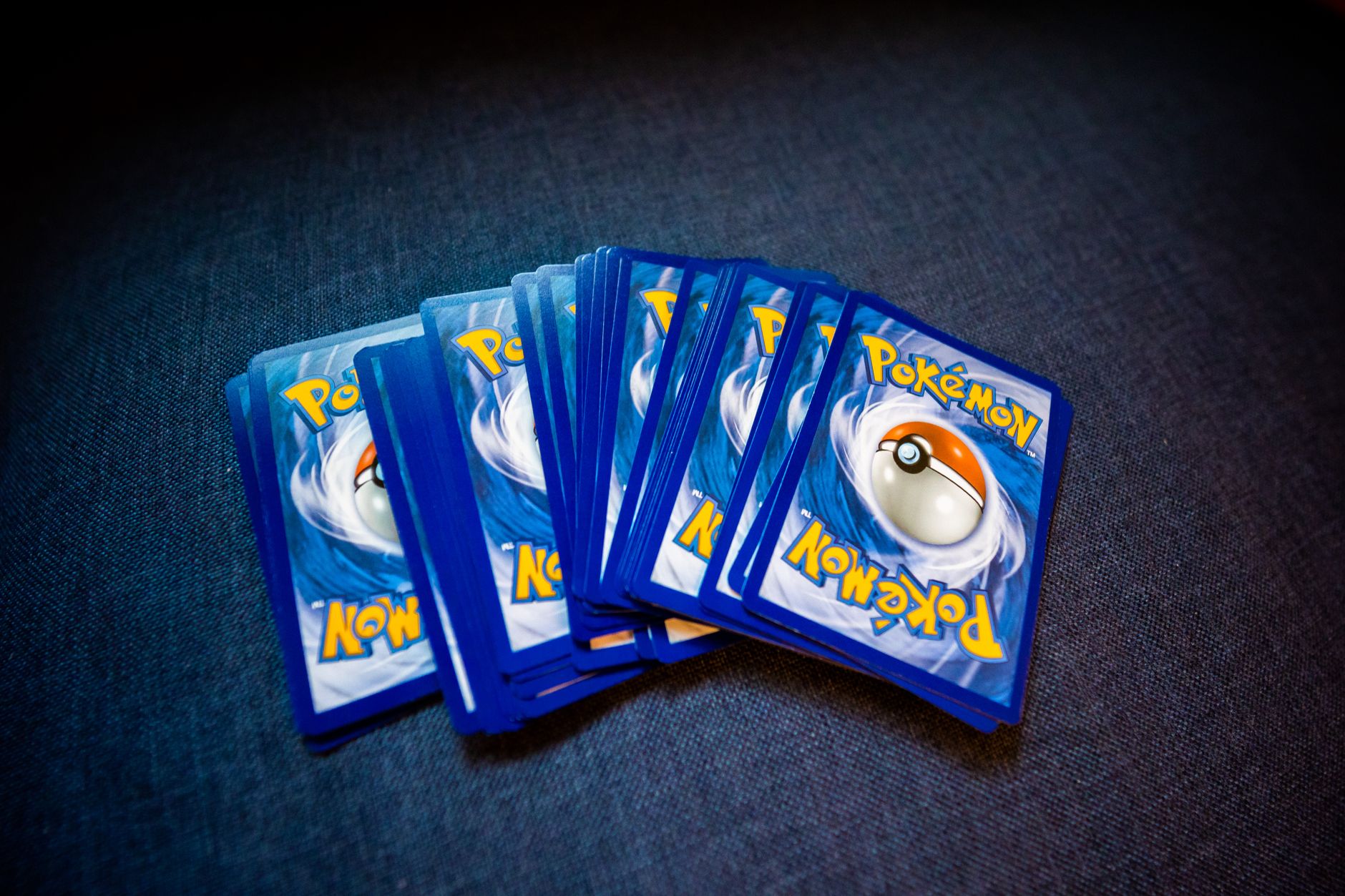
The safest way to store a Pokemon Trading Card Game collection is to double-protect each card and keep it cool, dry, dark and stable. Put each card in a soft penny sleeve, a loose clear sleeve, then in a rigid toploader or magnetic one-touch holder. The method works for binder sets, boxed singles and sealed cardboard product. Stability matters more than a perfect setting, so a steady interior closet beats a hot attic or damp basement.
Table of Contents
- How should you protect valuable singles?
- What binder holds sets safely?
- Where should boxes and binders live?
- How do you stop light damage?
- When does grading help, and how do you ship?
How should you protect valuable singles?
Slide the card into the penny sleeve first, then into the hard shell. Ultra PRO International describes its CardPreserver holders as 100% acid-free and PVC-free polypropylene for long-term storage in archival holder details.
Choose only sleeves and holders labeled acid-free and PVC-free polypropylene, because PVC and acids can migrate into card stock. Use the same order every time: Replace split, cloudy or tight sleeves at once. A snug fit causes edge wear, while a loose dirty sleeve lets dust rub the holofoil, the shiny foil layer.
- Center the card in the penny sleeve with the top fully covered.
- Push the sleeved card straight into the toploader, open edge last.
- Check that the hard edge never touches the card face during insertion.
What binder holds sets safely?
Keep organized sets in side-loading pocket binders. Portal TCG recommends side-loading pockets because side openings stop cards sliding out under gravity in its binder storage guide. The pocket holds each card still and limits handling.
Avoid cheap ring binders and top-loading pages for long-term sets. Portal TCG links rings to edge dents, loose pages to friction, and PVC pages to chemical damage. Store binders upright, packed snugly so pages do not lean, curl or press.
Where should boxes and binders live?
Keep the collection in a cool, dry interior room with good air circulation. The Northeast Document Conservation Center advises around 70°F with relative humidity under 55%, and says stability extends paper life more than an exact setpoint. That stability rule affects all paper cards and sealed cardboard product.
Choose a steady closet or interior shelf, away from attics, basements, leaks, radiators and vents. The Library of Congress advises cooler room-temperature storage near 35% relative humidity, with supportive enclosures stored flat. Home closets rarely reach archival coolness, so avoid swings in heat and moisture first.
How do you stop light damage?
Give cards minimal light and never direct or intense sunlight. The Library of Congress advises dark storage for paper collectibles because light fades inks, yellows stock and degrades holofoil in its paper care guidance.
Damage is cumulative and cannot be reversed. Display only copies and keep valuable originals dark. If you show a card, use UV-filtering glazing or a UV-filtering case, limit time on show, and return it to its box or binder afterward.
When does grading help, and how do you ship?
Reserve professional grading encapsulation for the most valuable cards. GuardTCG notes the sealed tamper-evident slab gives the strongest physical protection, but standard slabs do not fully block UV, so slabs still need cool, dry, dark storage.
Use a different holder for mail-in grading. PSA instructs submitters to place each card in a penny sleeve and then in a semi-rigid Card Saver, not a toploader or magnetic holder, in its semi-rigid Card Saver guidance. Rigid holders can jam PSA intake and delay processing, so move the card to a Card Saver before shipping.
You Might Also Like
- What Pokemon TCG Cards Are Worth Grading Before Year End?
- Should You Index Funds or Pokemon TCG Cards for Long-Term Gains?
- How Does Card Grading Affect Pokemon TCG Resale Value?