Yes, you can make money with Pokemon card liquidity in 2026—but the question is whether you have the right cards and strategy to do it profitably. The Pokemon card market is booming, with the ecosystem generating $2.7 billion in annual transactions as of March 2026. One high-profile example illustrates the scale: a Pikachu Illustrator card sold for $16.49 million at Goldin Auctions in February 2026, demonstrating that rare, graded cards can command extraordinary prices. However, not every collector who buys Pokemon cards will profit, and liquidity varies dramatically depending on what you own and where you sell.
The broader market signals are encouraging for investors. Since 2020, Pokemon card prices have risen 1,350% overall, and the market is projected to grow from $52.1 billion in 2026 to $90.2 billion by 2034—a steady compound annual growth rate of 7.1%. In January 2026 alone, average Pokemon card values climbed 46% year-over-year. However, this growth masks significant volatility: vintage sealed products are surging 15-25% while modern singles are correcting 20-30%. Understanding where you fit in this market matters as much as timing your entry.
Table of Contents
- Is Pokemon Card Liquidity Strong Enough to Sell Quickly in 2026?
- How Grading Transforms Liquidity and Price Multipliers
- Vintage Versus Modern: Where the Real Money Is in 2026
- Where and How to Maximize Liquidity: Platform Selection Matters
- The Hidden Risks That Prevent Most Collectors From Profiting
- The 30th Anniversary Phenomenon and Expected Appreciation
- Market Growth Trajectory and Long-Term Liquidity Outlook
- Conclusion
- Frequently Asked Questions
Is Pokemon Card Liquidity Strong Enough to Sell Quickly in 2026?
Liquidity—your ability to convert cards into cash—depends heavily on what you own and where you’re selling. eBay dominates the market with roughly 58% of all pokemon card transaction volume in 2026, making it the most liquid marketplace for high-value cards above $100, vintage holos, and PSA 10 grades. If you hold cards that meet these criteria, you can sell within days. Lower-grade modern cards and bulk commons take longer to move and often require discounting to find buyers.
Whatnot, the live auction platform, has exploded in 2026 as an alternative sales channel. The interactive format appeals to collectors who enjoy watching pack openings and sealed product auctions, and prices on Whatnot often exceed static marketplace listings by 10-30%. This creates an opportunity: the same card might sell for more through a live auction than through a fixed-price eBay listing. However, Whatnot requires you to be present and engaged with your audience, which isn’t passive selling. The trade-off is between convenience and maximizing price.

How Grading Transforms Liquidity and Price Multipliers
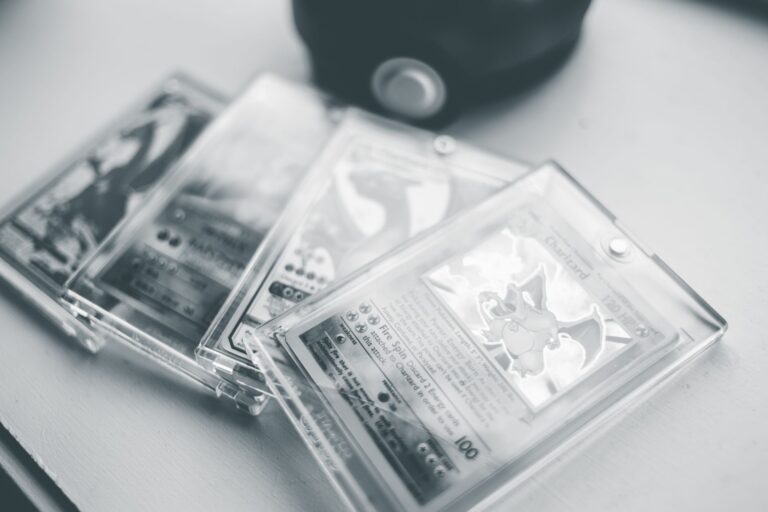
Grading is the single largest factor affecting how quickly you can sell cards and for how much. Graded cards—certified and encased by companies like PSA, BGS, or SGC—sell for 5 to 10 times more than ungraded versions of the same card. A graded PSA 9 Charizard Base Set will move faster and command a premium that ungraded copies simply won’t match. This multiplier effect is why serious investors prioritize grading, but it comes with real costs and risks. The grading process takes time and money.
Professional grading services charge between $10 and $150 per card depending on turnaround speed and market conditions. If you submit fifty cards for grading and only 40% receive grades of PSA 8 or higher, you’ll have wasted resources on low-value cards. Additionally, there’s no guarantee that a card will achieve the grade you expect when you submit it. A card you rate as a 9 might come back as a 7 due to centering issues, surface wear, or corner imperfections—significantly reducing its value and liquidity. This grading risk is a major limitation that separates profitable collectors from those who lose money.
Vintage Versus Modern: Where the Real Money Is in 2026
The divergence between vintage and modern Pokemon cards has never been sharper. Vintage sealed products—booster boxes and packs from early sets like Base Set, Jungle, and Fossil—are rising 15-25% annually, while modern singles and unopened modern product are correcting downward 20-30%. The market is clearly signaling that scarcity and nostalgia drive premium valuations. An unopened first-edition Base Set booster box now routinely sells for $200,000 to $500,000, while a 2024-2025 booster box costs $100-150 and is declining in value.
Japanese exclusives represent another strong category. Cards from Japanese sets like Scarlet & Violet or older Japanese exclusives often sell for 30-50% premiums over English equivalents because collectors prize Japanese printing quality and the rarity of Japanese cards in Western markets. If you’re building a liquidity strategy, high-grade vintage cards and Japanese exclusives offer the most reliable path to profit. The downside is that entry prices are steep—you’ll need thousands of dollars to acquire truly investable vintage cards. This creates a wealth barrier: casual collectors with $500 budgets cannot participate in the highest-return segments of the market.

Where and How to Maximize Liquidity: Platform Selection Matters
Your choice of sales platform directly affects liquidity and net proceeds. eBay remains the default option because of its market dominance and the volume of buyers searching for Pokemon cards daily. A PSA 10 vintage card listed on eBay typically sells within one to two weeks and reaches the widest audience. However, eBay charges 12.9% in fees (selling fees, payment processing, and optional promoted listings), which cuts into your profit margin. A card sold for $1,000 on eBay yields approximately $870 after fees.
Whatnot offers higher gross prices but requires active participation. Selling a graded Charizard through a live auction might net you $1,500, but you’ll spend an hour engaging with viewers and managing the sale. For high-value cards ($500+), the extra effort and premium pricing often justify Whatnot. For bulk sales or lower-value cards, eBay’s passive listing model saves time even at higher fees. Specialist retailers and local Facebook groups offer alternative channels but with much smaller buyer pools and slower movement. The comparison is straightforward: trade time and engagement for higher prices on Whatnot, or accept lower prices for faster sales and passive income on eBay.
The Hidden Risks That Prevent Most Collectors From Profiting
Making money with Pokemon cards isn’t guaranteed, effortless, or hype-proof. The market is cyclical: new set releases, franchise anniversaries, and media coverage drive spikes that don’t always sustain. A card that trends on social media one month might be forgotten the next, tanking secondary market value. Many collectors buy during hype cycles—like the 2020-2021 boom or around the 30th anniversary—only to watch their cards decline 40-60% within months. Emotional decision-making, FOMO, and overconfidence are the primary reasons most collectors lose money rather than profit.
Supply cycles are brutal. When The Pokemon Company announces a reprinting of a popular vintage set or releases new product flooding the market, card values can crash 20-30% overnight. Collectors who don’t understand these cycles and assume past appreciation guarantees future returns will be caught holding depreciating assets. Additionally, grading risk cannot be overstated: submitting fifty cards to PSA hoping for high grades is speculative, not investment. If your submitted cards come back with lower grades than expected, you’ll lose 30-50% of anticipated value immediately. The successful long-term strategy requires discipline: prioritize high-grade vintage cards and Japanese exclusives, avoid emotional purchases, understand supply announcements, and maintain capital reserves for grading costs and unexpected downturns.
The 30th Anniversary Phenomenon and Expected Appreciation
Pokemon’s 30th anniversary celebration on February 27, 2026 created significant price momentum leading into and following the milestone. Market analysis projected 30-50% price increases for vintage cards in the months around the anniversary. This phenomenon illustrates how external franchise events drive card valuations independent of intrinsic utility.
Collectors who accumulated vintage cards in late 2025 and early 2026 have seen substantial appreciation just from holding through the anniversary window. Looking forward, similar franchise milestones will likely create buying pressure and temporary spikes. The projected 15-25% compound annual growth rate for graded cards through 2035 incorporates these cyclical patterns. Smart collectors recognize that anniversaries and major franchise announcements are moments to assess their positions: consider selling appreciated inventory before the hype dissipates, or buying before the next major announcement if you believe in long-term fundamentals.
Market Growth Trajectory and Long-Term Liquidity Outlook
The Pokemon card market is on a firm expansion trajectory. Growth from $52.1 billion in 2026 to $90.2 billion by 2034 represents a 7.1% compound annual growth rate—slower than boom-period growth but sustainable and real. The Card Ladder Pokemon Index increased 116% over the past year, suggesting continued upward momentum. This backdrop supports the thesis that vintage, high-grade, and rare cards will remain liquid and appreciating assets through the late 2020s.
However, liquidity in a growing market differs from liquidity in a speculative bubble. As the market matures, buyer sophistication increases and prices converge toward fundamental value (rarity, condition, demand). This is good news for informed investors with quality inventory but bad news for speculators holding common cards or low-grade copies. The market will continue to bifurcate: elite vintage and graded cards will remain highly liquid with strong appreciation, while everything else will struggle for liquidity and value.
Conclusion
You can make money with Pokemon card liquidity in 2026, but success depends on three factors: owning the right cards (vintage and Japanese exclusives with high grades), understanding where to sell them (eBay for reach, Whatnot for premium prices), and managing risk through capital discipline. The market fundamentals are strong—$2.7 billion in annual ecosystem volume, 1,350% price growth since 2020, and projected expansion to $90.2 billion by 2034.
However, profitability is not guaranteed for casual buyers chasing hype. Your next step is honest self-assessment: Do you have the capital to acquire genuinely investable cards (vintage, high-grade)? Can you afford grading costs and absorb the risk of lower-than-expected grades? Are you disciplined enough to sell during peaks and sit through correction cycles without panic? If you answered yes to these questions and you’re willing to research supply cycles and market announcements, Pokemon card investing can generate meaningful returns. If you’re buying recent modern cards or chasing social media trends, you’re likely to lose money regardless of market growth.
Frequently Asked Questions
How much should I spend on Pokemon cards to make meaningful money?
Meaningful profit typically requires $5,000-$25,000 minimum to build a portfolio of high-grade vintage cards or Japanese exclusives that move regularly. Smaller budgets ($500-$1,000) can work in niche categories or through patient long-term holding, but liquidity will be limited.
Is it better to buy graded cards or raw cards and grade them myself?
Buying already-graded cards from reputable sellers is lower-risk because you know the grade before purchase. Buying raw cards and submitting for grading is speculative and requires extensive knowledge of card quality. Most collectors should start by buying graded cards and only transition to raw submission once experienced.
Should I sell on eBay or Whatnot?
Use eBay for convenience and bulk sales. Use Whatnot for high-value cards ($500+) where the premium pricing justifies your active participation. Many serious sellers use both platforms strategically.
What cards are most liquid right now?
PSA 8-10 graded cards from Base Set through Neo Genesis, Japanese exclusives, and sealed vintage product move fastest. Modern cards below PSA 8 are illiquid.
Can I make money flipping modern booster boxes?
Unlikely. Modern booster boxes are correcting 20-30% downward in 2026. Unless you buy at significant discounts and sell during temporary hype spikes, expect losses or minimal returns.
When should I sell my Pokemon cards?
Sell into major franchise announcements, anniversaries, or media coverage spikes when FOMO drives buyers. Avoid selling during correction cycles or when supply is flooding the market. Hold vintage, high-grade cards long-term unless you see significant overvaluation relative to historical trends.