Buyers are paying more attention to Pokemon card fraud in 2026 because the problem has become impossible to ignore. Over the past year, the market has been hit with a perfect storm: a 125% year-over-year increase in counterfeit cards, armed robberies totaling over $500,000, and at least 477 documented scam cases with losses exceeding $958,000 since October 2025 alone. The hobby is hemorrhaging money at an estimated rate of $5 to $10 million annually to counterfeits, and the criminals responsible are becoming increasingly brazen and organized.
The scale of the problem extends far beyond online scams. In January 2026, masked robbers with guns hit a Pokemon card store in Queens, and just days later, another armed robbery at a Manhattan shop netted thieves over $100,000 in cards. These violent crimes signal that Pokemon cards have become valuable enough to attract serious criminal attention, transforming what was once a niche hobby into a target-rich environment for fraud and theft. Collectors can no longer assume they’re dealing with legitimate sellers or authentic inventory.
Table of Contents
- The Explosion of Counterfeit Supply in the Collector Market
- Which Cards Are Being Targeted Most
- The Criminal Organizations Behind the Fraud
- How to Identify High-Risk Purchases Before You Buy
- Inspection Limitations Even for Experienced Collectors
- The Impact on Market Prices and Collector Confidence
- What to Expect as the Market Matures
- Conclusion
The Explosion of Counterfeit Supply in the Collector Market
Counterfeit pokemon cards have surged 45% compared to 2024, according to PSA estimates, and the trend shows no signs of slowing. The counterfeiting operations have become sophisticated enough to fool casual buyers and even some experienced collectors. What makes this year different is not just the volume of fakes—it’s their distribution across channels that most buyers trust. Eight out of every ten confirmed counterfeits traced by researchers came from just four sources: cheap booster boxes on AliExpress and Wish, raw single cards sold on Facebook Marketplace (particularly from sellers with under 50 friends), unauthenticated eBay listings under $50 from sellers with fewer than 100 feedback marks, and Discord bundle deals.
The platforms themselves show varying levels of contamination. On eBay UK, between 3 and 5% of high-value listings are flagged as counterfeit, while eBay US experiences a significantly worse problem at 8 to 12% of listings. Even on TCGplayer, which many collectors consider safer, slabbed cards show a 2 to 4% counterfeit rate, but raw cards climb to 10 to 15%. This means that a buyer shopping for an ungraded card on TCGplayer has roughly a one-in-seven chance of receiving a fake if they’re unlucky. The variance across platforms tells an important story: there is no completely safe place to buy.

Which Cards Are Being Targeted Most
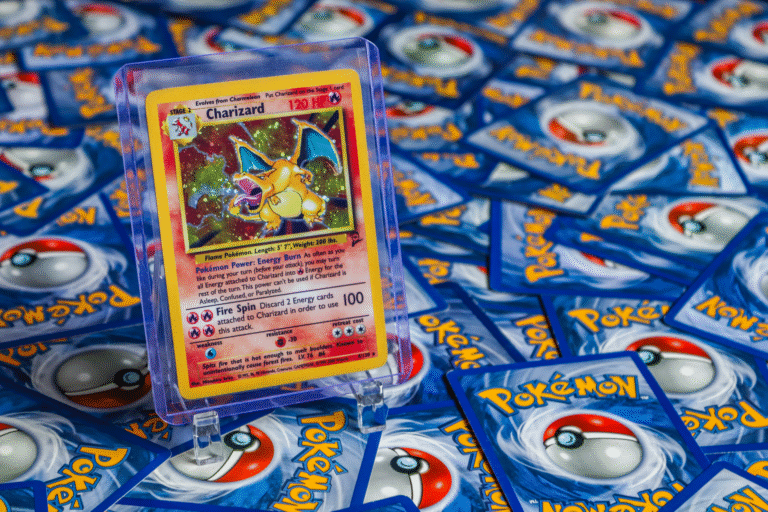
Six of the ten most counterfeited Pokemon characters are predictably the most iconic and expensive: Charizard, Pikachu, Gengar, Rayquaza, Umbreon, and Mewtwo. Counterfeiters target these cards because they command the highest resale prices and because collectors are most desperate to acquire them. The counterfeiting operations have synchronized their production with market surges—when Ascended Heroes packs generated hype between October and December 2025, counterfeit attempts on modern Mega SARs and IRs spiked 20 to 30%. Similarly, when Perfect Order restocks sold out in early 2026 and resale prices climbed 17 to 42%, the fakes started flooding the secondary market almost immediately.
This pattern reveals a critical limitation in how the hobby polices itself. Counterfeiters operate with nearly real-time market intelligence; they know which sets are hot and which cards are trending before most collectors finish unpacking their booster boxes. The speed at which they can produce and distribute fake inventory means that waiting for official supply or buying from established retailers no longer guarantees authenticity. Even recent releases with massive print runs are vulnerable to counterfeiting.
The Criminal Organizations Behind the Fraud
The Pokemon card fraud market is no longer driven by isolated scammers making quick cash—it is increasingly the work of organized criminal networks. A notable example is Anthony Curcio, convicted of conspiracy to commit wire fraud for selling sports and pokemon cards with fake PSA grades on a nationwide scale. His operation demonstrates how fraud extends beyond simple counterfeiting of the physical cards themselves. Criminals are also flooding the market with legitimately manufactured cards that have been slabbed with forged authentication grades, creating cards that appear legitimate to standard inspection but lack genuine certification.
These convictions, while significant, represent only the visible tip of a much larger operation. Federal law enforcement has charged and prosecuted individuals connected to the armed robberies and fraud rings, but the organizations supplying the counterfeits remain largely insulated. Manufacturing operations are often located overseas, particularly in regions with weak intellectual property enforcement, making prosecution difficult. Buyers purchasing from unfamiliar sellers online have little way of knowing whether they are dealing with a casual reseller or unwittingly participating in a supply chain controlled by international criminal enterprises.

How to Identify High-Risk Purchases Before You Buy
Protecting yourself starts with understanding the specific characteristics of high-risk marketplaces. Booster boxes listed at significantly below-market prices on AliExpress or Wish are almost certainly counterfeit—the economics simply do not work for legitimate sellers. On Facebook Marketplace, sellers with fewer than 50 friends should be treated with extreme caution, as this limits their ability to develop reputation or receive buyer feedback over time. eBay singles under $50 from accounts with fewer than 100 feedback marks represent a concentration of risk; while not all are fake, the probability increases substantially. Discord bundle deals, which offer multiple cards at steep discounts, prey on buyers who prioritize speed and convenience over verification.
The tradeoff in all of these warnings is convenience versus safety. A buyer can save money by shopping on emerging platforms or from unknown sellers, but they must accept a much higher probability of receiving counterfeits. Established platforms like TCGplayer and eBay, despite their contamination rates, maintain buyer protection policies and verification systems that unauthorized marketplaces do not. The cost of these protections is paid through slightly higher prices and narrower selection. Serious collectors increasingly accept that the cheapest deal is rarely the best deal.
Inspection Limitations Even for Experienced Collectors
Many collectors believe they can inspect cards in hand and spot fakes immediately, but this assumption is dangerously optimistic. Modern counterfeit operations produce cards that pass casual inspection by copying the print quality, cardstock weight, and even the holographic patterns of authentic cards with remarkable accuracy. The most dangerous fakes are not the obvious garbage counterfeits—they are the sophisticated reproductions that fall into a gray zone where only laboratory analysis or experienced third-party graders can definitively determine authenticity.
A critical limitation of visual inspection is that it works well for cards with obvious defects, such as incorrect text, poor color registration, or flimsy cardstock, but fails for high-quality counterfeits produced from modern tooling. Even experienced hobbyists have reported purchasing cards from trusted sources only to discover years later that they were fake. This is why third-party grading and authentication services like PSA have become so essential—they provide an objective verification layer that individual buyers cannot replicate. However, as shown by the Curcio case, grading services themselves have been targets of fraud, with forged slabs and faked authentication numbers flooding the market.

The Impact on Market Prices and Collector Confidence
The presence of so many counterfeits is creating a downward pressure on prices for authentic high-value cards. Buyers are becoming increasingly hesitant to purchase ungraded vintage or modern expensive cards from unknown sources, which reduces liquidity and drives prices lower. This creates a perverse incentive structure: collectors who own authentic versions of the most commonly counterfeited cards, particularly Charizard holos and first-edition versions, face difficulty proving authenticity to potential buyers.
Graded versions of the same cards, meanwhile, command premiums that can reach 30 to 50% above raw prices, reflecting the added confidence that professional authentication provides. For a high-value Charizard Base Set first edition, the difference between a graded PSA 8 and an ungraded copy in identical condition can be tens of thousands of dollars. This bifurcation of the market is fragmenting the hobby into two tiers: those who can afford professional authentication and those who cannot.
What to Expect as the Market Matures
The Pokemon card market is at an inflection point. As counterfeiting becomes more sophisticated and criminal organizations more entrenched, the hobby will likely see continued consolidation around authenticated, graded inventory and legitimate retail channels. The secondary market for raw cards, particularly expensive vintage cards, may become riskier and less liquid as trust erodes.
Collectors who want to hold valuable cards will increasingly need to absorb the cost of professional grading and authentication—not as a luxury, but as a necessity. Looking ahead, expect tighter controls from major platforms like eBay and TCGplayer, as well as more involvement from law enforcement agencies investigating organized counterfeit operations. Some collectors may exit the market entirely, unable to navigate the new risk landscape. Others will double down on relationships with established dealers and grading services, treating Pokemon cards less as a casual hobby and more as a financial asset that requires professional stewardship.
Conclusion
Buyers are paying more attention to Pokemon card fraud in 2026 because the stakes have never been higher. The hobby is losing $5 to $10 million annually to counterfeits, armed robbery crews are targeting stores and collections, and the quality of fake cards is improving faster than most buyers can learn to detect them. The data is clear: more than one in ten cards on some platforms are counterfeits, and the most valuable cards are being targeted with surgical precision. Protecting yourself requires accepting that the low-cost, frictionless shopping experience is no longer compatible with authentic purchasing.
Serious collectors must verify sellers, pay premiums for authentication and grading, and develop relationships with legitimate dealers. The Pokemon card market is evolving from a casual hobby into a market where trust must be earned, verified, and often purchased through third-party services. For those willing to adapt, the market remains rewarding. For those who do not, the risk of substantial financial loss is very real.