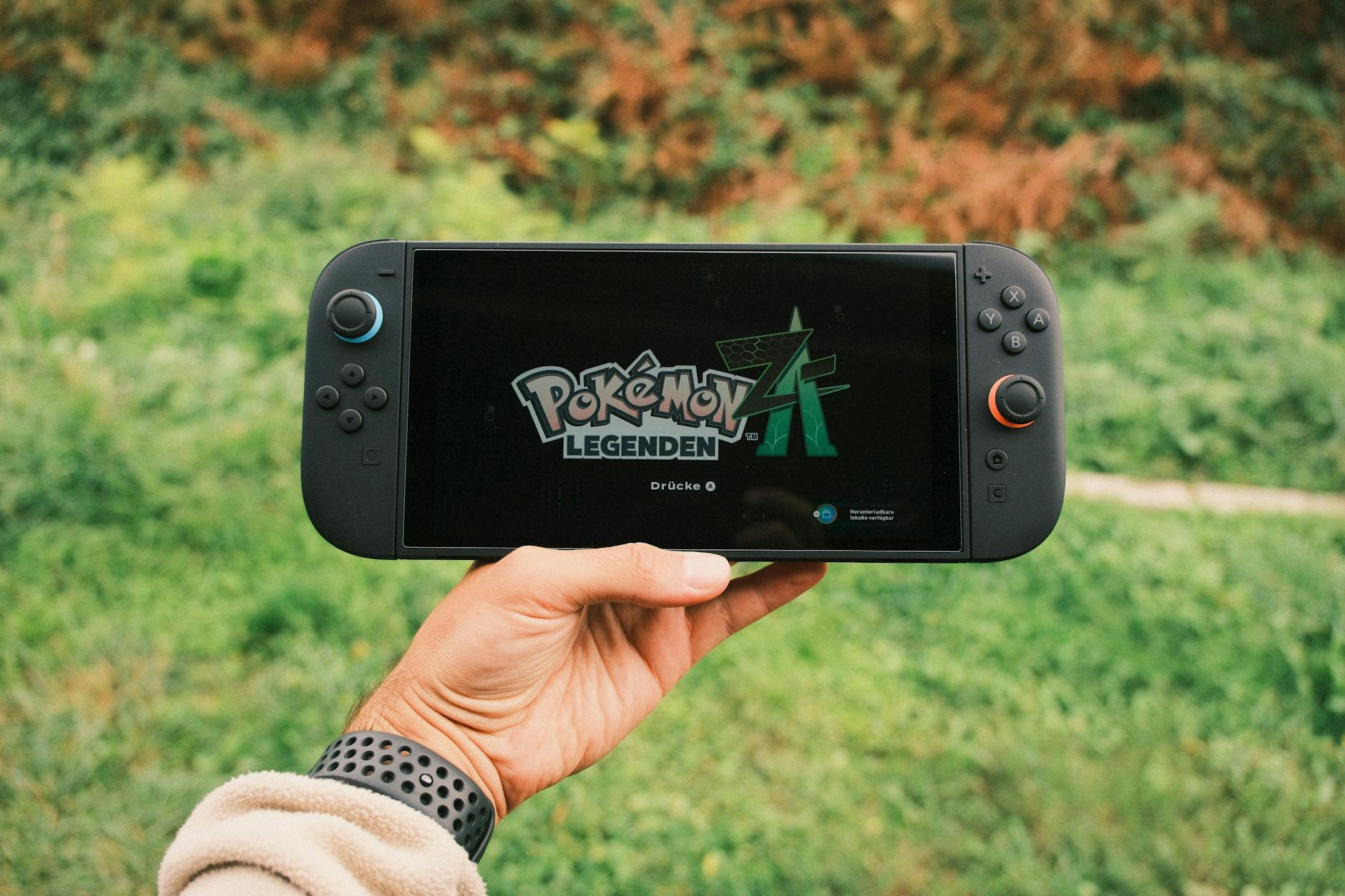
Casual players stepping into Pokémon ranked battles need to understand that the competitive landscape has shifted dramatically heading into 2026. The world of ranked battling now spans multiple games with different rulesets, seasonal schedules, and battle formats. If you’re picking up a Pokémon game and thinking about dipping your toes into ranked play without committing to a hardcore grind, knowing what each season offers and which game suits your playstyle is essential before you build your first competitive team.
The core thing casual players should know: Pokémon Scarlet and Violet are entering their final ranked season (Season 41, which began April 1, 2026), while Pokémon Legends: Z-A represents the future of ranked battling with a completely different 4-player battle format. These aren’t just cosmetic differences. The rulesets are different, the battle structures are different, and your team-building strategy changes entirely depending on which game you choose. A team that dominates in Scarlet and Violet might be completely unviable in Legends: Z-A, and vice versa.
Table of Contents
- Why Pokémon Ranked Seasons Matter More Than You Think
- Rulesets Create Completely Different Competitive Environments
- Understanding Battle Formats—Not Every Season Is 1v1
- Casual Battles and Private Battle Rooms—Your No-Risk Practice Spaces
- Rank Progression Has Built-In Safety Features in Legends: Z-A
- The Rise of Pokémon Champions as an Alternative
- Planning Your Competitive Path Forward
- Conclusion
Why Pokémon Ranked Seasons Matter More Than You Think
ranked seasons in pokémon games aren’t just marketing gimmicks or cosmetic resets. Each season introduces specific rulesets that fundamentally change what teams are viable and what strategies win. In Scarlet and Violet’s Season 41, the Regulation Set I allows you to use any Pokémon in the Lumiose and Hyperspace Pokédex, but you’re limited to one Restricted Pokémon per team. This means you can’t build a team with both Koraidon and Ogerpon, even though both are powerful choices. You have to choose one and fill your remaining slots with regular Pokémon that work well alongside it.
Understanding these restrictions matters because casual players often waste time breeding and training teams only to discover their carefully assembled roster violates the current ruleset. For example, if you spent weeks raising a legendary dinosaur and a legendary sky serpent because you liked them both, Season 41 stops you from using them together. By knowing the seasonal ruleset before you start grinding, you avoid the disappointment and wasted resources. The fact that Scarlet and Violet are now on their final season also means this ruleset won’t change anymore. No more surprises, no more rule shifts—what works now is what will work until the server support ends.

Rulesets Create Completely Different Competitive Environments
The difference between Scarlet and Violet’s ruleset and Legends: Z-A’s ruleset is so stark that it’s almost like playing different games. Scarlet and Violet allow Restricted Pokémon (the game’s most powerful legendary creatures) in ranked play, but limit you to one per team. Legends: Z-A does the opposite—it bans Restricted Legendaries entirely while allowing Mythical Pokémon. This single difference reshapes the entire meta and shifts which Pokémon become valuable. In practical terms, if you’ve been grinding to train a Koraidon or Ogerpon in Scarlet and Violet, that legendary becomes completely unusable in Legends: Z-A ranked battles.
Your carefully optimized training becomes dead weight. Conversely, Pokémon that seemed mediocre in Scarlet and Violet might become meta staples in Legends: Z-A because they fill roles that legendaries used to handle. This is a significant limitation for casual players who don’t want to maintain multiple separate trained rosters. The Scarlet and Violet Season 41 ruleset also means no future changes are coming—Nintendo has confirmed this is the final season. If you’re building a team now, you’re not building for rotation; you’re building permanence. That’s actually liberating for casuals because it removes the pressure to predict meta shifts, but it also means Scarlet and Violet’s competitive scene is essentially frozen where it stands.
Understanding Battle Formats—Not Every Season Is 1v1
One of the biggest surprises for casual players moving to Legends: Z-A is that its ranked battles aren’t traditional 1v1 matchups. Instead, Pokémon Legends: Z-A uses a four-player simultaneous battle format where all four players are fighting at the same time. Your ranking isn’t determined by simply winning or losing—it’s determined by your placement among the four competitors. This changes strategy fundamentally. In a four-player battle, you’re not just thinking about beating one opponent; you’re thinking about outplacing three others. Your team needs to handle multiple threat types simultaneously.
A team built for 1v1 dominated success might collapse when facing three opponents at once, even if individually those opponents would lose to you. For example, a perfectly optimized Scarlet and Violet team with defensive walls and strategic switches might be completely vulnerable to the chaotic spread damage and positioning strategies that four-player battles reward. The four-player format also means that casual players can’t hide weaknesses the way they can in 1v1 play. If your team has a notable weakness to Fire-type moves, that might not matter if your 1v1 matchup is against a Water-type trainer. In a four-player battle, one of your opponents will almost certainly exploit that weakness while the other two apply their own pressure. This is a genuine limitation to be aware of if you’re planning to transition from Scarlet and Violet to Legends: Z-A.

Casual Battles and Private Battle Rooms—Your No-Risk Practice Spaces
Here’s the element that actually makes ranked seasons less intimidating for casual players: you don’t have to jump straight into ranked. Both Scarlet and Violet and Legends: Z-A offer Casual Battle modes where you can battle opponents using the same rulesets, but your results don’t affect your ranking at all. This is the ideal space to test team builds, learn the meta, and develop your skills without the pressure of losing rating points. Private Battle Rooms take this a step further—you can create a private room, share a Room ID with friends or community members, and practice against real people without any ranking implications.
Many casual players use private battles to scrim with friends, participate in community tournaments, or simply get comfortable with their team’s strategy before stepping into the ranked ladder. This format works for both Scarlet and Violet’s 1v1 battles and Legends: Z-A’s four-player battles, giving you the opportunity to practice the exact format you’ll face in ranked. The comparison is worth noting: casual and private battles are completely free of the anxiety that comes with ladder play. Experienced competitive players often suggest that casual players spend weeks or months practicing in casual battles before ranking up, and there’s genuine merit to that advice. You’ll learn more about your team’s actual viability before committing to the ranked grind.
Rank Progression Has Built-In Safety Features in Legends: Z-A
Pokémon Legends: Z-A introduced an important feature for casual players: once you reach a rank tier, you cannot drop below it. If you climb from Rank 8 to Rank 7, you will stay at least Rank 7 for the rest of the season, even if you lose every subsequent battle. Your rating points within that rank can drop, and you might fall toward the bottom of your tier, but you’re protected from falling back to Rank 8. This safety net is meaningful for casual players because it removes the fear of devastating losing streaks undoing your progress. You might have an awful week where you lose eight games in a row, but you’re not starting completely over. The worst-case scenario is that your rating drops to the floor of your current rank, and you’ll need wins to climb again.
You’re not back to square one. However, this feature comes with a warning: it can create a false sense of progress for casual players. You might feel like you’ve “reached” a rank when really you’ve just unlocked the ability to stay there. If your actual skill level doesn’t match your rank, you’ll plateau in the lower portion of your tier and lose most matchups. It’s progress, but it’s not the same as becoming genuinely good at that rank’s level of play. Understanding this distinction helps casual players set realistic expectations for how far they can climb.

The Rise of Pokémon Champions as an Alternative
In April 2026, The Pokémon Company launched Pokémon Champions, a brand-new dedicated competitive battling game with its own ranked system and seasonal structure. For casual players, this represents a completely fresh starting point—everyone is learning the game simultaneously, the meta is still developing, and there’s no established hierarchy of veterans dominating the ladder. Legends: Z-A Season 10 is now running simultaneously with Pokémon Champions, giving players a genuine choice between formats.
The strategic advantage for casual players is clear: joining Pokémon Champions as a new game offers less intimidation than jumping into Legends: Z-A, where some players have been grinding since the game’s launch. However, the tradeoff is that Pokémon Champions has its own separate ranked system, its own rulesets, and its own meta. You can’t leverage any of the knowledge or trained Pokémon from Scarlet, Violet, or Legends: Z-A. You’re starting completely fresh with a new game engine and new rules.
Planning Your Competitive Path Forward
Casual players facing these options in mid-2026 need to make a deliberate choice about where to invest their time. Scarlet and Violet represent a dead-end—it’s the final season, the meta is solved, and there’s no future seasonal content coming. Investing heavily in that game’s competitive scene is choosing history. Legends: Z-A is the official successor with ongoing seasonal support and a different battle format.
Pokémon Champions is the newcomer’s option with a fresh ladder but a separate ecosystem entirely. The forward-looking reality is that Pokémon competitive play is fragmenting across multiple games rather than consolidating into one. This means casual players can no longer assume that learning competitive battling in one game transfers easily to another. Your next step should be clarifying which game aligns with your actual interests, then committing to that specific ecosystem rather than trying to maintain teams across all three.
Conclusion
What casual players should know about Pokémon ranked battle seasons ultimately boils down to this: the landscape is more fragmented than ever, each game has its own rules and expectations, and understanding those differences before you start grinding saves enormous time and frustration. Pokémon Scarlet and Violet Season 41 is final and frozen in place. Pokémon Legends: Z-A introduced four-player battles with different banned Pokémon.
Pokémon Champions launched as a completely fresh competitive game. These aren’t minor variations—they’re fundamentally different competitive environments. Your next move should be spending time in Casual Battles or Private Battle Rooms to understand which format genuinely appeals to you, then building your team and training strategy around that choice. The ranked season information exists to help you avoid wasted effort, not to overwhelm you with options.
You Might Also Like
- Why Pokémon Battle League Updates Still Matter to Competitive Players
- What Ranked Battle Rewards Say About Pokémon’s Competitive Future
- What Parents Should Know Before Planning a Pokémon Worlds Trip