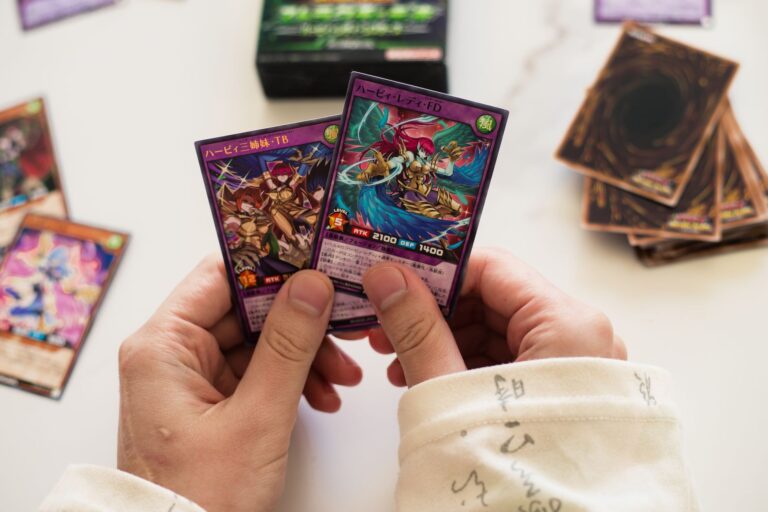
Mega Stones in the Pokemon Trading Card Game create a legitimate pathway to more competitive intensity in ranked battles by granting immediate stat boosts and additional effects that can shift the outcome of close matches. Unlike other power escalation mechanics that require setup turns or multiple card slots, Mega Stones offer instant gratification—a single card attachment that transforms your Pokemon’s combat capabilities within moments of being played. The competitive environment becomes more volatile when players can unexpectedly enhance a Pokemon mid-battle, forcing opponents to account for swing scenarios they might not have anticipated during deck construction. Consider a practical scenario: a player enters ranked play with a moderately-powered Pokemon that seemed sufficient during testing, but their opponent attaches a Mega Stone in turn three, suddenly inflating that Pokemon’s HP by 40 points and adding a secondary attack effect.
That 40-point difference becomes the deciding factor in a match that was otherwise evenly matched. This dynamic replayability—where the same matchup can have dramatically different outcomes based on Mega Stone timing—intensifies the psychological and strategic pressure of ranked competition. The question becomes whether this intensity translates to better competitive gameplay or simply rewards players with access to expensive, high-demand cards. The answer reveals itself across multiple dimensions of the game’s competitive ecosystem.
Table of Contents
- How Mega Stones Reshape the Competitive Meta
- The Power Ceiling Problem and Design Limitations
- Deck Building Pressure and Strategic Complexity
- Practical Implications for Tournament Players
- Balancing Issues and Format-Level Concerns
- Price and Availability Impact on Competitive Landscapes
- Future of Mega Mechanics in Ranked Play
- Conclusion
- Frequently Asked Questions
How Mega Stones Reshape the Competitive Meta
mega Stones force players to reconsider their entire approach to deck building because they occupy a limited resource: the hold-one-per-Pokemon-rule in most formats. This constraint creates meaningful decisions that ripple through format legality discussions and competitive metagame shifts. When a Mega Stone becomes legal in a format, entire archetype strategies can emerge or collapse based on which Pokemon receives the enhancement and whether that Pokemon’s base form was already viable. The competitive meta before and after Mega Stone introductions shows measurable shifts in win rates and popular deck archetypes.
A Pokemon that occupied a tier-two position in the meta might jump to tier-one status with the right Mega Stone, creating a ripple effect where counters need to be built specifically to handle the enhanced version. Players cannot ignore this shift without risking tournament losses to opponents leveraging the new power level. However, the opposite problem also emerges: if a Mega Stone enhancement is too powerful relative to its resource cost, the meta becomes centralized around that single card rather than diversified. The competitive environment loses intensity through monotony rather than gaining it through diversity. Formats like expanded have experienced this tension directly, where overpowered Mega Stone mechanics required ban discussions and rotation cycles to restore balance.

The Power Ceiling Problem and Design Limitations
Mega Stones present a fundamental design challenge: how much power increase justifies a permanent card slot in a 60-card deck? Too little, and competitive players ignore the card entirely, wasting a design space investment. Too much, and the card becomes mandatory in every deck that runs the base Pokemon, reducing player agency and creative deckbuilding. The Pokemon Company has walked this tightrope inconsistently across different eras of the game. A critical limitation emerges when examining Mega Stones in decks that run multiple Pokemon of the same species. A player constructing a deck with four copies of a particular Pokemon can only meaningfully use one Mega Stone in most competitive formats—the remaining copies sit in deck slots without access to the enhancement.
This design restriction prevents some archetype ideas from ever achieving competitive viability, which actually reduces competitive intensity by limiting the viable strategic space. The timing window for Mega Stone attachment also matters significantly. Stones that require bench positioning or specific evolution states create setup requirements that crafty opponents can disrupt through prize trade tactics. A player who removes the correct Pokemon before the Mega Stone attaches effectively wastes the opponent’s card investment, swinging momentum dramatically. This vulnerability means competitive players cannot simply assume their Mega Stone enhancement will resolve, adding psychological pressure but also highlighting the card’s potential fragility.
Deck Building Pressure and Strategic Complexity
Competitive players face an immediate constraint when Mega Stones enter the format: does my deck architecture prioritize the Mega Stone enhancement, or does it rely on alternative power sources? This binary decision forces specialization that either increases or decreases a deck’s flexibility. A deck built around Mega Stone enhancement might collapse if the player draws both the base Pokemon and the Stone in the same turn but doesn’t attach it (due to hand size or switching strategies), wasting both cards’ potential. The strategic complexity compounds when considering counterplay. Opponents cannot treat enhanced and non-enhanced versions of the same Pokemon identically—they must build in responses to the enhanced stat lines or effects.
A common response is to include Pokemon-EX counters or removal-based strategies specifically targeting enhanced Pokemon, which creates secondary deck-building pressure. Competitive players now need to allocate slots for both general consistency cards and format-specific counter cards, reducing overall deck resilience. Conversely, the requirement to respect Mega Stone power escalations might paradoxically reduce some forms of competitive intensity. If players become overly conservative, refusing to take calculated risks because the opponent might enhance a Pokemon and swing the math unfavorably, the game devolves into risk-averse gameplay where fewer memorable moments of high-intensity play actually occur. The theoretical intensity promised by Mega Stones doesn’t always translate to actual gameplay intensity if the meta shifts toward cautious, defensive strategies.

Practical Implications for Tournament Players
Tournament players preparing for ranked seasons must allocate significant time and resources to understanding which Mega Stones are format-legal and how they impact their specific archetype. The cost of competitive preparation increases when new Mega Stone mechanics enter the format, as players need access to testing partners running every possible enhanced variant. A player who practices against non-Mega Stone versions of opponent decks and then faces enhanced versions in the actual tournament has handicapped themselves through incomplete preparation. The financial barrier to competitive participation rises when Mega Stones represent expensive, high-demand cards in the secondary market.
Some Mega Stones command prices significantly higher than their regular counterparts, and a competitive deck might require multiple copies across different Pokemon. Players from lower-income backgrounds face genuine obstacles to accessing the full competitive experience when key Mega Stones cost $15-30 per card in the secondary market. However, the practical intensity increase for serious tournament players is undeniable. Matches resolved by Mega Stone attachments or non-attachments create memorable moments and genuine edge cases that reward preparation and anticipation. A player who builds sideboard strategies specifically to counter opponents’ Mega Stone reliance gains a tangible advantage, and this preparation-based intensity is a legitimate form of competitive escalation.
Balancing Issues and Format-Level Concerns
The Pokemon Company has struggled multiple times to balance Mega Stones correctly at the format level, sometimes resulting in cards that dominate ranked play for entire seasons before rotation or errata. Primal Kyogre-EX with its ability to attack on the turn it was played represented a balancing failure that warped the entire format for months—players either built around the card or built counters to it, with limited middle ground. This extreme polarization actually reduces the intensity of diverse matchups by concentrating meta shares unhealthily. Errata and rule changes targeting Mega Stone mechanics provide useful case studies in format management.
When the Pokemon Company restricted certain Mega Stone abilities or changed attachment rules, the format’s competitive health improved measurably—not because Mega Stones became weaker, but because their power was contextualized within a larger strategic environment. This suggests that raw Mega Stone power increases don’t automatically translate to better competitive intensity; the surrounding format context matters more. The rotation cycle introduces a secondary concern: when powerful Mega Stones rotate out of legal formats, decks built around those cards become instantly uncompetitive, which frustrates players who invested in card collections and competitive preparation. This creates a tension between keeping the format fresh through rotation and respecting players’ card investments. The intensity gained from new Mega Stone mechanics is offset by the intensity lost through sudden meta shifts that make previous competitive investments obsolete.

Price and Availability Impact on Competitive Landscapes
The secondary market pricing for competitive Mega Stones creates barriers to entry that fundamentally shape competitive intensity. Players seeking entry-level ranked participation might avoid formats where critical Mega Stones cost $20+ per card, instead choosing limited formats or casual play where access requirements are more reasonable. This reduces the overall competitive population, which paradoxically lowers competitive intensity by creating smaller, less diverse tournament fields.
Conversely, established competitive players with existing card collections and financial resources benefit from Mega Stone mechanics because they can afford the latest powerful cards. This creates a bifurcation in competitive intensity: well-resourced players experience high-intensity competition against similarly prepared opponents, while budget-constrained players experience lower intensity due to card access limitations. The game’s competitive health depends partly on maintaining accessibility across income levels.
Future of Mega Mechanics in Ranked Play
The Pokemon Company’s recent design philosophy has shifted away from pure Mega Stone mechanics toward alternative power escalation systems like Tera types and more nuanced ability effects. This represents a learned lesson: Mega Stones, while mechanically sound, created intensity through power scaling rather than through interesting decision-making.
Future ranked battle formats will likely continue limiting Mega Stone usage or phasing them out entirely in favor of mechanics that create competitive intensity through strategic choice rather than stat inflation. The legacy of Mega Stones in ranked play demonstrates that intensity doesn’t equate to power: some of the most memorable competitive moments occurred in formats where multiple viable strategies existed without overwhelming single-card power bombs. As the game continues evolving, the principles learned from Mega Stone balancing inform better design that creates intensity through diversity rather than dominance.
Conclusion
Mega Stones can make ranked battles more intense by introducing volatile swing mechanics and forcing players to account for power escalations during deckbuilding and in-game decision-making. This intensity is genuine but context-dependent: it emerges fully only when the surrounding format is balanced, when Mega Stones fill diverse roles rather than dominating the meta, and when player accessibility ensures that competition remains distributed across the skill spectrum rather than concentrated among well-resourced players.
The competitive future likely involves measured Mega Stone usage alongside other mechanics that create engagement through strategic nuance rather than raw power scaling. Ranked players preparing for upcoming seasons should expect Mega Stones to remain relevant tools in competitive toolkits, but not dominant forces that overshadow the broader metagame landscape.
Frequently Asked Questions
How much do competitive Mega Stones typically cost in the secondary market?
Prices vary significantly based on Power and format legality, ranging from $5-$30+ per card. Recently rotated Mega Stones become more affordable, while new format staples command premium prices due to demand from competitive players.
Can I use multiple Mega Stones on the same Pokemon in a single match?
No, most competitive formats restrict you to attaching one Mega Stone per Pokemon throughout the entire match. Once a Pokemon is Mega Evolved with a stone, you cannot replace it with a different Mega Stone on that same Pokemon.
Do Mega Stones work against Pokemon-EX and other special Pokemon types?
Yes, Mega Stones enhance any Pokemon they’re attached to, including Pokemon-EX, Pokemon-V, and other special types. However, if that Pokemon is knocked out, the Mega Stone goes to the discard pile along with the Pokemon.
What’s the best strategy for dealing with opponents’ Mega Stones in ranked play?
Build counter-Pokemon that damage or remove enhanced Pokemon before they attack, or include card draw and search effects that let you find answers quickly. Some decks also include Pokemon that ignore ability effects or attack costs, which can bypass Mega Stone enhancements.
Are Mega Stones expected to be phased out of competitive Pokemon TCG?
The Pokemon Company has gradually reduced Mega Stone prominence in favor of other mechanics like Tera types and ability-based power escalations. Mega Stones remain legal but are less central to format design than they were in previous years.
How do I know which Mega Stones are legal for my upcoming ranked season?
Check the official Pokemon TCG format regulations released before each season. Legality varies between Standard and Expanded formats, with Standard typically supporting only recently released cards while Expanded allows older Mega Stones.