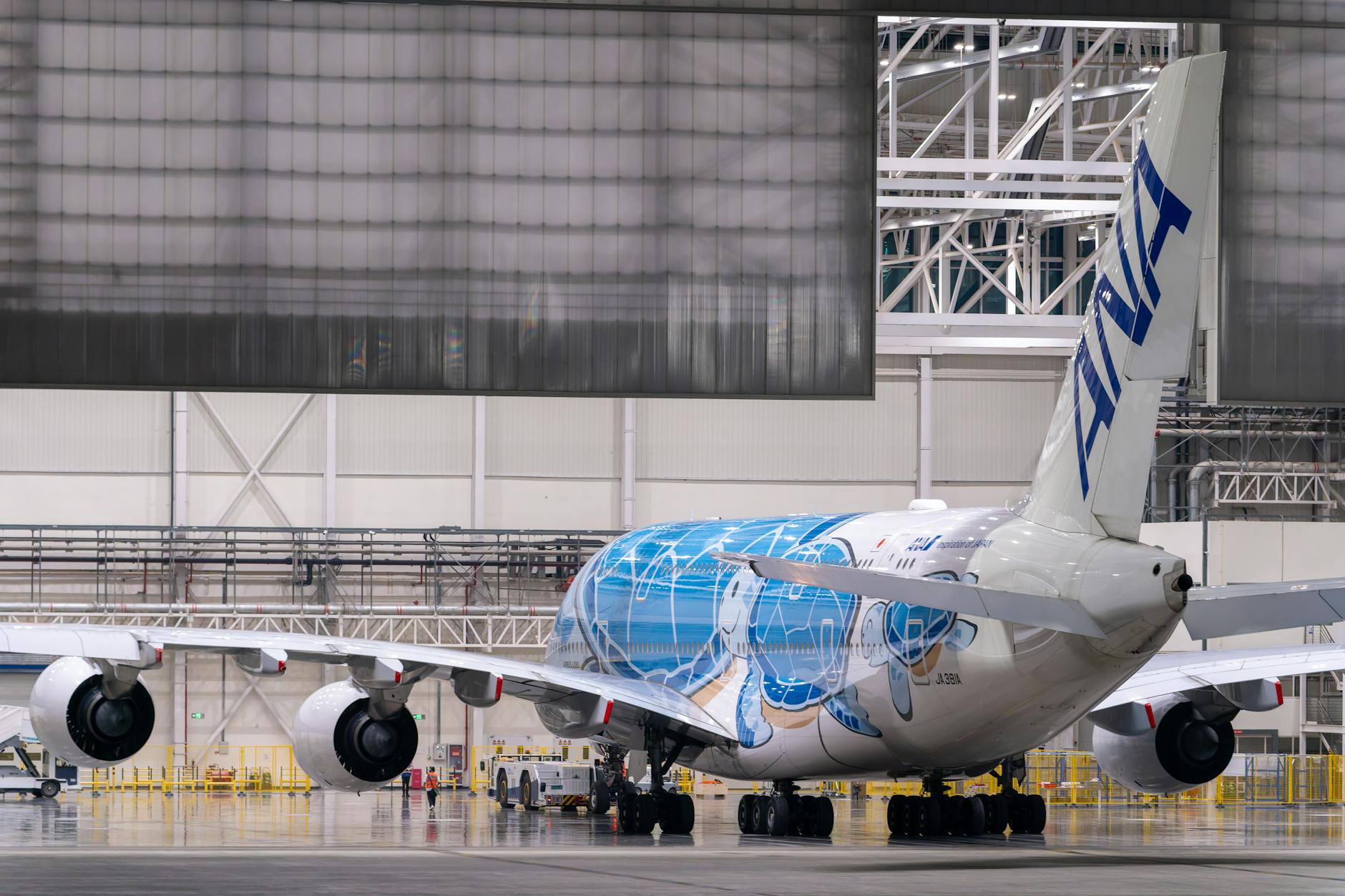
The new Pokémon Jets announced by All Nippon Airways on May 28, 2026, reveal a fundamental truth about character branding: the strongest brands don’t just appear on products—they transform entire spaces into extensions of their identity. The three-aircraft collaboration, with Pokémon Jet Red featuring all Fire-type starter Pokémon and Pokémon Jet Green showcasing Grass-type starters, demonstrates how strategic character selection can tell a cohesive visual story across vehicles, merchandise, and passenger experiences. When ANA chose to dedicate individual aircraft to specific Pokémon types rather than mixing characters arbitrarily, they revealed something critical about modern branding: audiences recognize and appreciate intentional curation over quantity. This approach stands in stark contrast to how many brands handle licensing partnerships.
Rather than simply slapping characters onto a surface, the Pokémon Jets use type-specific Pokémon to create thematic coherence. Passengers boarding Pokémon Jet Red at the end of July 2026 will encounter Charmander, Cyndaquil, Chicacha, Torchic, Tepig, Fennekin, Litten, and Fuecoco—a carefully selected roster that reinforces a single visual and conceptual identity. This isn’t accidental design. It’s character branding at scale, and it shows why Pokémon has maintained relevance across three decades.
Table of Contents
- How Type-Based Character Selection Creates Stronger Brand Identity
- The Strategic Role of In-Flight Merchandise in Character Extension
- Global Expansion Through Character Licensing Partnerships
- The Collector’s Perspective on Branded Pokémon Assets
- The Risk of Over-Saturation in Character Licensing
- How Anniversary Milestones Shape Character Branding Campaigns
- What Airlines as Branding Partners Reveal About Pokémon’s Global Reach
- Conclusion
How Type-Based Character Selection Creates Stronger Brand Identity
The decision to organize pokémon Jets around elemental types reveals why some branded partnerships feel cohesive while others feel scattered. Fire-type and Grass-type starters carry specific visual and emotional associations built over 30 years of games, trading cards, and media. A trainer using Fire-type Pokémon projects different energy than one using Grass-types—offense-oriented versus strategic balance. By assigning each aircraft a type identity, ana didn’t just decorate planes; they created opportunities for passengers to participate in a Pokémon-aligned narrative. The Boeing 787-8 designated as Pokémon Jet Red serves domestic Japanese routes, which matters for brand positioning. These are shorter flights where passengers are primarily Japanese audiences deeply familiar with Pokémon generational history.
The Fire-type lineup spans eight generations of starters, from first-generation Charmander to ninth-generation Fuecoco. Passengers on this aircraft experience a visual timeline of Fire-type evolution, reinforcing how long Pokémon has sustained character appeal. Pokémon Jet Green, operating internationally on the larger Boeing 787-9, tells a different strategic story. Grass-type starters appeal differently to global audiences—they’re often seen as the defensive, endurance-focused choice. International passengers, many encountering Pokémon casually rather than as committed fans, receive boarding stickers and headrest covers featuring a type that feels accessible and calming. This type-based segmentation shows that character branding works best when it accounts for audience expectations and route demographics. The limitation here is that not every Pokémon fan identifies with these specific types, meaning some passengers will find one aircraft more appealing than the other—unlike a Pikachu-centered approach that would appeal more uniformly.

The Strategic Role of In-Flight Merchandise in Character Extension
Limited-edition commemorative boarding stickers and cups distributed on the Pokémon jets represent a crucial branding mechanism often overlooked in casual licensing arrangements. These items serve dual purposes: they create tangible souvenirs that passengers take home, extending the branding experience beyond the flight itself, and they establish scarcity value in secondary markets. A boarding sticker from Pokémon Jet Red becomes a collectible asset, particularly for Pokémon trading card enthusiasts who understand how limited-edition items appreciate. The Pokémon-themed headrest covers available in Economy Class on domestic flights and Economy/Premium Economy on international routes create a different marketing value. These aren’t take-home items; they’re in-flight touchpoints. A passenger wraps their head against a Pokémon-branded cover for six hours, creating unconscious brand reinforcement. But here’s the limitation: headrest covers are functional items that wear out and get replaced.
Unlike the collectible stickers and cups, they don’t generate secondary market value or long-term collector appeal. Airlines are balancing immediate brand experience against durable collectibility, and not all passengers care about keeping merchandise. Some simply view these as disposable comfort amenities rather than branded assets worth preserving. The 30th anniversary commemorative cups deserve particular attention for collectors. Limited-edition cups with specific Pokémon designs distributed on flights during 2026 become temporal markers—you can identify when and possibly which aircraft distributed them. This creates depth for collectors who track not just which Pokémon appear, but in what context, on what aircraft type, and during which anniversary year. This is sophisticated branding because it rewards repeat engagement and curation-minded audiences, the exact demographic most likely to care about Pokémon trading cards and pricing.
Global Expansion Through Character Licensing Partnerships
The Pokémon Jets exist within a larger ecosystem of airline branding partnerships that reveals how Pokémon’s character properties command global appeal. China Airlines unveiled a second Pokémon aircraft in 2026, an Airbus A350 featuring 13 Pokémon characters including Pikachu, Skiploom, and Dragonite arranged in a pastel floral pattern. This design reveals a fundamental difference in branding philosophy—China Airlines took a kaleidoscopic approach, maximizing character variety and visual spectacle rather than type-based curation. Pikachu’s presence on that aircraft makes strategic sense (it’s the franchise mascot), but Skiploom and Dragonite create a less coherent visual narrative compared to ANA’s type-specific approach. Garuda Indonesia’s Pikachu Jet GA2, which entered service on January 20, 2025, operates an Airbus A330-343 with a batik design integration. This example shows how different carriers approach the same intellectual property differently based on regional preferences and brand positioning.
Pikachu Jet GA2 leverages Indonesia’s rich batik textile tradition, creating cultural fusion rather than pure character focus. These variations across airlines demonstrate that Pokémon’s character library is flexible enough to accommodate different strategic visions—from type coherence to character maximalism to cultural integration. The competition for Pokémon airline partnerships reveals something important about character branding value. When multiple carriers within a year or two choose to launch Pokémon-branded aircraft, it signals the franchise has reached a scale where partners see sufficient marketing ROI. However, this also creates fatigue risk. If every airline launches a Pokémon jet, the novelty diminishes and each individual aircraft becomes less distinctive. Collectors and enthusiasts who memorialize these moments must track which airlines, which aircraft, and which designs—making the original ANA partnership potentially more valuable long-term because it established the format.
The Collector’s Perspective on Branded Pokémon Assets
For Pokémon trading card collectors and enthusiasts tracking Pokémon-adjacent assets, these aircraft represent a unique category: brand touchstones that exist outside the traditional collecting framework. A Pokémon Jet Red boarding sticker from July 2026 onward cannot be obtained through card shops, online retailers, or the secondary market—it can only be acquired by actually flying on that aircraft. This creates artificial scarcity with documented provenance. Collectors who build comprehensive Pokémon anniversary collections increasingly pursue these out-of-game items: promotional cards, exclusive merchandise, and now, airline memorabilia. The practical value here involves portfolio thinking. A collector investing in Pokémon 30th anniversary assets might acquire specific high-grade cards from Scarlet/Violet sets, official Pokémon Company merchandise, and now, airline boarding stickers and cups from the ANA Jets. The stickers, assuming they were distributed in good condition and passengers preserved them, will appreciate in value because reproduction becomes impossible once flights cease operating under these liveries.
A boarding sticker from Pokémon Jet Red dated July 2026 becomes a temporal artifact—proof of participation in a specific, limited-time brand experience. However, the collector’s challenge involves accessibility. Unlike Pokémon cards sold at retail worldwide, these airline memorabilia items are geographically locked. Boarding stickers come only to passengers flying those specific routes, primarily within Japan or on ANA’s international network. A collector in Europe or South America cannot simply purchase these items; they require either travel to Japan, international flights on ANA, or purchasing secondhand from other collectors. This creates a two-tier market: original collectors (passengers) and secondary collectors (those buying from passengers). The secondary market price premium will depend entirely on how many passengers preserve items rather than discard them.
The Risk of Over-Saturation in Character Licensing
The proliferation of Pokémon airline partnerships across 2025-2026 hints at a branding risk that character-driven companies must constantly monitor: saturation and brand dilution. When Garuda Indonesia, China Airlines, and ANA all launch Pokémon aircraft within an 18-month window, the novelty effect diminishes. Each subsequent aircraft announcement generates less media coverage than the previous one. By the time the third aircraft appears, audiences treat it as routine rather than exceptional. This represents a genuine limitation of character licensing at scale. A warning worth emphasizing: character strength is not infinite. Pokémon can sustain partnership requests from dozens of companies simultaneously, but each partnership reduces the perceived exclusivity of every other partnership. If Cathay Pacific launches a Pokémon jet next year, and Thai Airways the year after, the original ANA partnership—which seemed momentous in May 2026—becomes just another instance of Pokémon character deployment.
Collectors tracking these assets need to recognize when saturation has diminished their significance. The boarding sticker from Pokémon Jet Red might appreciate if it remains unique for five years; it will plateau if competing airline memorabilia becomes common. Additionally, character licensing risks brand confusion when handled inconsistently. ANA’s type-based coherence creates a sophisticated narrative; China Airlines’ maximalist approach creates spectacle. These two philosophies, while both legitimate, send different messages about what Pokémon branding means. When audiences encounter too many interpretations of the same characters in too many contexts, the characters themselves lose distinctive meaning. The Pokémon Company faces the challenge of approving partnerships that maintain brand integrity while allowing partners creative freedom. Not all airlines will treat character branding with ANA’s intentionality.

How Anniversary Milestones Shape Character Branding Campaigns
The 30th anniversary context provides essential understanding of why these aircraft launched in May 2026. Major franchises use anniversary years as inflection points for brand expansion—opportunities to legitimate partnerships that might seem frivolous in non-anniversary years. A Pokémon Jet in a random year might appear random; a Pokémon Jet celebrating three decades of sustained cultural presence feels historically significant. This timing isn’t accidental. The Pokémon Company strategically approved the ANA collaboration as part of a broader 30th anniversary campaign that likely includes other media, merchandise, and partnerships announced throughout 2026.
For collectors, anniversary branding creates temporal organization. Assets distributed during a major anniversary year command different status than similar items from off-years. A boarding sticker labeled “Pokémon 30th Anniversary” or dated 2026 gains historical weight. It becomes an artifact documenting not just where you traveled, but when you participated in Pokémon culture’s 30-year milestone. The original Pokémon Red and Blue debuted in Japan in 1996; the 2026 anniversary jets mark exactly three decades of franchise presence. This mathematical significance—30 years, the round number—enhances the perceived value of anything created to commemorate it.
What Airlines as Branding Partners Reveal About Pokémon’s Global Reach
Airlines represent a particular category of branding partner worth understanding: they’re massive, highly visible, infrastructure-scale companies that typically partner with prestigious or universally recognized brands. When Japan’s largest carrier, major Asian carriers, and international networks all seek Pokémon partnerships, it reveals something profound about the franchise’s cultural penetration. Pokémon isn’t niche anymore; it’s infrastructure-adjacent, significant enough to brand transportation itself. Looking forward, the announced third aircraft—Pokémon Jet Blue—hints at expanding ambitions.
If ANA continues adding aircraft, or if other carriers accelerate their own programs, we’re witnessing the early stages of Pokémon becoming integrated into global aviation itself. Within a decade, seeing a Pokémon-branded aircraft might be as routine as seeing airline alliances. This normalization paradoxically strengthens the franchise’s cultural position while weakening each individual partnership’s distinctiveness. The original ANA jets from 2026 will carry historical significance precisely because they arrived when Pokémon airline partnerships still felt novel.
Conclusion
The Pokémon Jets reveal that character branding at scale requires intentional curation, type-specific coherence, and strategic timing around cultural milestones. ANA’s decision to assign elemental types to different aircraft, distribute limited-edition anniversary merchandise, and operate these aircraft on routes matched to different demographics demonstrates sophisticated thinking about how characters extend beyond media into physical space and experience. This approach contrasts sharply with character licensing that prioritizes quantity over meaning, and it explains why Pokémon has sustained relevance across three decades while many character franchises have faded.
For collectors and enthusiasts, these aircraft represent more than promotional vehicles—they’re temporal artifacts documenting how Pokémon culture integrates into global infrastructure during its 30th anniversary year. The boarding stickers, commemorative cups, and headrest covers become part of a comprehensive anniversary collecting picture. As multiple airlines launch Pokémon partnerships, the original ANA collaboration’s historical significance and intentional design will likely increase in perceived value, particularly among collectors who recognize that scarcity comes from both limited production and the natural attrition of items discarded by casual passengers. The real insight here is simple: character branding works best when brands respect the characters enough to deploy them thoughtfully rather than opportunistically.
You Might Also Like
- Why Japan’s Pokémon Jet Red and Jet Green Designs Are Getting Attention
- What the New ANA Pokémon Jets Say About the 30th Anniversary Push
- What Travelers Should Know About the New Pokémon Themed Flights