
Best offer sales are the Pokemon card market’s hidden price negotiators—they let sellers set unrealistic asking prices while transactions close at significantly lower amounts, creating a massive gap between advertised value and what collectors actually pay. When a card lists for $500 on eBay and sells for $320 through a negotiated best offer, the market doesn’t reflect the real price. This disconnect has become so pervasive that new collectors routinely overpay by 20-40% because they anchor to list prices instead of actual transaction data.
The asking price is marketing fiction; the sold price is reality. This opacity distorts the entire Pokemon card market, especially for modern cards and graded holographics where best offer negotiations are standard practice. Sellers benefit from the illusion of higher values, casual buyers get burned by overpaying, and the legitimate market becomes harder to navigate. Understanding how best offer sales hide the real market is essential for anyone serious about collecting, selling, or investing in Pokemon cards.
Table of Contents
- Why Asking Prices Don’t Reflect Real Market Value
- The Gap Between List Prices and Actual Sales
- How eBay Best Offers Mask True Selling Prices
- Using TCGPlayer Market Price as the Real Benchmark
- Modern vs. Vintage: Different Market Dynamics
- The PSA 10 Premium and Hidden Value
- Building a More Transparent Market
- Conclusion
Why Asking Prices Don’t Reflect Real Market Value
The fundamental problem is that list prices exist in isolation—they’re what sellers hope to receive, not what the market actually bears. A Charizard VSTAR listed at $450 might receive offers between $300-$380, with the seller accepting $340 to move inventory. The list price inflates the perceived market value, which newer collectors see and assume is legitimate. This happens because best offer sales are completely opaque; there’s no public record of the negotiation or final price, unlike traditional auctions where every bid and closing price is visible.
TCGPlayer’s market price averaging thousands of recent transactions across multiple sellers is far more reliable than any individual listing, yet many collectors default to checking eBay asking prices instead. The problem accelerates with modern cards, where 2023-2026 releases experience 20-30% value drops within 60 days of release after initial hype spikes. A Special Art Rare (SAR) card might launch at $80 with aggressive asking prices of $120, but the actual market price (via best offers and TCGPlayer) settles around $60 within two months. Collectors who bought at inflated asking prices discover they’ve already lost 25% in real market value—a loss that wouldn’t have been obvious if they’d checked actual sales data instead of list prices.
The Gap Between List Prices and Actual Sales
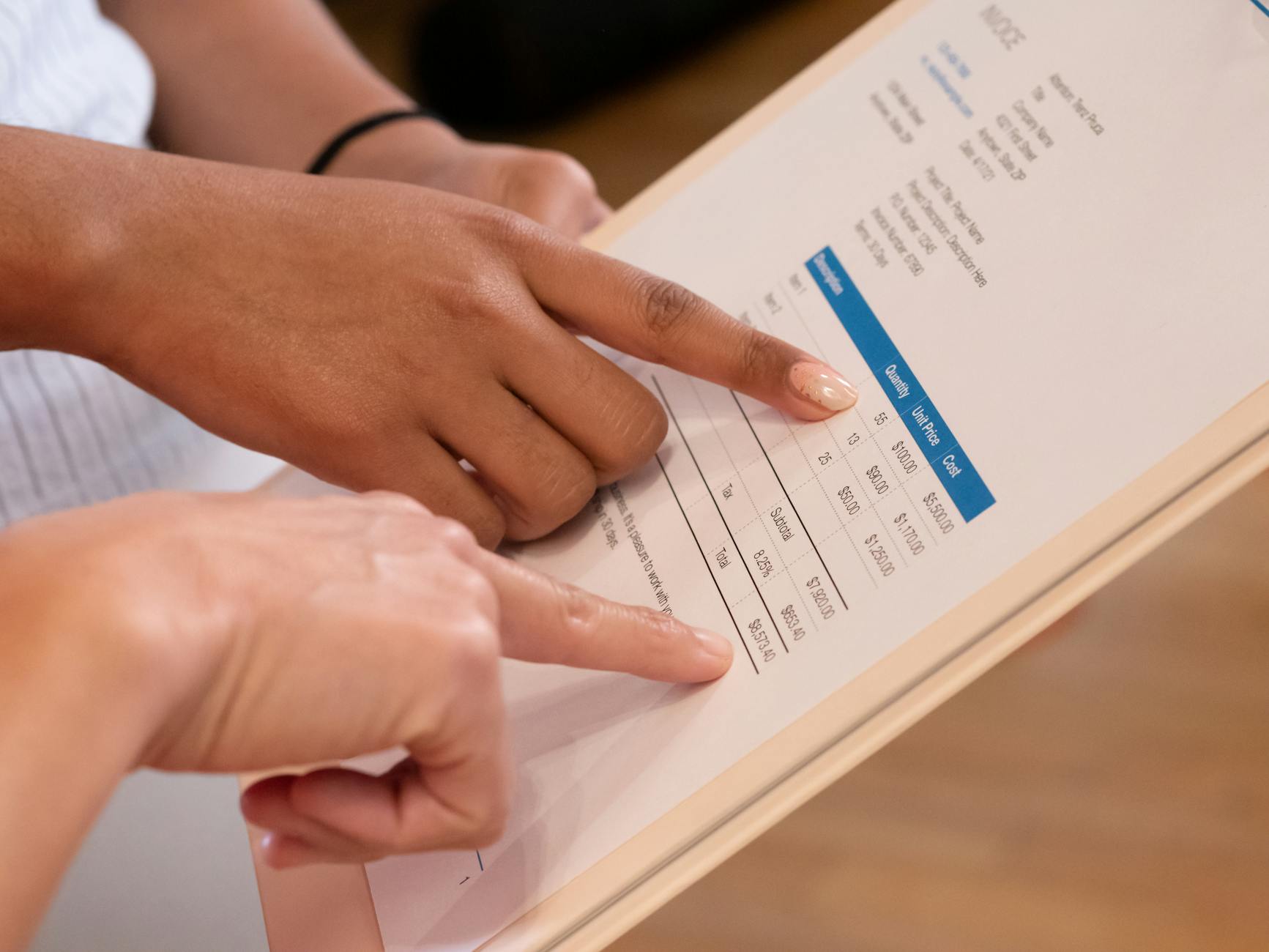
The difference between what eBay listings show and what “Sold” items reveal is staggering. A careful collector can filter eBay to show only completed sales in the last 90 days—these are the true market prices paid by real buyers. When you do this comparison on any popular card, you’ll typically see asking prices 15-35% higher than the actual sold prices. For high-end graded vintage cards, the gap can exceed 40%. This hidden markdown exists because sellers know the market value but initially list high hoping for uninformed buyers, then gradually lower prices or accept best offers at the actual equilibrium.
The warning here is significant: anchor bias works against collectors. If you see ten listings at $250 and two actual sales at $170, your brain registers the higher number as normal. By the time you realize the true market value is $170, you’ve either overcommitted to an offer or missed the card entirely. TCGPlayer’s market price algorithm neutralizes this problem by calculating a weighted average of recent sales, but it only works if you know to check it. Most casual buyers don’t; they see the most prominent eBay listings and make decisions based on asking prices that were never realistic.
How eBay Best Offers Mask True Selling Prices
ebay‘s “Make an Offer” feature was designed to facilitate negotiation, but it’s become the primary mechanism for hiding real prices. A seller lists a card at $300, rejects offers at $200 and $250, and accepts $270. That $270 is the real market value, but it’s invisible to other shoppers—only the original $300 listing appears prominently. Over time, this means the most visible prices are always the least realistic, while the prices that actually clear the market remain hidden. The buyer who paid $270 knows the truth, and the next ten browsers seeing $300 don’t.
This opacity disproportionately affects newer collectors and casual buyers who don’t have the experience to recognize inflated asking prices. It also creates perverse incentives for sellers to list aggressively high, knowing they’ll negotiate down. In a more transparent market, competitive pressure would force prices to reality much faster. The eBay “Sold” filter exists to fix this, but it requires active knowledge and effort to find—it’s not the default discovery experience. For valuable cards, spending five minutes checking 20-30 completed sales will reveal the actual market price; it’s a critical step most collectors skip.

Using TCGPlayer Market Price as the Real Benchmark
TCGPlayer’s “Market Price” is the gold standard for actual Pokemon card value in 2026. This metric averages transaction data across thousands of sellers and updates continuously, making it far more representative of reality than any individual eBay listing. For modern and ungraded cards especially, TCGPlayer market price is your anchor—not the highest ask, not the average asking price, but the actual transaction average. A card showing $45 market price on TCGPlayer but listed at $65 on eBay is giving you clear market intelligence: asking prices are inflated by roughly 45%.
The limitation of TCGPlayer data is that it primarily reflects non-graded modern cards and some vintage commons. For ultra-rare graded vintage cards (PSA 8-10 WOTC holographics), the trading volume is lower and pricing becomes more subjective. Still, understanding TCGPlayer’s market price for the baseline card value and then adjusting for grading, condition, and rarity is far more reliable than pure list price speculation. If you’re buying or selling, always cross-reference the TCGPlayer market price first—it’s the most unbiased data point available.
Modern vs. Vintage: Different Market Dynamics
Modern cards (2023-2026 releases) are the most vulnerable to best offer distortion because they’re issued in large quantities with rapid reprints, making asking price manipulation particularly ineffective at holding value. A Special Illustration Rare (SIR) card launches with hype, sellers list high, but 60 days later—after the market recognizes overproduction or waning competitive demand—the real price has dropped 20-30%. Asking prices adjust slowly; actual transaction prices (via best offers and TCGPlayer) drop immediately. Collectors who bought early at inflated ask prices get trapped holding inventory worth significantly less.
Vintage 1st Edition cards are projecting 30-50% appreciation through 2026, and this segment has a completely different dynamic. These cards are fixed in supply, grading populations are stable, and the collector base is more sophisticated. Best offer sales still occur, but the volume is lower and the community is more aware of actual market prices via PSA population reports and auction history. The distinction matters: modern card best offers are primarily price deception; vintage card best offers are more often genuine negotiations between informed collectors. If you’re considering modern cards as investments, understand that asking prices are inflated relative to vintage, and that gap will close quickly as new sets release and attention shifts elsewhere.

The PSA 10 Premium and Hidden Value
Cards graded PSA 10 command premiums of 500-1000%+ over PSA 9 equivalents—a difference that often hides in plain sight across best offer sales. A PSA 9 Charizard Base Set might trade at $8,000, while a PSA 10 of the same card lists for $50,000 and accepts a best offer of $35,000 after negotiation. Both numbers would appear on the seller’s history, but the PSA 10 buyer and any observer without access to population reports might not understand that the premium is legitimate and driven by extreme scarcity, not artificial markup. PSA population reports are your decoder ring here—they show exactly how many PSA 10 copies of any card exist, which directly explains the premium structure.
The warning: high-end graded cards are where best offer sales create the most opacity, because the prices are so large that each sale is semi-unique. A PSA 10 Blastoise Base Set with a sold best offer at $22,000 and a similar card listed at $28,000 aren’t necessarily contradictory—condition variations, eye appeal, and centering differences can account for $6,000 swings in value. But best offer negotiations can also mask real condition issues or allow overpriced cards to be delisted before selling. Always request high-resolution photos and grading details for any card over $5,000, regardless of asking price.
Building a More Transparent Market
The 30th Anniversary set release on February 27, 2026, triggered 18-30% year-over-year increases in vintage Base Set, Jungle, and Fossil cards—a price movement that happened uniformly across the market because vintage card pricing is slightly more transparent. Graded vintage cards have established auction histories and population reports that constrain seller discretion. Modern cards, by contrast, saw sharp 20-30% declines in the same period as new product flooded the market. The transparency difference is instructive: when collectors and sellers have access to objective market data (like PSA populations and TCGPlayer averaging), prices converge more quickly to reality.
Best offer sales become less useful as negotiation tools and more obviously what they are—attempts to hide real prices. Moving forward, the collector community benefits from tools like TCGPlayer market prices, eBay sold item filters, and population reports that make actual market value more visible. Sellers who rely on inflated asking prices and best offer obscurity are increasingly at odds with collectors who have access to real transaction data. The most successful and respected sellers in 2026 are trending toward transparent pricing, knowing that the Pokemon card market is maturing and information is becoming distributed. If you’re serious about collecting or investing, make the same shift: anchor to actual market data, not listing aspirations.
Conclusion
Best offer sales hide the real Pokemon card market by creating a gap between asking prices and actual transaction prices—a gap that costs casual buyers thousands of dollars in overpayment and undermines market transparency. The solution is consistent: check eBay completed sales, use TCGPlayer’s market price averages, and consult PSA population reports for graded cards. These data points are objective and freely available; using them takes five extra minutes but prevents the kind of overpayment that characterizes most retail Pokemon card mistakes.
The broader trend is toward transparency. Modern cards are more liquid and accessible to real-time pricing data; vintage cards benefit from established auction history and population constraints. Best offer sales will remain part of the market, but informed collectors increasingly recognize them as what they are—negotiation mechanisms, not price discovery. Build your collection and investment strategy around actual market data, not list prices, and you’ll avoid the trap that catches thousands of collectors annually.
You Might Also Like
- Why Character Popularity Still Controls the Pokemon Card Market
- Which Matters More for Pokemon Card Value, Grade or Set?
- How to Spot a Fake Pokemon Card Listing Before You Bid