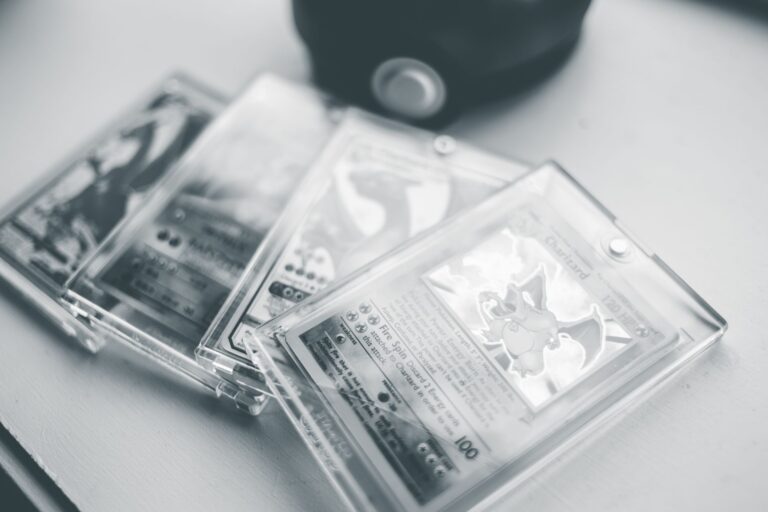
Hidden Fates remains one of the most watched modern Pokémon TCG sets because it fundamentally changed what collectors expect from special releases. When The Pokémon Company introduced the Shiny Vault mechanic—featuring alternate artwork depicting shiny (alternate color) versions of popular Pokémon—the set created a new category of desirable cards that didn’t exist in the modern era before 2019. This innovation captured collector imaginations in a way that resonated across casual enthusiasts and serious investors alike, establishing a sustained demand that has persisted through multiple reprints and five years of subsequent releases. The market itself validates this continued attention.
The chase card, Charizard GX SV49, commands prices exceeding $900 for PSA 10 copies, with top-condition examples reaching $1,611 or more as of May 2026. Elite Trainer Boxes originally sold at retail for around $40 are now trading at 7 times that price. These numbers don’t reflect nostalgia or speculative hype alone—they reflect a set with genuine scarcity, innovative mechanics that set it apart from standard releases, and a card pool deep enough to sustain long-term collector interest. What separates Hidden Fates from other “valuable” modern sets is longevity. While many sets experience initial spikes in demand that flatten quickly, Hidden Fates has maintained relevance not through artificial scarcity manipulation but through legitimate collector preference and natural market dynamics that continue to drive prices upward.
Table of Contents
- What Makes the Shiny Vault Mechanic a Game-Changer for Modern Pokémon Collecting
- The Pricing Dynamics Behind Hidden Fates’ Sustained Market Strength
- The Chase Card Hierarchy and What Drives Collector Priorities
- Investment Perspective: Is Hidden Fates Still a Smart Buy in 2026?
- Supply Dynamics and the Reprinting Paradox
- Specific Card Valuations and Market Examples
- Market Outlook and the Future of Hidden Fates Collectibility
- Conclusion
What Makes the Shiny Vault Mechanic a Game-Changer for Modern Pokémon Collecting
The Shiny Vault was not simply a cosmetic addition—it represented a structural innovation in how The Pokémon Company could package collectible content. By creating a separate subset of cards within a single release, each featuring alternate artwork of popular Pokémon, the set introduced a collectors’ tier system that elevated the challenge and excitement of hunting packs. A collector chasing a complete Hidden Fates collection now faced 150 base cards plus an additional 100 secret cards, with the Shiny Vault cards weighted as premium pulls. This mechanic proved so effective that it became a template for future releases, but Hidden Fates holds the distinction of being the first major implementation in the modern era.
Cards like Shiny Charizard GX, Shiny Umbreon GX, and Shiny Espeon GX became pursuit-grade cards—the kind players set aside budget and time to acquire. The rarity engineering worked precisely as intended: these weren’t harder to pull than standard GX cards by mere percentages, they occupied a psychological category of their own. The lasting impact comes from how this mechanic affected the secondary market. Unlike chase cards that derive value purely from competitive play utility or limited print runs, Shiny Vault cards hold value because they tap into visual collectibility and artwork preference. A collector might own one Charizard GX for play and spend years hunting an alternate-art Shiny version, creating overlapping demand across the player and collector segments.

The Pricing Dynamics Behind Hidden Fates’ Sustained Market Strength
Hidden Fates pricing defies typical set depreciation patterns. Most modern special sets experience strong demand at launch, peak in price within 6-12 months, then settle into a predictable equilibrium as new releases absorb collector capital. Hidden Fates has instead experienced what looks like a floor price that gradually rises over time, with individual chase cards posting new highs years after release. The Charizard GX SV49 illustrates this perfectly. In 2019-2020, PSA 10 copies were valued in the $300-500 range. By 2023, they had climbed to $600-800.
As of May 2026, they’re commanding over $1,600 for top-condition examples. This isn’t volatility—it’s consistent appreciation driven by a shrinking supply of high-grade sealed products meeting continuous collector demand. The Pokémon Company, focused on newer set releases, has deprioritized Hidden Fates reprints as of March 2025, effectively capping supply at a time when demand continues to pull prices higher. A limitation to consider: prices are not uniform across all chase cards. While Charizard GX holds exceptional value, other Shiny Vault pulls from the set command more modest premiums. Trainer cards like Cynthia Full Art do appreciate significantly for players seeking historical competitive-format staples, but they don’t approach Pokémon-specific chase card valuations. If you’re entering the market, card selection matters more than set selection alone.
The Chase Card Hierarchy and What Drives Collector Priorities
Within Hidden Fates, not all valuable cards were created equal. The set’s most pursued pulls follow a clear hierarchy that reflects both artwork quality and Pokémon popularity. Shiny Charizard GX occupies the top tier, followed closely by Shiny Umbreon GX and Shiny Espeon GX—psychic-type powerhouses with alternate colorations that represent visually significant departures from their standard forms. Below these apex cards sits a broader tier of Shiny Vault holos and Full Art Supporter cards that retain consistent secondary market demand.
Cynthia Full Art, for instance, combines artwork desirability with competitive historical significance, as the card saw extensive play in tournament formats throughout the 2019-2021 window. Players rebuilding competitive-format decks and collectors seeking prestige cards both drive demand for these cards, creating a deeper market foundation than sets that rely solely on Pokémon popularity. A real-world example: a PSA 10 Shiny Umbreon GX might cost $400-600, while a PSA 10 copy of the standard Umbreon GX from the same set fetches $20-30. This massive differential—200-fold in some cases—highlights why set identity matters less than specific card identity within Hidden Fates. You’re not buying “Hidden Fates cards” the way you might buy Pokémon base Set—you’re buying specific printings and specific artwork that collectors have collectively designated as crown jewels.

Investment Perspective: Is Hidden Fates Still a Smart Buy in 2026?
As of March 2025, Hidden Fates ranks among the strongest sealed product investments of the past five years, a designation that has only strengthened through mid-2026 as prices continue to climb. From a pure investment standpoint, the set demonstrates three characteristics that separate it from speculative assets: demonstrated demand persistence across multiple market cycles, limited supply due to reprinting prioritization elsewhere, and ongoing collector interest that transcends gameplay utility. Sealed Elite Trainer Boxes represent the most accessible entry point for investors without capital for graded singles. A 7x return on original retail investment is exceptional, but it also reflects the compounding effects of a set that’s been out of print long enough for sealed supply to become genuinely scarce. The tradeoff: if you’re buying now in 2026, you’re not buying at the $40 retail price—you’re buying at $280-400 per box.
The question is whether future collectors will value a sealed Hidden Fates ETB at $500-600 as market dynamics continue to shift. The safer investment approach focuses on high-grade examples of established chase cards rather than sealed boxes. A PSA 10 Charizard GX SV49 has demonstrated sustained price appreciation over multiple years, with clear collector demand driving bids. Sealed products, by contrast, depend on the broader market perception that these boxes are investments worth preserving. If market conditions shift or The Pokémon Company releases a surprise reprint (unlikely but not impossible), sealed box values could compress quickly.
Supply Dynamics and the Reprinting Paradox
Hidden Fates received multiple official reprints between 2019 and 2024, yet prices continued rising rather than falling—a pattern that confuses many investors accustomed to traditional commodities behavior. The explanation lies in the difference between supply volume and demand magnitude. Each reprint wave did introduce new product to the market, but collector demand for these cards has consistently outpaced the available supply at the price points where market transactions occur. The reprinting paradox takes an interesting turn when you examine Pokémon’s current strategy. As of March 2025, the company appears to have effectively ended prioritization of Hidden Fates reprints in favor of newer releases and sets with higher margin profiles.
This represents an implicit supply cap—not a hard ceiling, but a strategic decision that limits future supply influxes. Collectors and investors should interpret this as a potential inflection point: prices may accelerate from this baseline if no additional reprints materialize. A warning: The Pokémon Company’s strategy can shift unexpectedly. A surprise reprint announcement—which happened with other sets after long dormancy periods—could immediately suppress sealed product prices by 20-40%. Investors betting heavily on Hidden Fates should maintain diversified holdings and understand that sealed product values are not immune to supply shocks from the manufacturer.

Specific Card Valuations and Market Examples
Examining specific high-value cards from Hidden Fates reveals the granular market dynamics at work. Shiny Charizard GX SV49 serves as the primary reference point, but Shiny Umbreon GX and Shiny Espeon GX provide meaningful secondary examples. A PSA 10 Shiny Umbreon GX typically commands $400-500, while the same grade on Espeon GX reaches $350-450.
These cards represent the rarest pulls from the set’s Shiny Vault, and their scarcity is partially artificial—The Pokémon Company designed these as pursuit cards with depressed pull rates. Full Art Supporter cards like Cynthia add another valuation dimension. A PSA 10 Cynthia Full Art from Hidden Fates reaches $150-250, a premium driven by competitive format relevance (the card saw extensive tournament play through 2021) combined with artwork desirability. This pricing tier demonstrates that Hidden Fates value isn’t exclusively dependent on Pokémon chase cards—it extends to utility cards that bridge the player and collector segments.
Market Outlook and the Future of Hidden Fates Collectibility
Hidden Fates appears positioned for continued relevance through the rest of 2026 and into 2027, barring significant market disruptions or reprinting announcements. The set’s foundational innovation—the Shiny Vault mechanic itself—has become a permanent fixture in the modern TCG landscape, which paradoxically reinforces Hidden Fates’ historical significance. New collectors discovering the modern era are directed toward sets with this mechanic, and Hidden Fates retains the cultural cache of being the original.
The realistic trajectory suggests slow, steady price appreciation for high-grade chase cards and modest inflation for sealed products, assuming supply remains constrained. If you’re considering entry into Hidden Fates as a collector or investor, the current market environment favors patience over urgency—prices are high, but sustained demand suggests they’re unlikely to fall significantly. The set has transformed from a special release into a foundational pillar of modern TCG collectibility.
Conclusion
Hidden Fates remains one of the most watched modern Pokémon TCG sets because it succeeded in creating durable collector demand through genuine innovation. The Shiny Vault mechanic introduced visual collectibility at scale, and five years of subsequent market behavior have validated that this mechanic resonates with buyers across competitive and casual segments.
Charizard GX SV49 reaching $1,611 for top-condition examples, Elite Trainer Boxes trading at 7x retail value, and sustained interest despite multiple reprints all point to a set with real structural advantages. For collectors evaluating whether to enter Hidden Fates now, focus on specific high-grade chase cards rather than speculating on sealed products, and understand that current prices reflect established demand, not speculative pricing. The set’s future value depends on continued collector interest and supply constraints rather than hype cycles, which suggests relatively stable long-term prospects for investors with patience and diversified holdings.