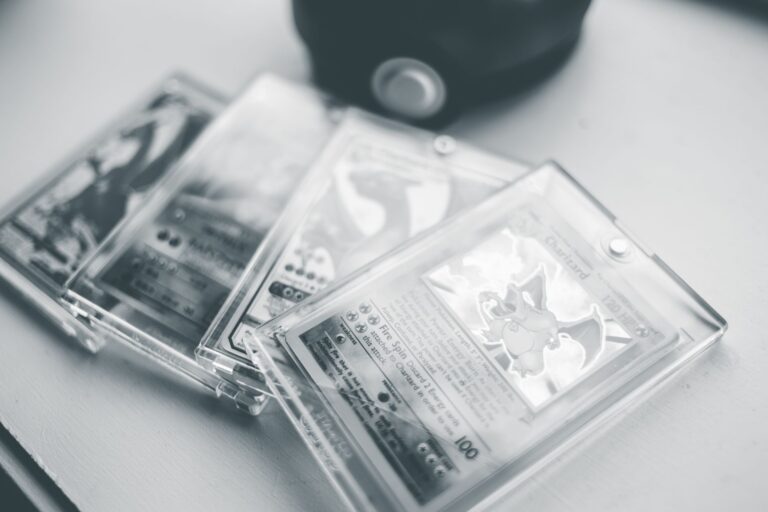
The Base Set cards people ignore until prices start moving are almost always the commons and uncommons—the very cards that longtime collectors dismiss as junk. A Nidorino #37 might trade for under a dollar, but the same card in graded PSA 9 condition can jump from the typical $2-5 range to $50-150 or more. This isn’t hype. The market data is clear: as of the last 30 days, roughly 482 Base Set cards moved on eBay with an average price of $69.05, and specific commons like Hitmonchan #7/102 logged 21 trades at an average of $9.31 each. The real money, however, isn’t hiding in the rare holographic cards everyone watches.
It’s in the gems—the overlooked commons and uncommons that gain value the moment serious collectors and grading companies decide they’re actually worth preserving. The February 27, 2026 release of Pokémon’s 30th Anniversary set reignited Base Set nostalgia across the market. Prices climbed an average of 18-30% year-over-year as buyers competed for limited supply. But within that surge, something shifted: common cards that had been trading for pocket change suddenly looked investable. This isn’t because anything changed about the cards themselves. What changed is that collectors finally understood scarcity—and scarcity applies just as much to gem mint vintage commons as it does to first-edition holographic Charizards.
Table of Contents
- Why Vintage Commons Get Dismissed Until the Market Recognizes Scarcity
- The Grading Impact That Made Even Commons Investable
- Which Base Set Commons Have Actually Appreciated
- How to Identify Commons Worth Grading Before They Spike
- The Preservation Problem: Why Gem Mint Base Set Commons Are Genuinely Rare
- The 30th Anniversary Effect and Recent Price Momentum
- Market Projections and What 2026 Means for Commons Collectors
- Conclusion
Why Vintage Commons Get Dismissed Until the Market Recognizes Scarcity
Commons and uncommons from base Set (cards #17-102 non-holographic) typically float in played or lightly played condition between $1 and $8. They look cheap. They feel cheap. And for decades, they were treated like filler—the cards nobody saved carefully because they were easy to pull and perceived as worthless. This perception persists, even though it’s economically outdated. The dismissal runs deep. When Base Set cards were actively circulated in the late 1990s and early 2000s, kids and casual players discarded commons without hesitation. Those cards got played, bent, spilled on, and lost.
The few that survived in near-mint or gem-mint condition are genuinely scarce. But the market didn’t price scarcity until grading services like PSA and BGS made it visible—and investable. A card nobody thought to preserve suddenly has quantifiable value when it carries a PSA 9 label. The warning here is real: this only applies to commons in exceptional condition. Heavily played copies remain cheap. There’s no resurrection for a card with dog-eared corners and permanent creasing, no matter how old it is. The commons that appreciate are the ones that survived in the hands of careful collectors, or were packed away and never touched. Condition is everything, which is why so many commons remain invisible to the market—most copies simply don’t exist in high grade.
The Grading Impact That Made Even Commons Investable
The rise of professional grading transformed the common card market by creating two distinct price tiers: raw cards and graded cards. A raw Raichu #14 from Base Set might sell for $20-50, depending on condition assessment. That same card in a PSA 10 slab commands $1,700. The jump is extreme, but it illustrates a principle that applies all the way down to commons: a visible, authenticated grade creates collector confidence and investability. For commons specifically, PSA 9 and BGS 9.5 grades represent a market inflection point. A Hitmonchan #7/102 in raw near-mint condition might trade in the $5-15 range, unremarkable and easy to overlook. Grade it PSA 9, and collectors suddenly view it as a preserved piece of Pokémon history worth significant capital. This isn’t artificial—it’s a direct reflection of actual scarcity.
Most copies of that card don’t exist in PSA 9 condition. Most were played. The ones that weren’t are rare enough to command real money. The limitation is that grading costs money. A modern submission to PSA or BGS costs $10-30 per card depending on the service level. Grading a bulk lot of commons becomes expensive quickly, and it only makes economic sense for cards with realistic upside. A commons that might appreciate from $2 to $50 when graded justifies the cost. A card with no upside potential doesn’t. Collectors need to be selective about which commons are worth the investment in grading.
Which Base Set Commons Have Actually Appreciated
Specific commons from Base Set have shown measurable price movement, especially when tracked across graded populations. Hitmonchan #7/102 has been one of the most actively traded commons from the set, with 21 sales recorded in the last 30 days alone. The average price across those sales was $9.31, which reflects a mix of raw and lightly graded copies. But high-grade versions of the same card—PSA 9 or better—trade at multiples of that average. Another angle: Base Set non-holographic cards show a wide price variance across the entire set. On one end, Nidorino #37 trades for $0.49 in bulk. On the other end, Raichu #14 in gem condition (PSA 10) hits $1,700.
Most commons cluster in the $1-8 range raw, but specific cards in the set have proven they can appreciate. The key is identifying which ones have collector demand independent of their raw print runs. Hitmonchan has artwork appeal and historical relevance in the competitive scene. Other commons may have similar advantages that aren’t immediately obvious. A real-world example: a collector who graded 100 of the most actively traded Base Set commons in PSA 9 condition would have invested roughly $1,500 in grading costs alone. If even 20 of those commons appreciate from $5-8 raw value to $40-60 graded value over the next 12 months, that investment breaks even. If they hit $100+ per card—which high-grade commons increasingly do—that collector is looking at meaningful returns. The data on recent trading activity suggests momentum is real.

How to Identify Commons Worth Grading Before They Spike
Finding undervalued commons requires understanding what makes a card collectible beyond just being old. Artwork is one factor—commons with memorable or unusual art get collected at higher rates than bland designs. Competitive relevance is another—Hitmonchan matters because it was playable in the competitive scene decades ago, so collectors seek it out. Certain Pokémon types seem to hold more collector appeal: water types, psychic types, and fighting types from Base Set move more actively than others. Look at trading volume and ask which commons are actually selling. If a commons has zero sales in the last 30 days, there’s no demand to drive appreciation. If it’s trading 10+ times per month at stable prices, there’s at least a viable market.
The 482 Base Set cards that moved on eBay in the last 30 days represent active demand, and those trading patterns tell you which commons collectors actually want. Filter for those, then assess condition. A raw example in excellent or near-mint condition is a candidate for grading consideration. The practical tradeoff is between immediate capital and speculative upside. Grading a common ties up cash for 2-6 weeks (depending on service level) and costs money upfront with no guarantee of appreciation. But the market data from 2026 shows that Base Set commons in high grades are appreciating, especially in the post-30th-Anniversary environment. Sealed box prices have climbed back toward $400-500, indicating overall market strength and continued collector interest. That environment supports commons appreciation, but only if the card itself has collector demand beyond pure age.
The Preservation Problem: Why Gem Mint Base Set Commons Are Genuinely Rare
The fundamental constraint on commons appreciation is supply. Base Set was printed heavily in 1999-2000, which means millions of commons were produced. But “millions produced” doesn’t mean “millions surviving in gem condition.” Most commons were actively played, traded between kids, stored in shoeboxes without sleeves, and exposed to moisture and sunlight. Mint copies simply don’t exist in large quantities. This is the real scarcity story. A holographic Charizard #4 is valuable partly because of its status and demand, but also because fewer were pulled per pack compared to commons. A Hitmonchan #7/102, by contrast, was printed by the tens of millions—yet finding one that survived in PSA 9 condition is genuinely difficult. The gap between cards produced and cards surviving in high grade is enormous for commons.
This is why gem mint vintage commons are investable: they’re scarcer than most people realize. The warning is that not every commons can achieve high grades, regardless of potential. Heavy play is permanent—corners don’t un-crease, creases don’t flatten, and discoloration doesn’t fade. Before grading, honestly assess the card’s condition. A commons in excellent condition is a reasonable candidate. A commons in very good condition is a gamble. Anything below that is likely not worth the grading investment, because it won’t hit the PSA 9+ range that commands premium pricing. The market has spoken: mid-grade commons ($2-10 raw) don’t appreciate significantly, only the high-grade ones do.
The 30th Anniversary Effect and Recent Price Momentum
The February 27, 2026 release of Pokémon’s 30th Anniversary set created a significant market event. Base Set prices climbed an average of 18-30% year-over-year as nostalgic demand surged and competitive buyers pushed bidding higher. Sealed boxes—a reliable indicator of overall set demand—climbed back toward $400-500 after some recent volatility. This isn’t a minor fluctuation. It’s sustained collector interest driving prices across the entire set. Within that broader surge, commons benefited.
When sealed boxes appreciate, it signals that the underlying set has collector momentum. That momentum carries through to individual cards, including commons. Cards that were trading at $5-8 raw in late 2025 began moving at $8-15 in early 2026. Graded versions of the same cards saw similar uplift. The 30th Anniversary release essentially reset the reference point for Base Set value, creating a window where collectors reassessed which cards were underpriced. Commons that had been ignored suddenly looked reasonable in comparison to the new overall price floor.
Market Projections and What 2026 Means for Commons Collectors
The Pokémon card market has matured significantly since the 2021 bubble burst. Volatility has declined, and prices have stabilized into a collector-driven ecosystem with realistic growth projections. Market analysts are projecting 15-25% annual growth through 2026 as the market continues to sort between speculative cards and genuinely collectible ones. Commons are increasingly landing in the collectible category rather than the speculative one, because their value is tied to actual scarcity rather than hype cycles. For collectors interested in commons, this environment is favorable but temporary.
The longer Base Set remains relevant and nostalgic, the more collector demand will exist for all cards within it, including commons. But markets eventually shift. Newer sets will gain prominence. The 30th Anniversary window won’t last forever. The practical implication: commons that are appreciating now are likely to continue appreciating while Base Set momentum holds, but identifying those with the longest-term upside matters more than timing the market perfectly.
Conclusion
The Base Set cards people ignore until prices start moving are the commons and uncommons that survived in gem condition—cards that were overlooked because they were common, played, and cheap, not because they lacked value. The 2026 market has proven that high-grade vintage commons are genuinely investable, with documented trading activity showing significant movement and graded versions commanding premiums of 10x or more over raw copies. The key to identifying which commons to pursue is understanding scarcity (condition + demand) and having the patience to grade selectively rather than speculatively.
The February 2026 market surge and continued momentum through the 30th Anniversary period have created a favorable window for commons appreciation. But this window is temporary, and the economics only work for cards in exceptional condition with active collector demand. Start by identifying which commons are actually trading regularly, assess their condition honestly, and only grade those that meet the PSA 8+ threshold. The money in Base Set commons is real—but only for the preserved ones.